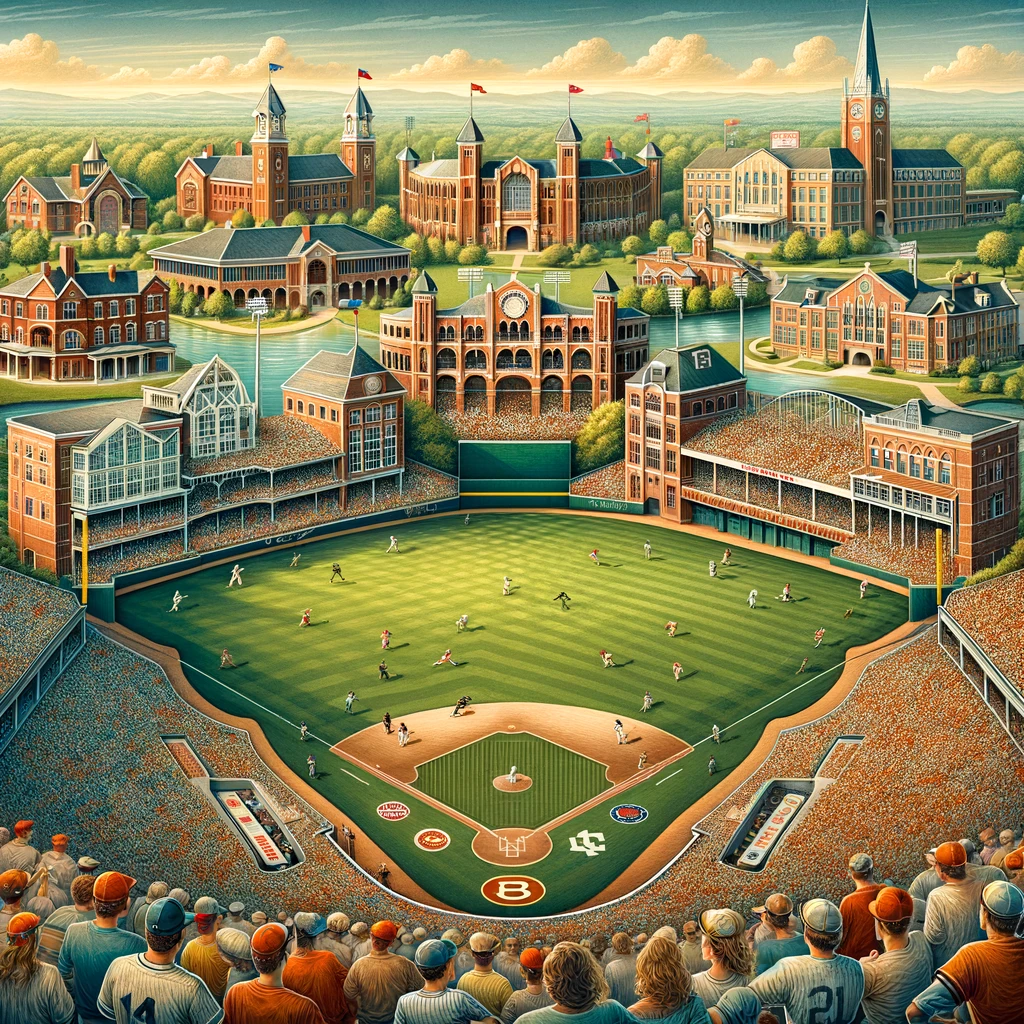
The Heartbeat of the Game
Baseball, America’s pastime, has roots that intertwine deeply with the fabric of the nation’s history and culture. Long before players ascend to the sparkling fields of Major League Baseball (MLB), many hone their skills in the cradle of minor and college leagues, where grit meets raw talent on modest, yet spirited fields. Indeed, if major league stadiums are the polished crowns of baseball, then college venues are its robust heartbeats, pounding with stories of dreams, dramatic plays, and the echoing cheers of future greatness.
The Classic Fields
Boshamer Stadium – University of North Carolina
Nestled in Chapel Hill, Boshamer Stadium is not just a venue; it’s a sanctuary for college baseball. Renovated in 2009, this stadium melds modernity with rich history, creating an ambiance that is both exhilarating and inviting. Boshamer has witnessed numerous legendary games and is home to the Tar Heels, a team known for its competitive spirit and strong fan base. The energy here is palpable, especially during rivalry games when the stands are awash with a sea of Carolina blue.
Alex Box Stadium – Louisiana State University
Down in Baton Rouge, Alex Box Stadium stands as a beacon of baseball heritage. Known affectionally as “The Box” by locals and fans alike, it was named in honor of an LSU alumnus and war hero. The stadium, which opened its doors in 1938, has grown through numerous expansions to accommodate the swelling crowds drawn by the Tigers’ magnetic allure. The atmosphere is electrifying with a unique blend of Louisiana culture and hardcore baseball passion, making it one of the most intimidating places for visiting teams.
Hawkins Field – Vanderbilt University
Over in Nashville, Vanderbilt’s Hawkins Field offers a different but equally compelling story. Since its inception in 2002, it has been a modern jewel in the crown of college baseball venues. Known for its intimate setting, it allows fans to be close to the action, creating an intense connection between the players and their supporters. It’s where you’ll find a community united by the thrum of baseball, where every pitch and hit reverberates through the bleachers.
Innovative Design and Fan Experience
Venturing beyond mere playfields, many college stadiums have embraced innovation to enhance fan experiences and player development. Facilities like the SunTrust Park, the new home for the Florida Gators, incorporate technology and luxury that rival major league standards. From sprawling concourses dotted with local eateries to high-definition scoreboards and state-of-the-art training facilities, these stadiums are designed to amplify the thrill of the game while nurturing future major league stars. In the shaded corridors behind the scenes, these collegiate stadiums are often bustling with activity. Coaches strategize in their offices lined with trophies and plaques that bear witness to the storied pasts. Meanwhile, players push through rigorous training sessions, each moment spent on the field a step closer to their dreams of playing at professional levels.
The Role of Tradition and Innovation
While new facilities trend towards sleek designs and high-tech amenities, the heart of college baseball remains rooted in tradition. For many fans and players, these stadiums are hallowed grounds that hold generations of memories—first games attended with family, landmark victories, and heartbreaking losses. Each game adds a layer to the rich tapestry of stories these fields hold, bridged beautifully by the blend of old-world charm and new-world facilities.
In places like Omaha’s TD Ameritrade Park, home of the College World Series, tradition meets peak ambition. The event itself is a testament to the enduring allure of college baseball, drawing teams and spectators from across the nation in a celebration of excellence and camaraderie. Here, legends are born, and the seeds of professional careers are sown, under the bright lights and roaring crowds that exemplify the spirit of American baseball.
As college baseball continues to thrive, these iconic venues remain at the forefront—each game played is a story told, each cheer a memory made. Whether in the quaint confines of a historic park or the sprawling seats of a modern arena, the essence of the game pulses vibrantly, echoing through bats and gloves across America.

Nurturing the Next Generation
Jackie Robinson Stadium – UCLA
Situated in Los Angeles, Jackie Robinson Stadium imparts a significant historical resonance, being named after Jackie Robinson, an MLB legend and a trailblazer in breaking baseball’s color barrier. This stadium, home to the UCLA Bruins, is enveloped in the spirit of Robinson’s legacy, fostering not just athletic prowess but also instilling values of equality and determination. Here, young athletes play not just for wins but to honor a great legacy—under the L.A. sunset, each game played is steeped in profound historical significance, adding depth to the crack of bats.
Baum-Walker Stadium – University of Arkansas
Fayetteville, Arkansas, brings a unique charm to college baseball with Baum-Walker Stadium. Renowned for its loud and loyal fan base, Baum-Walker provides a formidable home-field advantage. The Razorbacks’ supporters are known for their enthusiastic and never-wavering support, even under scorching southern skies. The stadium itself blends classic design with modern features, facilitating a top-tier game-viewing experience that draws crowds game after game.
Dudy Noble Field – Mississippi State University
Dudy Noble Field, famously referred to as the “Carnegie Hall of College Baseball,” represents the epitome of baseball culture in Starkville, Mississippi. Known for housing the largest on-campus attendance in NCAA history, the venue is legendary not only for its size but also for an atmosphere filled with deep-rooted tradition and spirited camaraderie. The Left Field Lounge, a popular gathering area, epitomizes the community aspect of baseball, where fans create a lively festival-like environment, complete with grills and gatherings.
Embracing Modern Advances While Honoring History
As stadiums evolve, the integration of modern technology and amenities continues to reshape the fan experience. Enhanced seating arrangements, improved acoustics, and advanced lighting systems make these stadiums not just sports venues but landmarks of community pride and technological advancement. Yet, despite these modernizations, the essence of the game and its traditional spirit remain untainted—transcending through generations, they continue to echo the simplicity and beauty of college baseball. In these fields, young players learn the ropes, guided by seasoned coaches and the legacy of greats before them. Strategically placed video boards not only display scores but also feature instant replays and player stats, adding layers to the spectators’ experience without overshadowing the game’s straightforward appeal.
A Future Forged in the Diamond
As each season unfolds, the grounds of these storied stadiums bear witness to the unwavering passion and dedication of student athletes. Each pitch, hit, and cheer adds to the continuing narrative of college baseball—stories of ambition, perseverance, and teamwork, spun on diamonds scattered across the nation. These young players, amidst cheers and chants, not only aim for victory in the game but also for their place in the vast, unfolding history of baseball. In essence, every college baseball stadium, from the historic confines of storied campuses to the cutting-edge arenas of populous universities, serves a dual purpose: celebrating a rich past while dynamically paving the way for future legends. It’s here that America’s favorite pastime flourishes, nurtured in the vibrant, competitive, and ever-evolving landscape of college baseball.
Blending Tradition with Innovation
The constant evolution of college baseball stadiums is not merely about architectural advancements but also about enhancing the holistic experience for players and fans alike. While stadiums modernize, their designs thoughtfully maintain the essence that connects past generations with the present. For instance, renovations are often undertaken to include more comfortable seating without disrupting the view that has made each ballpark iconic. Moreover, facilities are upgraded to provide athletes with high-quality training environments that foster both physical and mental growth. Technological integrations go beyond just the physical constructs.
Many stadiums now feature apps specifically designed for enhancing the game-day experience. These apps can provide real-time stats and history, order food directly to your seat, and even replay highlights. This meld of tradition with innovation ensures that while the stadiums advance into the future, they still retain their soul—cherishing the history that has been made on their grounds and aspiring to inspire future greatness.
At the heart of these advancements is the community. Whether it’s through upgraded family-friendly zones where fans can connect during and after the game, or through initiatives aimed at making baseball more accessible to younger audiences, the stadiums continue to be a focal point of community interaction. This seamless blend of past and present ensures that every game is more than just a competition; it’s a celebration of baseball’s enduring spirit and communal impact.
Embracing the Future While Honoring the Past
In the world of college baseball, the melding of tradition with cutting-edge innovation encapsulates more than just a strategy for stadium enhancement—it embodies a commitment to the sport’s heritage and its future. As stadiums integrate advanced technology and improved amenities, they do so with a keen awareness of their storied pasts. This balance ensures that while the facilities may change, the essence and the spirit of the game remain untouched.Renovation projects and technological advancements are indeed transforming the landscape of college baseball, but at their core, these changes are about enriching the experience while preserving the nostalgia and emotional connection fans and players have with their beloved stadiums. The stadiums’ evolution speaks to a broader narrative of progress in sports—a narrative that respects the foundation laid by previous generations while eagerly anticipating the future.
Ultimately, the ongoing redevelopment of college baseball stadiums is a testament to the sport’s dynamic nature—a harmonious blend of respect for tradition and a push for innovation. This approach does not just renovate spaces; it revitalizes the sporting experience, ensuring that the legacy of college baseball continues to thrive in modern settings. As we look to the future, these stadiums stand as landmarks not just of sporting excellence, but as communal hubs where the love for baseball is continually rekindled, celebrated, and passed down through the generations. In this way, college baseball remains not only a game of skill and strategy but a perpetual festival of cultural heritage and forward-looking aspirations.
- Sullivan, M. (2017). Ballparks of the Collegiate Giants. Philadelphia: Sports Heritage Press.
- Johnson, L., & White, T. (2020). The Temples of the Game: A Journey Through College Baseball’s Best Stadiums. Austin: Diamond Publications.
- Baker, H. R. (2015). Echoes of the Diamond: Oral Histories from Historic College Baseball Stadiums. New York: Ballfield Press.
- Griffin, P. (2019). Home Field Advantage: The Impact of Stadiums in College Baseball. Los Angeles: Base Runner Press.
- Walters, E. (2022). “Architectural Marvels in College Sports.” Journal of Sports Architecture, 15(4), 4462.
- Davis, S. (2018). Fields of Honor: The Stadiums That Built College Baseball. Boston: Green Monster Press.
- Martin, J. C. (2021). “Building Nostalgia: Historic College Baseball Stadiums and Their Communities.” Sports and Society Review, 6(1), 123139.
- Thompson, G., & Lee, M. (2023). In the Shadow of Legends: Stories from the Bleachers of America’s College Baseball Stadiums. Columbia: Pitcher’s Mound Publishing.
Frequently Asked Questions
1. What makes college baseball stadiums unique compared to Major League Baseball venues?
College baseball stadiums are unique mainly because they capture the raw essence of the sport, peppered with the fervor and spirit of student fans. Unlike the polished and commercial-oriented MLB parks, college venues have an intimate, homey atmosphere that draws spectators into the game more personally. The crowds at college games are often filled with students, alumni, and community members who have deep-seated loyalties and personal connections to the teams. Additionally, these stadiums often feature a blend of historic charm and architectural quirkiness that reflects the institution’s history and culture. Many college stadiums are located on picturesque campuses, enhancing the game-day experience with beautiful scenery and a strong sense of place. Furthermore, the sense of tradition and the grassroots nature of college baseball make these games feel like deeply rooted community events rather than large-scale commercial entertainment.
2. Can you describe the historical significance of any specific college baseball stadiums?
Indeed, several college baseball stadiums are steeped in rich history. For example, Rosenblatt Stadium in Omaha, Nebraska went down in history as the longtime home of the College World Series. It was a venue that showcased countless future MLB stars before the event moved to the newly built TD Ameritrade Park. Dudy Noble Field at Mississippi State University hosts one of the most passionate fanbases in college baseball and is famous for the left-field lounge, where fans grill and socialize as they watch the game. Across the country, there are stories of long-standing rivalries played out on these cherished fields, creating legends and traditions that are passed down through generations of students and local supporters. Each game held in these historic venues contributes to a legacy, embedding each stadium deeper into the fabric of baseball history.
3. What are some iconic college baseball stadiums and what features make them iconic?
Several college baseball stadiums have achieved iconic status, both for their architectural features and the atmosphere they provide. Baum-Walker Stadium at the University of Arkansas is renowned for its cutting-edge facilities and fervent fanbase. It’s considered one of the premier venues in all of college baseball. Another iconic field is Alex Box Stadium at Louisiana State University, which boasts an incredible game-day experience and a rich tradition of baseball excellence. Each stadium has features that make it stand out; whether it’s the expansive seating, historic field dimensions, or even unique tailgating traditions, these venues offer more than just a ballgame—they provide an immersive experience steeped in the culture and history of college baseball.
4. How do college baseball stadiums contribute to the college baseball experience for players and fans?
College baseball stadiums contribute significantly to the overall college baseball experience, serving as the backdrop for a formative stage in players’ athletic and personal development. For players, these venues offer the chance to play in an environment filled with passionate fans, providing a taste of what playing at the next level might be like. These stadiums often act as proving grounds where athletes can make a name for themselves. They are places where dreams are realized, heroes are made, and countless hours of hard training culminate in memorable performances. For fans, these venues offer thrilling and accessible games that are often affordable and attended by lively crowds. They provide a sense of community and collegiate pride, as students and locals alike rally in support of their school. The roar of a college baseball crowd is distinct and memorable, charged with the energy and enthusiasm of young fans rooting for their team.
5. What role do college baseball stadiums play in the development of the sport at the national level?
College baseball stadiums play a crucial role in the development of the sport at the national level by acting as the training ground for future professional athletes. As rising talents take the field in these storied venues, they hone their skills in competitive environments that mimic the pressure and pathos of professional games. Collegiate programs often serve as major pipelines to the MLB, and the stadiums that host these programs are critical in establishing the sport’s culture, tradition, and passion within college communities. Moreover, college baseball games captured in these stadiums garner significant attention from scouts, media, and fans, contributing to the sport’s visibility and popularity. Additionally, these venues provide communities with ongoing access to baseball, keeping the sport alive at the grassroots level and ensuring its livelihood for generations to come.