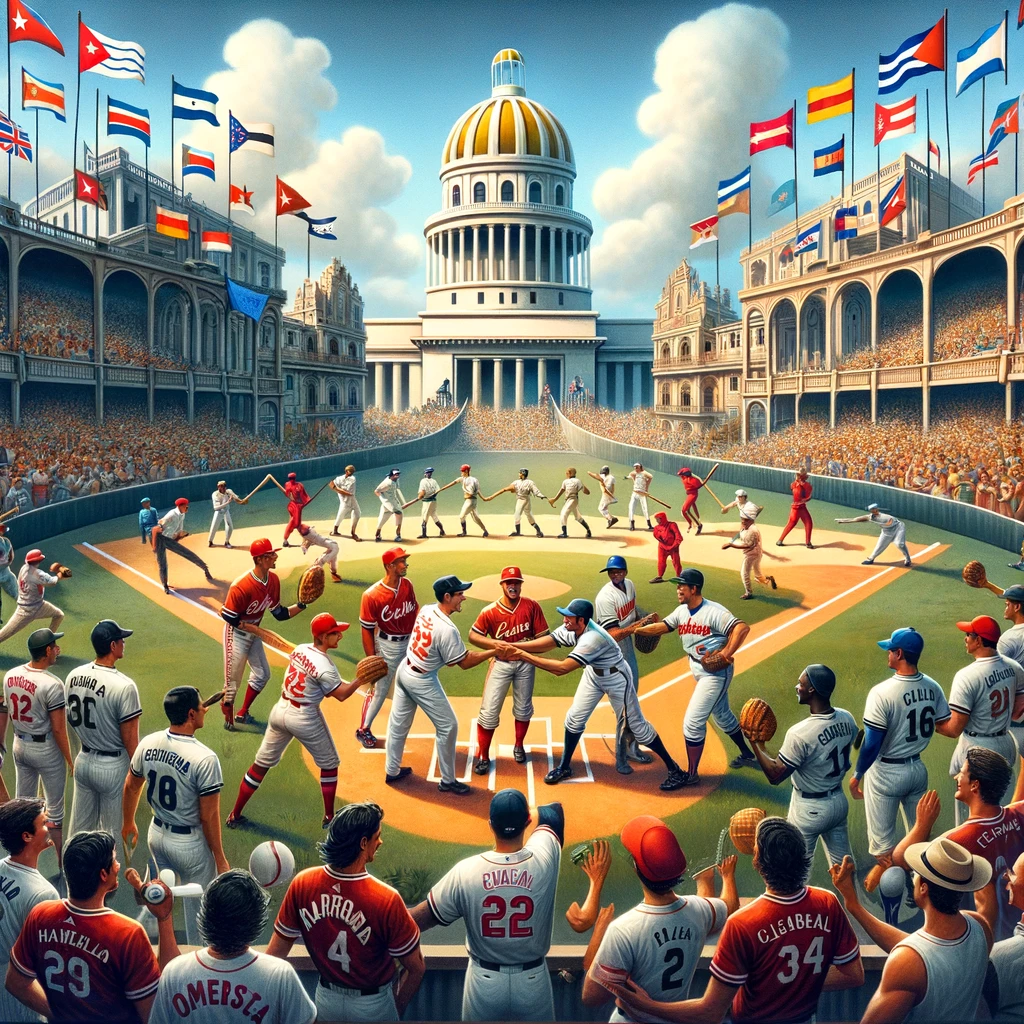
Cuba’s relationship with baseball is profound, transcending the boundaries of a mere sport to become a pivotal element in its international relations and diplomatic interactions. This article delves into the historical context of Cuban baseball, its significance in diplomatic relations, and how Cuba has leveraged baseball as a channel for international diplomacy.
The Roots of Cuban Baseball and its International Appeal
Baseball’s introduction to Cuba in the 19th century marked the beginning of what would become a deep-seated cultural phenomenon. By the 1860s, Cuban students returning from studying abroad in the United States brought back not only educational insights but also a new sport—baseball. This timing was critical, coinciding with Cuba’s growing desire for independence from Spanish colonial rule. Baseball quickly became a symbol of political defiance against Spain, with the establishment of the first Cuban baseball club in 1868, which interestingly mirrored the timeline of Cuba’s Ten Years’ War for independence. The early 20th century saw the emergence of professional baseball in Cuba, further solidifying its role as a national pastime. Cuban teams often played against teams from the United States, fostering a competitive yet collaborative environment that transcended the geographical divide between the two nations. This period marked the beginning of baseball diplomacy, where sporting events served as informal arenas for diplomatic and cultural exchange.
The Cold War Era: Baseball Diplomacy Takes Center Stage
The Cold War period significantly altered the dynamics of international relations, and Cuba was no exception. Following Fidel Castro’s rise to power in 1959, Cuba’s political and ideological landscape underwent dramatic changes, affecting its international sporting engagements. During this era, Cuban baseball experienced both isolation and heightened importance as a tool for diplomacy. Cuba’s participation in international competitions, such as the Amateur World Series (now known as the WBSC Premier12), became platforms to showcase its socialist ideals and the prowess of its athletes, who were considered amateurs in name but professionals in skill. Despite the U.S. embargo, which severed formal diplomatic ties and restricted sports exchanges between the two countries, Cuba found ways to engage with the world through baseball. The sport served as a non-verbal medium of diplomacy, breaking down political barriers and fostering people-to-people connections.
Baseball in the Post-Cold War Era: Bridging Divides
The post-Cold War era marked a new chapter in Cuba’s baseball diplomacy. The dissolution of the Soviet Union, Cuba’s primary economic and political ally, plunged the island into economic hardship. This period, however, also saw a gradual thawing of relations between Cuba and the rest of the world, including the United States. Baseball played a critical role in this process, serving as a bridge that reconnected Cuba with the global community. One of the most iconic moments of baseball diplomacy occurred in 1999, when the Baltimore Orioles played an exhibition game against the Cuban national team in Havana. It was the first time in over 40 years that a Major League Baseball (MLB) team had played in Cuba. This event, though controversial, highlighted baseball’s potential as a diplomatic tool, capable of humanizing international relations and fostering dialogue.
Cuba’s Contribution to International Baseball
Cuba’s impact on international baseball extends beyond its political borders. The island has been a powerhouse in international competitions, winning numerous Olympic golds and World Baseball Classic medals. Cuban players are highly sought after in professional leagues around the world, from Major League Baseball in the United States to Japan’s Nippon Professional Baseball and beyond. The migration of Cuban baseball talent has also had diplomatic ramifications. Defections of Cuban players, seeking professional careers in the MLB and other leagues, have underscored the complexities of U.S.-Cuba relations but also highlighted the universal appeal and connective power of baseball. These athletes serve as informal ambassadors of Cuban culture, contributing to a greater understanding and appreciation of Cuba’s rich baseball heritage worldwide.
The Legacy and Future of Cuban Baseball Diplomacy
Cuba’s baseball diplomacy holds a unique place in the annals of sports and international relations. It reflects the island’s historical struggles, national pride, and its pursuit of sovereignty and cultural identity through the universal language of sports. Looking forward, the evolving diplomatic landscape, particularly the potential for improved U.S.-Cuba relations, presents new opportunities and challenges for Cuba’s baseball diplomacy. Efforts to normalize relations between the two countries, though fluctuating, have reignited discussions about the future of Cuban athletes in the MLB and other international leagues, as well as the prospects for more frequent cultural and sports exchanges. These developments not only have implications for the athletes involved but also signify a broader potential for sports as a vehicle for international goodwill and understanding.
Navigating Challenges: Cuba’s Baseball Diplomacy in the 21st Century
As we move deeper into the 21st century, Cuban baseball diplomacy faces both familiar and new challenges. The landscape of international sports is changing, with increased competition, evolving norms, and the impact of globalization. Cuba must navigate these waters while remaining true to its ideals and leveraging baseball for diplomatic and cultural objectives. The key to the future success of Cuban baseball diplomacy lies in its ability to adapt to these changing circumstances while maintaining the essence of what makes Cuban baseball unique. This will involve balancing the development of domestic talent with the realities of global sports, strengthening international collaborations, and using baseball as a bridge to engage with the world, even in times of political uncertainty. In conclusion, Cuba’s baseball diplomacy is a testament to the power of sports as a means of international engagement and cultural exchange. It showcases how a nation can use its passion and prowess in a particular sport to influence global perceptions, foster diplomatic ties, and build bridges across cultural and political divides. As Cuba and the world at large continue to evolve, the legacy and lessons of Cuban baseball diplomacy will remain relevant, reminding us of the unifying power of sports in an often divided world. Sure, I’ll continue from where it logically cuts off, keeping in mind the guidelines you’ve provided. — The involvement of Cuban players in leagues worldwide has not only nurtured global talent pools but also posed questions about nationalism, sportsmanship, and the economic disparities in global sports. These athletes, often seen as defectors by Cuban authorities, have sparked debates around issues of freedom, national loyalty, and the global sports economy. The stories of these players, intertwined with hopes, dreams, and often political asylum, highlight the complex interplay between sports and geopolitics.
Fostering People-to-People Ties Through Baseball
Beyond the competitive spirit and international rivalries, Cuban baseball diplomacy has played a significant role in fostering people-to-people ties. The cultural exchanges that occur naturally through sports have enabled Cuban citizens and their international counterparts to interact, share experiences, and forge mutual understandings outside the confines of formal diplomatic engagement. These grassroots-level interactions can sometimes bridge gaps that official diplomatic channels cannot, offering a glimpse into the power of cultural diplomacy. Through international tours, competitions, and the participation of Cuban players in foreign leagues, Cuba has managed to maintain a presence on the world stage, promoting its cultural heritage and forging unofficial diplomatic links. These interactions have also provided Cuban athletes and citizens with a window to the world, breaking the isolation often imposed by geopolitical circumstances.
The Role of Baseball in Promoting Cuban Culture
Baseball has been an effective ambassador for Cuban culture, showcasing the nation’s love for the game, its competitive spirit, and its sportsmanship. The international success of Cuban baseball has been a source of national pride, highlighting the country’s ability to excel despite economic hardships and political isolation. Through baseball, Cuba has been able to convey stories of its resilience, culture, and identity, connecting with global audiences on a human level. The sport has also served as a canvas for showcasing Cuban arts, music, and festivals, with baseball events often accompanied by cultural exhibitions. This has allowed countries engaging with Cuban baseball teams to experience aspects of Cuban culture firsthand, deepening mutual respect and understanding.
Challenges and Considerations for the Future
Despite its successes, Cuban baseball diplomacy faces several challenges. The evolving global sports environment, marked by increased commercialization and professionalization, poses questions about the sustainability of an amateur sports model in a professional world. Additionally, the lure of professional contracts abroad continues to draw talent away from Cuba, challenging the country’s ability to compete at the highest levels. Moreover, changes in U.S.-Cuba relations and the policies of other countries toward Cuba can impact the ease and extent of cultural and sports exchanges. The fluctuating political climate requires constant navigation to ensure that baseball remains a bridge between Cuba and the global community.
Nurturing the Next Generation of Cuban Baseball
Looking ahead, the future of Cuban baseball diplomacy will depend on nurturing the next generation of players and fans. This includes enhancing sports infrastructure, providing access to quality training, and ensuring that baseball remains an accessible and beloved part of Cuban life. Equally important will be the ability to adapt to the global sports landscape, embracing the opportunities it offers while staying true to the spirit of Cuban baseball. Engaging with the diaspora of Cuban baseball talent could also provide avenues for cultural and diplomatic engagement, using the stories and successes of Cuban players abroad to inspire connections and bridge divides.

Enhancing International Collaboration
To advance Cuban baseball and leverage its full potential as an instrument of diplomacy and cultural exchange, enhancing international collaboration is crucial. This could involve establishing more comprehensive and structured exchange programs with baseball leagues worldwide. These programs could extend beyond just the players to include coaches, managers, and other professionals in the sport, creating a more intensive exchange of knowledge, strategies, and cultures. Such collaborations could also pave the way for combined training sessions and workshops, allowing Cuban athletes and sports professionals to access state-of-the-art facilities and knowledge bases, thereby elevating the standard of baseball in Cuba. In return, the global baseball community could gain unique insights into the passion, techniques, and ethos that characterize Cuban baseball, enriching the sport worldwide.
Addressing Economic and Political Challenges
One of the major hurdles facing Cuban baseball diplomacy is navigating the economic and political landscapes, both domestically and internationally. To secure a future where Cuban baseball can thrive and continue to contribute to international relations and cultural diplomacy, it’s imperative to engage in open dialogues and partnerships that transcend political discrepancies. Creating frameworks that protect the rights and welfare of Cuban players participating in international leagues is essential. These would address issues like representation, contracts, and the assurance that the players and their families benefit economically while ensuring that their participation also contributes positively back to the sport and communities in Cuba. Additionally, international sports organizations and bodies can play a more proactive role in mediating and facilitating conversations between Cuba and countries with significant baseball leagues. By doing so, they can help ensure that political tensions do not hinder the sport’s development or the cultural and diplomatic bridges that baseball helps to build.
Leveraging Technology and Media
In today’s digital age, technology and media play pivotal roles in shaping perceptions and building bridges between different cultures. By leveraging these tools, Cuban baseball can enhance its visibility on the global stage and engage with a broader audience. Creating digital platforms that showcase games, player stories, training sessions, and cultural events related to Cuban baseball can help in sharing the richness of Cuba’s baseball culture with the world. Social media channels, streaming services, and collaborations with international sports networks could provide new avenues for Cuban baseball to reach global fans and players alike. Through documentaries, player interviews, and live game broadcasts, the nuances of Cuban baseball’s heritage and its contributions to the sport globally can be highlighted, fostering a greater appreciation and understanding among international audiences.
Promoting Youth Engagement and Development
The future of Cuban baseball ultimately rests with the younger generation. Nurturing their talent, passion, and understanding of the sport’s cultural significance is essential for its continuation as a pillar of Cuban identity and diplomacy. This involves not only providing access to quality training and facilities but also integrating baseball education with academic curriculums to cultivate well-rounded individuals who appreciate the sport’s history, ethics, and potential as a career. Community programs that promote engagement with baseball from an early age can help in instilling a love for the game. Meanwhile, international youth tournaments and exchanges can provide young players with exposure to diverse playing styles and philosophies, broadening their horizons and skills.
Conclusion
As we contemplate the trajectory of Cuban baseball, it becomes evident that its influence extends far beyond the diamond. It embodies a rich cultural heritage, a platform for international diplomacy, and a beacon of hope and unity for many. By embracing cooperation, navigating geopolitical challenges with agility, and harnessing the power of digital engagement, Cuban baseball can continue to be a significant player on the global stage. The journey ahead is filled with potential for fostering deeper cultural connections and showcasing the unifying power of sports, making Cuban baseball not just a national treasure but a global ambassador of sportsmanship and cultural exchange.
Frequently Asked Questions
1. How did baseball become so significant in Cuban culture and history?
Baseball’s roots in Cuban culture stretch back to the 19th century when the sport was introduced by American sailors and Cuban students returning from studies in the United States. Its appeal rapidly grew, as it was not only a leisure activity but also represented a form of resistance against Spanish colonial rule, symbolizing modernism and progress. Over time, baseball became engrained in the Cuban national identity, gaining popularity across all social classes. This shared passion provided a platform for unity and national pride, especially after the Cuban Revolution. The government embraced baseball as a significant cultural asset, investing in the development of talent and international competitions. The legacy of legendary Cuban players and the country’s consistent international performance have continued to reinforce baseball’s central role in Cuban culture and history.
2. How has Cuba utilized baseball as a tool for international diplomacy?
Cuba’s strategic use of baseball extends beyond its borders as a potent diplomatic tool. The sport has been used to foster goodwill and cultural exchanges with other nations, often bridging gaps that politics could not. For instance, baseball diplomacy was evident during the 1999 exhibition game between the Baltimore Orioles and the Cuban national team, symbolizing a thaw in U.S.-Cuban relations. Similarly, Cuban teams have toured various parts of the world, showcasing their skills and fostering diplomatic connections. Beyond mere talent display, these interactions provided opportunities for dialogue and cooperation on broader political issues, thus leveraging baseball as both a cultural and diplomatic exchange mechanism.
3. What role do Cuban baseball players play in global diplomacy?
Cuban baseball players have long been ambassadors of their country’s athletic prowess and cultural richness. Their performances on international stages highlight not only their personal expertise but also the strength of Cuba’s sports training systems. Players who excel on global platforms can open channels of communication and understanding, bridging cultural divides and fostering relationships. For players allowed to participate in international leagues, there’s an added element of personal diplomacy, as their presence helps to humanize the abstract political narratives and sometimes even directly influence diplomatic stances. This dual role of representing both their personal careers and their nation makes them pivotal figures in global diplomacy.
4. How did the Cuban Revolution impact baseball in Cuba?
The Cuban Revolution brought significant transformation to the sports landscape, with baseball being no exception. The new government recognized the sport’s value in promoting nationalism and international prestige. As part of a broader initiative to leverage sports talent as a diplomatic asset, baseball underwent reforms, with increased state support for the development of players and facilities. The revolutionary ethos emphasized equal access to sports, thus providing more opportunities for talent nationwide to develop. These changes allowed Cuba to excel in international competitions, which in turn strengthened its diplomatic leverage globally. Despite the challenges of defections and geopolitical tensions, the essence and influence of baseball in Cuba were solidified through these revolutionary changes.
5. What challenges do Cuban baseball players face when engaging with international leagues?
Cuban baseball players often encounter numerous unique challenges when engaging with international leagues. Historically, political tensions have restricted their movement, requiring them to defect if they wish to pursue careers abroad, involving personal and political risks. Defection often means leaving families and their home country behind, confronting the uncertainty of starting anew. For those permitted to play abroad, language barriers and cultural adjustments present additional hurdles. However, with evolving policies, like those that allow players to engage with leagues more freely, these challenges are beginning to mitigate, slowly changing the landscape of international Cuban baseball participation. Despite the difficulties, these players continue to serve as cultural conduits, showcasing the incredible talent of Cuba on the world stage while navigating complex international waters.