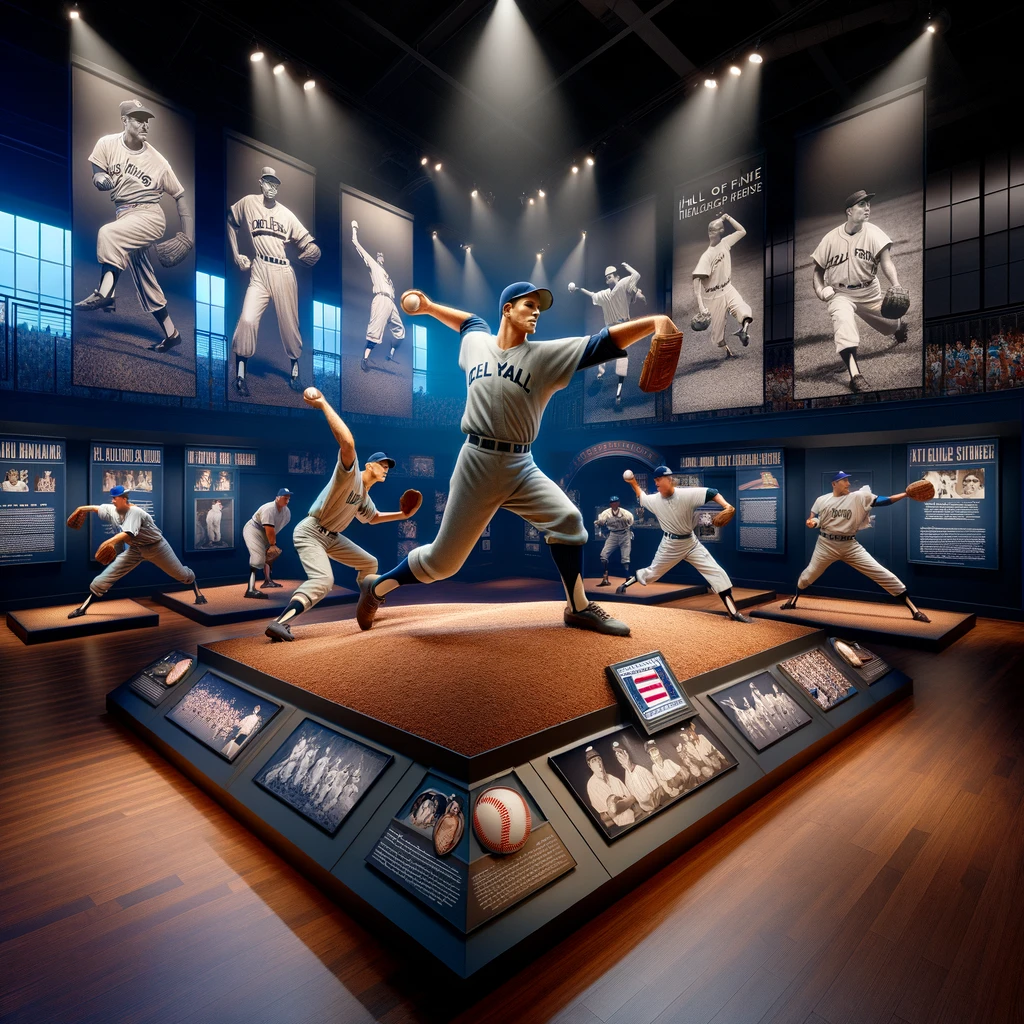
The Baseball Hall of Fame, located in Cooperstown, New York, is a shrine to the greatest players, managers, and executives in baseball history. Among its inductees, pitchers hold a special place, having shaped the game with their skill, strategy, and sometimes sheer force of will. This article delves into the careers of some of the most remarkable pitchers in the Hall of Fame, exploring what made them stand out and how they left an indelible mark on baseball.
Early Days: The Pioneers of Pitching
In the early days of baseball, pitchers like Cy Young set the standard. Young, whose career spanned from 1890 to 1911, remains the all-time leader in wins (511) and complete games (749). His dominance led to the creation of the Cy Young Award, given annually to the best pitchers in the Major Leagues.
Another early star was Walter Johnson, nicknamed “The Big Train.” Johnson’s fastball was legendary, and his 3,509 strikeouts were a record for over 50 years. His gentle nature off the field contrasted sharply with his fearsome presence on the mound, a testament to the diverse personalities that have dominated pitching through the years.
The Golden Age: Pitchers Who Defined an Era
The mid-20th century saw a golden age of pitchers, with names like Sandy Koufax and Bob Gibson dominating the headlines. Koufax’s career, though brief, was meteoric. His mastery of the curveball and fastball led to four no-hitters, including a perfect game. He was a three-time Cy Young Award winner and played a pivotal role in the Dodgers’ success in the 1960s.
Bob Gibson, known for his intimidating pitching style and competitive nature, dominated during the late 1960s. His 1.12 ERA in 1968 is one of the most impressive single-season performances in baseball history. This performance was so dominant that it led to a lowering of the pitcher’s mound to rebalance the game.
Modern Masters: Pitchers Who Redefined the Game
The late 20th and early 21st centuries saw pitchers who not only dominated but also redefined the game. Greg Maddux, known for his precision and control, won four consecutive Cy Young Awards from 1992 to 1995. His ability to outthink hitters made him one of the most effective pitchers of his era.
Pedro Martinez, another modern legend, combined power with precision. His peak years, particularly with the Boston Red Sox, were marked by an overwhelming dominance. His 1999 and 2000 seasons are widely regarded as two of the best pitching seasons in modern baseball history.
The Craft of Pitching: What Makes a Hall of Fame Pitcher
While statistics are crucial in evaluating a pitcher’s career, they tell only part of the story. Hall of Fame pitchers often possess intangible qualities like leadership, the ability to perform under pressure, and a deep understanding of the game. They have signature styles, pitches, or approaches that set them apart from their peers.
For instance, Mariano Rivera, the first player ever to be unanimously elected to the Hall of Fame, revolutionized the role of the closer. His cutter, a pitch that seemed to defy physics, became a symbol of late-inning inevitability in baseball.
Impact Beyond the Field
Hall of Fame pitchers have not only excelled in the game but have also left an impact beyond the field. Many have been ambassadors for baseball, helping to grow the game globally. Figures like Nolan Ryan, who played an astounding 27 seasons and struck a record 5,714 batters out, have also been influential in post-playing careers, contributing to the sport’s administration and development.
Challenges and Controversies
The road to the Hall of Fame is not always smooth. Pitchers like Roger Clemens and Curt Schilling have had stellar careers but have also been embroiled in controversies that have impacted their legacies. The Hall of Fame’s role in acknowledging these complexities adds depth to its historical significance.
The Future of Hall of Fame Pitching
As baseball continues to evolve, so does the art of pitching. New strategies, analytics, and a deeper understanding of player health are shaping the future of pitching. Current stars like Clayton Kershaw and Max Scherzer may well be the future inductees, carrying on the legacy of the greats before them.

The Role of Innovation and Adaptation
Hall of Fame pitchers are often remembered not just for their achievements, but also for their ability to innovate and adapt. For example, Lefty Grove, who played primarily for the Philadelphia Athletics and Boston Red Sox, was known for his blazing fastball in his early years. However, as he aged and his velocity declined, Grove adapted by developing a devastating curveball, extending his dominance in the league.
Similarly, Warren Spahn, who spent most of his career with the Boston and Milwaukee Braves, is remembered for his remarkable longevity and adaptability. His ability to change his pitching style allowed him to continue playing effectively into his 40s, a rare feat in the world of professional sports.
The Influence of the Hall of Fame Pitchers on Today’s Game
The legacy of Hall of Fame pitchers extends beyond their career statistics and into the very fabric of today’s game. They have influenced generations of pitchers who have studied and emulated their techniques, mental approaches, and training regimens. The rise of specialized pitching roles, such as the closer and setup man, can be partly attributed to the strategies and success of Hall of Fame pitchers.
Moreover, the emphasis on pitching analytics and biomechanics in the modern game owes a debt to the trailblazing approaches of past legends. The meticulous study of pitching mechanics, spin rates, and pitch selection can be seen as a continuation of the innovative spirit of these greats.
The Hall of Fame Debate: Statistics vs. Impact
One of the ongoing debates in baseball circles is what criteria should be used for Hall of Fame induction. While statistics like ERA, strikeouts, and wins are often cited, there’s a growing argument for considering a player’s impact on the game. This includes their ability to draw fans, their performance in crucial games, and their overall influence on their team’s success.
For instance, pitchers like Jack Morris, who may not have the most overwhelming career statistics, are revered for their clutch performances in key games, including World Series appearances. This raises the question of whether the Hall of Fame should merely be a reflection of statistical dominance or a broader recognition of a player’s overall contribution to the sport.
Preserving the Legacy
The Baseball Hall of Fame not only honors these great pitchers but also serves as a repository of baseball’s history. It preserves artifacts, memorabilia, and stories, allowing fans to connect with the game’s past. For aspiring players and enthusiasts, the Hall of Fame offers an inspirational journey through the careers of the greatest pitchers who have ever played the game.
Conclusion
As we reflect on the careers of the greatest pitchers in the Hall of Fame, we are reminded of the rich tapestry that is baseball history. These players were not just masters of their craft but also innovators, leaders, and icons. Their legacies continue to shape the game, inspiring new generations of players and fans alike. The Baseball Hall of Fame stands not just as a tribute to individual greatness, but as a celebration of the enduring spirit of baseball.
Frequently Asked Questions
1. What is the significance of the Baseball Hall of Fame for pitchers?
The Baseball Hall of Fame is the ultimate honor for any baseball player, serving as a testament to their career achievements. For pitchers, it holds immense significance as it recognizes their impact on the game, encapsulating their stellar performances, consistency, and leadership on the field. In the annals of baseball history, pitchers like Cy Young, Walter Johnson, and Sandy Koufax have set benchmarks with their legendary performances, securing their places in the Hall of Fame as a symbol of their contribution and excellence in the sport.
The inclusion in the Hall of Fame not only honors their statistical accomplishments, such as wins, strikeouts, and earned run averages but also acknowledges their strategic mastery and emotional resilience. For many pitchers, reaching Cooperstown is a validation of their hard work, their ability to dominate opposing batters, and their influence in leading their teams to victory. It’s also about their ability to perform under pressure, influence the dynamics of the game, and inspire future generations of pitchers.
Moreover, the Hall of Fame serves as an educational pillar, highlighting the evolution of pitching techniques and strategies over time. Enthusiasts and aspiring players alike can delve into the archives to learn from these legends, discover the nuances of pitching, and gain inspiration from their stories of determination and passion for baseball.
2. What qualities do Hall of Fame pitchers generally possess?
Pioneering baseball pitchers enshrined in the Hall of Fame often share a combination of several qualities, each contributing to their legendary status. One of the most essential traits is *dominance*—the ability to consistently overpower hitters and change the course of the game single-handedly. Pitchers like Nolan Ryan exemplified this with their fastballs and commanding presence on the mound.
*Consistency* is another key attribute. Hall of Fame pitchers often maintained high levels of performance not just for a few years but throughout enduring careers. They demonstrated reliability and resilience across seasons, amassing statistics indicative of sustained excellence, such as low ERAs and high strikeout counts. Cy Young, with his unprecedented number of wins, showcased extraordinary longevity and stability.
*Craft and Strategy* play a significant role as well. Many Hall of Fame pitchers were not just powerhouses but also cerebral athletes who used their wits to outthink the batters. The strategic manipulation of pitches and reading of the opposing lineup were hallmarks of pitchers like Greg Maddux, whose precision and control bewildered hitters. *Leadership and Influence* on the field and in the clubhouse are indispensable qualities. These pitchers often inspired teammates, showing resilience and a fighting spirit that galvanizes entire teams. Their ability to perform under pressure, especially in critical games or post-season plays, often helped secure pivotal victories.
Furthermore, Hall of Fame pitchers are known for their *adaptability*. Over the span of their careers, they evolved by learning new pitches, adjusting to rule changes, and adapting to varying team strategies to stay relevant and effective. These pitchers left an indelible impression on baseball, often redefining the position with their unique skills and approaches.
3. How have the roles and techniques of Hall of Fame pitchers evolved over time?
Baseball, much like any other sport, evolves over time, and with it, the roles and techniques of the pitchers. In the early days, pitchers were mainly relied upon for their durability and stamina, as starting pitchers often completed games themselves. Pioneers such as Christy Mathewson and Walter Johnson were revered for throwing complete games with remarkable regularity compared to today’s standards. As time progressed, the specialization within pitching roles began to take shape. Relief pitchers were introduced, necessitating finesse and exceptional control in high-pressure, short-inning situations.
With the advent of advanced statistical analysis and evolving game strategies, Hall of Fame pitchers adapted by adding variety to their repertoire. Pitching evolved from mere speed and power to include an arsenal of pitch types—curveballs, sliders, changeups, and split-finger pitches. These adjustments were marked by iconic players like Sandy Koufax, whose devastating curveball became a model of pitch-specific excellence.
As more data became available, pitchers paid greater attention to tendencies, batter weaknesses, and maximizing their efficiency with each pitch. This analysis and adaptation were pivotal as seen in the careers of pitchers like Pedro Martínez and Mariano Rivera, who became known for their strategic approach in exploiting opponents’ weaknesses.
Their roles on the mound saw a transition as well; durability and pacing became factors in a pitcher’s longevity. Techniques such as conserving power for crucial moments and understanding biomechanics better helped prolong careers and enhance performance. These multifaceted changes redefined what it meant to be a Hall of Fame pitcher, requiring a blend of mental acumen, physical prowess, and strategic adaptability.
4. Can you provide an example of a pitcher whose career was transformed by a specific event or technique, impacting their Hall of Fame legacy?
Without a doubt, one of the most illustrative examples of a career transformed is that of Sandy Koufax. Koufax’s early career was marked by inconsistency; his incredible raw talent was evident in his blazing fastball, yet he struggled with control and thus effectiveness. However, his career took a significant turn when he adopted a more controlled pitching technique and developed a killer curveball that became his signature move. By refining his mechanics and increasing his control, Koufax transformed into one of the most dominant pitchers in baseball history.
This pivotal transformation escalated Koufax’s performance to new heights, earning him multiple Cy Young awards and a coveted spot in the Hall of Fame. Despite his career being relatively short due to arthritis, his mastery during his peak redefined the late 1950s and early 1960s pitching standards. His historic performances in crucial games, particularly in the World Series, spotlighted his ability to deliver successive outstanding performances, establishing him firmly in baseball lore.
Koufax’s legacy in the Hall of Fame is cemented not only by his statistics but by his resilience to overcome early career challenges and adapt with precision and power, serving as motivation for countless aspiring pitchers.
5. What impact do Hall of Fame pitchers have on modern baseball?
The influence Hall of Fame pitchers have on the modern game of baseball is multifaceted and profound. Firstly, they set benchmarks for what pitching excellence looks like, giving current and aspiring pitchers standards to strive toward. The legendary careers of Hall of Fame pitchers serve both as a source of inspiration and a blueprint of the attributes needed for success. Modern pitchers study footage and analyses of these greats to improve their own game, incorporating techniques and strategies that have been proven effective across generations.
Additionally, Hall of Fame pitchers contribute to a rich narrative culture within baseball—stories of legendary games, impossible comebacks, and groundbreaking achievements that capture the imagination of fans and players alike. Players like Bob Gibson, who dominated hitters with an intimidating presence and unmatched skill, create a mystique that has enriched the sport’s history.
In practical terms, the evolution of certain pitches and game strategies directly draws from the innovations brought by these all-time greats. Pedro Martínez’s changeup technique, for example, has inspired countless pitchers to perfect their off-speed pitches, while Mariano Rivera’s dominant cutter has become a sought-after skill in the modern game. Analytics have taken a prominent place in player development and game strategy, and the ingenuity of Hall of Fame pitchers in adapting and crafting their pitch arsenals informs ongoing analysis and evolution.
Finally, their continued involvement in the sport, whether through coaching, broadcasting, or mentorship, impacts how the game is approached today. By passing down knowledge and inspiring the next generations, Hall of Fame pitchers ensure that the sport grows and prospers while honoring the rich traditions and legends of the past.