
Baseball, America’s pastime, has a rich tapestry of teams and legends. Among these, the Seattle Mariners stand out, not just for their achievements on the field, but for their profound impact on the cultural and sporting landscape of the Pacific Northwest. This article delves into the history, achievements, and cultural significance of the Seattle Mariners, a team that has woven itself into the fabric of Seattle and beyond.
The Birth of a Franchise
The story of the Seattle Mariners begins in the late 1970s. After a legal battle for a Major League Baseball (MLB) team, Seattle was granted a franchise, and the Mariners played their inaugural game on April 6, 1977. Although their early years were marked by struggles on the field, the foundation was being laid for a team that would capture the hearts of millions.
Building the Team
The 1980s and early 1990s were a period of growth and development for the Mariners. Key draft picks and trades began to shape the team’s future. In 1989, the arrival of Ken Griffey Jr., a player who would become an icon of the sport, signaled a turning point. His charisma, talent, and trademark smile brought excitement and hope to the fans.
The 1995 Miracle Season
The 1995 season stands as a watershed moment in Mariners’ history. Faced with the threat of relocation and lagging behind in the standings, the team orchestrated one of the most remarkable comebacks in baseball history. Led by stars like Griffey, Edgar Martinez, and Randy Johnson, the Mariners not only clinched a playoff berth but also advanced to the American League Championship Series. This season, immortalized by the slogan “Refuse to Lose,” reignited the passion for baseball in Seattle and played a pivotal role in securing funding for a new ballpark.
Safeco Field: A New Home
In 1999, the Mariners moved to Safeco Field (now T-Mobile Park), a state-of-the-art stadium that became a symbol of the team’s resurgence and commitment to Seattle. With its retractable roof and stunning views of the Seattle skyline, Safeco Field offered fans a unique baseball experience and became a beloved landmark in the city.
The 2001 Record-Breaking Season
The 2001 season remains one of the most remarkable in MLB history, with the Mariners tying the record for most wins in a single season (116). This extraordinary achievement showcased the team’s talent and depth, with players like Ichiro Suzuki, who became the first Japanese position player in MLB, making a significant impact. This season, though ending in playoff disappointment, further cemented the Mariners’ place in baseball lore.
Community Impact and Cultural Significance
Beyond the field, the Mariners have played a significant role in the community. The team’s outreach programs, charity work, and efforts to promote baseball among youth have endeared them to the Pacific Northwest. Players like Felix Hernandez, known for his philanthropy and community involvement, have been pivotal in these efforts.
The Mariners’ impact extends to cultural significance as well. The team has been instrumental in popularizing baseball in the Pacific Northwest, creating a loyal fan base that spans generations. The Mariners have also played a role in promoting diversity in the sport, with players from different backgrounds and countries contributing to the team’s success.
Challenges and the Future
Despite their achievements, the Mariners have faced challenges, including playoff droughts and the quest for a World Series title. However, the team’s resilience and commitment to building a competitive roster continue to give fans hope for the future.
The Mariners’ farm system and focus on developing young talent suggest a bright future. With a commitment to excellence and a deep connection to their community, the Seattle Mariners are poised to continue their legacy in the Pacific Northwest.
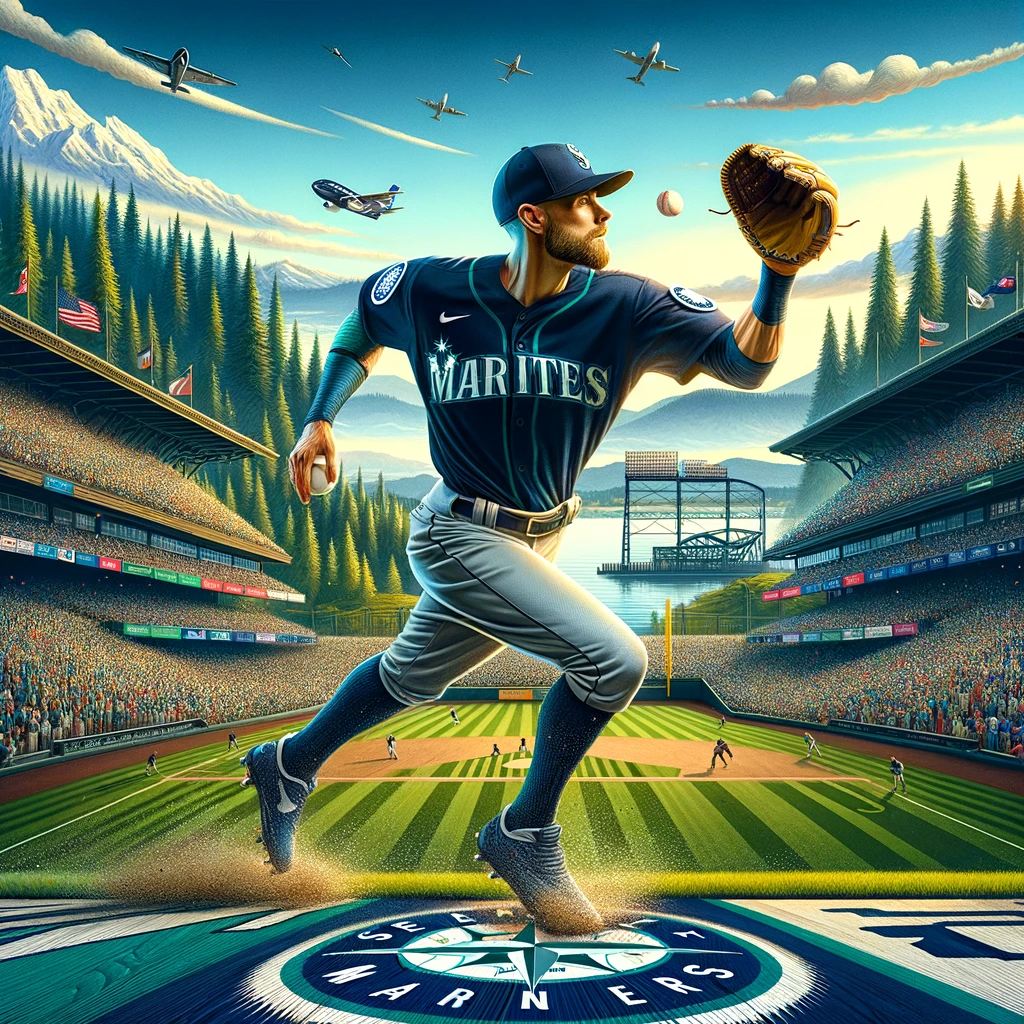
The Emergence of Star Players
The Seattle Mariners’ journey in the MLB is marked by the emergence of iconic players who not only elevated the team’s performance but also etched their names in the annals of baseball history. Perhaps the most celebrated among them is Ken Griffey Jr., whose arrival in 1989 signaled a new era for the Mariners. Griffey, known for his remarkable hitting prowess and exceptional fielding skills, became the face of the franchise. He was instrumental in leading the team to its first postseason appearance in 1995, a moment that remains one of the most defining in Mariners’ history.
Equally significant was the contribution of Edgar Martinez, a designated hitter and seven-time All-Star, known for his consistent batting and clutch hitting. Martinez’s double in the 1995 American League Division Series, famously known as “The Double,” is a highlight reel staple that immortalized him in Mariners lore. His excellence at the plate led to the MLB renaming the Designated Hitter of the Year Award in his honor.
Randy Johnson, another Mariners legend, brought a fearsome presence to the pitching mound. Known as “The Big Unit,” Johnson’s fastballs and sliders intimidated batters across the league. His tenure with the Mariners, marked by multiple Cy Young Awards, solidified his position as one of the greatest pitchers in baseball history.
The Turn of the Century and Record-Breaking Achievements
As the new millennium dawned, the Mariners continued to build on their legacy. The 2001 season remains a landmark in the team’s history, as they tied the major league record for most wins in a single season with 116 victories. This extraordinary feat was accomplished under the leadership of manager Lou Piniella and fueled by the talents of players like Ichiro Suzuki, Bret Boone, and Mike Cameron. Ichiro, in particular, made a sensational debut in MLB in 2001, capturing both the American League MVP and Rookie of the Year honors, a rare double achievement.
Challenges and the Quest for a Championship
Despite these successes, the Seattle Mariners have faced their share of challenges, particularly in their quest for a World Series title. The team has seen periods of rebuilding, with new talents being nurtured to bring the Mariners back to the forefront of baseball competitiveness. The management’s commitment to developing a strong farm system and making strategic acquisitions has been evident in their efforts to build a well-rounded team capable of competing at the highest level.
Community and Cultural Impact
Beyond the field, the Seattle Mariners have made a significant impact on the Pacific Northwest community. The team has been actively involved in various charitable endeavors, focusing on youth development, education, and health. Their commitment to the community has helped forge a strong bond with the fans, making the Mariners an integral part of the region’s cultural fabric.
The Mariners’ influence extends to the international stage as well, particularly in bridging connections with Asian baseball communities. The signing of players like Ichiro Suzuki from Japan and their engagement with Asian markets have not only brought a global fan base but also highlighted the Mariners’ role in promoting cultural exchange through sports.
The Future of the Franchise
As the Seattle Mariners continue to evolve, the focus remains on securing that elusive World Series championship. With a blend of seasoned veterans and promising young talents, the Mariners are poised to write the next chapter in their storied history. The team’s resilience and determination, coupled with the unwavering support of their fans, keep the hope alive for a future filled with triumphs and celebrations.
Conclusion
From their inception in 1977 to the present day, the Seattle Mariners have carved out a unique legacy in the world of baseball. Through ups and downs, they have captivated fans with moments of brilliance, heart-stopping plays, and a relentless pursuit of excellence. As they continue their journey, the Mariners not only represent the spirit of Seattle but also stand as a testament to the enduring appeal of America’s pastime. The Seattle Mariners, with their rich history and bright future, are truly a symbol of resilience and hope in the Pacific Northwest.