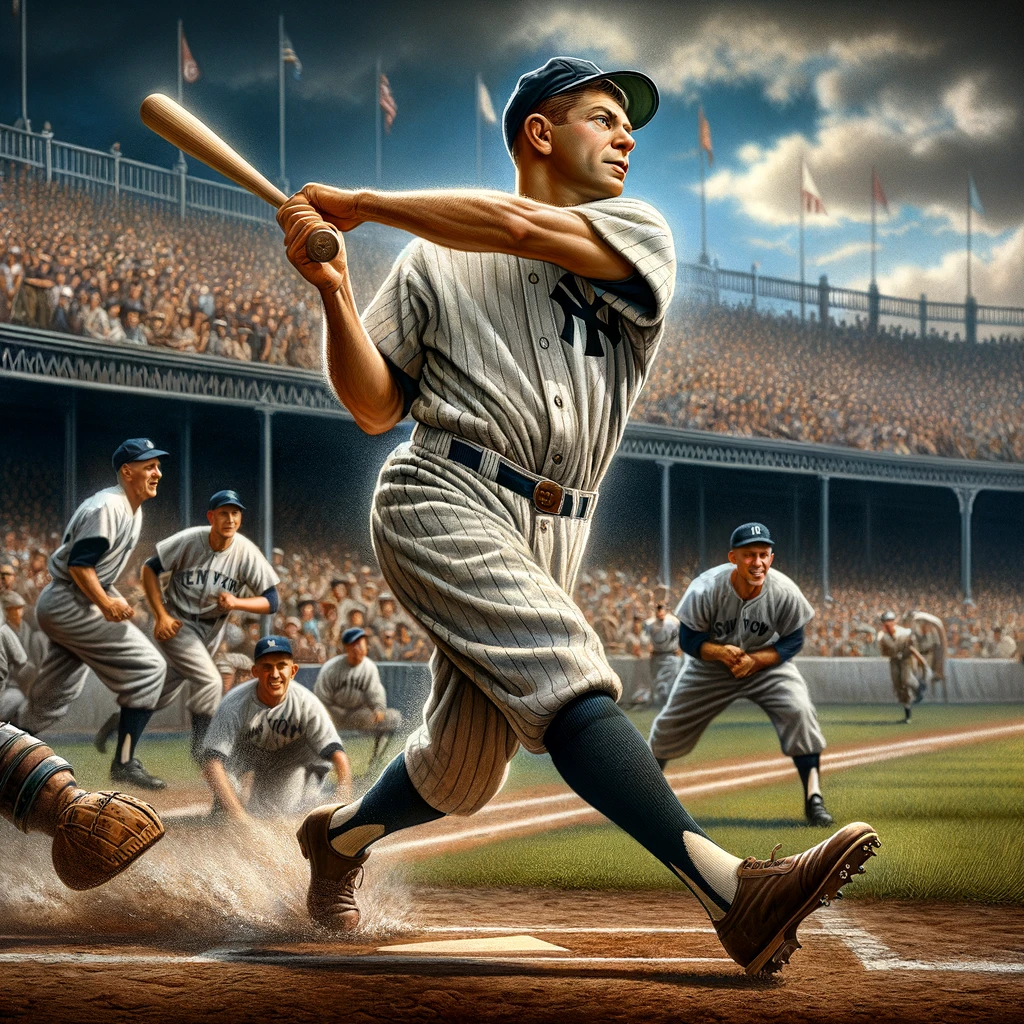
Early Years and Rise to Fame
Born on October 20, 1931, in Spavinaw, Oklahoma, Mickey Charles Mantle, known as the “Commerce Comet,” emerged from humble beginnings to become one of the most legendary figures in baseball history. Mantle’s journey began in the small mining town of Commerce, Oklahoma, where his father, a lead miner and semi-professional baseball player, introduced him to the game. Recognizing his son’s natural talent, Mantle’s father instilled in him a love for baseball, particularly for the New York Yankees.
Mantle’s high school years showcased his extraordinary athletic abilities, not just in baseball but in football as well. However, a football injury almost derailed his career before it began. Despite this setback, his talent on the baseball diamond was undeniable. At 17, Mantle signed with the Yankees and quickly moved up the ranks in their farm system.
Breaking into the Majors
Mickey Mantle made his Major League debut on April 17, 1951. His early days with the Yankees were challenging, and he briefly returned to the minor leagues. However, Mantle’s resilience, raw power, and speed soon became apparent. In 1952, he began to display the form that would make him a legend, hitting 23 home runs and helping lead the Yankees to a World Series victory.
Mantle’s switch-hitting ability was a significant advantage. He could hit with power from both sides of the plate, a rarity in baseball. This versatility made him a formidable opponent for any pitcher.
Triumph and Challenges
Throughout the 1950s, Mantle solidified his status as one of baseball’s brightest stars. He won the Triple Crown in 1956, leading the American League in batting average, home runs, and runs batted in (RBIs). That same year, he was named the American League’s Most Valuable Player (MVP), an honor he would earn two more times in his career.
Mantle’s combination of power and speed was unparalleled. He was known for hitting mammoth home runs, some of which are still talked about today. His speed on the bases was equally impressive, often turning singles into doubles and doubles into triples.
However, Mantle’s career was not without challenges. He struggled with injuries, particularly to his knees, which he had injured in high school and again in his first World Series. Additionally, his off-field life was marked by personal struggles, including a well-documented battle with alcoholism.
The 1960s and Beyond
As the 1960s dawned, Mantle remained a key player for the Yankees, although injuries continued to hamper his performance. He played a pivotal role in the 1961 season, one of the most memorable in baseball history, as he and teammate Roger Maris chased Babe Ruth’s single-season home run record. Mantle finished the season with 54 home runs, while Maris broke the record with 61.
Mantle’s career began to wind down in the late 1960s. His final season came in 1968, and he retired with 536 home runs, at the time the third-highest total in baseball history. His career batting average was .298, and he had amassed over 1,500 RBIs and nearly 2,000 runs scored.
Legacy and Impact
Mickey Mantle’s impact on baseball is immeasurable. He was a 20-time All-Star and won seven World Series titles with the Yankees. His power and speed combination redefined what was possible for a baseball player. Mantle was inducted into the Baseball Hall of Fame in 1974, receiving 88% of the vote.
Beyond his statistical achievements, Mantle’s charisma and the dramatic nature of his play captured the imagination of fans. He was a symbol of the post-war American dream, a small-town boy who reached the pinnacle of sports success. His legacy continues to inspire new generations of baseball players and fans alike.

Mantle’s Influence on Baseball Culture
Mickey Mantle’s influence extended beyond his statistical achievements and accolades. He became a cultural icon, embodying the spirit of baseball during a transformative era in American history. His fame coincided with the golden age of television, allowing his exploits on the field to be witnessed by a wider audience than ever before. Mantle’s image was everywhere, from baseball cards to advertisements, making him a household name.
His influence also extended to inspiring a generation of young players. Mantle’s style of play, combining power and speed with a hint of recklessness, captured the imagination of countless youngsters who aspired to emulate his heroics on the field. His switch-hitting prowess encouraged many young players to learn batting from both sides, forever changing the approach to hitting in baseball.
Overcoming Personal Struggles
Mantle’s personal struggles, particularly later in his life, added a layer of humanity to his legend. He dealt openly with alcoholism and its impact on his life and family. In doing so, he became a symbol of struggle and redemption, showing that even heroes have flaws and challenges to overcome. Mantle’s candidness about his struggles helped change the perception of athletes from untouchable icons to relatable human beings.
In his later years, Mantle became a vocal advocate for organ donation, following his liver transplant in 1995. His openness about his illness and the consequences of his lifestyle choices brought significant attention to the importance of organ donation and the dangers of alcohol abuse.
The Legacy of Number 7
Mantle’s number 7 jersey became synonymous with greatness in baseball. The New York Yankees retired his number in 1969, ensuring that no Yankee would ever again wear it. This act solidified his place in the pantheon of Yankee greats, a team known for its storied history and legendary players.
Mantle’s impact on the Yankees’ franchise cannot be overstated. He was a key figure in one of the most successful eras in the team’s history, helping them to secure numerous pennants and World Series titles. His legacy is a significant part of the mystique and allure of the Yankees, a team that has become a global symbol of baseball excellence.
Remembering Mickey Mantle
Today, Mickey Mantle is remembered not just for what he achieved on the baseball field, but for who he was as a person. His story is one of extraordinary talent, resilience in the face of adversity, and personal redemption. The Mickey Mantle World Series, an annual youth baseball tournament, is named in his honor, ensuring that his legacy continues to inspire young players.
Mantle’s memorabilia remains highly sought after by collectors, and his rookie cards are among the most valuable in the sports collectible market. His autograph, his image, and stories of his exploits are cherished by baseball fans around the world.
Conclusion
Mickey Mantle, the Commerce Comet, remains an enduring figure in the history of baseball. His remarkable combination of power and speed, his resilience in overcoming personal and professional challenges, and his impact both on and off the field, secure his place as one of the greatest to ever play the game. Mantle’s story transcends sports, offering lessons about the human spirit, the pursuit of excellence, and the power of redemption. His legacy lives on, not just in the record books, but in the hearts of baseball fans everywhere.