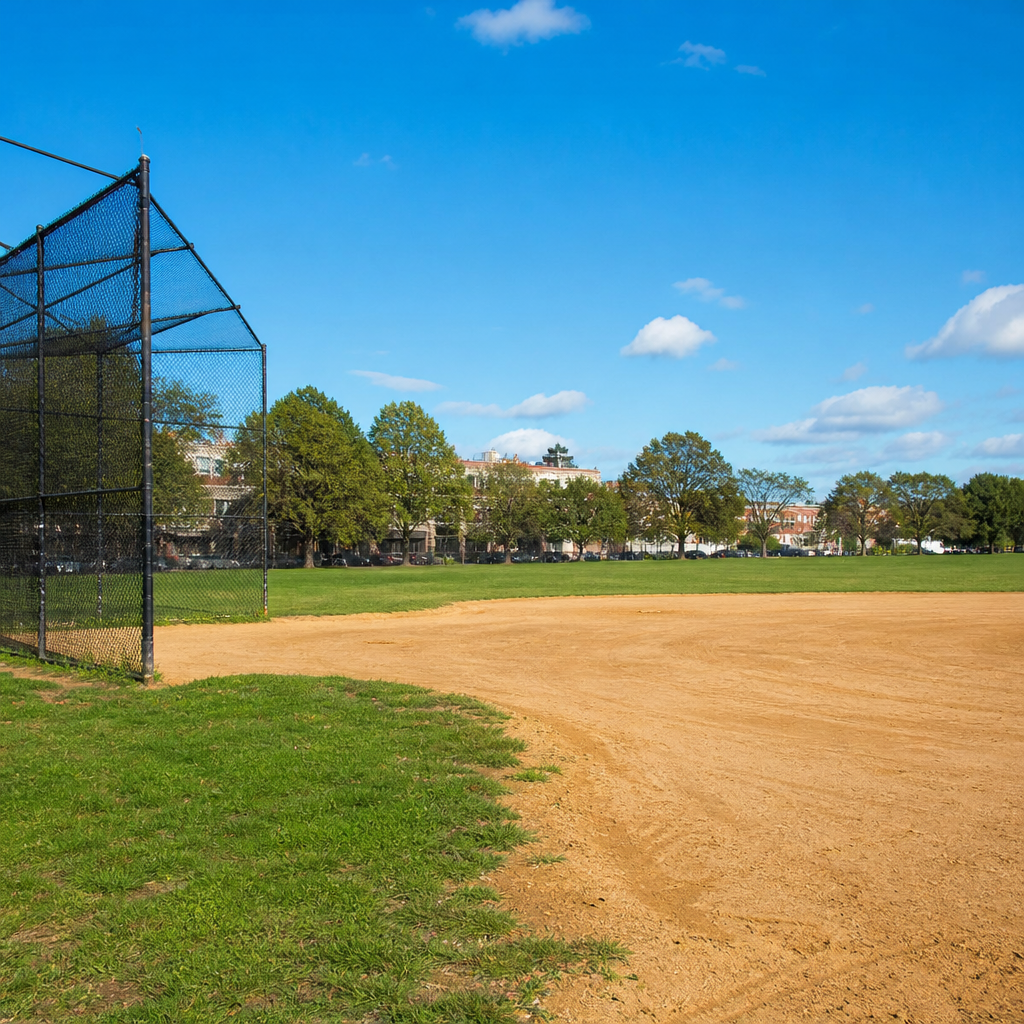
Washington Park in Brooklyn tells the story of professional baseball before the Dodgers became inseparable from Ebbets Field. Long before the better known concrete-and-steel park opened in 1913, three different ballparks in Brooklyn carried the name Washington Park, and together they trace the rough, improvised, and fast-changing years of nineteenth- and early twentieth-century major league baseball. For anyone studying lost MLB ballparks, Washington Park matters because it was not one stadium but a sequence of homes shaped by fires, street grids, transit lines, ownership disputes, and the rapid growth of the game itself. In practical terms, Washington Park usually refers to the ballparks used by the Brooklyn club that later became the Dodgers, but the exact park depends on the year in question.
That distinction is essential. Historians generally identify Washington Park I, used in the American Association era beginning in 1884; Washington Park II, the better known National League park that opened in 1898; and Washington Park III, a temporary stop used after Ebbets Field opened but was not yet fully ready for all games. Some sources also treat the intervening Eastern Park, used from 1891 through 1897, as part of the same lineage because it filled the same role in the club’s evolution. I have found that many fans know the name Washington Park but not the chronology, which can make early Brooklyn baseball seem more confusing than it really is. Once the sequence is clear, the larger history of lost ballparks also becomes easier to understand.
Washington Park matters beyond Brooklyn because it captures why so many early major league parks disappeared. Unlike later signature venues built as enduring monuments, nineteenth-century ballparks were often vulnerable assets on valuable urban land. They were made largely of wood, exposed to fire risk, constrained by trolley routes and adjacent industry, and frequently outgrown by teams chasing larger crowds. In that sense, Washington Park serves as a hub topic for lost MLB ballparks: it connects to themes that also shaped the fates of the Polo Grounds, South End Grounds, West Side Park, Robison Field, Hilltop Park, and Baker Bowl. Each park was local and unique, yet the underlying pressures were shared across the sport.
Brooklyn’s parks also reveal how a ballclub’s identity can survive repeated changes of address. Before “Dodgers” became the permanent nickname, the club was called the Atlantics, Grays, Bridegrooms, Grooms, Superbas, and Robins, among other labels. The parks changed, the names changed, and even the league landscape changed, but the franchise endured. That continuity makes Washington Park especially valuable for readers exploring iconic ballparks from a historical angle. A lost ballpark is never just a missing structure; it is evidence of how teams, neighborhoods, and cities developed together. Understanding Washington Park is therefore one of the best entry points into the broader subject of lost MLB ballparks.
The Washington Park sequence and why the name causes confusion
The simplest way to understand Washington Park is to think of it as a family name applied to multiple sites rather than a single famous building. Washington Park I stood in the Red Hook and Gowanus area, bounded roughly by Third Street, Fourth Avenue, Fifth Street, and Third Avenue, and became the home of the Brooklyn club when it joined the American Association in 1884. The location was close to transit and working-class neighborhoods, which fit the business logic of nineteenth-century baseball. Owners needed convenience more than grandeur. The original grounds were wooden, compact, and characteristic of their era: practical, busy, and vulnerable.
The club left that first Washington Park after the 1890 season and moved to Eastern Park in 1891, partly because the old site had become inadequate and because ownership wanted a larger and more profitable facility. Eastern Park, located in East New York near the Long Island Rail Road terminal at Broadway, was ambitious but flawed. It seated more fans, yet it sat too far from the team’s traditional fan base in western Brooklyn. Attendance suffered despite the club’s strong teams. That lesson is one I have seen repeated in many ballpark histories: size alone does not guarantee success if the site does not match fan travel patterns.
In 1898 the club corrected course by returning west and opening Washington Park II at Third Avenue, First Street, Third Street, and Fourth Avenue, near the old grounds. This is the Washington Park most often pictured in surviving photographs. It hosted National League baseball from 1898 through 1912 and saw stars such as Willie Keeler, Joe Kelley, Nap Rucker, and Zack Wheat. It also hosted the 1903 and 1904 Brooklyn clubs and the 1909 pennant winner managed by Wilbert Robinson’s predecessor, Ned Hanlon having earlier shaped the franchise’s championship standard in the 1890s. If a reader asks which Washington Park directly preceded Ebbets Field, this second park is the main answer.
Washington Park III is more transitional. When Ebbets Field opened in April 1913, construction was incomplete, and some early games were shifted to another nearby field sometimes identified as Washington Park. It was not the central chapter in the franchise’s history, but it explains why some records mention a third park. The broader point is that Brooklyn baseball did not move in one neat line from one finished home to the next. It lurched, adapted, and improvised, exactly as other early major league franchises did.
How Washington Park I reflected nineteenth-century baseball economics
Washington Park I belonged to a period when professional baseball clubs were still defining what a major league operation looked like. The American Association, founded in 1882 as a rival to the National League, targeted urban working-class audiences with lower ticket prices and a more flexible business model. Brooklyn entered that environment in 1884, and its ballpark reflected the economics. Owners emphasized accessibility and quick construction. Wooden grandstands could be erected comparatively fast and altered as demand changed, but they rarely offered the permanence associated with later landmark parks.
The first park quickly became home to a successful club. Brooklyn won the American Association pennant in 1889 and then the 1890 championship of the Players’ League-linked postseason arrangement against Louisville after an earlier world series style contest. The important point is that major moments in franchise history happened before Ebbets Field and before the National League years most casual fans remember. When I study old attendance patterns and newspaper descriptions, what stands out is how lively and improvised the setting was. Spectators dealt with limited amenities, less orderly circulation, and sightline compromises that would be unacceptable in a later era. Yet the park was viable because expectations were different and baseball’s live experience was still novel.
Fire was a constant danger in these wooden parks, and Washington Park I did not escape that reality. A blaze in November 1889 heavily damaged the facility, forcing reconstruction. This pattern was common across nineteenth-century baseball. Boston’s South End Grounds burned more than once, and clubs routinely rebuilt because timber was cheaper than masonry even though it carried obvious risk. The cycle of construction, damage, and rebuilding is one of the clearest reasons so many lost MLB ballparks vanished with limited physical trace.
Eastern Park, the missing link between the two main Washington Parks
No account of Washington Park is complete without Eastern Park, even though it carried a different name. From 1891 through 1897 it served as the club’s principal home, and it demonstrates how location can outweigh architecture. Team president Charles Byrne and ownership believed a larger ballpark would unlock greater revenue, and Eastern Park was indeed more expansive. The challenge was geography. Positioned in East New York, it required longer travel from the club’s established western Brooklyn audience, and transit convenience was not strong enough to overcome that disadvantage for everyday attendance.
The irony is that the team often performed well during this stretch. Under Ned Hanlon, Brooklyn became one of baseball’s best clubs, winning National League pennants in 1899 and 1900 shortly after leaving Eastern Park, while the organizational foundation had been built during the move east. Eastern Park therefore shows that on-field quality and ballpark success are related but not identical. A winning team can still underperform at the gate if the ballpark experience is inconvenient. Modern franchises still confront this principle when evaluating suburban versus urban siting, parking versus transit, and the commercial district around the stadium.
Eastern Park’s inclusion in this hub matters because many lost MLB ballparks disappeared not because they were architecturally weak, but because they were strategically misplaced. Hilltop Park in Manhattan faced similar limitations when the Yankees later sought the Bronx. Robison Field in St. Louis struggled with neighborhood change and competition. Ballparks die from geography as often as from structural decay.
Washington Park II and the bridge to Ebbets Field
Washington Park II opened in 1898 and finally gave Brooklyn a better-balanced solution: a return to the club’s traditional base with a site still shaped by urban constraints. The park was irregular, tightly fitted into its block, and bordered by industry and rail infrastructure. Contemporary accounts noted that a pond in center field at the old site had once created muddy conditions, a reminder that many early parks occupied marginal land considered unsuitable for more prestigious uses. That was common in pre-zoning urban baseball. Teams took what was available, then tried to turn awkward parcels into revenue-producing entertainment grounds.
This second Washington Park hosted Brooklyn through the final pre-Ebbets era. It saw the emergence of the “Trolley Dodgers” nickname, linked to the streetcar-dense borough environment through which fans traveled to games. It also witnessed the game as dead-ball strategy matured: bunting, hit-and-run plays, stolen bases, and pitching depth mattered in a park where dimensions and field conditions could influence outcomes. Because detailed architectural drawings are limited, historians rely on photographs, Sanborn maps, newspaper reports, and surviving statistical context to reconstruct how the park played. That method—blending cartography, journalism, and baseball records—is central to serious ballpark history.
| Park | Primary Years | League Context | Why It Mattered | Why It Was Replaced |
|---|---|---|---|---|
| Washington Park I | 1884–1890 | American Association, then transition period | First major league home of the Brooklyn franchise | Fire damage, limited capacity, need for a larger facility |
| Eastern Park | 1891–1897 | National League era begins | Larger interim park; organizational bridge to later success | Poor location for core fan base and disappointing attendance |
| Washington Park II | 1898–1912 | Established National League home | Main predecessor to Ebbets Field; site of the early Dodgers identity | Small scale, aging design, and demand for a modern fireproof park |
| Washington Park III | 1913 temporary use | Overlap with Ebbets Field opening | Short-term overflow and transition site | Ebbets Field became the permanent home |
The move from Washington Park II to Ebbets Field was not simply an upgrade in aesthetics. It represented a strategic shift toward permanence, fire resistance, and controlled expansion. By 1913, reinforced concrete and steel had become the standard for ambitious urban ballparks, as seen at Shibe Park in Philadelphia, Forbes Field in Pittsburgh, and Fenway Park in Boston. Brooklyn could no longer rely on a modest wooden-era facility if it wanted to compete commercially and symbolically. Ebbets Field was the answer, but Washington Park II made that answer necessary.
What Washington Park teaches about lost MLB ballparks as a whole
As a hub for the lost MLB ballparks topic, Washington Park offers a framework readers can apply across the country. First, ballparks disappear for clustered reasons: fire, land value, poor siting, changing building standards, and rising expectations for comfort and capacity. Second, the stadium itself cannot be separated from transportation. The expansion of streetcars, elevated rail, and commuter lines directly influenced which parks prospered. Third, many early venues have weak physical survival because they were built with perishable materials on land later absorbed by housing, warehouses, schools, or roads.
These patterns appear repeatedly. The Polo Grounds evolved through multiple versions after fire and relocation pressures. Cincinnati’s League Park gave way as baseball architecture modernized. Baker Bowl became infamous for structural problems and cramped urban limitations. West Side Park was abandoned when the Cubs pursued a more durable long-term home at Weeghman Park, later Wrigley Field. In each case, fans remember players and pennants, but the underlying stadium story is really about urban development and business adaptation.
Washington Park also reminds us to be careful with nostalgia. Lost ballparks were atmospheric, but they were not always comfortable, safe, or equitable. Seating quality varied sharply by class, circulation could be chaotic, and amenities were basic. Some parks had obstructed views or hazardous outfield walls. Preservation-minded readers should appreciate the romance of vanished parks without pretending every old facility was superior to what replaced it. The best historical analysis holds both truths at once: these parks were culturally rich and physically limited.
How to explore the Washington Park story today
Very little of Washington Park survives above ground, so understanding the site requires historical tools rather than on-site architecture. Start with Sanborn fire insurance maps, which show block layouts, adjacent industry, and structural footprints with remarkable precision. Pair those maps with Baseball-Reference team pages, Retrosheet schedules, Library of Congress image collections, and local histories from the Brooklyn Daily Eagle archives. When I reconstruct a lost park, I look for agreement across at least three source types: maps, contemporary reporting, and later scholarly synthesis. That approach reduces the risk of repeating attractive but inaccurate anecdotes.
Walking the neighborhood still helps. Street patterns around Gowanus and Park Slope preserve the urban logic that shaped the park’s placement, even though the ballpark itself is gone. Seeing the distances between avenues, rail corridors, and industrial parcels makes the old attendance questions more concrete. You understand why ownership kept trying to balance access, land cost, and expansion room, and why Ebbets Field’s eventual Flatbush site represented a different long-term bet.
Washington Park in Brooklyn deserves recognition not as a footnote to Ebbets Field, but as the essential prehistory of Brooklyn major league baseball and a model case in lost MLB ballparks. Three parks shared the name, a fourth park bridged the sequence, and together they show how baseball grew from wooden urban enclosures into modern stadium architecture. They also show why old parks disappeared: they burned, they aged, they sat on changing land, and they no longer matched the scale of the sport. For readers building a deeper understanding of iconic ballparks, that is the central lesson. Study Washington Park, then follow the trail to Eastern Park, the Polo Grounds, Baker Bowl, South End Grounds, and Hilltop Park. The more you compare them, the clearer baseball’s urban history becomes. Explore the maps, read the box scores, and use Washington Park as your starting point for the lost ballparks that shaped the major leagues.
Frequently Asked Questions
What was Washington Park in Brooklyn, and why is it important in baseball history?
Washington Park in Brooklyn was not just one stadium but a sequence of three different ballparks that served Brooklyn professional baseball clubs before Ebbets Field opened in 1913. That is exactly what makes it so important. When people think of historic Brooklyn baseball, they usually jump straight to Ebbets Field and the Dodgers’ better-known twentieth-century identity. Washington Park tells the earlier story: a period when teams changed leagues, ballparks were often built quickly, urban land use shifted constantly, and the professional game was still trying to define itself.
Its significance lies in what it reveals about baseball’s formative years. The various Washington Parks hosted Brooklyn clubs during the nineteenth century and into the early twentieth century, including teams that would eventually evolve into the franchise associated with the Dodgers. These ballparks reflected the realities of their time: simpler construction, more irregular field layouts, and less permanence than the grander stadiums that followed. Studying Washington Park helps place Brooklyn baseball in its full historical arc, showing how the borough’s baseball culture developed long before Ebbets Field became iconic.
For historians of lost MLB ballparks, Washington Park is especially valuable because it captures transition. It connects the rough-and-ready era of early professional baseball with the more modern ballpark age that began in the 1910s. In that sense, Washington Park is less a single place than a chapter-by-chapter record of how baseball, cities, and fan expectations evolved together.
How many Washington Parks were there in Brooklyn, and how were they different from one another?
There were three different ballparks in Brooklyn that carried the name Washington Park, and each belonged to a different stage in the development of the local club and the sport itself. Rather than representing one long-lived stadium, the name was reused as the team relocated and rebuilt, which can be confusing for casual readers but is central to understanding the site’s history.
The first Washington Park belonged to the early era of professional baseball, when teams and leagues were less stable and ballparks were often comparatively modest. Facilities of that period typically emphasized function over architectural permanence. Grandstands were smaller, construction materials were more basic, and the boundaries of the playing field could be shaped as much by surrounding streets and neighboring properties as by any ideal baseball design.
The second and third Washington Parks reflected Brooklyn baseball’s growing popularity but also the instability of urban sports venues. As attendance increased and expectations changed, older grounds became obsolete, inconvenient, or physically inadequate. Fires, deterioration, transportation considerations, and the constant pressure of city development all played roles in why teams moved or rebuilt. Later versions of Washington Park generally offered improved seating and accommodations, but they still belonged to the pre-classic-ballpark world, where even major league facilities could feel temporary compared with the steel-and-concrete stadiums that soon followed.
What distinguishes the three parks most clearly is their place in baseball’s timeline. Taken together, they show how Brooklyn’s club adapted to changing league structures, larger crowds, and a maturing business model. The repeated use of the same name can suggest continuity, but in reality each Washington Park represented a new solution to the same challenge: how to house a growing professional baseball team in a rapidly changing city.
Which Brooklyn baseball teams played at Washington Park before Ebbets Field?
Washington Park was home to the professional Brooklyn clubs that preceded the Dodgers’ full identification with Ebbets Field, including teams known by several different names over time. In the nineteenth century and early twentieth century, baseball teams often acquired nicknames informally, through newspapers, ownership associations, or fan usage rather than through a single fixed brand. As a result, Brooklyn’s franchise history includes names such as the Bridegrooms, Grooms, Superbas, and others before “Dodgers” became the enduring identity.
The key point is that the franchise lineage associated with today’s historical understanding of the Brooklyn Dodgers passed through Washington Park. These were the same broad organizational roots, even if the branding was inconsistent by modern standards. That means Washington Park hosted major league baseball in Brooklyn during the franchise’s formative years, when it was establishing its competitive place in the National League and building the fan base that later filled Ebbets Field.
This can be especially important for readers tracing franchise history. Washington Park was not a side note or minor outpost; it was the principal setting for Brooklyn major league baseball before 1913. Many of the habits, traditions, and local loyalties that later attached to the Dodgers were formed while the club was still playing at these earlier grounds. In that way, Washington Park belongs directly to the pre-Ebbets story of the same baseball lineage, even if the team names shifted from era to era.
Why did Brooklyn move from Washington Park to Ebbets Field?
Brooklyn moved from Washington Park to Ebbets Field because baseball had outgrown the older park model. By the early twentieth century, clubs needed larger capacity, better fan amenities, safer and more durable construction, and facilities that reflected baseball’s emergence as a major commercial entertainment industry. Washington Park, especially in its final version, had become inadequate for those demands.
One of the major issues was physical limitation. Older parks were often built on constrained urban sites that made expansion difficult. Seating capacity, sightlines, circulation, and structural quality could only be improved so much within the inherited footprint. As attendance climbed and the economics of the sport changed, ownership increasingly wanted a stadium that could generate more revenue while offering a more comfortable and modern experience.
Ebbets Field answered those needs. Opened in 1913, it represented the newer generation of ballparks built with greater permanence and ambition. Compared with Washington Park, it offered a stronger architectural identity and a more modern sense of scale. The move also reflected broader trends across baseball, as teams in major cities began replacing older wooden or semi-improvised facilities with substantial urban stadiums designed to serve larger crowds more efficiently.
So the transition was not simply a change of address. It marked the end of one baseball era in Brooklyn and the start of another. Washington Park belonged to the game’s more experimental and transitional age; Ebbets Field belonged to the age of established major league spectacle. The move underscores how quickly baseball was modernizing in the years just before World War I.
Why do lost ballpark historians pay so much attention to Washington Park today?
Lost ballpark historians focus on Washington Park because it offers unusually rich insight into how early major league baseball functioned before the standardized stadium era. Many famous ballparks are remembered because of championships, legendary players, or surviving photographs. Washington Park matters for a different but equally important reason: it helps explain the environment that produced modern baseball culture in the first place.
The three Washington Parks collectively illuminate several major themes. First, they show that nineteenth-century and early twentieth-century ballparks were often fluid and provisional rather than permanent civic monuments. Second, they demonstrate how deeply baseball depended on transportation patterns, neighborhood geography, and urban land pressures. Third, they reveal how franchise identity could remain continuous even while team names, leagues, and physical homes changed. That combination makes Washington Park a useful case study for understanding not just Brooklyn, but the broader development of professional baseball in American cities.
There is also a preservation angle. Because Washington Park does not survive and because it has been overshadowed in popular memory by Ebbets Field, historians work harder to reconstruct its story through maps, newspapers, photographs, and city records. In doing so, they recover a part of baseball history that might otherwise be flattened into a simple “before Ebbets Field” footnote. The reality is much more interesting. Washington Park represents the unstable, inventive, and often messy world from which the classic ballpark era emerged, and that makes it essential for anyone trying to understand the full history of baseball in Brooklyn.