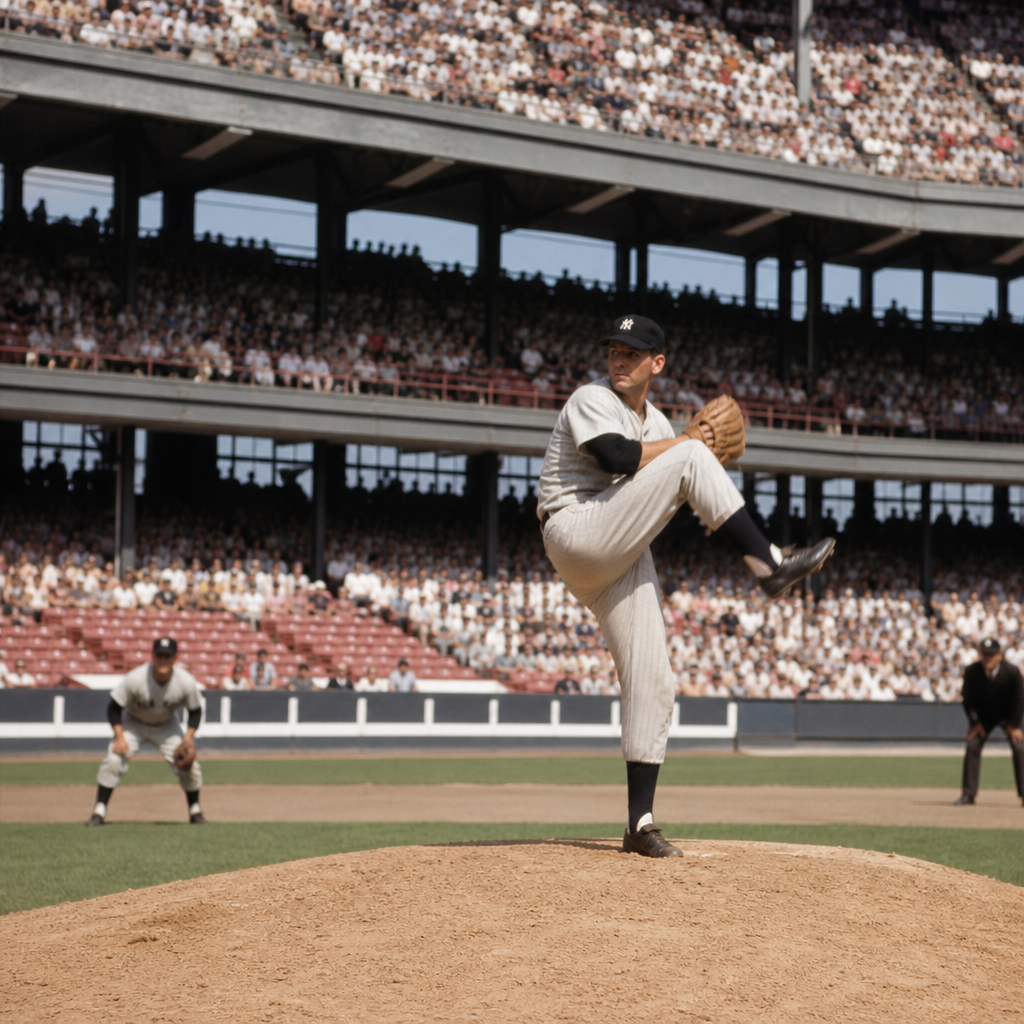
Baseball in the 1960s reshaped the modern major league game through rapid expansion, overwhelming pitching, labor change, and a postseason format that finally moved beyond a single World Series matchup. For fans studying baseball eras, this decade stands as the hinge between the compact, tradition-bound sport of the 1950s and the commercial, strategically layered game that emerged in the 1970s. “Expansion” in this context means the addition of new major league franchises, new markets, larger travel footprints, and the organizational strain of stocking rosters quickly. “Pitching dominance” refers to a run environment so suppressed that the sport changed its rules after 1968, the famous “Year of the Pitcher.” “A new postseason” points to the 1969 creation of league championship series after each league split into divisions. Although full free agency did not arrive until the middle of the 1970s, the 1960s laid critical groundwork through salary disputes, player organizing, and the erosion of the reserve system that had long bound players to one club.
I have always found the decade impossible to separate into neat boxes, because the same forces kept colliding. Expansion diluted talent in some places while creating opportunities in others. New ballparks altered offense. Television money encouraged owners to think nationally rather than locally. The stronger players’ union changed contract expectations even before free agency existed in its modern form. At the same time, pitchers such as Sandy Koufax, Bob Gibson, Juan Marichal, Don Drysdale, and Denny McLain made run scoring feel like a daily act of resistance. If you want to understand why baseball today has divisions, championship series, player movement debates, and endless concern about competitive balance, you have to start here.
The decade also matters because it produced contradictory outcomes. Major League Baseball became bigger geographically, yet the style of play often felt tighter and lower scoring. More teams entered the sport, but established powers still found ways to dominate. Labor remained restrictive, but players became more organized and more willing to challenge management. By the end of the 1960s, baseball had a broader national footprint, a newly structured route to the World Series, and a labor environment moving steadily toward free agency. This article serves as a hub for that transformation by connecting expansion, pitching conditions, and postseason reform rather than treating them as separate stories.
Expansion changed the map and the economics of baseball
Major League Baseball spent most of its early history with 16 teams, eight in each league. That static structure broke in the 1960s. The National League added the New York Mets and Houston Colt .45s in 1962. The American League answered with the Los Angeles Angels and the new Washington Senators in 1961 after the original Senators relocated and became the Minnesota Twins. The next wave came in 1969, when the Kansas City Royals and Seattle Pilots joined the American League, while the Montreal Expos and San Diego Padres entered the National League. In less than a decade, the majors grew from 16 to 24 teams, a fifty percent increase. That is the defining fact of baseball expansion in the 1960s.
Expansion was not simply about putting teams in empty places on the map. It reflected population shifts toward the West and South, competition with football for national attention, and the financial pull of television. Owners and league officials knew that remaining concentrated in the Northeast and Midwest would limit growth. Houston brought indoor baseball ambitions and major-market potential. Los Angeles already had the Dodgers, but the Angels gave the American League a needed foothold in Southern California. Montreal represented the first major league club outside the United States, a sign that baseball’s business imagination was widening.
On the field, expansion affected roster quality immediately. Existing clubs supplied players through expansion drafts, but they protected the core of their systems. New teams often started with thin pitching, uneven defense, and little organizational depth. The 1962 Mets, who lost 120 games, remain the classic example. Yet expansion also created jobs for players who might have remained in the high minors a few years earlier. I have always viewed that as one of the decade’s underappreciated changes: expansion broadened the talent funnel and accelerated evaluation, forcing clubs to think harder about scouting, player development, and roster construction.
Expansion also exposed how much successful franchises depended on farm systems. The Cardinals, Orioles, Dodgers, Giants, and Tigers consistently looked better prepared than many new entrants because they had pipelines of pitching and position talent. Clubs with weak development systems could not hide behind the old small-league structure anymore. As schedules grew and travel intensified, front offices needed depth in a way earlier executives had not fully confronted. That organizational pressure is one reason the 1960s are central to any discussion of baseball expansion and free agency. Before players could gain true mobility, clubs were already learning that talent scarcity had economic consequences.
Pitching dominance defined the decade and forced rule changes
The easiest way to explain why pitching ruled the 1960s is to look at run scoring and earned run averages. In 1968, American League teams scored just 3.42 runs per game, while National League teams scored 3.43. Bob Gibson posted a 1.12 ERA for St. Louis, one of the greatest pitching seasons ever recorded. Denny McLain won 31 games for Detroit, the last pitcher to reach 30 in a season. Carl Yastrzemski led the American League with a .301 batting average, the lowest batting title mark in modern history. Those numbers were not isolated oddities; they were the climax of a broader low-offense environment that had been building through the decade.
Several factors drove the pitching edge. Strike zones were interpreted generously. The mound stood fifteen inches high until after 1968, giving pitchers downhill leverage and sharper plane. Ballparks such as Dodger Stadium and Candlestick Park suppressed offense, especially at night. Expansion may have diluted some hitting, but the stronger explanation is that elite pitching talent was extraordinary and heavily concentrated on contender rosters. Koufax and Drysdale with the Dodgers, Gibson with the Cardinals, Marichal with the Giants, and later Tom Seaver with the Mets changed the emotional pace of games. Opposing managers entered series expecting to manufacture one or two runs, not to outslug anyone.
Dominance was not only about aces. Bullpen usage evolved more slowly than it does today, so starters carried heavy workloads and often finished what they began. Gibson threw 304.2 innings in 1968. Marichal topped 295 innings six times in the decade. This mattered strategically because lineups had fewer chances to attack weaker middle relievers. Defense also played a role. Clubs that converted balls in play efficiently made strong pitchers look nearly unbeatable. The Orioles under manager Hank Bauer and then Earl Weaver built around run prevention principles that fit the era perfectly.
Baseball responded after 1968 by lowering the mound from fifteen inches to ten and shrinking the strike zone for 1969. Those were not cosmetic adjustments. They were admissions that the sport’s competitive balance had tilted too far toward pitchers. Offense rose immediately. The rule changes are essential when discussing baseball in the 1960s because they show that the decade did more than produce memorable stats; it triggered direct structural reform. The game people watched in 1970 was measurably different because 1960s pitching had become too powerful to ignore.
A new postseason changed pennant races and October strategy
Before 1969, each league sent only one team to the World Series, the club with the best regular-season record. That format made pennant races brutally simple and often unforgiving. A great team that finished one game behind stayed home. Expansion made that structure harder to sustain. With twelve teams in each league by 1969, Major League Baseball divided both leagues into East and West divisions and created the League Championship Series. For the first time, reaching the World Series required winning a second postseason round.
The new format changed incentives immediately. Geography and scheduling mattered differently inside divisions. Front offices could build to beat a smaller cluster of rivals rather than an entire league table. Managers also had to think about short series tactics, especially rotation alignment. In the first National League Championship Series, the “Miracle Mets” upset the heavily favored Atlanta Braves and then defeated the Orioles in the World Series. Their run illustrated a truth that still defines October baseball: once a team gets in, dominant pitching and defense can compress talent gaps quickly.
The League Championship Series also created more meaningful late-season races, which owners wanted for attendance and television. That commercial logic should not be dismissed as cynical; it was a practical response to a larger league. A single pennant winner among twelve teams risked too many markets losing interest early. Divisions kept more fan bases engaged deeper into the calendar. In that sense, the new postseason was a business reform and a competitive reform at once.
| Change | When introduced | Why it mattered |
|---|---|---|
| AL expansion to 10 teams | 1961 | Opened new markets and increased roster demand |
| NL expansion to 10 teams | 1962 | Ended the 16-team status quo and broadened national reach |
| Further expansion to 24 total teams | 1969 | Required divisional alignment and deeper talent evaluation |
| League Championship Series | 1969 | Created a new postseason round before the World Series |
| Mound lowered and strike zone reduced | 1969 | Countered extreme pitching dominance from the late 1960s |
There were tradeoffs. Some traditionalists believed divisions cheapened the pennant by allowing a club with a weaker overall record to reach October. That criticism has never fully disappeared. Still, the 1969 postseason reform became permanent because it matched the realities of an expanded sport. More teams, more travel, more media money, and more regional fan interest required a broader path to the championship.
The road to free agency began before free agency officially existed
Any serious hub on expansion and free agency has to state the chronology clearly. Players in the 1960s did not enjoy open-market free agency. The reserve clause effectively renewed contracts and bound a player to his club unless he was traded, sold, released, or retired. Owners controlled careers with remarkable force. Salaries remained far below what comparable entertainment talent could command in a true market. Yet the decade is still essential to free agency history because the legal and organizational foundations of later player movement were built here.
The central figure was Marvin Miller, who became executive director of the Major League Baseball Players Association in 1966. Miller, a seasoned labor economist from the United Steelworkers, taught players to see themselves as workers with collective leverage rather than isolated contractors negotiating alone. I have always considered his arrival the single most important off-field event of late-1960s baseball. Within a few years, the union secured a formal collective bargaining agreement in 1968, then salary arbitration rights in the early 1970s, and eventually the challenge that broke the reserve system after the Seitz decision in 1975.
The seeds of that change were visible during the 1960s in pension disputes and minimum salary concerns. In 1966, player frustration over pension fund issues nearly led to a strike around the All-Star Game. The conflict showed that owners could no longer assume passive labor compliance. Even stars had limited leverage individually, but together they could threaten the sport’s public image and revenue streams. Expansion actually sharpened these tensions. More teams meant more payroll slots, more uneven front offices, and more players comparing treatment across organizations. Information spread, and with it came rising expectations.
Curt Flood’s challenge to the reserve clause after being traded following the 1969 season sits at the decade’s endpoint and points directly toward modern free agency. Flood argued that a player should not be treated like property. He lost at the Supreme Court in 1972, but his case transformed public debate and emboldened future challenges. When readers ask how free agency connects to baseball in the 1960s, the answer is straightforward: the decade did not finish the labor revolution, but it made that revolution unavoidable.
How expansion, labor change, and style of play shaped the next era
By 1970, baseball looked and functioned differently because of decisions made throughout the 1960s. Expansion had made national reach a permanent priority. Divisions and championship series had changed the route to a title. Rule changes had checked the most extreme pitching conditions. The players’ union had become a real institution, not a symbolic association. These developments reinforced one another. A larger league needed better labor structures, more systematic player acquisition, and a postseason format that could support television growth.
Real-world examples show the decade’s long shadow. The Mets, born as an expansion club in 1962, became champions in 1969 and proved that new franchises could build legitimacy quickly with pitching, defense, and smart development. The Royals, another expansion team, were competitive within a few seasons because they drafted and developed effectively. Meanwhile, clubs that failed to modernize scouting or labor relations found themselves lagging behind. Baseball had entered an era in which market size alone could not solve every problem.
For readers exploring baseball eras, the clearest takeaway is that the 1960s were not merely a bridge between famous dynasties. They were a restructuring decade. If you want to understand modern roster depth, divisional races, postseason drama, salary power, and recurring debates about offense versus pitching, this is the era to study closely. Expansion created opportunity and instability. Pitching excellence became so overwhelming that the rules had to change. Labor consciousness grew into the movement that would deliver free agency. Start with these themes, then follow them outward to team histories, union milestones, and postseason evolution across the decades.
Frequently Asked Questions
Why was the 1960s such a turning point in baseball history?
The 1960s marked a true transition point because several major changes happened at once, and together they reshaped how the sport looked, where it was played, and how it was organized. Earlier eras of major league baseball had been relatively stable, with the same basic league structure, a limited number of franchises, and a postseason that ended with one direct path to the World Series. In the 1960s, that began to change quickly. Teams were added through expansion, the game spread into new cities and regions, and baseball’s national footprint became much broader than it had been in the tightly clustered decades before.
On the field, the style of play also shifted dramatically. The decade became famous for dominant pitching, lower offensive output, and games that often turned on defense, speed, and one or two key plays rather than constant scoring. By the late 1960s, offense had dipped enough that the sport responded with rules changes, including lowering the pitching mound and shrinking the strike zone after the 1968 season. That alone shows how unusual the environment had become: baseball believed the balance between pitching and hitting had tilted too far.
Just as important, the decade helped lay the foundation for the modern business and labor structure of the game. Owners, players, and league officials were operating in a sport that was becoming more commercial, more geographically dispersed, and more conscious of television, attendance, and player rights. The rise of the players’ union under Marvin Miller late in the decade signaled that the old owner-controlled model would no longer go unchallenged. Add in the introduction of league championship series play at the end of the decade, and the 1960s stand out as the hinge between baseball’s older, more tradition-bound model and the more expansive, strategic, and nationally marketed game that followed.
How did expansion change Major League Baseball during the 1960s?
Expansion changed baseball in both visible and structural ways. Most obviously, it increased the number of teams and brought the major leagues into new markets. Instead of remaining concentrated in long-established northeastern and midwestern cities, baseball pushed into a wider national landscape. New franchises and relocated teams reflected the country’s postwar population shifts, especially toward the West and other growing metropolitan areas. This meant more fans could identify with local clubs, more stadiums were built or adapted for major league play, and baseball became less tied to its older geographic center.
Expansion also affected competitive balance. New teams had to build rosters quickly, often through expansion drafts and a mix of veterans, overlooked players, and developing talent. That process could create uneven competition in the short term, because established franchises usually had stronger farm systems, more continuity, and deeper rosters. At the same time, expansion forced front offices to think differently about scouting, player development, and depth. As the talent pool was spread across more clubs, organizational planning became even more important.
There were schedule and league-structure consequences as well. More teams meant more complicated pennant races, more travel, and eventually a need to rethink how first-place finishers were determined. By the end of the decade, baseball had moved to divisional play in each league, which made a new postseason round possible. That was a major break from the older format in which the American League champion and National League champion simply went straight to the World Series. In that sense, expansion was not just about adding franchises. It was the catalyst for a more modern league system, one that made room for additional postseason games, broader media interest, and a more national version of the sport.
Why did pitching dominate so much in the 1960s?
Pitching dominated the 1960s because several factors came together to suppress offense. The decade featured a remarkable concentration of elite pitchers, including power arms and control specialists who could work deep into games and consistently limit scoring. Teams also relied heavily on complete games from front-line starters, which meant offenses often had to solve the same excellent pitcher for nine innings rather than waiting for a weaker bullpen arm. In that environment, one dominant starter could control an entire series or pennant race in a way that feels less common in later eras.
Conditions in the game itself also favored pitchers. The strike zone was larger for much of the decade, and by the late 1960s the pitching mound stood high enough to give pitchers a meaningful physical advantage. Combine that with ballparks that could be spacious, a style of play that emphasized bunting and situational hitting more than pure power, and an era before the offensive explosion of later decades, and run scoring naturally stayed low. The result was a baseball environment in which a shutout or a 2-1 game did not feel unusual.
The clearest symbol of this trend was 1968, often called the “Year of the Pitcher.” That season saw historically low batting averages and run totals, highlighted by Bob Gibson’s extraordinary 1.12 earned run average in the National League and Denny McLain’s 31-win season in the American League. League-wide offense fell enough to convince baseball’s rule-makers that the balance of the game needed correcting. In response, Major League Baseball lowered the mound and reduced the strike zone beginning in 1969. That decision is important because it confirms that pitching dominance in the 1960s was not just a matter of nostalgia or style; it was measurable, extreme, and influential enough to trigger structural change.
What was the “new postseason,” and why was it important?
The “new postseason” refers to baseball’s move away from its long-standing format in which only two teams advanced each year: the American League pennant winner and the National League pennant winner, who met directly in the World Series. For most of major league history, that was the entire postseason. It made the regular season intensely important, but it also meant there was no playoff round within each league. If a team finished second, even by a game, its season was over.
That changed in 1969, when both leagues were split into divisions as a response to expansion. The winners of each division then met in the newly created League Championship Series, with the victors advancing to the World Series. This was a significant development because it added another competitive stage, increased television and fan interest, and acknowledged that a larger, more national league structure needed a more layered way to determine its champion. It also created a different strategic reality. Teams were no longer just trying to outlast every club in the league standings; they were trying first to win their division and then survive a short postseason series.
The importance of this shift is hard to overstate. The League Championship Series introduced the basic idea that postseason rounds beyond the World Series were not only acceptable but beneficial to the sport’s popularity and structure. It paved the way for the expanded playoff systems that arrived in later decades, including additional rounds and wild-card teams. In modern baseball, a multi-tier postseason feels normal. In the 1960s, it represented a major break with tradition and a clear sign that the game was adapting to growth, media demands, and a broader national audience.
How did labor change in the 1960s affect the future of baseball?
Labor change in the 1960s mattered because it began to shift the balance of power between players and owners. For much of baseball history, owners operated with overwhelming control, especially through the reserve system, which effectively tied players to one club unless they were traded, sold, or released. Salaries and working conditions were shaped in a system where players had very limited leverage. By the middle and late 1960s, however, players were becoming more organized and more willing to challenge that arrangement.
A central figure in this transformation was Marvin Miller, who became executive director of the Major League Baseball Players Association in 1966. Under his leadership, the union became far more effective, disciplined, and strategically focused. Miller helped players understand collective bargaining, pension issues, contract rights, and the long-term importance of acting together rather than as isolated individuals. This did not instantly create free agency or fully modern labor relations, but it changed the direction of the sport. Players were beginning to see themselves not just as employees at the mercy of club owners, but as professionals with shared interests and negotiable rights.
The consequences reached far beyond the decade itself. The stronger union culture of the late 1960s set up many of the labor battles and breakthroughs of the 1970s, including salary arbitration and the eventual collapse of the old reserve-clause system. Those changes transformed payrolls, roster building, contract strategy, and the economics of competition. So while expansion and postseason reform are often the most visible stories of 1960s baseball, labor change may have been just as consequential. It helped create the modern major leagues, where player movement, negotiated compensation, and union power are central parts of how the sport functions.