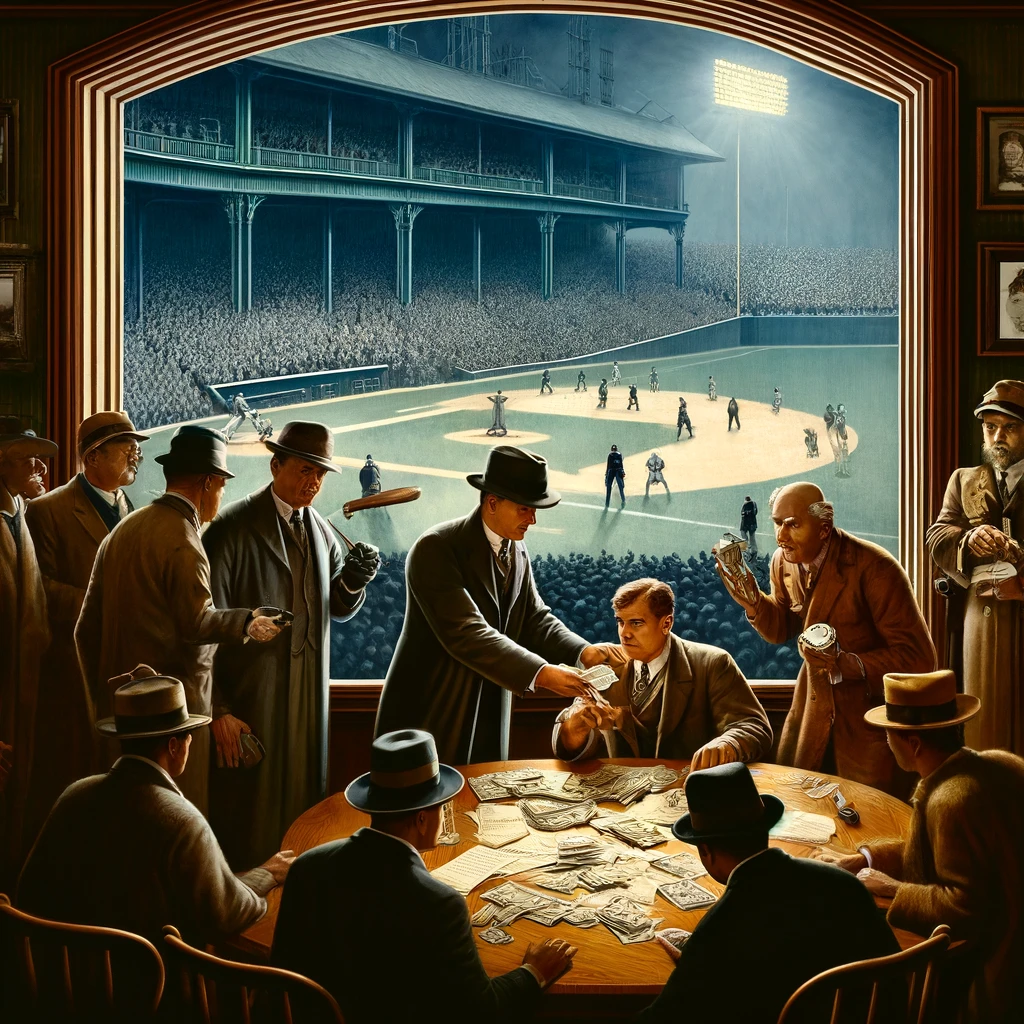
Baseball, often hailed as America’s pastime, has had its share of memorable moments, but few are as infamous as the Black Sox Scandal of 1919. This event not only changed the course of baseball history but also left an indelible mark on the sport’s integrity.
The Setting
The 1919 World Series pitted the Chicago White Sox against the Cincinnati Reds. On paper, the White Sox were the clear favorites, boasting a roster filled with some of the best players of the era. However, the series would end in shock and controversy.
The Build-Up
In the years leading up to 1919, baseball was experiencing rapid growth in popularity. But beneath the surface, the sport was rife with problems like low player salaries and gambling influences. Players often struggled to make ends meet, despite the profits their teams and the league were earning. This economic disparity set the stage for the scandal.
The Scandal Unfolds
Rumors that the World Series had been fixed began to circulate even before the first pitch was thrown. Eight players from the Chicago White Sox, later dubbed the “Black Sox,” were accused of intentionally losing games in exchange for money from gamblers. The alleged ringleader was Arnold “Chick” Gandil, the White Sox first baseman, who, along with his teammates, was said to have been promised a total of $100,000 (a significant sum at the time) to throw the series.
The Series Itself
As the series unfolded, suspicious plays and uncharacteristic mistakes raised eyebrows. Key players like “Shoeless” Joe Jackson, who was known for his sharp batting, underperformed or made inexplicable errors. Despite these signs, the general public initially had little reason to suspect foul play, and the Reds clinched the series 5-3, leading to widespread disbelief and confusion.
The Fallout
The scandal was fully exposed in 1920 after confessions by some of the involved players, prompted by legal investigations and media scrutiny. The confessions were later recanted, but the damage was done. The players were acquitted in a 1921 court trial but were permanently banned from professional baseball by the newly appointed Commissioner of Baseball, Kenesaw Mountain Landis.
The Impact on Baseball
The Black Sox Scandal had profound implications for Major League Baseball. It shattered fans’ trust in the game, casting a shadow over the sport’s integrity. In response, baseball’s leadership took drastic steps to restore credibility. The appointment of a Commissioner was meant to clean up the sport, and strict rules against gambling were implemented. Landis’s tough stance on corruption set a precedent, and his legacy in upholding the integrity of baseball remains influential to this day.
The Legacy of the Black Sox
The players involved in the scandal, particularly “Shoeless” Joe Jackson, remain figures of sympathy and debate. Jackson, who had exceptional career statistics, continues to be the subject of discussions about whether he was rightfully banned or merely a scapegoat. Despite the controversy, the Black Sox Scandal has become a crucial part of baseball lore, serving as a cautionary tale about the risks of gambling and the importance of integrity in sports.
The Black Sox Scandal of 1919 is more than just a dark chapter in baseball history; it is a complex tale of betrayal, greed, and redemption. It forced baseball to confront its vulnerabilities and reform its governance, ensuring the sanctity of the sport’s competitive spirit. Today, nearly a century later, the scandal still resonates as a pivotal moment that forever altered how the game is played and perceived. As fans, we continue to reflect on its lessons, ensuring the integrity of the game for future generations.

The repercussions of the Black Sox Scandal extended far beyond the immediate banishment of the eight players. The incident precipitated a series of reforms aimed at cleaning up baseball and restoring its image as a fair and honest sport. These reforms had a lasting impact on how Major League Baseball operated and set the standard for professional sports leagues around the world.
Reforms and Changes in Baseball
In the wake of the scandal, baseball’s governing bodies realized the necessity for a strong central authority. The appointment of Judge Kenesaw Mountain Landis as the first Commissioner of Baseball was a decisive move to regain the trust of the public. Landis was granted almost unlimited powers to govern the sport, a testament to the league’s commitment to rectifying the tarnished image of baseball. His ruling to ban the involved players for life, despite their acquittal in court, underscored his commitment to integrity over legal technicalities.
The Immediate Aftermath in the 1920s
The 1920s saw a transformation in the culture of baseball, shifting from the so-called “dead-ball” era to a more dynamic game characterized by home runs and lively balls. This change was partly a deliberate shift to recapture the interest of fans disillusioned by the scandal. Figures like Babe Ruth rose to legendary status during this period, helping to bring back crowds with his spectacular play and charismatic personality. The era not only restored fans’ interest but also reshaped the game into a more exciting spectacle, laying the groundwork for modern baseball.
Long-Term Effects on Player Conduct and Governance
The scandal also led to stricter regulations regarding player conduct and interactions with gamblers. These rules were continuously expanded and refined, forming a comprehensive policy that governs player behavior to this day. The enforcement of these rules has helped maintain the sport’s integrity, with MLB going to great lengths to educate players about the dangers and consequences of gambling-related activities.
Cultural Impact and Public Memory
Culturally, the Black Sox Scandal has been immortalized in various forms of media, including films, books, and plays, reflecting its significant impact on American society. The story of the 1919 World Series serves as a compelling narrative of betrayal and consequence, resonating with themes of greed and redemption. It also raises questions about justice and fairness in sports, themes that are still relevant in today’s discussions about athlete behavior and league governance.
Reflecting on the Legacy
The Black Sox Scandal remains a critical lesson in the importance of ethical conduct in sports. It serves as a reminder of what can happen when the lure of money overshadows the competitive and fair spirit of athletics. The scandal is not just a story about baseball; it is a parable about morality, integrity, and the consequences of corruption.
As we look back on this pivotal event nearly a century later, the Black Sox Scandal encourages a reflection on how far sports leagues have come in terms of governance and integrity, and how much further they still have to go. The story of the 1919 World Series is a cautionary tale that continues to inform and influence the world of sports, ensuring that the dark days of the Black Sox do not repeat themselves.
Conclusion
Reflecting on the Black Sox Scandal offers more than just a glimpse into a troubled past; it provides a lens through which we can examine the present and future of baseball. By understanding the mistakes of 1919, MLB and its fans are better equipped to safeguard the sport against similar threats, ensuring that baseball remains a beloved and honorable pastime for generations to come. The Black Sox Scandal, with its complex characters and dramatic narrative, will forever serve as a stark reminder of the delicate balance between competition and integrity in the world of professional sports.