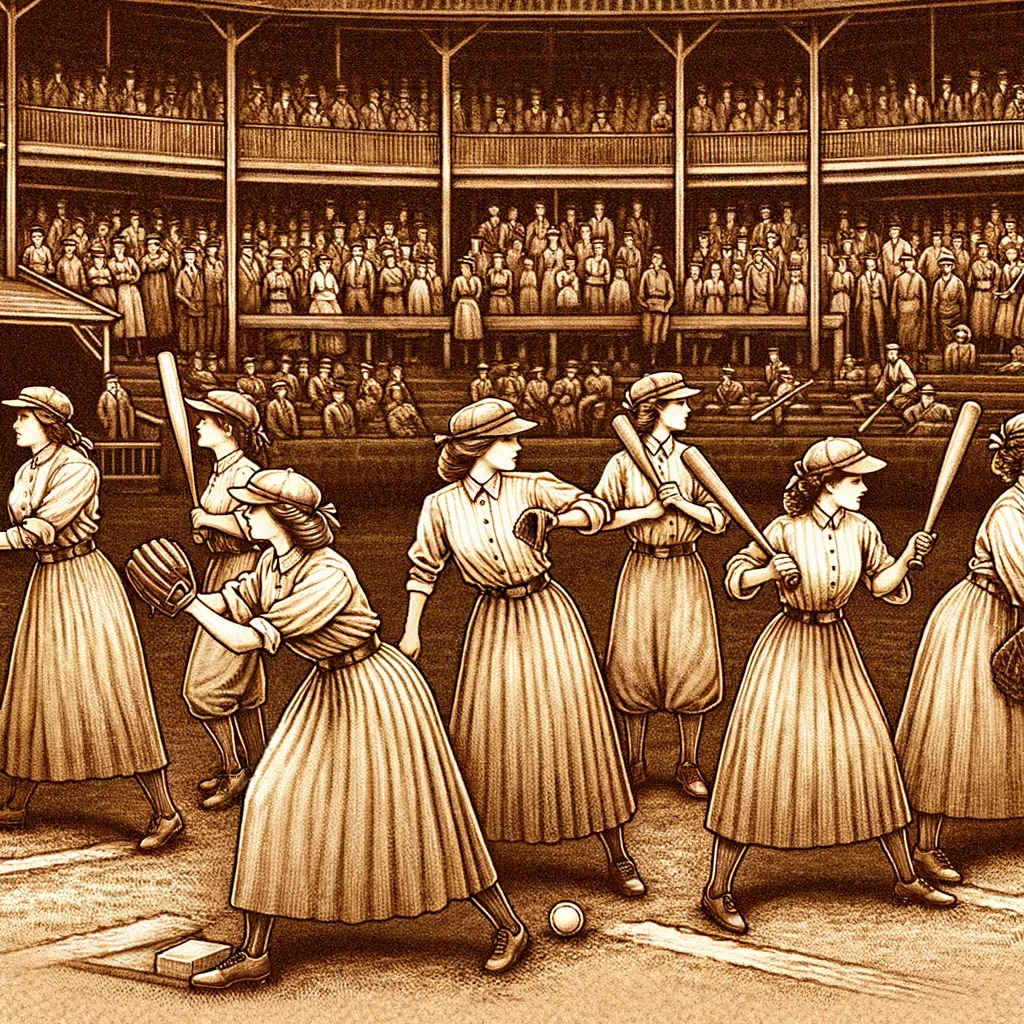
Baseball, often dubbed America’s pastime, has a rich and complex history that extends beyond the familiar narrative dominated by male figures. An integral, yet often overlooked, part of this history is the role of women in the early days of baseball. This article delves into the untold stories of female pioneers who not only played but also significantly contributed to shaping the early days of this beloved sport.
The Dawn of Women’s Involvement
The involvement of women in baseball dates back to the mid-19th century, a time when baseball itself was still in its infancy. In these early days, women’s participation was largely informal, with games often taking place in social gatherings and picnics. Despite societal norms that discouraged women from engaging in physical activities, these early female players were undeterred, demonstrating both skill and passion for the game.
Breaking Barriers: The Vassar College Games
One of the earliest recorded instances of organized women’s baseball occurred at Vassar College in the 1860s. Here, female students formed baseball teams, challenging the then-prevailing societal norms that deemed such activities unladylike. These games were among the first to pave the way for organized women’s baseball, setting a precedent for future generations.
The Bloomer Girls Era
As baseball’s popularity grew, the late 19th and early 20th centuries witnessed the emergence of the “Bloomer Girls” teams. These teams, named after the bloomers they wore instead of traditional skirts, toured the country, playing against local men’s teams. Contrary to popular belief, these teams were not merely sideshows; they were skilled athletes, often competing fiercely and winning against their male counterparts.
Pioneering Players
Among the Bloomer Girls, several players stood out for their exceptional skills and contributions to the game. Players like Lizzie Arlington, who in 1898 became the first woman to pitch professionally in a men’s league, and Alta Weiss, a remarkable pitcher who drew large crowds, were trailblazers in their own right. Their participation highlighted the growing interest and involvement of women in baseball, challenging gender norms and inspiring future generations.
The Struggle Against Societal Norms
The journey of women in baseball was not without its challenges. Women players often faced ridicule, skepticism, and outright hostility. The social expectations of the time, which dictated that women should behave in a demure and ladylike manner, clashed with the physicality and competitiveness of baseball. Despite these obstacles, women persevered, continuing to play and contribute to the sport.
Media Portrayal and Public Perception
The media of the time often portrayed women baseball players as novelties or anomalies, failing to recognize their athletic abilities and contributions to the sport. This portrayal further fueled public skepticism, making it difficult for women’s baseball to gain the recognition it deserved. However, the tenacity and skill of these women slowly began to change public perception, garnering a growing respect for women in the sport.
The Impact of World War II
The onset of World War II marked a significant turning point for women in baseball. With many men away at war, women’s baseball saw a surge in popularity and acceptance. This era gave rise to the All-American Girls Professional Baseball League (AAGPBL), immortalized in the film “A League of Their Own.” The league, which ran from 1943 to 1954, offered women the opportunity to play professional baseball at a level never seen before.
The Legacy of the AAGPBL
The AAGPBL was more than just a wartime novelty; it was a testament to the skill and determination of women athletes. The league produced many talented players and helped to solidify the place of women in the world of baseball. It also served as an inspiration for future generations of female athletes, proving that women could compete at a professional level.
The Enduring Legacy
The story of women in early baseball is one of resilience, skill, and passion. These pioneering women laid the groundwork for future generations, challenging stereotypes and breaking barriers in a sport dominated by men. Their legacy continues to inspire and influence the world of sports, reminding us of the importance of diversity and inclusion in all areas of life.
Recognizing the Contributions
Today, the contributions of these early female baseball players are beginning to receive the recognition they deserve. Museums, historical societies, and baseball organizations are increasingly highlighting the role of women in the sport’s history. This recognition is crucial in preserving the rich and diverse history of baseball, ensuring that the stories of these pioneering women are not forgotten.
The Influence on Modern Women’s Baseball
The legacy of these early women players is evident in the modern landscape of women’s baseball. Today, there are numerous women’s baseball teams and leagues at various levels, from amateur to professional. These modern players owe a debt of gratitude to the pioneering women who defied conventions and paved the way for their participation in the sport.
Growth of Women’s Baseball
In recent years, there has been a significant increase in the number of women participating in baseball at all levels. Initiatives by various baseball organizations to promote and support women’s baseball have contributed to this growth. This is a positive sign, indicating a move towards greater inclusivity and recognition of women in the sport.
Women in Baseball Leadership
The impact of women in early baseball extends beyond the field. Women have increasingly taken on pivotal roles in baseball administration and coaching. Their involvement in these areas is crucial in shaping the policies and direction of the sport, ensuring that the needs and perspectives of female athletes are adequately represented.
Breaking the Glass Ceiling
Women in leadership positions in baseball have broken the glass ceiling in what was traditionally a male-dominated area. Their presence in these roles challenges stereotypes and inspires future generations of women to pursue careers in sports administration and coaching.
The Road Ahead
While significant progress has been made in recognizing and supporting women in baseball, there is still a long way to go. Continued efforts are necessary to promote gender equality in the sport, including providing more opportunities for women at all levels, from playing to coaching and administration.
Future Challenges
One of the key challenges is the need for greater visibility and media coverage of women’s baseball. Increased exposure would not only help in recognizing the achievements of female players but also inspire more women and girls to take up the sport. Additionally, there is a need for more funding and resources to support the development of women’s baseball.
Celebrating Women in Baseball
Recognizing the contributions of women in baseball is crucial in preserving the sport’s history and ensuring a more inclusive future. Celebrations such as Women in Baseball Week and the inclusion of women players in the Baseball Hall of Fame are steps in the right direction.
Honoring the Past
Events and initiatives that honor the history of women in baseball help in bringing their stories to the forefront. These celebrations are not just about acknowledging the past but are also about inspiring the future generations of women in baseball.
The Role of Education and Advocacy
Educational programs and advocacy are essential in promoting the history and role of women in baseball. By educating the public, especially the younger generation, about the contributions of women, we can help to build a more inclusive and diverse sport.
Conclusion
The story of women in early baseball is not just a footnote in the history of the sport; it is a powerful narrative of resilience, talent, and determination. These pioneering women broke barriers and defied societal norms, laying the foundation for future generations of female athletes. As we move forward, it is our responsibility to continue their legacy, promoting inclusivity and equality in baseball and beyond.
Frequently Asked Questions
1. When did women first start playing baseball in the United States?
The involvement of women in baseball in the United States can be traced back to the mid-19th century. The earliest known organized women’s baseball game took place in 1866 when the Vassar College Resolutes, a team comprised entirely of women, played a match in Poughkeepsie, New York. This moment was significant because it marked a public acknowledgment that women could participate in and understand the intricacies of a sport that was rapidly gaining popularity. Despite societal norms of the time that often discouraged women from engaging in physical activities deemed too strenuous or unfeminine, female athletes were already challenging those perceptions. These pioneering women, many of whom participated in college-based or community teams, paved the way for future generations by daring to step onto the diamond and claim their place in the world of baseball.
2. Who are some notable women pioneers in early baseball history?
Several women left an indelible mark on early baseball history, standing as icons of courage and perseverance. One such figure is Alta Weiss, who made headlines at the dawn of the 20th century when she pitched for a semiprofessional men’s team, the Vermilion Independents, in Ohio. Weiss demonstrated exceptional skill and determination, gaining notoriety for her pitching ability despite widespread skepticism about women’s physical capabilities in sports. Another trailblazer was Lizzie Arlington, recognized as one of the first women to play in a professional men’s baseball game when she pitched for the Reading Coal Heavers in 1898. Beyond playing, these women also contributed to changing public perceptions and expanding opportunities for future female athletes. Moreover, teams like the Bloomer Girls, active from the 1890s until the 1930s, featured women playing against men and showcased their formidable talent in exhibitions and competitive matches around the country.
3. What challenges did women in early baseball face?
Women in early baseball encountered numerous challenges, both on and off the field. Social attitudes during the 19th and early 20th centuries often favored traditional gender roles, which posited that women should engage primarily in domestic tasks and activities that were considered delicate. Participation in sports, especially a rigorous and physically demanding game like baseball, was frequently viewed as inappropriate or even harmful to women. Media portrayals often reflected these biases, sometimes reducing female athletes to objects of curiosity rather than recognizing their athletic achievements. Additionally, there were organizational hurdles such as the lack of robust infrastructure for women’s teams compared to the well-established men’s leagues. Women faced obstacles in gaining access to quality training facilities, coaching, and the financial backing necessary to sustain teams. These difficulties, however, only fueled the determination of these pioneers to excel in their sport and inspire generations to follow in their footsteps.
4. How did the presence of women influence the development of baseball as a sport?
The presence of women in early baseball played a critical role in expanding the scope and appeal of the sport beyond a male-dominated pastime. Women’s teams and athletes drew curious crowds, contributing to the popularization of baseball by demonstrating its broad appeal and accessibility. Their involvement challenged stereotypes about gender-specific roles in athletics, laying a foundation that helped spur more inclusive attitudes towards women in sports. The performances of women in exhibition games, as well as their participation in organized teams, highlighted the potential for baseball as a unifying cultural phenomenon that could transcend social barriers. Moreover, the early efforts by women players and teams paved the way for future developments, such as the All-American Girls Professional Baseball League (AAGPBL) established during World War II, which further solidified the importance of women in baseball’s evolving history.
5. Are there any modern organizations or events dedicated to commemorating these early women baseball pioneers?
Yes, several modern organizations and events are dedicated to commemorating the contributions of early women baseball pioneers. The International Women’s Baseball Center (IWBC) is one such organization, devoted to preserving the history of women in baseball and advocating for greater recognition and opportunities for female athletes in the sport today. The IWBC hosts events, educational programs, and works towards establishing a physical center that will serve as a museum and educational hub. Additionally, the National Baseball Hall of Fame and Museum has made efforts to acknowledge the achievements of women in baseball history through exhibits and inductions that spotlight significant female contributors. Events like the Women’s Baseball World Cup also provide a platform for celebrating the achievements and ongoing legacy of women in baseball, drawing attention to the continued impact of those early pioneers who laid the groundwork for today’s athletes.