
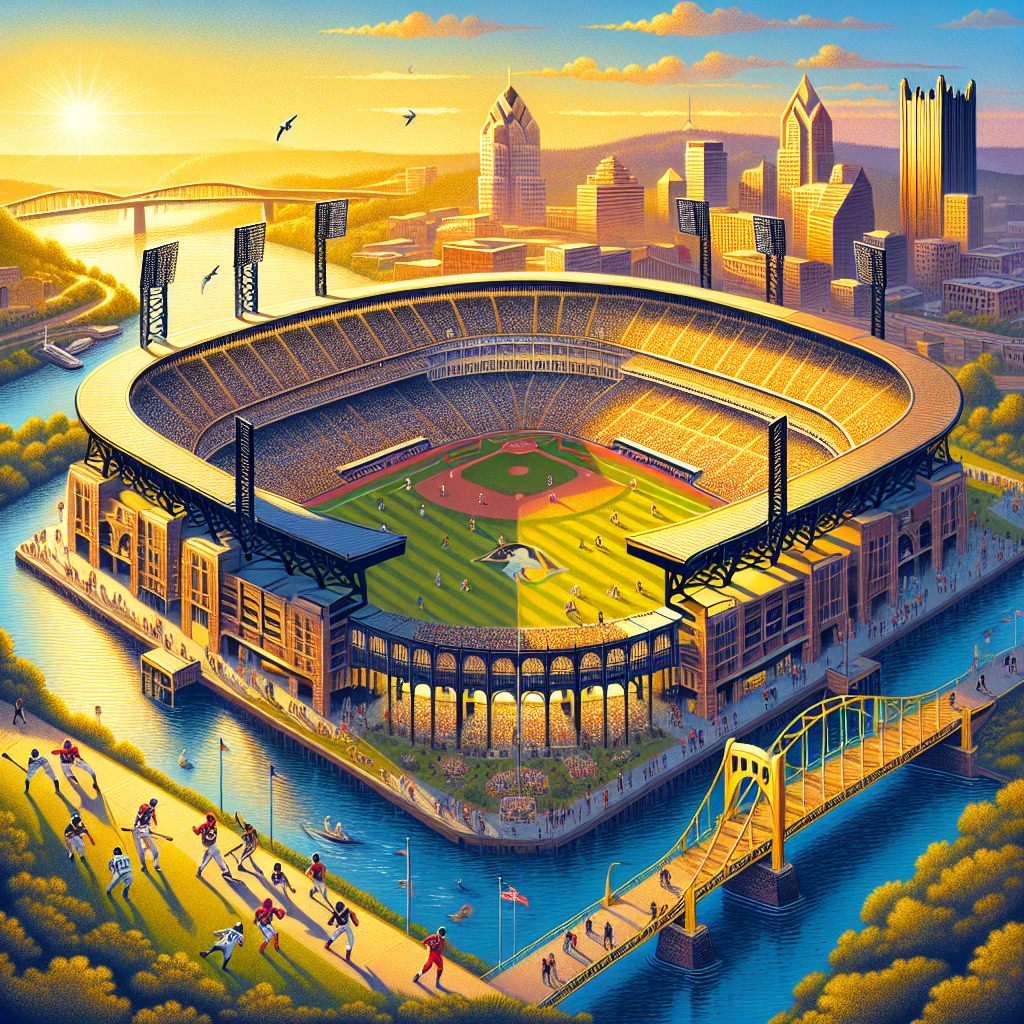
For Pittsburgh sports enthusiasts, the mention of Three Rivers Stadium brings a flood of memories and a wave of nostalgia. Situated at the confluence of the Allegheny, Monongahela, and Ohio rivers, this monumental structure was a hub for sporting events, concerts, and ample excitement from its inception in 1970 to its demolition in 2001. This iconic stadium was a shared home for the Pittsburgh Pirates of Major League Baseball (MLB) and the Pittsburgh Steelers of the National Football League (NFL). Due to its versatile design and rich history, it became one of the most celebrated stadiums in America.
The concept of multi-purpose stadiums was gaining popularity during the 1960s, and Three Rivers Stadium was a perfect embodiment of this trend. The vision behind it was twofold: to accommodate both football and baseball and to symbolize Pittsburgh’s renaissance as a city. Designed to host tens of thousands of fans, the stadium quickly became a centerpiece of Pittsburgh’s sporting community and a symbol of the city’s blue-collar spirit. This wasn’t just a stadium; it was a gathering place where memories were forged, where legends arose, and where the heartbeats of Pittsburgh’s sports culture thrived.
At the heart of Three Rivers Stadium’s charm was its versatility. It was designed as a circular, multi-purpose facility that allowed for easy transformation between football and baseball configurations. This architectural marvel not only saved costs but also ensured that the stadium pulsated with activity year-round. It boasted an artificial turf, which was lauded for its durability, a state-of-the-art scoreboard, and an impressive seating capacity that could accommodate over 50,000 football fans and 47,000 baseball aficionados. The stadium was more than just a physical structure; it was an emotional stronghold for countless fans who cheered, cried, and celebrated together within its confines.
The story of Three Rivers Stadium is not just a tale of bricks and steel; it’s a narrative of passion, triumphs, camaraderie, and the everlasting spirit of Pittsburgh. Let’s delve deeper into the history, the unforgettable moments, and the stalwart legends that made Three Rivers Stadium an iconic landmark.
The Birth of Three Rivers Stadium
The inception of Three Rivers Stadium is deeply rooted in the history of Pittsburgh. As the steel city was undergoing an economic and cultural renaissance, there was a growing demand for a modern sports complex to replace the aging Forbes Field and Pitt Stadium. The construction of Three Rivers Stadium was seen as a bold move toward revitalizing the cityscape and boosting the local economy. Ground was broken for the new stadium in April 1968, and after two years of construction, the stadium officially opened its doors on July 16, 1970.
The opening ceremony was marked by exuberance and optimism. Dignitaries, athletes, and fans gathered in droves to witness the inauguration of this new beacon of sportsmanship. The first game played at the stadium was a baseball match between the Pittsburgh Pirates and the Cincinnati Reds. It was a fitting start, given that baseball was a beloved pastime in the city. The Pirates’ Bill Mazeroski, known for his walk-off home run in the 1960 World Series, hit the first base hit in the stadium, symbolically bridging the past and the future.
Three Rivers Stadium was also a political victory. It was a testament to the collaboration between local government, private investors, and passionate sports fans. The stadium’s design was the brainchild of the local architectural firm Deeter Ritchey Sippel, which envisioned a cutting-edge facility that would cater to both baseball and football fans. The use of reinforced concrete and steel ensured durability, while the circular design provided unobstructed views from every seat. This innovative approach set a new benchmark for multi-purpose stadiums across the nation.
The stadium quickly became a center for community pride and unity. It wasn’t just a place to watch sports; it was a venue for bringing people together, transcending social and economic barriers. The excitement of game days, the electric atmosphere, and the camaraderie among fans turned Three Rivers Stadium into a cherished institution in Pittsburgh.
Pittsburgh Pirates’ Glorious Moments
The Pittsburgh Pirates have a storied history, and much of their golden era unfolded at Three Rivers Stadium. The team’s tenure at this iconic ballpark was filled with unforgettable moments, remarkable players, and championship triumphs. One of the most significant chapters in Pirates’ history is their victorious 1971 season when they clinched the World Series. Led by the legendary Roberto Clemente, this team showcased grit, determination, and exceptional skill, culminating in a hard-fought victory against the Baltimore Orioles.
Roberto Clemente was more than just a player; he was a hero and an icon. His brilliance on the field and his humanitarian efforts off it endeared him to fans and earned him a lasting legacy in Pittsburgh. Clemente’s 3,000th and final hit occurred at Three Rivers Stadium in 1972, an emotional milestone that remains etched in the memories of those who witnessed it.
In the mid-1970s, the Pirates continued to shine under the moniker “The Lumber Company,” a nod to their powerful offensive lineup. Sluggers like Willie Stargell, Dave Parker, and Al Oliver dominated opposing pitchers, making the ballpark a fortress for the Pirates. The zenith of this brilliance came in 1979 when the Pirates, dubbed “We Are Family,” captured another World Series title. Stargell, affectionately known as “Pops,” was instrumental in this campaign and was named the World Series MVP.
However, the story of the Pirates at Three Rivers Stadium isn’t just about victories and championships. It’s also about the passion of the fans, the sound of the bat meeting the ball, the cheers that echoed through the stands, and the collective spirit that epitomized Pittsburgh pride. With each season, the stadium witnessed the highs and lows, the thrilling comebacks, and the heartbreaking losses, adding layers to its rich tapestry of history.
Pittsburgh Steelers’ Legendary Domination
While Three Rivers Stadium provided a stage for baseball brilliance, it was equally a fortress for the Pittsburgh Steelers of the NFL. The Steelers’ era of dominance in the 1970s turned the stadium into a symbol of football excellence and brought unparalleled glory to Pittsburgh. The team, under the leadership of head coach Chuck Noll, and the iconic “Steel Curtain” defense, laid the foundation for a dynasty that won four Super Bowl titles in six years.
The Steelers’ journey to greatness was marked by tenacity and an unyielding spirit. The team’s roster boasted legendary names like Terry Bradshaw, Franco Harris, Lynn Swann, and Jack Lambert, whose performances carved their names into the annals of NFL history. One of the most iconic moments in football history, the “Immaculate Reception,” unfolded at Three Rivers Stadium in 1972 when Franco Harris caught a deflected pass and ran it into the end zone for a miraculous touchdown. This play is celebrated as one of the greatest in NFL history, epitomizing the magic of Three Rivers Stadium.
Throughout the 1980s and into the 1990s, the Steelers continued to be a formidable force in the NFL. The passionate fan base, known as the “Steelers Nation,” made Three Rivers Stadium an intimidating venue for visiting teams. The stadium’s electric atmosphere, with the echoes of the Terrible Towels waving in unison, created an unparalleled home-field advantage.
The legacy of the Steelers at Three Rivers Stadium is one of resilience, excellence, and relentless pursuit of victory. The stadium was more than just a field; it was a battleground where legends were forged, and the spirit of Pittsburgh was reflected in every tackle, pass, and touchdown. Each game day was a celebration of football, community, and the enduring legacy of the Steelers.
Memorable Non-Sports Events at Three Rivers Stadium
While sports were the lifeblood of Three Rivers Stadium, the venue also hosted a plethora of other events that added to its multifaceted charm. Concerts, cultural events, and community gatherings transformed the stadium into a vibrant hub of activity, transcending its identity as merely a sports arena.
Music enthusiasts have fond memories of the many iconic concerts that took place at Three Rivers Stadium. Legendary artists such as The Rolling Stones, Bruce Springsteen, U2, and Pink Floyd graced the stage, drawing massive crowds and creating unforgettable experiences. These concerts transformed the stadium into a musical haven, where fans from all walks of life gathered to celebrate their shared love for music.
Beyond music, Three Rivers Stadium played host to a variety of community events, including religious gatherings, charity events, and celebratory parades. The stadium’s ample space and excellent facilities made it an ideal venue for large-scale events that brought the community together. From hosting high school graduations to being the site of fireworks displays, Three Rivers Stadium was a versatile venue that served the community in myriad ways.
The stadium also had its fair share of memorable moments beyond the realm of athletics and entertainment. For instance, it was used as a filming location for movies and television commercials, adding a touch of Hollywood glamour to its storied history. These events showcased the versatility and cultural significance of Three Rivers Stadium, making it a beloved landmark in Pittsburgh’s social landscape.
The blend of sports, music, and community events made Three Rivers Stadium a comprehensive cultural hub that resonated with the people of Pittsburgh. These non-sporting events enriched the legacy of the stadium, making it a cherished venue that transcended its primary function and became an integral part of the city’s cultural fabric.
Architectural Innovations and Challenges
Three Rivers Stadium was lauded for its architectural ingenuity, especially given its dual-purpose design. The circular structure allowed for seamless transitions between football and baseball configurations, thanks to movable seats and retractable stands. This flexibility was a hallmark of modern stadium design in its time and set a precedent for future multi-purpose stadiums.
One of the most innovative features of the stadium was its use of artificial turf, specifically AstroTurf, which was a cutting-edge technology in the 1970s. This synthetic surface was chosen for its durability and low maintenance, making it suitable for hosting multiple sports and events year-round. However, it also sparked debates among players and purists regarding its impact on gameplay and injuries.
The stadium’s structural integrity and safety were paramount. The use of reinforced concrete and steel provided a robust framework that could withstand the vast crowds and varied weather conditions of Pittsburgh. The design also included modern amenities such as advanced lighting systems, ample restroom facilities, and easy accessibility, which enhanced the overall fan experience.
However, the stadium’s multipurpose nature also posed several challenges. The sightlines for fans, while good, were not always optimal for either sport. Football fans sometimes found themselves too far from the action, while baseball fans often had seats that were not ideal for viewing the diamond. These compromises were a common critique of multi-purpose stadiums of the era.
As the years went by, newer stadiums with more specialized designs began to emerge, leading to discussions about the future of Three Rivers Stadium. Despite its architectural brilliance, the stadium eventually faced obsolescence due to advancements in stadium design and fan expectations for more specialized facilities. Nevertheless, its innovative design and the challenges it overcame cemented its place as a pioneering structure in the world of sports arenas.
Conclusion
Three Rivers Stadium was more than just a venue; it was a symbol of Pittsburgh’s sports heritage, community spirit, and architectural innovation. From its opening in 1970 to its demolition in 2001, it served as a gathering place for fans, a stage for legendary performances, and a blueprint for future stadium designs. Its legacy is etched in the memories of those who witnessed the miraculous plays, the championship victories, and the unforgettable concerts that took place within its walls.
The stadium’s history is deeply intertwined with the stories of the Pittsburgh Pirates and the Pittsburgh Steelers, two teams that brought unparalleled glory to the city during their tenure at Three Rivers. The unforgettable moments, the legendary players, and the passionate fans created a vibrant atmosphere that made the stadium a beloved landmark.
Beyond sports, Three Rivers Stadium was a cultural hub that hosted a myriad of events, enriching the community and fostering a sense of unity. Its versatile design, though met with some challenges, was a testament to architectural ingenuity and set a precedent for future multi-purpose arenas.
As Pittsburgh continues to evolve, the memories of Three Rivers Stadium remain a cherished chapter in the city’s storied history. The tales of triumph, camaraderie, and community spirit that unfolded within its walls continue to inspire and resonate with sports fans and residents alike. Though the stadium is no longer physically present, its essence lives on in the hearts and minds of those who experienced its magic. Three Rivers Stadium will always be remembered as an iconic symbol of Pittsburgh’s enduring legacy in sports and culture.