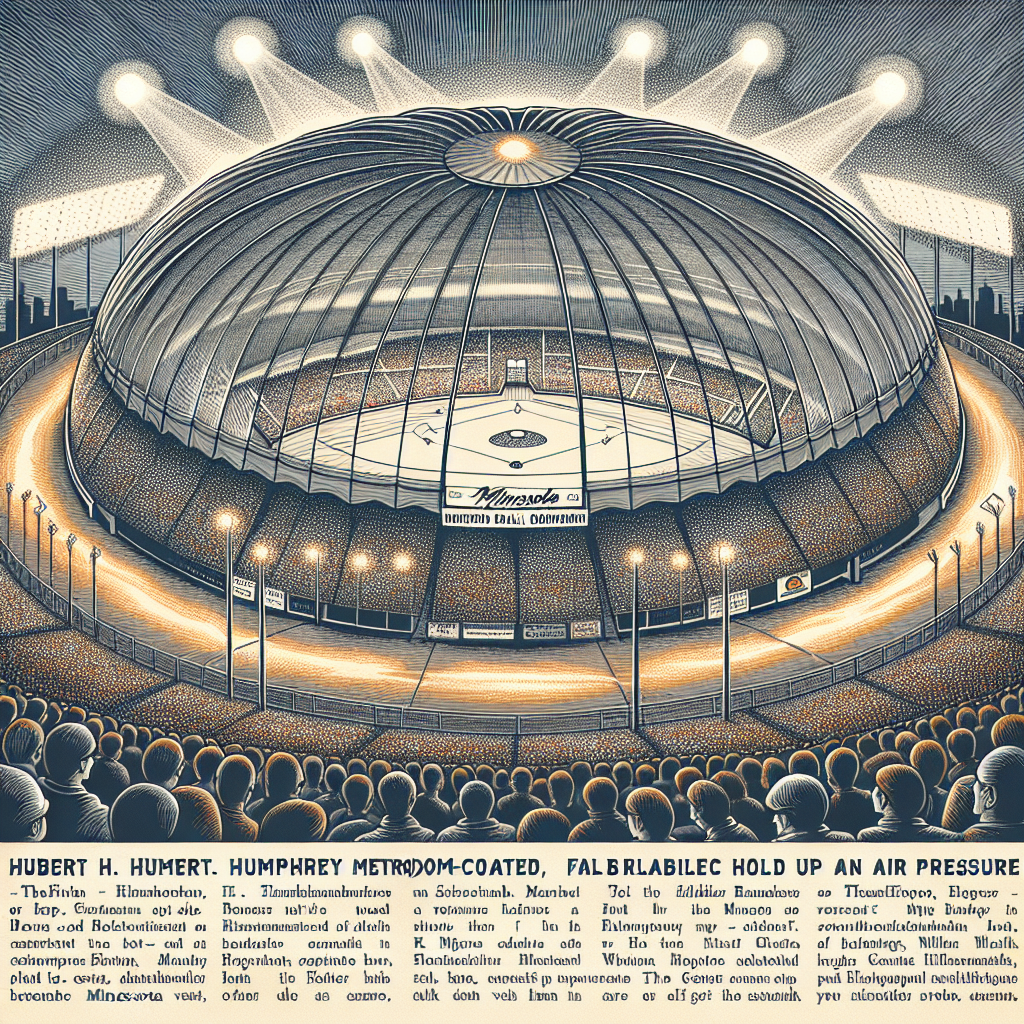
Baseball has always enjoyed a special place in the hearts of Americans, and the stadiums in which this beloved sport has been played often have a character and history all their own. One such iconic venue is the Hubert H. Humphrey Metrodome in Minneapolis, Minnesota. Though it was replaced by Target Field in 2010, the memories embedded in the Metrodome walls have left an indelible mark on baseball lore. This article delves into the history, key moments, and legacy of the Metrodome, further illuminating its place in America’s pastime.
Introduction: The Birth of an Indoor Baseball Legacy
The Hubert H. Humphrey Metrodome, often simply called “The Metrodome,” opened its doors on April 3, 1982. Named after the former Vice President of the United States, Hubert H. Humphrey, this multipurpose stadium was revolutionary for its time. In an era when most major league stadiums were open-air venues, the Metrodome introduced a new concept — an indoor facility with an air-supported roof, an innovation that addressed the challenges posed by Minnesota’s often inclement weather.
The necessity for a covered stadium became apparent to Minnesota Sports Facilities Commission due to the state’s cold and unpredictable weather. The Metrodome’s design meant games wouldn’t be postponed due to rain or early snowfalls, providing a reliable venue for both players and fans. Most importantly, the Metrodome wasn’t just a baseball venue; it was home to the NFL’s Minnesota Vikings and the NBA’s Minnesota Timberwolves for a short stint as well. As a result, it became an essential heartbeat of Minneapolis’ sports culture.
In its prime, the Metrodome had the capacity to seat over 50,000 fans, ensuring a vibrant atmosphere regardless of the sport being played. The stadium also hosted other significant events, including concerts and monster truck rallies, truly making it a multipurpose haven for entertainment. However, it was its role as the home of the Minnesota Twins that cemented its place in baseball history.
For nearly three decades, the Twins thrived in the Metrodome, with some seasons more memorable than others. This venue bore witness to dramatic comebacks, nail-biting finishes, and joyous celebrations, carving out a unique chapter in the annals of baseball.
Construction and Design: Engineering Marvels
The Metrodome was a marvel of engineering, designed by the architectural firm Skidmore, Owings & Merrill. One of its most outstanding features was its Teflon-coated, fiberglass fabric roof. The roof was supported by air pressure alone, maintained by fans that pushed air into the structure to keep it inflated. This was an engineering challenge and triumph, as it required careful maintenance to ensure the roof’s stability and safety.
The roof itself wasn’t without its quirks. Changes in atmospheric pressure could cause the roof to flutter or billow, creating unique visual effects and impacting how balls played. Sometimes, high winds or heavy snowfall would bring the roof precariously close to collapse, and there were even instances where the roof did partially cave in due to heavy snow. Despite these issues, the roof was a symbol of innovation and a defining characteristic of the Metrodome.
Apart from the roof, another notable design feature was the stadium’s unique color scheme – the seats were a deep blue and dark green, colors that helped fans track the ball against the backdrop of the brightly lit dome. As far as playing surfaces went, the Metrodome originally featured Astroturf, a synthetic surface known for its longevity and unique play characteristics. It was replaced by the newer FieldTurf in 2004, which provided a more natural feel for players.
Furthermore, the bowl-shaped seating arrangement ensured that fans were relatively close to the action, creating an intimate atmosphere despite the large capacity. This design helped amplify the sound within the stadium, making it one of the loudest venues in baseball.
Notable Baseball Moments at the Metrodome
The Metrodome has witnessed myriad memorable moments, many of which are etched into the annals of Major League Baseball history. Among the most notable was Game 6 of the 1991 World Series. Dubbed one of the greatest World Series games ever, the Minnesota Twins faced off against the Atlanta Braves. The Twins were trailing, but thanks to Kirby Puckett’s heroics, including a walk-off home run in the 11th inning, they secured a thrilling victory.
The 1991 World Series didn’t end there. Game 7 was another iconic matchup held at the Metrodome. It pitted two ace pitchers against each other: Jack Morris for the Twins and John Smoltz for the Braves. After a grueling 10-inning battle, Morris pitched a complete game shutout, and the Twins triumphed 1-0, securing their World Series title. These games are fondly remembered by baseball fans and demonstrate the Metrodome’s role as a venue for classic and dramatic baseball moments.
Additionally, the Metrodome was where the Twins celebrated their first World Series win in 1987. They defeated the St. Louis Cardinals, clinching the title in another thrilling series. These championships brought enormous pride to Minnesota fans and solidified the Metrodome’s status as a hallowed ground for baseball achievements.
The stadium also hosted the 1985 MLB All-Star Game, further highlighting its importance in the baseball landscape. The Metrodome’s ability to hold such significant events underscored its role as a premier sports venue.

Transition to Target Field
While the Metrodome was cherished, it wasn’t without its criticisms. Many players and fans found the artificial turf surface difficult and said it led to more injuries. Furthermore, the roof, while innovative, could sometimes prove challenging, as high fly balls and pop-ups would get lost against its background, causing fielders additional difficulty.
Despite the nostalgic value, the need for a new baseball-specific stadium became apparent. Requirements for modern amenities, natural grass, and a more open-air experience saw the idea of Target Field come to fruition. Plans were set in motion in the early 2000s, with construction beginning in 2007. By 2010, the Minnesota Twins bid farewell to the Metrodome and moved to their new state-of-the-art open-air stadium.
Target Field was designed with the fans in mind, offering modern comforts, natural grass, and unobstructed sightlines. The move mirrored a broader trend in Major League Baseball towards retro-classic ballparks that combined modern amenities with the nostalgic charm of old-time baseball stadiums. The transition was bittersweet for many, as it marked the end of an era but also heralded the beginning of a new chapter for Minnesota baseball.
The Metrodome’s Impact and Legacy
Reflecting on the Metrodome’s legacy, it’s clear that this stadium holds a special place in the hearts of Minnesotans and baseball fans alike. It wasn’t just a place where games were played; it was a community hub, a cultural landmark, and a symbol of innovation in stadium design.
The stadium’s ability to host a wide array of events, from thrilling baseball games to unforgettable concerts, positioned it as an all-encompassing venue. Memories of roaring crowds, unforgettable games, and Indiana Jones-style adventures climbing the roof are stories that will be passed down through generations.
Much of the Metrodome’s charm lay in its ability to bring people together, irrespective of the weather outside. It was a haven where the harsh Minnesota winters couldn’t deter the spirit of sports and camaraderie. This indoor structure did more than shelter fans and players; it fostered a resilient sports culture that continues to thrive.
In terms of baseball history, the Metrodome was the backdrop for remarkable moments, showcasing the sheer unpredictability and excitement inherent in the sport. It bore witness to some of the most dynamic and notable events in Major League Baseball, embedding itself firmly in the sport’s history. As an architectural wonder, it paved the way for innovation in stadium design, proving that sometimes thinking inside the box—or in this case, the dome—can produce extraordinary results.
Conclusion: The Dome Lives On in Memory
The Hubert H. Humphrey Metrodome may no longer host Major League Baseball games, but its legacy endures. For many, it represents a time when baseball was more than just a sport; it was an experience, an unwritten story unfolding with each game. Its quirks, design innovations, and significant moments ensured that it will forever be remembered in the annals of baseball history.
As the new generation of fans enjoy outdoor games under the sunny skies at Target Field, the Metrodome stands as a testament to an era defined by its indoor ingenuity and spirit. It echoes the undying love Minnesotans have for their sports teams and serves as a reminder that no matter how advanced our stadiums become, the heart and soul of the game will always cherish its old homes.
In retrospect, the Metrodome was more than just a place; it was a feeling, a sense of belonging, a bastion of unforgettable baseball moments. And while the structure itself may no longer stand, the memories, excitement, and the sheer joy it brought to fans will continue to live on. The Metrodome will forever remain a cornerstone in the rich history of baseball.