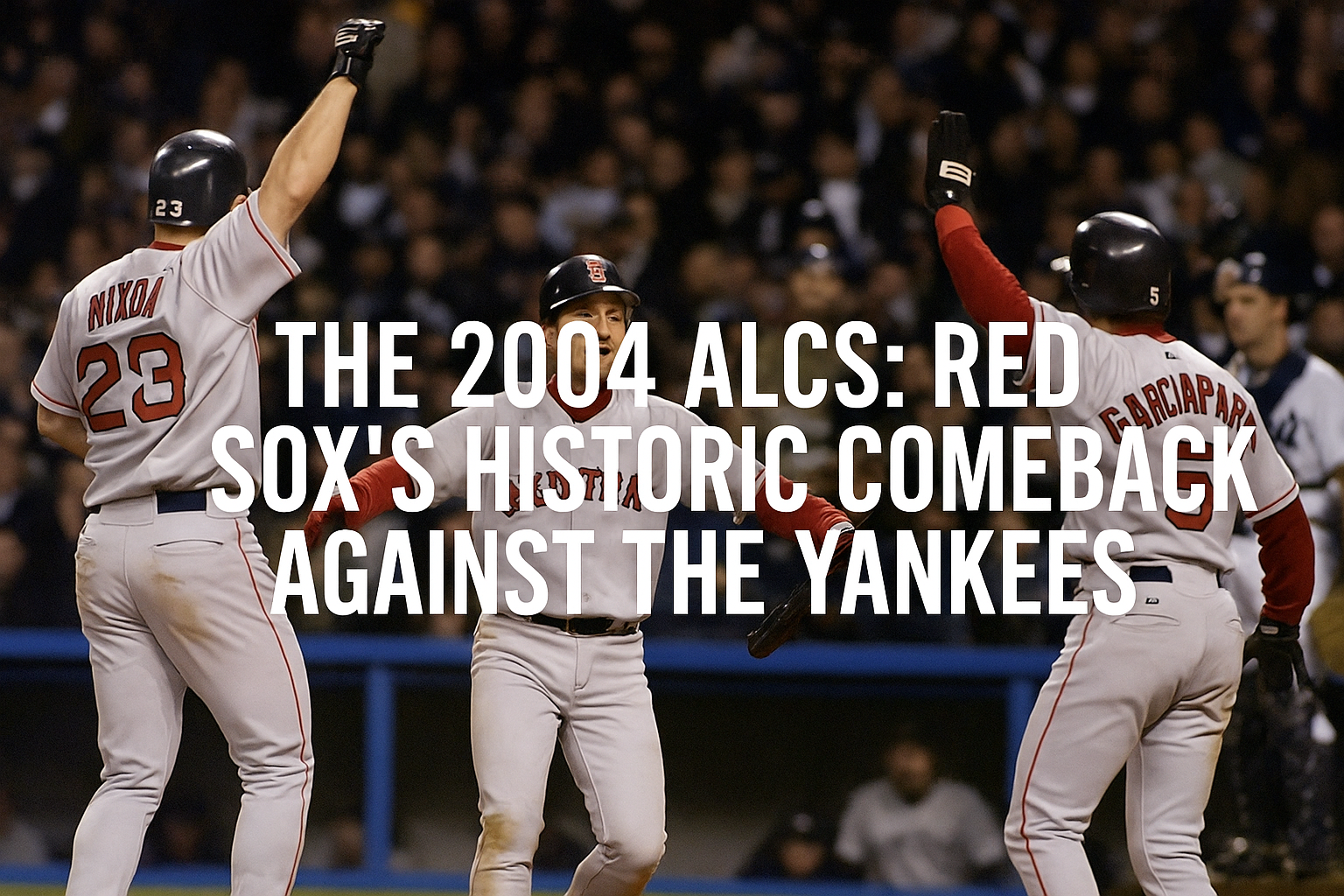
The 2004 American League Championship Series (ALCS) was not just another baseball playoff; it was the epitome of resilience, determination, and sheer willpower. The Boston Red Sox faced a seemingly insurmountable challenge against their arch-rivals, the New York Yankees. With the Yankees leading the series 3-0 and one game away from sending the Red Sox home, what unfolded next was nothing short of legendary. This series showcased not only the talent and depth of the Red Sox roster but the passion of a city craving liberation from an 86-year championship drought. It demonstrated how sports can transcend mere games, becoming a testament to human perseverance. The 2004 ALCS remains etched in history for the Red Sox’s historic comeback, replete with memorable moments, strategic brilliance, and heroic performances. In this article, we’ll delve deeply into the series dynamics, dissect the pivotal games, and understand how the Red Sox overcame the odds to achieve what was dubbed the “Greatest Comeback of All Time.”
The Stage: Clash of Titans
The 2004 ALCS was more than a series; it was a battleground featuring two historical franchises with passionate fanbases. The Yankees, with 26 World Series titles, were a powerhouse. Their roster boasted talent, experience, and a history of postseason success. The Red Sox, on the other hand, carried the weight of the “Curse of the Bambino,” a folkloric jinx that began after Babe Ruth was sold to the Yankees in 1919. This curse was thought to be responsible for their prolonged World Series drought. Fans were eager to see if this was the year their beloved team would finally break free from the curse’s grip.
Yankees’ Domination: Games 1-3
The series started in the Yankees’ favor. In Game 1, played at Yankee Stadium, the Yankees defeated the Red Sox 10-7. Curt Schilling was the Red Sox’s ace pitcher, and though he started Game 1, he struggled against the Yankees’ formidable lineup. Alex Rodriguez, Derek Jeter, and Gary Sheffield led the Yankees offensively, setting the tone right from the start. Game 2 saw the Yankees wielding a 4-1 victory, courtesy of stellar pitching from Jon Lieber and timely hitting. With confidence surging, the Yankees arrived in Boston for Game 3, where they inflicted a humiliating 19-8 defeat on the Red Sox. It seemed inevitable the Yankees would sweep the Red Sox. Fans and analysts alike expected the series to end swiftly.
A Glimmer of Hope: Game 4
With their backs against the wall, the Red Sox faced an elimination game at Fenway Park. The Yankees were ready to celebrate, but the Red Sox showed no signs of conceding. Game 4 turned into a battle of wits and endurance. The game extended into extra innings, largely because of a game-tying steal by Dave Roberts in the ninth inning, which is now a key highlight in Red Sox lore. Roberts stole second base after a rare pinch-run appearance and scored the tying run off a single, which set the stage for David Ortiz’s heroic walk-off two-run homer in the 12th inning. Fenway Park erupted as the Red Sox secured a 6-4 victory, providing a glimmer of hope and igniting a spark in the team and its fans.
The Momentum Shift: Game 5
After their incredible Game 4 win, the Red Sox entered Game 5 brimming with cautious optimism. Once more, Fenway Park served as the backdrop for what would become another epic contest stretching into extra innings. The Yankees again took an early lead, but the resilient Red Sox wouldn’t relent. In the 8th inning, a key RBI single from Jason Varitek closed the gap. That evening, David Ortiz again emerged as the hero, hitting a walk-off single in the 14th inning, allowing Johnny Damon to score the winning run. The Red Sox won 5-4, surprising many who believed they were already down and out. Hope clearly stirred Boston fans as the series traveled back to New York. The momentum had officially shifted.
Game 6: Schilling’s Redemption
Game 6 became known as the “Bloody Sock Game.” Curt Schilling returned to the mound for the Red Sox, carrying the weight of prior poor performances. Despite a serious ankle injury that required medical intervention, Schilling pitched one of the most heroic games of his career. Through sheer force of will and tactical ingenuity by the Red Sox’s medical team, Schilling’s right shoe was visibly stained with blood by the end of the game. His powerful performance limited the Yankees to one run over seven innings, leading Boston to a 4-2 victory. Mark Bellhorn contributed with a key three-run homer, while the Yankees struggled against Boston’s solid defense and inspired pitching. John Kerry, the senator and a Massachusetts native watching the game, perfectly captured the sentiment by dubbing it “one of the gutsiest performances by any athlete I’ve ever seen.” With the series tied 3-3, the unthinkable seemed possible—the Red Sox might actually accomplish a full comeback.
Game 7: Sealing the Comeback
The decisive Game 7 at Yankee Stadium was a momentous event for both teams and their fans. Riding a tidal wave of momentum and newfound belief, the Red Sox dominated from the first pitch. Johnny Damon, who had struggled earlier in the series, authored one of the most memorable performances with two home runs, including a grand slam, propelling the Red Sox to an early lead. The Yankees’ defense crumbled under pressure, while the Red Sox played flawlessly. On the mound, Derek Lowe provided a solid pitching performance, while the Yankees’ famed offense fell curiously silent. By the end of nine innings, the Red Sox claimed a 10-3 victory. The impossible had become a reality: the Red Sox won the ALCS, completing the greatest comeback in baseball playoff history. They had transformed a 0-3 deficit into a 4-3 series win, demoralizing the Yankees and empowering Red Sox Nation.
Aftermath and Legacy
The 2004 ALCS victory propelled the Boston Red Sox into a new epoch. They faced the St. Louis Cardinals in the World Series, sweeping them in four games to capture their first championship since 1918. The series against the Yankees not only lifted the mythical “Curse of the Bambino” but also redefined the Red Sox organization and its identity within Major League Baseball. It provided a psychological edge and a template for overcoming seemingly insurmountable odds. The emotions, struggles, and ultimate triumph of the 2004 ALCS were immortalized, making it a cornerstone moment in sports history. The ramifications of the series extended beyond sports, illustrating themes of perseverance and redemption that resonated profoundly among fans worldwide. It also heightened one of sports’ fiercest rivalries between the Yankees and Red Sox. This series served as a defining chapter in their storied history that would fuel their competitive spirits for generations.
Conclusion
The 2004 ALCS was more than just a baseball series; it was a seismic event in sports history. The Boston Red Sox’s legendary comeback against the New York Yankees encapsulated the quintessence of determination and belief. It defied historical precedents and elevated the narrative of curses and redemption into the annals of sporting lore. This comeback was not merely a victory on the scoreboard, but a victory of the human spirit, showcasing what can be achieved through resilience, courage, and teamwork. Red Sox players and fans alike relished the sweetness of this victory, one that brought historical vindication and broke a generational curse. It was a triumph that transcended the game itself, redefining the Red Sox franchise and emboldening their supporters. The 2004 ALCS remains a testament to what is possible when individuals refuse to submit to the status quo and instead, through collective tenacity and faith, choose to pave a new path to victory. Even years later, this remarkable series continues to inspire athletes and enthusiasts, reminding all that no challenge is insurmountable if met with unwavering perseverance.
Frequently Asked Questions
1. What made the 2004 ALCS between the Red Sox and the Yankees so historic?
The 2004 American League Championship Series (ALCS) wasn’t just historic; it was breathtakingly unbelievable, showcasing one of the most significant comebacks in sports history. The Boston Red Sox were on the brink of elimination, lagging behind with a 3-0 deficit against the New York Yankees—a daunting challenge no team had ever overcome in Major League Baseball postseason history. The Yankees, replete with talent and experience, appeared to have the series in the bag. However, the Red Sox’s comeback was a resounding testament to their resilience and determination. No team had ever recovered from such a deficit, yet the Red Sox defied the odds and sealed their place in the annals of sports lore. Their victory wasn’t just about physical prowess but was a narrative of unwavering spirit and tenacity. They went from being almost written off to scripting a saga of triumph, finally overcoming their fiercest rivals and, eventually, breaking the ‘Curse of the Bambino’ by winning the World Series.
2. How did the Red Sox manage to pull off such an incredible comeback?
The Red Sox’s remarkable comeback was an intricate mix of strategic brilliance, exceptional plays, and a never-say-die attitude. It started with Game 4, which saw dramatic heroics when Dave Roberts famously stole second base in the ninth inning, later scoring the run that tied the game, sending it into extra innings. This single play is often hailed as a pivotal moment that shifted momentum. Then, David Ortiz, a defining figure throughout the series, hit a dramatic two-run walk-off home run in the 12th inning, giving Boston their first win. Game 5 went to 14 innings, again ending with Ortiz being a hero with a single that brought Johnny Damon home for the win. The Red Sox’s pitching was equally heroic, with Curt Schilling famously pitching Game 6 despite an injured ankle that required an innovative medical procedure, later dubbed the ‘bloody sock game.’ By Game 7, the Red Sox were unstoppable, clinching the win decisively amidst a euphoric sea of their fans.
3. What was the significance of the ‘bloody sock game’?
The ‘bloody sock game,’ as it came to be known, is one of the most iconic moments not just in the 2004 ALCS, but in baseball history. This refers to Game 6 of the series when Boston Red Sox pitcher Curt Schilling battled through an excruciating ankle injury to deliver an outstanding performance. Schilling had undergone a special procedure to stabilize a tendon in his ankle, which was visibly bleeding through his sock during the game. Despite this, he managed to deliver a masterful pitching performance against the strong Yankees lineup, contributing significantly to the Red Sox’s victory in that game. This gutsy display of dedication and grit, immortalized by the image of blood soaking through his sock, exemplified the fighting spirit of the Red Sox throughout this incredible comeback.
4. How did the ALCS victory impact the Red Sox’s pursuit of ending the ‘Curse of the Bambino’?
The ALCS victory was monumental in lifting the psychological burden of the ‘Curse of the Bambino,’ a superstition that had haunted the Red Sox since 1918 after trading Babe Ruth to the Yankees. This ALCS triumph symbolized the breaking of that long-standing curse, challenging the mental barrier that had plagued the team and its fanbase for decades. The victory against the Yankees was emblematic because it came against the same franchise with which Ruth found monumental success. Riding the wave of this momentum, the Red Sox went on to sweep the St. Louis Cardinals in the 2004 World Series, clinching their first championship in 86 years. It was a cathartic moment for generations of Red Sox fans, finally erasing years of heartache and near-misses.
5. What was the broader impact of the 2004 ALCS on baseball history?
The 2004 ALCS changed the landscape of baseball in several ways. It redefined what was possible in sports, proving that no deficit is insurmountable with resilience and heart. This series underscored the unpredictable nature of baseball, where momentum can shift and underdogs can triumph against insurmountable odds. It also intensified the historic Red Sox-Yankees rivalry, elevating it to legendary status in the sports world. Furthermore, this comeback inspired future teams to believe in their potential to overcome odds, fostering a competitive spirit and determination. The 2004 ALCS remains a blueprint for motivation, reminding teams and fans alike that the game isn’t over until the final out, and anything is possible with the right mix of skill, strategy, and willpower.