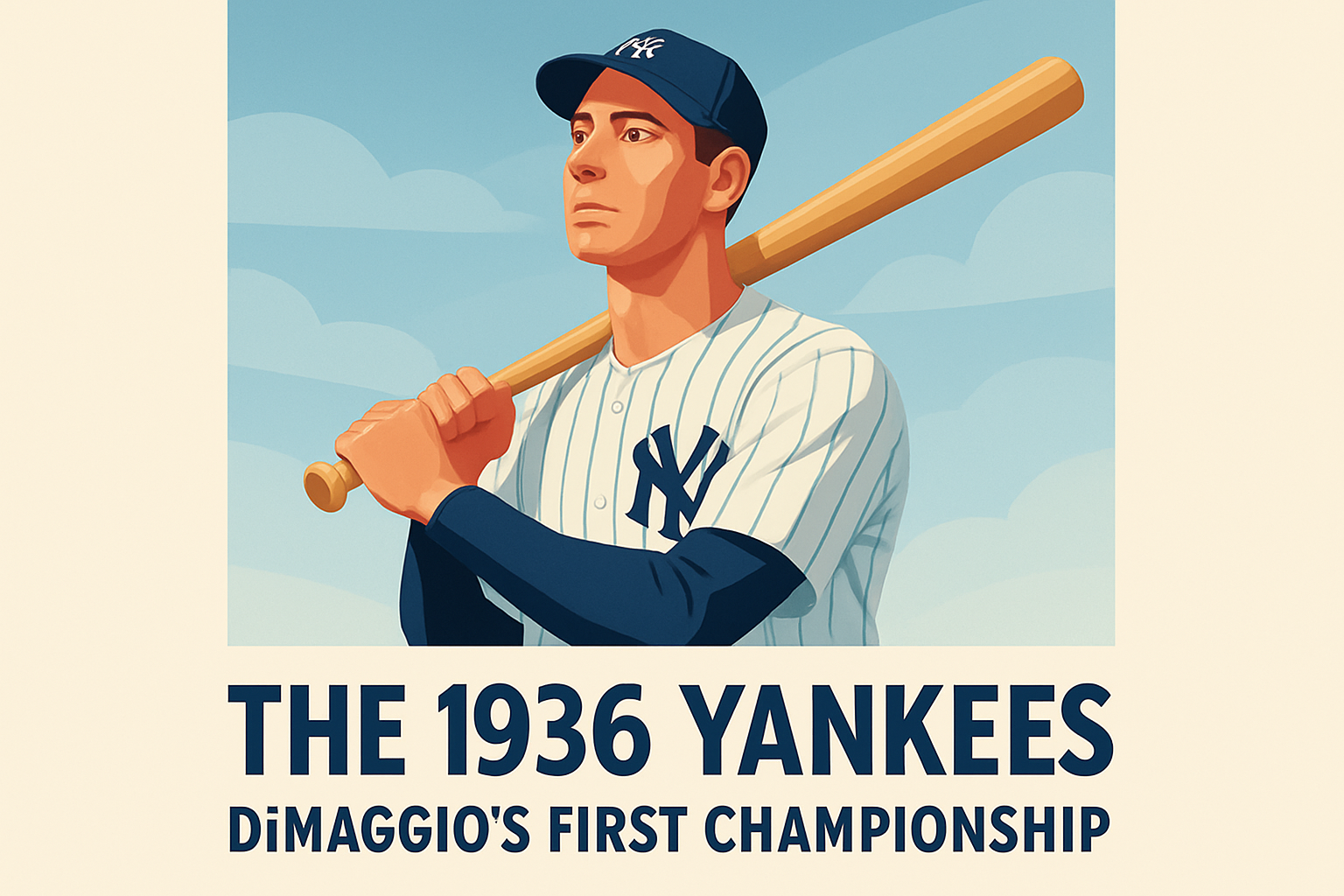
The 1936 New York Yankees team holds a special place in the annals of baseball history as it marked the beginning of an era dominated by one of the sport’s most legendary players: Joe DiMaggio. The Yankees of this year, often celebrated for their performance and talent depth, were instrumental in shaping Major League Baseball (MLB)’s narrative. This article explores why the 1936 Yankees matter, focusing on Joe DiMaggio’s impact and his first championship win. By analyzing their season, we aim to highlight the team’s strengths, the key players involved, and the broader implications of their triumph. In doing so, we can better understand how their accomplishments influenced the sport and left an indelible mark on American culture.
Key terms central to this article include “World Series,” referring to MLB’s championship series played between the American League (AL) and National League (NL) champions, and “rookie,” denoting a player’s first season in major leagues. Recognizing these terms helps appreciate the context of the Yankees’ achievement and DiMaggio’s emergence as a pivotal player. The discussion will also cover the Yankees’ strategic approach, the performance of their players, and the competitive landscape of the 1936 MLB season. Understanding these factors enriches our appreciation of this era in baseball and offers insights into the dynamics of sports success.
Setting the Stage: The 1936 MLB Season
The 1936 MLB season was characterized by intense competition, with multiple teams striving for the prestigious World Series title. The New York Yankees, already a storied franchise, entered the season with new vigor and resolve. This period was marked by a broader transformation within baseball, as teams increasingly focused on building well-rounded squads capable of sustained success. The Yankees understood this shift and had been strategically enhancing their roster to reclaim their spot as the premier team in baseball.
The season itself was a showcase of talents, with both emerging and established players making an impact. Fans were eager to see who would rise to the occasion and which team would ultimately capture the coveted championship. For the Yankees, the inclusion of Joe DiMaggio—an already promising talent from his minor league days—signaled a noteworthy addition to their lineup. His presence foreshadowed a shift not just within the Yankees but potentially across the league.
DiMaggio’s Arrival: A Rookie Sensation
Joe DiMaggio’s entry into the Yankees and MLB marked the arrival of a player destined to reshape the sport. Playing as a center fielder, DiMaggio quickly distinguished himself through his exceptional hitting prowess and defensive capabilities. During his rookie season, he set the baseball diamond ablaze with a remarkable .323 batting average, earning his place among the league’s elite players.
DiMaggio’s debut was not only a personal triumph but a crucial element in the Yankees’ victorious campaign that year. His extraordinary consistency at bat and intuitive outfield play added a new dimension to the team. Furthermore, he played alongside other legendary Yankees like Lou Gehrig, creating a formidable combo that rattled opponents and thrilled fans. DiMaggio’s reputation as a rookie sensation greatly boosted the Yankees’ performances throughout the season.
The Yankees’ Road to the World Series
The Yankees’ journey to the World Series in 1936 was marked by strategic excellence and consistent victories. Armed with a blend of seasoned veterans and fresh talent, the Yankees finished the regular season with a notable 102-51 win-loss record, securing the American League pennant. Their dominance was a product of well-executed strategies, with Manager Joe McCarthy skillfully guiding the team dynamics and performances.
One crucial aspect of the Yankees’ success was their depth in both offense and defense. With players like Lou Gehrig, who contributed mightily with 49 home runs and 152 RBIs, the Yankees boasted a powerful lineup. The team’s pitching staff, led by Red Ruffing and Lefty Gomez, effectively neutralized opponents, setting the stage for a formidable World Series campaign. Their path to the championship highlighted resilience and a relentless pursuit of excellence.
| Player | Position | Batting Average | Home Runs | RBIs |
|---|---|---|---|---|
| Joe DiMaggio | Center Fielder | .323 | 29 | 125 |
| Lou Gehrig | First Base | .354 | 49 | 152 |
| Bill Dickey | Catcher | .362 | 22 | 107 |
The 1936 World Series: Triumph Over the Giants
The 1936 World Series pitted the Yankees against the New York Giants, which heightened interest due to the local rivalry aspect. The Yankees’ performance throughout the series highlighted their ability to rise to the occasion when stakes were highest. Over six games, the Yankees defeated the Giants, capturing their fifth championship title. This series victory was more than just a win—it heralded the beginning of a new era for the Yankees.
Game 5 of the series stands as a testament to the Yankees’ dominance, with the team capturing a decisive 13-5 victory, showcasing both offensive firepower and defensive strength. DiMaggio, with significant contributions throughout the series, was instrumental in sealing the championship. His performance, alongside veterans like Gehrig and the strategic prowess of Joe McCarthy, secured the Yankees’ place in history as a rebuilt powerhouse.
Legacy and Impact of the 1936 Yankees
The legacy of the 1936 Yankees extends far beyond the World Series victory. This season marked the dawn of a dominant era for the team, driven by strategic investments in player development and tactical enhancements. Beyond the immediate success, the 1936 Yankees influenced the broader MLB landscape by setting new benchmarks for excellence and professionalism.
Joe DiMaggio, through his performance and potential, became a centerpiece that the Yankees would build around in subsequent years. The team’s championship wins would continue over the following seasons, cementing their status as one of the most formidable dynasties in sports. The 1936 Yankees, with their blend of innovation and tradition, redefined what it meant to be champions, leaving an inspiring legacy for future teams.
The 1936 Yankees’ Influence on Baseball Culture
The 1936 Yankees not only dominated the baseball field but also played a pivotal role in shaping baseball’s cultural impact in America. The team’s success stories became narratives that resonated with fans across the nation, turning baseball into a central entertainment form. This era of baseball, often called its golden age, saw increased interest in both local ballparks and national broadcasts, fueled in part by the Yankees’ popularity.
DiMaggio’s rise as a sporting hero mirrored the American ideal of excellence and perseverance. His contributions to the Yankees’ success symbolized the transformative power of young talent, inspiring countless young athletes. Similarly, the 1936 Yankees’ emphasis on teamwork and strategic acumen became a model for future sports teams, highlighting the importance of cohesive management alongside raw talent.
Economic and Technological Advancements
The Yankees’ triumph in 1936 had economic ramifications as the team’s success drove increases in attendance and merchandise sales. The Yankees’ leadership capitalized on this surge by investing in better facilities and grooming talent, which perpetuated their dominance. This era also witnessed technological advancements, such as the introduction of radio broadcasts, which allowed games to reach a larger, national audience, further entrenching baseball in American culture.
The technological advancements also aided in expanding the visibility of players like DiMaggio, making him a household name. This increased media exposure not only elevated the profiles of players but also enhanced the public’s engagement with the sport, creating a virtuous cycle of interest and investment. The 1936 Yankees were at the heart of this evolution, driving an increased commercial and cultural investment in baseball.
Summarizing the 1936 Yankees’ Epic Season
The 1936 Yankees embodied a renaissance in baseball, heralding the arrival of Joe DiMaggio and shaping the franchise’s future successes. Their strategic brilliance, combined with exceptional performances, secured a championship season that continues to be celebrated. The team’s legacy is evident in both the records they set and the cultural shifts they influenced. They showed that with the right mix of talent, leadership, and innovation, excellence is achievable.
As we reflect on this historic season, it’s crucial to recognize the enduring influence the 1936 Yankees had on the evolution of baseball. Their achievements pushed the boundaries of what’s possible in team sports, providing a framework for championship-building. The impact of DiMaggio’s championship win resonated beyond the diamond, influencing generations of athletes and fans alike.
For current baseball enthusiasts and scholars, revisiting the 1936 Yankees’ journey offers invaluable lessons in sportsmanship, strategy, and cultural impact. It underscores the importance of nurturing talent and fostering unity within a team to achieve monumental success. For those inspired by this narrative, exploring the rich history of baseball can continue to provide insights into the dynamic nature of competitive sports.
Frequently Asked Questions
1. Why is the 1936 Yankees team considered so significant in baseball history?
The 1936 New York Yankees are often hailed as one of the most iconic teams in baseball history due to several compelling factors. Firstly, they were the team that introduced a young Joe DiMaggio to the Major Leagues. DiMaggio, even in his rookie year, displayed an exceptional level of talent that would set the stage for his legendary career. The 1936 season was also significant because it marked the beginning of a new era of dominance in MLB, as the Yankees won the World Series and initiated a run of four consecutive championships. The team was remarkable not only for its winning record but also for its incredible depth in talent, boasting stars like Lou Gehrig, Bill Dickey, and Lefty Gomez. They played a brand of baseball that was both powerful and efficient, significantly influencing how the game was perceived and played. The 1936 team laid the groundwork for what would become the Yankees’ monumental dynasty, establishing a lasting legacy in the sport.
2. Who was Joe DiMaggio and what was his impact on the 1936 Yankees?
Joe DiMaggio, often referred to as “The Yankee Clipper,” was an Italian-American baseball player whose rookie season with the 1936 Yankees made an indelible impact on the team and the sport. His addition to the Yankees roster brought a new level of excitement and talent. As a center fielder, DiMaggio was noted for his grace, athleticism, and a rifle arm. His batting prowess quickly became evident as he posted a .323 batting average, delivered 29 home runs, and drove in 125 runs during his first season. DiMaggio’s presence on the team complemented other stars such as Lou Gehrig, providing a formidable offensive lineup that terrorized opposing pitchers. His style of play attracted fans and set new standards for outfield performance, both offensively and defensively. DiMaggio’s impact on the Yankees went beyond statistics as his poise and skill underscored the rise of a baseball dynasty that would capitalize on his talents for years to come.
3. What highlights from the 1936 season exemplify the Yankees’ dominance?
The Yankees’ 1936 season was replete with highlights that showcased their dominance over Major League Baseball. They finished the regular season with a substantial 102-51 win-loss record, clinching the American League pennant in a commanding fashion, 19.5 games ahead of the second-place Detroit Tigers. This season also featured the American League MVP performance of Lou Gehrig, who continued to demonstrate his power-hitting capabilities with 49 home runs and 152 RBIs. In addition to individual brilliance, the Yankees boasted a balanced and robust pitching staff led by Lefty Gomez, who finished the season with a 13-7 record and a 3.27 ERA. Gomez’s performance in the postseason, alongside the clutch hitting from DiMaggio and Gehrig, was crucial to the Yankees’ success in the 1936 World Series. They overcame the New York Giants in six games, showcasing a blend of strategic hitting and reliable pitching that underscored their superiority in the league.
4. How did the Yankees’ performance in the 1936 World Series contribute to their legacy?
The 1936 World Series was a pivotal moment in Yankees history as it both established and solidified their status as a dominant force in baseball. Facing off against their crosstown rivals, the New York Giants, the Yankees captured the championship in six games. The series highlighted their depth and quality of play, as they defeated a talented Giants team that included future Hall of Famers such as Mel Ott and Carl Hubbell. Key contributors for the Yankees included Joe DiMaggio, who struck three hits in his World Series debut, and Lou Gehrig, whose powerful hitting remained vital. The pitching staff, headlined by Lefty Gomez, who posted two wins during the series, and Red Ruffing, who also played a pivotal role, provided the team with the necessary edge to seize victory. This championship win spearheaded a period of Yankees dominance, setting the stage for multiple subsequent titles and reinforcing their image as baseball’s preeminent team.
5. What made the 1936 Yankees’ roster so exceptional compared to other teams at the time?
The 1936 Yankees boasted one of the most talented and balanced rosters in MLB history, which set them apart from other teams during that time. Their lineup was a blend of rising stars, seasoned veterans, and tactical brilliance. Joe DiMaggio, in his rookie season, provided an explosive entry into the league, demonstrating both offensive and defensive skills that were unmatched for a player of his age. Lou Gehrig, already an established star, delivered a stellar performance as the team’s first baseman and a formidable hitter. Players like Tony Lazzeri, Bill Dickey, and Red Rolfe rounded out a lineup that was both powerful and consistent at the plate. The pitching staff was equally impressive, with Lefty Gomez and Red Ruffing leading the rotation with strategic and dominant performances. The team also benefited from outstanding management under Joe McCarthy, whose leadership and baseball acumen meshed these talents into a cohesive and formidable squad adept at overcoming opponents with a combination of power, strategy, and depth. This exceptional balance and talent were key in catapulting the Yankees to successes and sustaining their preeminence in baseball for years to come.