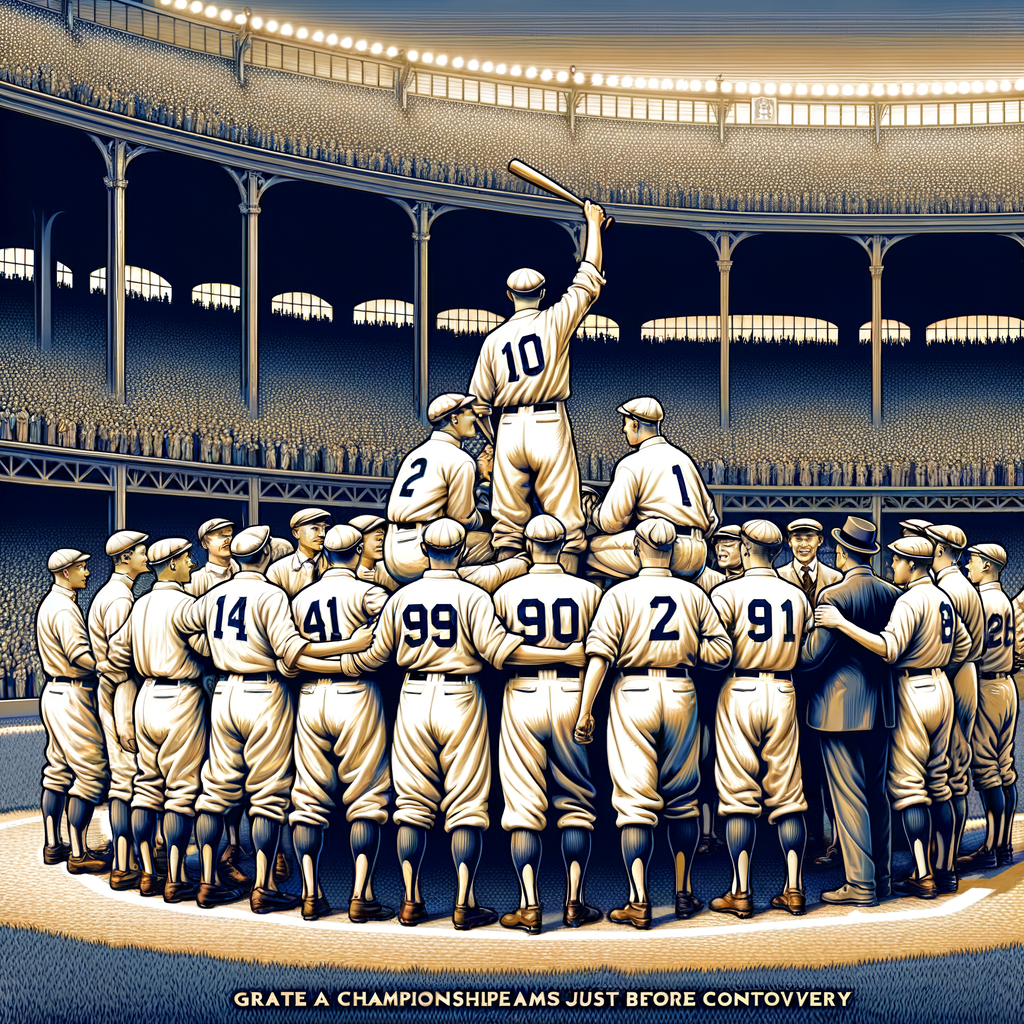
The Chicago White Sox of 1917 holds a remarkable chapter in the annals of baseball history. This team achieved extraordinary success well before the infamous scandal that shadowed the franchise two years later. The world remembers the 1919 “Black Sox,” whose scandalous behavior tarnished their legacy forever. However, the victorious triumph of the 1917 team presents a different tale filled with athleticism, talent, and sheer determination. This narrative is not just about baseball; it’s about a period marked by cultural shifts and historical contexts influencing the sports landscape. The White Sox’s journey in 1917 offers rich insights into a team that dominated baseball and captured the hearts of fans with their impressive play.
An exploration of their incredible season is to benefit from deep stories of pivotal games, legendary talent, key managerial decisions, and the socio-political atmosphere surrounding them. These details portray how the 1917 White Sox captivated a nation and thrived in perhaps their hall of fame season if retrospectively considered independent of their 1919 missteps.
Understanding the significance of this victory involves examining the players’ dedication, management strategies, and societal factors that intertwined, creating an exemplary baseball team. The fascination with sports history delves deeper when considering this championship context paralleling the social dynamics and challenges of early 20th-century America. As we trace this journey, the intricate patterns emerge showing why the 1917 White Sox deserve recognition beyond the shadows cast by future events.
The 1917 Season: A Display of Excellence
The 1917 season marked an era where the Chicago White Sox exhibited top-tier baseball prowess that dominated both American League (AL) standings and their World Series opponents. During this period, baseball was undergoing transformations with technological innovations altering gameplay, with home audiences rapidly increasing.
The White Sox began their season on a strong note, maintaining an exceptional pace that set them apart from their competition. Key players such as Eddie Collins and Shoeless Joe Jackson contributed significantly to the lineup. Eddie Collins, with his strategic mind and exceptional base-running skills, became an irreplaceable figure while Joe Jackson’s consistent batting averages demonstrated his near-legendary talents.
Their pitching lineup was led by Red Faber, whose curveballs and strategic pitching choices made substantial impacts on critical games. Faber’s role was indispensable during clutch moments, delivering under pressure to secure victories when much was at stake.
Manager Pants Rowland demonstrated profound leadership, orchestrating strategies that harmonized players’ unique abilities into effective team performances. His management style cultivated an environment of coordination, ensuring reliance on each team member’s strength for the collective goal of victory.
Key Players of the 1917 White Sox
The roster of the 1917 White Sox featured many iconic players who left indelible marks on baseball history. Their contribution not only highlights individual brilliance but also underscores the essence of teamwork that brought success.
Eddie Collins, often seen as the core strategizer, combined intellect with athleticism. His ability to read the field and anticipate plays expanded possibilities for offensive maneuvers. Collins’s agility and speed fortified the team’s defensive play, driving opponents to adjust their strategies unsuccessfully.
“Shoeless” Joe Jackson remains a household name due to his prowess on the field. Batting .301 over the season, he sustained a formidable offensive presence. His ability to hit in clutch moments and field with acrobatics justified his inclusion among baseball greats. Jackson’s role in the 1917 successes is essential understanding his prowess independent of the subsequent scandal overshadowing future years.
Pitcher Red Faber was integral in delivering wins during critical points in the season. Faber contributed significantly to the White Sox’s championship drive, known for stamina and adaptability against varying opposition. His performance in the World Series would prove decisive, showcasing techniques that would be studied and replicated by future generations.
The World Series Glory
The 1917 World Series saw the Chicago White Sox face off against the New York Giants, in what would be a memorable series cementing their legacy. The White Sox emerged victorious, defeating the Giants four games to two. Fans witnessed pitching excellence and strategic play that contributed to the White Sox’s triumph.
Game one commenced at Comiskey Park drawing large crowds enthusiastic for an outstanding performance from their local team. Red Faber’s pitching initiated the series with formidable artistry, ensuring their first win. The momentum gained was pivotal, boosting team morale and inspiring confidence among players.
The series returned to New York for subsequent games, presenting challenges adjusting to new environments. However, the White Sox demonstrated adaptability, with pitchers delivering spectacular performances locking Giants hitters in difficult positions.
Game five became a noteworthy occurrence, intertwining heroic efforts from Eddie Collins with strategic managerial decisions from Rowland. Collins’ base running acumen broke the stalemate, leading to a vital performance instigating crucial runs assisting toward their victory of that game – a stepping stone towards the eventual World Series win.
The final game brought the series back to Comiskey Park. The stage witnessed classic baseball finery, witnessing the team’s comprehensive display of skills. The victory parade in Chicago following this victory left an indelible mark on the fans, elevating the White Sox to hero status. The series highlighted teamwork, evident in each player’s contribution, uniting fans under the banner of success.
Managerial Genius: Pants Rowland
Rowland’s management drew from calculated foresights and transparent communication throughout the season, ensuring his strategies matched the evolving game dynamics. Behind the 1917 championship lay a tapestry of decisions balancing player talents and situational needs. Rowland steered the team towards mutual respect and understanding, viewing challenges as opportunities refined through strategic insight.
His role transcended normal managerial duties, building a robust team culture emphasizing collective success over individual accolades. This philosophy became evident as players executed their roles with precision within the established framework, leaving nothing to chance.
Understanding opposition strengths and weaknesses became Rowland’s forte. His intuitive game head, built from years of observational learning within baseball circles, ultimately crafted a team synonymous with success, only to be slightly diminished by the subsequent scandal in later years. Nonetheless, his contributions retain grand narratives within baseball history.
Beyond Baseball: Socio-Cultural Impact
The 1917 White Sox’s championship embodied more than pure sports achievement; it resonated within a society undergoing transformation. America of 1917 faced numerous social challenges, with the country edging towards involvement in World War I, shaping public consciousness across various dimensions inclusive of sports.
Baseball emerged as a relatable escape offering solace against appearing adversities. The White Sox’s extraordinary journey in the championship instilled hope, providing audiences moments of joy amid a backdrop of societal anxieties derivative from emerging global conflicts.
Their triumph symbolized broader undercurrents reflective in society – a testament to unity, resilience, and unwavering spirit. These symbols unified a community, strengthening civic frameworks despite challenges. The social significance extended through the broader public domain transcending traditional fan boundaries and reaching into broader hearts of national sentiments.
Conclusion
The 1917 White Sox represent a prestigious chapter in the baseball saga, demonstrating excellence well before scandal clouded their legacy. Their journey, punctuated by notable victories and distinctive player contributions, echoes through time inviting admiration for their prowess and strategic innovation.
This team’s narrative served as history’s mirror, reflecting early 20th-century American socio-cultural dynamics while sharing an unsung heroism amidst upcoming challenging times. Despite later controversies, the 1917 team transcends and stands within their rightful pedestal, enabling generations to appreciate unspoiled excellence.
In studying these champions, a multitude of insights emerge encompassing the strategic brilliance of team dynamics, cultural contexts influencing sports ecosystems, and the power of athletic accomplishments in uplifting collective spirits. With this recognition unfolds, an understanding and appreciation acknowledging the 1917 White Sox not just as sporting champions, but as timeless hallmarks of baseball’s rich tapestry.
Frequently Asked Questions
1. What made the 1917 Chicago White Sox a remarkable team before the infamous scandal?
The 1917 Chicago White Sox were exceptional due to a combination of talent, strategy, and leadership. Managed by the legendary Clarence “Pants” Rowland, the team boasted an impressive roster of players who brought unique skills to the field. Players like Eddie Cicotte, a master pitcher, and Shoeless Joe Jackson, one of the greatest hitters of the time, were instrumental in the team’s success. Their teamwork and determination led them to achieve a regular-season record of 100-54, which was a significant achievement in the dead-ball era of baseball, where low scoring games were common. This team’s dominance in both pitching and offense made them a formidable opponent and allowed them to capture the American League pennant, eventually leading to their World Series victory against the New York Giants. This World Series win is particularly noteworthy as it was the team’s second in history and solidified the White Sox as a powerhouse of their era before the darker times of the 1919 scandal.
2. How did the 1917 World Series unfold for the Chicago White Sox?
The 1917 World Series was a thrilling encounter that demonstrated the Chicago White Sox’s prowess and strategic excellence. The series was played against the New York Giants, a formidable team in their own right. The White Sox clinched the championship by winning the series 4 games to 2. It was a hard-fought battle characterized by standout performances from several key players. Eddie Cicotte’s exemplary pitching took center stage; his arm was instrumental in neutralizing the threat posed by the Giants’ formidable offensive lineup. Defensive plays were also crucial, with players executing strategic moves that turned potential scoring opportunities for the Giants into outs. Offensively, the White Sox were relentless; the likes of Shoeless Joe Jackson and Happy Felsch provided the firepower needed to score critical runs. Each game was a testament to their teamwork and tactical acumen. The clinching win in Game 6, held at the Polo Grounds in New York, showcased the team’s all-around capabilities, securing their place in baseball’s hall of fame long before controversy shadowed their later achievements.
3. Who were the standout players on the 1917 White Sox team?
The 1917 White Sox boasted several standout players who played pivotal roles in their championship victory. Eddie Cicotte was the ace pitcher whose performances on the mound set the tone for their success – his ability to control games was unrivaled, earning him a place as one of the era’s top pitchers. Shoeless Joe Jackson, renowned for his batting prowess, was a key offensive weapon, delivering hits when they mattered most and maintaining an exceptional batting average throughout the season. Third baseman Buck Weaver was integral, both in infield defense and as a reliable hitter, providing consistency in the lineup. Happy Felsch, an outfielder with both power and defensive skill, delivered numerous clutch plays. Additionally, catcher Ray Schalk was known for his game-calling ability and defensive acumen behind the plate, guiding the pitchers effectively through crucial series moments. Together, these players formed a cohesive unit that excelled in all aspects of the game, each bringing unique skills that complemented the overall team strategy.
4. What was the significance of the 1917 White Sox’s victory for the city of Chicago?
The 1917 victory was a momentous occasion for the city of Chicago, resonating far beyond just the baseball community. At a time when America was grappling with the realities of World War I, sports provided an escape and a source of pride. The triumph of the White Sox was not only a symbol of athletic excellence but also a morale booster for a city caught in the throes of wartime uncertainty. Chicagoans found in their baseball heroes a reason to unite and celebrate during a period when daily life was marked by sacrifice and concern for loved ones overseas. The White Sox’s World Series victory offered a narrative of local achievement on the national stage, helping to elevate Chicago’s status within the sports world and bringing a lasting legacy of pride to the city’s rich sports history. This victory further solidified Chicago’s baseball credentials and contributed to a growing sense of community and identity that baseball uniquely cultivates.
5. How did the achievements of the 1917 team influence the legacy of the White Sox prior to the 1919 scandal?
The achievements of the 1917 Chicago White Sox team were foundational in establishing the franchise’s early legacy of success. Before the 1919 scandal tarnished their name, the White Sox were seen as exemplars of professional baseball, defining an era of sportsmanship and skill. Their victory served as a benchmark for the team’s capabilities and set a standard for future White Sox teams to aspire to. The 1917 success story was often referenced as a golden era of American sports, characterized by its purity and competitiveness. This narrative became a crucial part of Chicago’s identity and the team’s mythology, offering a glimpse of what a united, talented team can achieve. The memories of 1917 served as a powerful counterpoint to the scandalous behavior of 1919, reminding fans and historians alike that the White Sox were once at the pinnacle of their sport because of their rightful, hard-fought courage and talent, rather than notoriety. This layer of history continues to influence how the team is perceived, reminding fans and players of a time when integrity and skill reigned supreme on the baseball diamond.