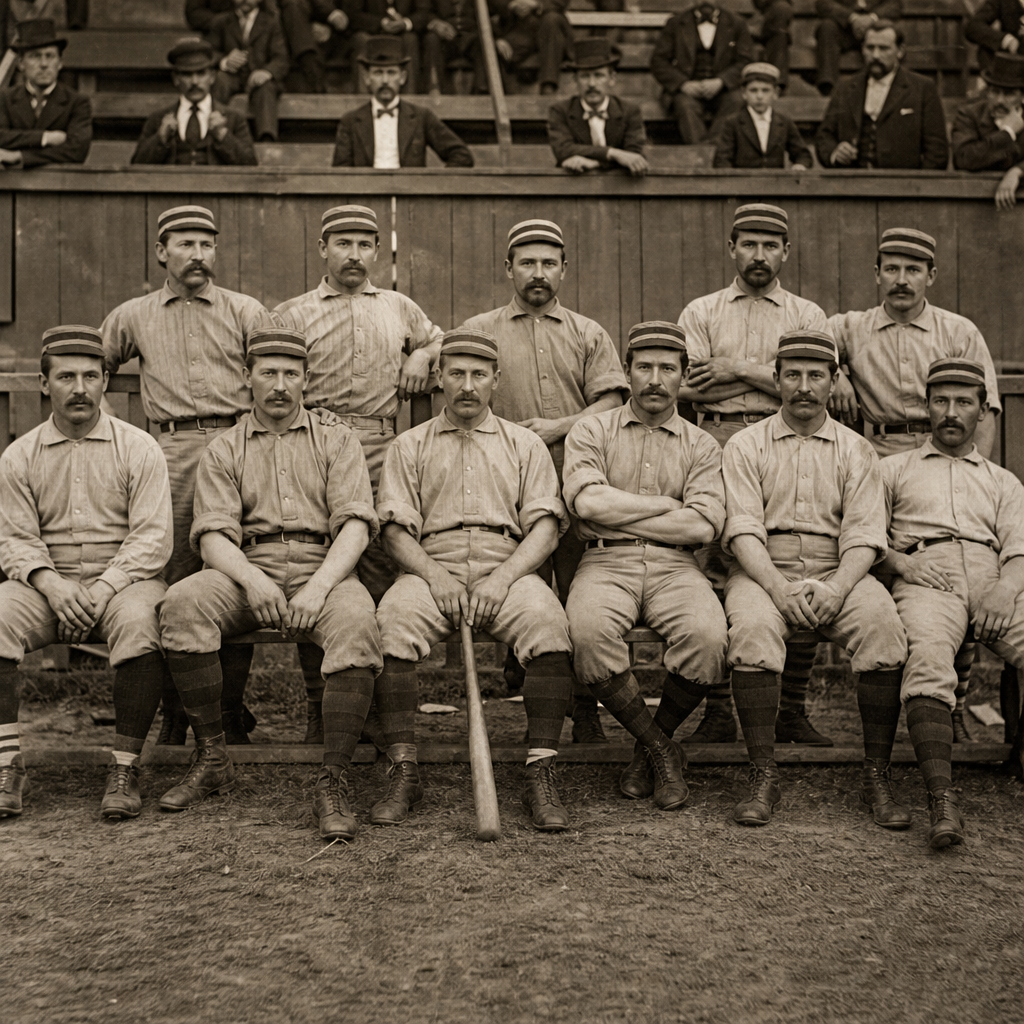
The 1875 National Association season stands at the center of baseball’s first great business failure. Founded in 1871, the National Association of Professional Base Ball Players was the sport’s first fully professional major league, yet by the end of 1875 it had exhausted the patience of owners, players, newspapers, and fans. To understand why the National Association collapsed, it helps to define the issue clearly: this was not simply a weak pennant race or a few unstable clubs. It was a breakdown in governance, finance, scheduling, competitive balance, and public trust, all happening at once during a pivotal moment in the early history of baseball.
In practical terms, professionalization meant paying players openly, organizing clubs as businesses, charging admission consistently, and treating baseball as an entertainment industry rather than a gentleman’s pastime. That transition was messy. I have spent years working through nineteenth-century league records, box scores, club minutes, and newspaper disputes, and the pattern is unmistakable. The National Association created a market for baseball labor and a template for urban spectator sport, but it never built the institutional controls required to sustain that market. Clubs came and went quickly, stars shifted teams with little restraint, and league authority remained weak because the member clubs guarded local autonomy.
The 1875 season mattered because it exposed every flaw in the system at maximum scale. The Boston Red Stockings, led by Harry Wright and anchored by stars such as Albert Spalding and Cal McVey, dominated the standings. Their excellence was real, but the league around them was fraying. Some clubs folded midyear. Others skipped road trips, disputed gate receipts, or struggled to field competitive teams. The championship lacked suspense, and the business model looked increasingly unreliable to the stronger clubs that generated most of the revenue and publicity.
For readers exploring Professionalization and Business within early baseball, this season is the hub because nearly every later development flows from it. Questions about league structure, owner power, player contracts, franchise stability, scheduling standards, and the economics of gate-driven sport all converge here. The collapse of the National Association after 1875 cleared the way for the National League in 1876, a new organization designed explicitly to solve the old league’s commercial and administrative failures. The lesson is simple: baseball did not become a durable national business merely by paying players. It became durable only when money, rules, and authority were aligned.
What the 1875 season revealed about the National Association’s structure
The National Association was a league in name, but it operated more like a loose confederation of clubs. There was no powerful central office, no commissioner in the modern sense, and limited ability to punish teams that ignored obligations. Membership rules existed, but enforcement was inconsistent because club representatives governed themselves. In my view, that structural weakness explains more than any single scandal or pennant result. A professional sports league needs centralized authority over scheduling, admissions, disputes, and membership standards. The Association never fully accepted that principle.
The 1875 alignment included clubs from Boston, Philadelphia, Hartford, St. Louis, Chicago, Louisville, New Haven, Brooklyn, and New York. On paper, that looked broad and impressive. In practice, travel costs were heavy, local revenues varied sharply, and not all markets could sustain first-class professional clubs. Teams were expected to arrange games and meet commitments, but there was too much room for improvisation. Clubs could protect their own interests by canceling unattractive dates or avoiding expensive trips. That may have been rational from an individual owner’s perspective, yet it undermined the credibility of the entire competition.
Another problem was entry and exit. The Association did not create a stable franchise system with high barriers to membership. That kept expansion easy, but it also made the league vulnerable to financially thin operators. When a club weakened, the damage spread. Opponents lost expected gate receipts. Newspaper readers saw standings distorted by uneven schedules. Fans could not trust that a listed match would actually occur. By 1875, the strongest executives had concluded that a league could not survive if membership was treated as a casual privilege rather than a binding commercial obligation.
Business instability, gate receipts, and the economics of early pro baseball
Baseball in 1875 was overwhelmingly a gate-receipt business. There were no broadcast rights, no national sponsorship packages, and no licensing economy to cushion weak attendance. A club lived on ticket sales, occasional exhibitions, and careful cost control. That made business discipline essential. Wealthier or better-run teams could survive uneven weather or a disappointing home stand; fragile clubs could not. The National Association’s loose framework magnified every local setback into a league-wide problem.
Boston showed what a successful early baseball business looked like. The Red Stockings paired elite play with smart management, recognizable stars, and strong public credibility. A winning club in a supportive market could draw repeatedly and turn talent into consistent revenue. But Boston’s success highlighted the weaker clubs rather than saving them. If one city had a polished operation and another had shaky financing, the stronger team still depended on the weaker one to complete the schedule and deliver road gates. That interdependence is why league stability matters so much in professional sport.
Expenses also rose as the professional game matured. Salaries climbed for top players. Railroad travel, hotel bills, and ballpark maintenance were recurring costs. Clubs needed reliable bookkeeping and trustworthy handling of gate receipts, especially on road trips where accusations could arise over attendance counts. In an environment with limited auditing and weak league supervision, suspicion flourished. Even when outright fraud was not proven, the absence of transparent controls damaged confidence between clubs.
| Business Issue | How it appeared in 1875 | Why it pushed the league toward collapse |
|---|---|---|
| Gate dependence | Teams relied heavily on paid attendance for operating cash | Missed games or weak opponents immediately hurt revenue |
| Uneven markets | Strong cities like Boston outperformed weaker clubs financially | Competitive and financial imbalance widened over the season |
| Weak enforcement | League had limited power over schedules and obligations | Owners lost faith that commitments would be honored |
| Unstable membership | Financially fragile clubs entered and struggled to finish strongly | Standings, travel plans, and fan trust became unreliable |
Once newspapers and club officers began discussing alternatives, collapse became more likely. Business confidence is partly psychological. A league can survive one bad season if stakeholders believe order is coming. In 1875, many influential baseball men believed the opposite. They saw no path to disciplined growth under the Association’s existing structure.
Competitive imbalance and the credibility problem
The 1875 pennant race was not compelling. Boston finished far ahead because it was the best club by a substantial margin, but the size of that gap raised larger concerns about league competitiveness. A strong champion can help a sport if challengers seem credible. When the rest of the field looks unstable or overmatched, dominance starts to feel like evidence of system failure. That is what happened in the National Association’s final year.
Boston’s roster quality reflected both excellent management and the realities of a fluid labor market. Without durable contract controls, richer and more reputable clubs could attract talent more easily. Players sought better pay, better chances to win, and more secure conditions. That was entirely logical, yet it concentrated stars. Fans in weaker markets were then asked to support clubs with little realistic chance at the championship. The business effect was severe: poor competitive balance reduced local interest, and reduced local interest weakened already fragile finances.
The standings themselves could be misleading because schedules were uneven. Clubs did not always play the same number of games, and disputes could cloud which contests counted. Modern fans expect a fixed schedule and standardized championship criteria. In 1875 those assumptions did not hold. As a result, the pennant lacked the clean legitimacy that a growing national sport required. Baseball needed not just a champion, but a championship process the public would accept as fair, orderly, and complete.
This credibility problem extended beyond wins and losses. A league asking fans to pay regular admission must sell certainty as well as entertainment. People need to know that the advertised contest will happen, that both teams are trying to win, and that the standings mean something. The National Association often struggled on all three fronts, especially by the end.
Player movement, contract weakness, and owner frustration
One of the great contradictions of early professional baseball is that open payment solved one problem and created another. Once clubs openly hired players, talent became the central business asset. But the National Association never developed strong enough mechanisms to regulate player movement in a way owners considered secure. Contracts existed, yet enforcement across clubs was inconsistent and often contested. Players and clubs operated in a market with limited central discipline.
From the player perspective, flexibility had advantages. Skilled professionals could seek better salaries or improved conditions. From the owner perspective, that same flexibility made roster planning risky. Why invest in building public enthusiasm around a star if another club could lure him away? Why commit to travel and operating costs if a depleted roster might ruin the gate? These were not abstract complaints. They affected every budget decision a club made in 1875.
Stronger clubs generally benefited because reputation itself became a recruiting tool. Harry Wright’s Boston club offered not only money but stability, professionalism, and a chance to contend. Weaker organizations had fewer answers. Some chased talent they could not afford. Others delayed payments or assembled inferior nines. The result was a labor market that rewarded the best-run clubs but accelerated the decline of marginal ones. Owners who later formed the National League wanted tighter discipline precisely because they viewed unrestricted instability as bad business.
It is important to note the tradeoff. More owner control did not automatically mean fairness to players. The post-1875 system imposed order, but often at labor’s expense. Still, if the specific question is why the National Association collapsed, contract weakness and roster volatility belong near the top of the list because they eroded both investment confidence and competitive balance.
Scandals, gambling fears, and declining public confidence
No discussion of the Association’s end is complete without addressing gambling and game integrity. Nineteenth-century baseball existed in close proximity to betting culture, and that proximity made every surprising result vulnerable to suspicion. The most famous integrity crisis linked to the league’s final season involved the New York and Philadelphia clubs and allegations that games had been thrown. Contemporary reporting and later historians have debated details, but the broader impact is clear: even the perception of dishonesty was devastating.
For league operators, integrity is not a moral accessory. It is the core product. Fans will tolerate a losing team more readily than a crooked contest. Newspapers can forgive business mistakes more easily than fixed games. Once gambling suspicion attaches to a league already suffering from weak governance, each new controversy confirms the belief that nobody is truly in charge. That was the environment in late Association baseball.
The stronger club executives understood the risk. If the public suspected that pennant races or individual games were manipulated, paid attendance would fall and civic respectability would suffer. Baseball in the 1870s was still fighting for its place among mainstream urban entertainments. Respectable middle-class audiences, local officials, and commercial backers were more likely to support a game that looked organized and honest. The National Association increasingly looked neither.
This does not mean every club or player was corrupt. Most professionals wanted legitimate employment and took pride in performance. But league systems are judged by how they handle worst-case behavior. On that measure, the Association failed. It lacked the strong investigative and disciplinary tools needed to reassure the public.
Why the National League replaced the Association after 1875
The National League was not created because baseball needed a fresh name. It was created because leading owners wanted a fundamentally different business model. William Hulbert of Chicago became the central organizer of that change, and his project directly answered the National Association’s failures. He sought a smaller, more selective membership, firmer schedules, stronger central authority, and clearer expectations for club conduct. In short, he wanted professional baseball run as a coordinated enterprise instead of a fragile alliance.
That redesign addressed the exact weaknesses exposed in 1875. Stable clubs in stronger cities would be preferred. Membership would carry more obligation. Discipline would be more credible. The schedule would matter because the league would insist that it be played. Hulbert and his allies also aimed to distance the new organization from gambling suspicion and administrative drift. Their argument was persuasive because the old system had already discredited itself.
The transition also marks a major turning point in the business history of sports. The Association proved there was demand for professional baseball. The National League proved that demand had to be organized. That distinction matters across the entire Early History of Baseball. Professionalization was not a single event in 1871. It was a contested process, and the collapse of 1875 showed that professionalism without institutional control remained unstable.
For anyone building out a broader understanding of early baseball business history, this season connects naturally to club finance, labor relations, urban markets, league governance, gambling regulation, and the rise of permanent franchises. It is the hub because it gathers all those themes into one decisive ending.
The 1875 National Association season explains why baseball’s first pro league collapsed: the sport had money in motion, but not enough structure to protect it. Weak governance, unstable clubs, uneven schedules, star concentration, contract insecurity, and gambling fears combined to break confidence in the league. Boston’s dominance did not cause the collapse by itself, but it exposed how poorly the rest of the system functioned. By the winter after the season, influential owners no longer wanted reform around the margins. They wanted replacement.
The lasting lesson is larger than one failed league. Professional sports survive when business incentives, competitive rules, and public trust reinforce one another. The National Association achieved professionalism in the narrow sense of paying players, yet it failed to build the administrative and financial architecture a real league requires. The National League’s creation in 1876 was therefore not an abrupt revolution. It was a direct response to problems that had become impossible to ignore in 1875.
If you are exploring the Early History of Baseball, use this season as the starting point for understanding how the game became a modern business. Follow the threads from here into labor control, franchise development, league governance, and the economics of gate-era sport. That is where baseball’s professional future was decided.
Frequently Asked Questions
What was the National Association, and why is the 1875 season so important to its collapse?
The National Association of Professional Base Ball Players, usually called the National Association, was founded in 1871 and is widely recognized as baseball’s first fully professional major league. It represented a major turning point in the sport because clubs openly paid players and competed in a looser, more commercial environment than the old amateur and semi-professional systems allowed. In theory, the league was supposed to organize the best teams in the country and create a stable structure for professional baseball. In practice, however, it never developed the kind of centralized authority needed to control club behavior, enforce schedules, protect competitive balance, or maintain public trust.
The 1875 season matters because it exposed every major weakness the league had been carrying since its founding. By that point, the National Association was not merely dealing with a few troubled franchises or a disappointing race for the championship. It was facing a full institutional breakdown. Strong clubs operated with broad freedom, weaker clubs came and went, schedules were inconsistently honored, and accusations of disorder, self-interest, and poor governance became impossible to ignore. Newspapers, club executives, and many baseball insiders increasingly believed the league was no longer capable of governing the professional game.
In other words, 1875 was less the cause of the collapse than the moment when the collapse became undeniable. The season concentrated years of frustration into a single final verdict: the National Association had proven that professional baseball could attract talent and public attention, but it had not proven that it could govern itself responsibly. That realization opened the door for a new model, which arrived almost immediately with the formation of the National League for the 1876 season.
Why did so many owners, journalists, and fans lose confidence in the National Association by the end of 1875?
Confidence in the National Association eroded because the league never established a strong governing framework. Clubs retained too much independence, which sounds attractive in theory but in practice created constant disorder. Teams could influence scheduling to their advantage, fail to complete commitments, and operate with little fear of meaningful punishment. Without a powerful central office or a firm constitution backed by enforcement, the league looked less like a disciplined major competition and more like a shifting alliance of local business interests.
Owners became frustrated because they needed a system that protected investments. Professional baseball was no longer a casual pastime by the mid-1870s; it involved gate receipts, player salaries, travel costs, and growing public scrutiny. Club executives wanted predictable schedules, reliable opponents, and credible championship conditions. Instead, they often faced uncertainty. A well-run club could still be harmed by the instability of others, and there was no dependable mechanism to safeguard the league as a whole from poorly managed members.
Journalists lost patience because the National Association generated controversy without offering solutions. Newspapers of the era followed baseball closely, and many writers saw the league’s weaknesses in real time. They criticized everything from administrative confusion to competitive irregularities and questioned whether the Association truly deserved to represent the highest level of the sport. Fans, meanwhile, could tolerate losing, but they were less likely to tolerate chaos. If standings seemed unreliable, if clubs disappeared or neglected obligations, or if the league looked unserious in its management, public faith naturally weakened. By the end of 1875, the problem was no longer simply that people disliked certain outcomes; it was that they doubted the legitimacy of the entire structure.
Was the National Association undone more by competitive imbalance or by poor business organization?
Poor business organization was the deeper problem, though competitive imbalance made the failure more visible. The National Association certainly struggled with uneven competition. Stronger clubs, particularly those with better finances and access to elite players, could dominate weaker opponents. That hurt public interest and fed the perception that the championship race was not always compelling or broadly accessible. But many leagues in sports history have survived imbalance. What they cannot survive for long is a lack of institutional control.
The core issue was that the National Association did not operate like a modern league with strong centralized authority. It was closer to a collection of clubs than a tightly governed enterprise. That meant scheduling, membership standards, discipline, and financial expectations were not enforced consistently enough to create long-term confidence. Teams could enter without the kind of screening that later leagues would require, and not all clubs had the same capacity or commitment to finish a season in a professional manner. For owners trying to build baseball as a durable business, that was a fatal flaw.
Competitive problems became especially damaging because they were not being managed by a strong organization. If one or two clubs were too powerful, there was no effective league apparatus to restore confidence through stricter scheduling, better franchise standards, or firmer operating rules. So the baseball problem and the business problem fed each other. Dominance on the field highlighted fragility off the field, and administrative weakness made every competitive complaint seem like evidence that the entire league was structurally unsound. By 1875, many influential figures concluded that reform within the National Association was not enough; a replacement was necessary.
How did the National Association’s structure differ from the National League that replaced it in 1876?
The most important difference was authority. The National Association was built on a relatively loose model in which clubs retained broad independence and the league lacked the power to compel orderly behavior across the board. That looseness reflected the early nature of professional baseball, when the game was still transitioning from local club culture to a true national business. The arrangement offered flexibility, but it also made it extremely hard to enforce standards when disputes arose or when clubs acted in ways that damaged the league’s reputation.
The National League, founded for the 1876 season, was designed specifically to correct those weaknesses. Its organizers wanted a more disciplined, centralized, and commercially reliable structure. Membership standards were tighter, club obligations were taken more seriously, and the league’s leadership was intended to exercise more direct control over scheduling, conduct, and organizational integrity. The emphasis shifted from simply gathering professional clubs under one banner to building a durable business institution that could command respect from investors, the press, and the paying public.
This was a crucial evolution in baseball history. The collapse of the National Association taught club leaders that professional talent alone was not enough. A major league needed governance, not just participation. The National League’s founders understood that if baseball was going to survive as a profitable national sport, it needed rules that clubs could not casually evade and a structure that placed the collective health of the league above short-term local advantage. In that sense, the National Association’s failure was not merely an ending; it was the lesson that made the next era possible.
Did the collapse of the National Association hurt baseball, or did it ultimately help the sport grow?
In the short term, the collapse was undeniably damaging because it revealed how unstable professional baseball still was. A failed major league can undermine public trust, disrupt careers, and create uncertainty for clubs, players, and local fan bases. The National Association’s end showed that early professional baseball had not yet found a stable formula. For observers at the time, that could easily have seemed like proof that the professional game was too disorganized or too commercially chaotic to endure.
Over the longer term, however, the failure helped baseball grow by forcing the sport’s leading figures to confront structural reality. The National Association demonstrated that there was real demand for professional baseball, that cities would support clubs, and that top-level competition could draw attention and money. What it failed to demonstrate was how to govern that world responsibly. Its collapse became a powerful argument for stronger league discipline, more careful franchise selection, firmer scheduling, and a more coherent business philosophy.
That is why historians often see the end of the National Association not as the death of major league baseball, but as a rough first draft being discarded. The 1875 season crystallized the lesson that professional sports require more than talent and enthusiasm; they require institutions capable of enforcing standards and protecting credibility. In that sense, the National Association’s collapse was a necessary failure. It exposed the weaknesses of baseball’s first pro league so clearly that a more durable system could be built in its place, setting the foundation for the organized major league structure that followed.