
Baseball, America’s pastime, has evolved significantly since its inception in the 19th century. Among the most thrilling aspects of the game are the stolen bases, a testament to the blend of speed, skill, and strategy. This article delves into the history of baseball, focusing on the fastest players who turned games with their legs.
Early Days: The Genesis of Speed in Baseball
The origins of baseball date back to the mid-19th century. It was a different game then, with rules and gameplay that have morphed over time. However, the essence of speed was always a core element. One of the earliest stars known for his speed was Billy Hamilton, nicknamed “Sliding Billy,” who played in the late 1800s. His base-stealing prowess was legendary, setting a standard for future generations.
The Deadball Era: Speed as a Strategy
The early 20th century, known as the Deadball Era, was a time when baseballs were soft and did not travel far when hit. This era highlighted speed and strategy over power. Players like Ty Cobb and Honus Wagner became icons not just for their hitting, but for their ability to steal bases. Cobb, particularly, was notorious for his aggressive base-running, stealing over 800 bases in his career.
The Golden Age: Integration and the Rise of Dynamic Players
The integration of baseball in 1947 with Jackie Robinson breaking the color barrier brought new dynamics to the game. Robinson, along with players like Willie Mays and Hank Aaron, brought an unprecedented level of athleticism to baseball. Their ability to hit, field, and especially run the bases, changed the game. Mays, known for his “Say Hey” style, combined power with speed, making him one of the most feared base runners of his time.
The 1960s and 1970s: A Shift in the Game
The 1960s and 1970s witnessed a shift in baseball from the power-centric game of the 1950s to a more balanced approach that included speed. Players like Lou Brock and Maury Wills brought base stealing back into the spotlight. Brock, who broke Cobb’s stolen base record, was a master of the steal, using his incredible speed and intelligence to outwit pitchers and catchers.
The Modern Era: Speed Meets Technology
The late 20th and early 21st centuries saw the game of baseball embrace technology, with players’ speed and skills being honed to new levels. Rickey Henderson emerged as the embodiment of this era. Known as the “Man of Steal,” Henderson combined raw speed with an unparalleled understanding of pitchers’ moves and catchers’ habits, leading him to shatter Lou Brock’s career stolen base record.
Analyzing Speed: The Impact of Sabermetrics
The introduction of sabermetrics, the empirical analysis of baseball statistics, further changed how speed was viewed in the game. This analytical approach allowed teams to quantify the value of stolen bases and speed on the base paths, leading to a more strategic utilization of fast players. It also brought attention to players like Tim Raines and Vince Coleman, whose speed and base-stealing abilities were now more accurately appreciated in the context of their overall contribution to their teams’ success.
Contemporary Stars: The New Age Speedsters
In the current era of baseball, players like Billy Hamilton (no relation to the 19th-century player) and Trea Turner have continued the legacy of speed. Their ability to steal bases and turn singles into doubles, or even triples, adds a dynamic aspect to the game that can change the outcome in an instant. These players, with their lightning-fast sprints and smart base running, keep the tradition of speed alive in modern baseball.
From the early days of “Sliding Billy” Hamilton to the modern exploits of Trea Turner, the history of baseball is rich with players who have used their speed to change the game. Stolen bases, once a cornerstone of the sport, continue to excite fans and frustrate opponents. As baseball continues to evolve, the role of speed remains a vital and thrilling element of this beloved game.
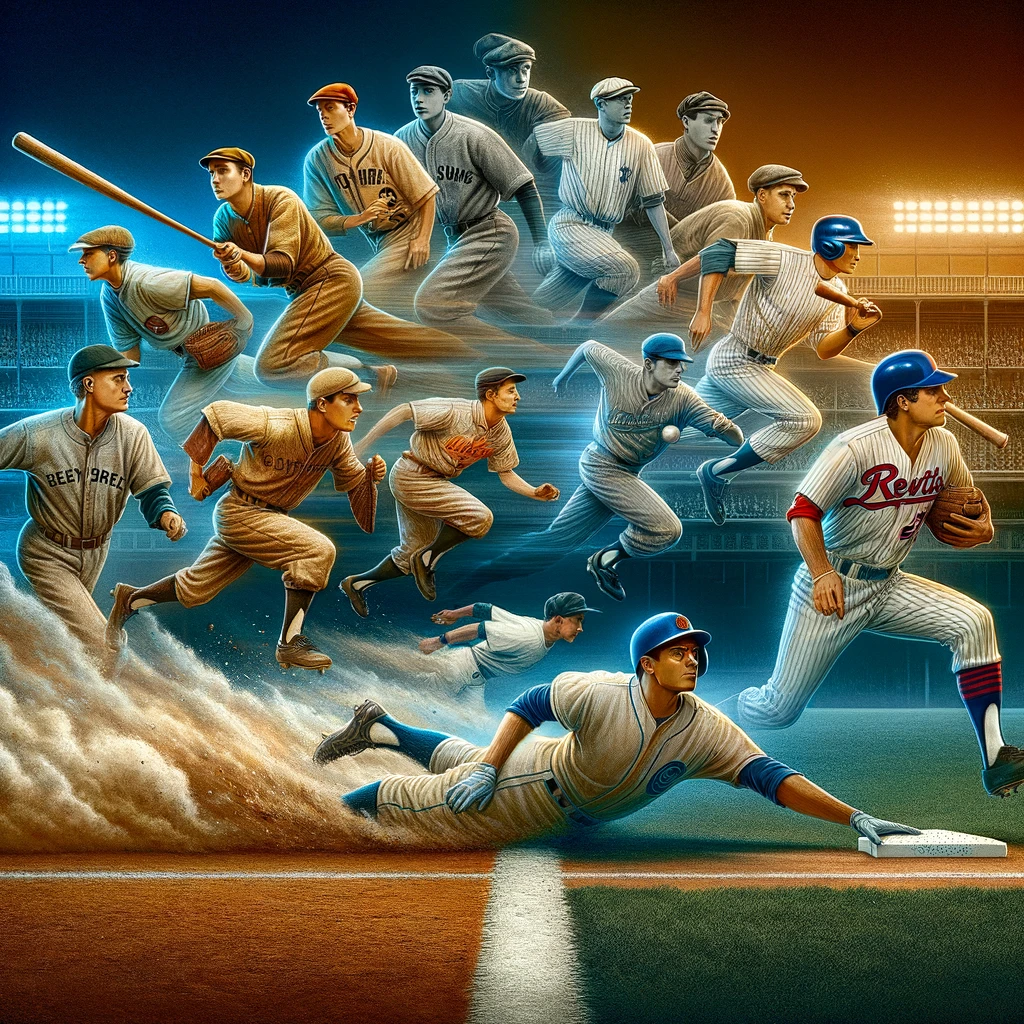
Evolution of Base-Stealing Tactics
As baseball progressed through the decades, so did the tactics and techniques of base stealing. In the early days, it was about sheer speed and daring. However, as the game evolved, so did the art of stealing bases. Players began to study pitchers’ movements, understand catchers’ throw times, and even read the infielders’ positioning to gain an edge. This evolution turned base stealing from a physical feat into a mental duel between the runner and the defense.
The Art of the Steal: Rickey Henderson’s Mastery
Rickey Henderson, widely regarded as the greatest base stealer of all time, exemplified the combination of physical prowess and mental acumen. He didn’t just rely on his incredible speed; he studied pitchers relentlessly, understanding their every move. Henderson’s ability to read the game, coupled with his athleticism, made him a constant threat on the bases.
The Sabermetrics Influence
With the advent of sabermetrics, teams began to understand the true value of a stolen base. It wasn’t just about taking an extra base; it was about the pressure it put on the defense, the potential for errors, and the disruption of the pitcher’s focus. Players like Tim Raines, who had high on-base percentages and exceptional base-stealing efficiency, became highly valued. The metrics showed that it wasn’t just about the number of stolen bases but the success rate and the situations in which the bases were stolen.
Speed in the Modern Game
In the current landscape of baseball, speed still plays a critical role. However, the way it is utilized has shifted. Modern players combine speed with advanced analytics to pick the perfect moments to steal bases. Players like Billy Hamilton and Trea Turner are not just fast but also smart on the bases, choosing their moments with a blend of analytics and instinct.
The Impact of Technology
Today, technology plays a significant role in enhancing a player’s speed. High-performance training, biomechanics, and detailed video analysis help players refine their technique, from their lead-off to their slide into the base. This technological advancement has led to a new breed of base stealers who are faster, smarter, and more efficient.
The Future of Speed in Baseball
As baseball continues to evolve, the role of speed remains uncertain. The current trend in baseball emphasizes power hitting and strikeouts, but there’s always room for players who can change the game with their legs. The future may see a resurgence of the importance of stolen bases as teams look for every edge in an increasingly competitive and analytical game.
Preserving the Legacy
The legacy of baseball’s speedsters is not just in the records they set but in the excitement they bring to the game. The thrill of a stolen base, the race between runner and ball, is a timeless aspect of baseball. As we look to the future, it’s essential to remember and celebrate the players who have made speed an integral part of baseball’s history.
Conclusion
The history of baseball is rich with stories of speed, from the daring base runners of the early days to the analytical speedsters of the modern era. These players have left an indelible mark on the game, changing the way it is played and viewed. As baseball continues to evolve, the legacy of these players – their stolen bases and breathtaking speed – will forever be a part of this beautiful game.
Stolen bases and speed have not just been a part of baseball; they have defined moments, shaped careers, and thrilled fans. From Billy Hamilton to Rickey Henderson to the speedsters of today, the quest for the extra base continues to be a captivating element of baseball’s ongoing story.
Frequently Asked Questions
1. What is the significance of stolen bases in baseball and why are they important?
The importance of stolen bases in baseball cannot be overstated, as they are a crucial element of the game’s strategy. A stolen base occurs when a baserunner advances to the next base while the pitcher is delivering the ball to home plate. This tactic relies on the runner’s speed, agility, and timing. Stolen bases can radically alter the dynamics of a game by putting the runner in scoring position, forcing the defense to change their strategy, and applying pressure to the pitcher and catcher. Historically, players with the ability to steal bases effectively have been valuable assets to their teams, often leading to dramatic shifts during games. The thrill of a successful steal captures the essence of the athleticism and strategic depth that makes baseball so exciting.
2. How did the role of speed and stolen bases evolve in baseball history?
The evolution of stolen bases and the role of speed trace back to baseball’s early years in the mid-19th century, a time when the sport was still shaping its foundational rules. Initially, stealing was less prevalent, but as strategies evolved, speed on the basepaths became a defining skill. In the early days, fields were rough and uneven, and cleats were rudimentary, making stolen bases a true test of a player’s athleticism. Over time, with improvements in equipment and field conditions, along with more understanding of game strategy, players refined the art of stealing bases. Legends like Ty Cobb and Lou Brock in the mid-20th century highlighted the critical impact a swift baserunner could have. Modern analytics continuously shape the approach as teams assess risk versus reward, making speed a nuanced factor in a team’s success.
3. Who are some of the fastest players in MLB history renowned for their base-stealing abilities?
Throughout MLB history, there have been numerous players famous for their incredible speed and expert base-stealing capabilities. Lou Brock is one of the most iconic figures, holding the all-time stolen bases record for many years until it was broken by Rickey Henderson. Henderson, known as the “Man of Steal,” revolutionized the role of speed in baseball, with a career total of 1,406 stolen bases. Players like Vince Coleman, known for his back-to-back seasons of more than 100 steals, and Ty Cobb, whose aggressive style redefined stealing in the early 20th century, are also noteworthy. Billy Hamilton, known as “Sliding Billy,” was another remarkable talent of his era, showcasing raw speed in the late 19th century. Each of these players used speed as a strategic advantage to alter the course of games and influence how opponents approached the game.
4. How do teams incorporate speed and the possibility of stolen bases into their game strategies today?
Today, baseball teams integrate speed and the potential for stealing bases with a sophisticated blend of analytics and field strategy. The use of advanced metrics helps teams assess the best situations to attempt a steal, weighing success rates against current-game scenarios. Coaches analyze pitchers’ timing to the plate and catchers’ throwing arms to optimize stealing chances. Some teams favor a “small ball” approach, using speed to manufacture runs in tight games where long ball tactics may not be as effective. Moreover, certain players are groomed to perfect their primary leads and secondary leads off bases, work on their slide techniques, and study opposing pitchers’ habits closely. The increase in defensive shifts also plays a role, as shifts can open up opportunities to exploit slow fielders. In the modern era, speed remains an invaluable tool in the strategic toolkit of every competitive baseball team.
5. What challenges do players face when attempting to steal bases and how have these challenges changed over time?
Stealing bases requires a combination of speed, timing, and keen perception, making it one of baseball’s most demanding feats. Players face several challenges when attempting to swipe a bag. Historically, rough field conditions and less protective footwear made running and sliding risky. Today’s players contend with highly trained catchers with powerful arms and reduced pitch-to-catch times, as advancements in athletic training and technology have created stronger defensive capabilities. Additionally, modern baseball’s reliance on analytics means pitchers and catchers study baserunners’ tendencies meticulously, further complicating the endeavor. Moreover, the risk of injury from slides or collisions with fielders looms, especially when executed at top speed. Despite these challenges, players who master base-stealing continue to add a dynamic and exciting element to the game, celebrating both the sport’s strategic depth and its emphasis on raw athletic talent.