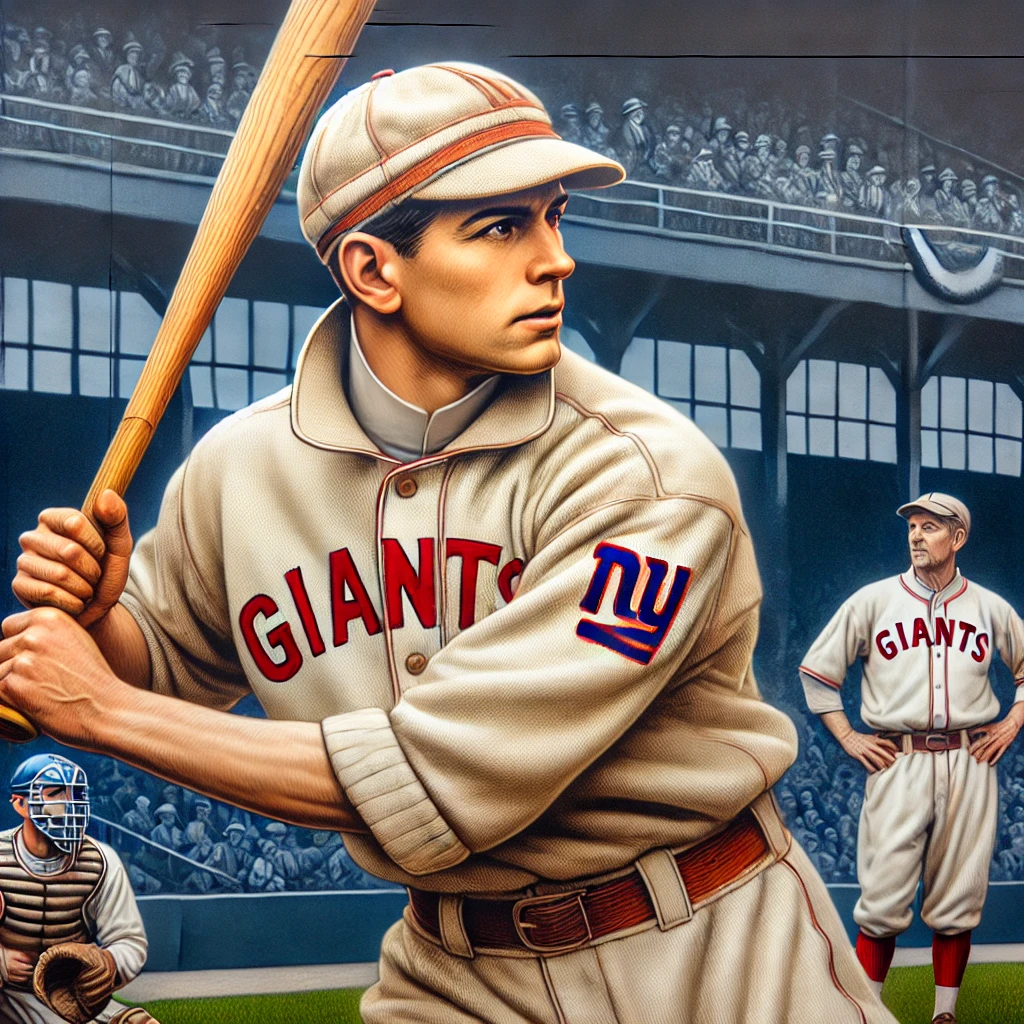
Often, the annals of baseball history are filled with stories of legendary players known for their iconic moments, dazzling performances, and long, successful careers. However, some stories are bittersweet, defined by both extraordinary talent and untimely tragedy. One such figure in baseball lore is Ross Youngs, a name that might not echo as loudly as Babe Ruth or Ty Cobb, but with a story that captures the essence of what it means to be a hero in the sport. Ross Youngs, an exceptional outfielder for the New York Giants in the 1920s, showcases a blend of innate talent, relentless determination, and a touch of tragedy that makes his story so compelling.
Born Ross Middlebrook Youngs in Shiner, Texas, on April 10, 1897, Ross showed early signs of his baseball prowess. With his powerful arm and keen eye for the ball, he quickly found his way into the professional leagues. His career with the Giants took off in 1917 when he was signed by the legendary manager John McGraw. Youngs quickly cemented his place in the baseball world with his extraordinary talent and versatility. Whether it was his astute batting, speedy base running, or flawless fielding, Youngs had the makings of a baseball star. His odyssey, however, was to be as short as it was brilliant, cut tragically short by illness at the pinnacle of his career.
Over the next few sections, we will delve deeper into Ross Youngs’ life, career, and enduring legacy, capturing what made him a tragic hero for the Giants and a cherished figure in baseball history.
Early Life and Career
Ross Youngs’ early years were spent in the small town of Shiner, where his love for baseball took root. He spent countless hours honing his skills on makeshift fields, cultivating a passion that would drive him to the peak of the sport. As a teenager, he played for local teams, quickly earning a reputation as a standout player. His big break came at the age of 20 when he caught the eye of a scout from the San Antonio Bronchos, a minor league team. In 1916, Youngs joined the Bronchos, where he displayed exceptional talent, batting .359 in his first season.
His performance with the Bronchos was enough to grab the attention of John McGraw, the well-known manager of the New York Giants. McGraw, always on the lookout for promising talent, saw the potential in Youngs and brought him into the Giants’ fold in 1917. It didn’t take long for Youngs to adapt to major league baseball. He quickly earned a starting position in the outfield thanks to his impressive skills and adaptability, playing both center and right field.
Youngs’ rookie season was an impressive one. He batted .346 and established himself as a reliable and versatile player. His blazing speed and exceptional hand-eye coordination made him a threat on both offense and defense. His ability to contribute to the team in various ways made him an invaluable asset to the Giants. Fans and teammates alike immediately saw the potential for greatness in the young Texan.
Peak years:
Throughout the early 1920s, Ross Youngs evolved into one of the best outfielders in the major leagues. He had an uncanny ability to read pitchers and adjust his approach accordingly. His skills at the plate were matched only by his prowess in the outfield, where he made numerous game-saving plays that often left spectators in awe. Youngs was a key player during a period when the Giants were at their peak, contributing significantly to their success. His batting average consistently hovered around the .300 mark, and he was known for his ability to get on base and create scoring opportunities for his teammates.
One of Youngs’ standout seasons was in 1922, when he batted .331 and helped lead the Giants to a World Series victory over the New York Yankees. His performance in the championship series was spectacular, batting .375 with five RBIs. His exceptional play earned him the respect and admiration of his peers, making him an integral part of the Giants’ lineup. His leadership on and off the field was evident as he mentored younger players and set an example with his work ethic and dedication to the game.
Youngs’ career statistics during his peak years are a testament to his outstanding skill and consistent performance. In 1923, he maintained a .356 batting average, further solidifying his status as one of the most dependable hitters in the league. Despite his relatively short career, Youngs accumulated impressive numbers, finishing with a .322 lifetime batting average and over 1,000 hits in just eight full seasons. Ross Youngs was not just a talented player; he was a beacon of hope and a symbol of what relentless perseverance could achieve in baseball.
Illness and Career Decline
The triumphs of Ross Youngs’ career, however, were tragically overshadowed by a burgeoning and untreatable illness. In 1926, Youngs began to feel weak and suffer from undiagnosed symptoms of a serious illness that deeply affected his ability to perform on the field. Initially, the severity of his condition was not fully recognized, and he continued to play despite his declining health. His performance waned as the seasons progressed, and it became apparent that his condition was worsening. Little did the baseball world know, Youngs was battling a fatal disease amid his struggle to keep playing the game he loved.
During the latter part of 1926, his mysterious illness, which was later diagnosed as a kidney disorder known as Bright’s disease, had taken a significant toll on his health and hindered his playing capabilities. By the time the 1927 season came around, Youngs’ condition had deteriorated to the point where he was unable to play the game at the level he once did. The once vibrant and energetic outfielder was now frequently fatigued and unable to sustain his previous level of performance. His presence on the team was still a source of inspiration, but it was clear that his days on the field were numbered.
The realization of the severity of his illness was a devastating blow not only to Youngs and his loved ones but also to his teammates and fans. The world watched as Ross Youngs, the dynamic outfielder known for his electrifying plays and infectious energy, faced a battle far more significant than any he had encountered on the field. The significance of his contributions to the Giants became more poignant as it became increasingly evident that his remarkable journey in baseball was coming to an untimely end.
Legacy and Honors
Despite his career being painfully cut short, Ross Youngs left an indelible mark on the game of baseball. His excellence on the field and the courage displayed in the face of illness made Youngs a legendary figure not only among Giants fans but also within the broader baseball community. In recognition of his significant contributions to the sport, the Baseball Hall of Fame posthumously inducted Youngs in 1972, a testament to his lasting impact and the high esteem in which he was held. Fellow players, managers, and baseball historians have often cited Youngs as a shining example of what it means to be a consummate professional in the sport.
The induction into the Hall of Fame ensured that Youngs’ memory would be preserved for future generations. His number is not retired by the Giants, but his legacy endures among the Giants faithful and baseball enthusiasts who recognize his incredible talent and unwavering spirit. Current players and fans alike continue to be inspired by stories of Youngs’ exploits on the field and his determination to play through adversity.
Youngs’ legacy is also carried forward through the anecdotes and memories shared by those who were privileged to see him play. His teammates and opponents often reminisced about his remarkable abilities and the sportsmanship he consistently displayed, even when faced with the most challenging circumstances. Ross Youngs serves as a poignant reminder that greatness in sport is not solely measured by longevity but by the impact one has on the game and the people who cherish it.
Conclusion
Ross Youngs’ life and career encompass the essence of what makes a sports hero truly unforgettable. His brief but brilliant career was a testament to both his extraordinary talent and his remarkable character. In an era where the emphasis on sportsmanship and determination was paramount, Youngs stood out not just for his skills on the field but for his determination to battle his illness while continuing to contribute to the game he loved so dearly.
The tragic element of Youngs’ story brings an added layer of poignancy to his legacy. His tale is one of immense potential, abruptly halted by circumstances beyond his control, yet leaving a lasting impact that resonates through the ages. Ross Youngs exemplified the virtues of dedication and resilience, characteristics that have inspired countless individuals within and beyond the realm of baseball.
As fans of the sport look back on the history of baseball, Ross Youngs’ story serves as both an inspiring and a cautionary tale. It reminds us of the fragility of even the most promising careers and the importance of cherishing and celebrating the talents and contributions of athletes while they are in their prime. The legacy of Ross Youngs endures, not only as a reminder of what he achieved in his all-too-short career but also as a symbol of courage and grace in the face of adversity.
In honoring Ross Youngs, we acknowledge a player whose influence transcended the confines of the baseball diamond, leaving an indelible mark on the hearts of those who watched him play and those who continue to cherish his memory today. The New York Giants may have lost a brilliant player too soon, but the spirit of Ross Youngs remains a powerful and eternal part of baseball history.
Frequently Asked Questions
1. Who was Ross Youngs and what role did he play in baseball history?
Ross Youngs was an exceptionally talented outfielder for the New York Giants in the early 20th century. Known for his versatility, Youngs contributed significantly to the success of the Giants during his career from 1917 to 1926. A reliable hitter and fielder, Youngs helped the team secure multiple National League pennants and two World Series championships in 1921 and 1922. Despite his relatively short career, his impact on the field and his sportsmanship left a lasting legacy in baseball. His story is particularly poignant due to his early death at the age of 30, a devastating blow to the baseball community that admired him both for his talent and his character. Youngs was posthumously elected to the Baseball Hall of Fame in 1972, cementing his place in the history of the sport.
2. What were some of Ross Youngs’ most notable achievements with the New York Giants?
Ross Youngs achieved a remarkable career batting average of .322 over ten seasons with the New York Giants, a testament to his skill at the plate. He was known for his consistency and his ability to perform under pressure, earning him a reputation as a clutch hitter. Youngs’ speed and defensive prowess also made him a cornerstone of the Giants’ outfield. One of his most notable achievements was his role in the Giants’ back-to-back World Series victories in 1921 and 1922, where his performances contributed significantly to the team’s success. He consistently ranked among league leaders in various offensive categories, highlighting his all-around playing ability in an era filled with star players.
3. What contributed to Ross Youngs’ status as a tragic hero in baseball?
Ross Youngs is often referred to as a tragic hero in baseball due to the combination of his immense talent and his untimely death, which cut short a promising and already illustrious career. Diagnosed with Bright’s disease, a serious kidney disorder, Youngs began to experience health problems in 1925. Despite his declining health, he continued to play and contribute to his team’s success until he was no longer physically able to perform at the same level. His death in 1927 at the age of 30 left fans, teammates, and the entire baseball community in shock, mourning the loss of a genuinely gifted athlete who was also known for his leadership and sportsmanship. Youngs’ legacy as a tragic hero is reinforced by the “what if?” scenarios pondering the heights he might have reached had his life and career not been prematurely ended.
4. How did Ross Youngs influence future generations of baseball players?
Ross Youngs’ influence on future generations of baseball players can be seen in his demonstration of perseverance, sportsmanship, and the power of leading by example. Even as his health declined, Youngs continued to play with determination, inspiring both teammates and fans. His approach to the game emphasized fundamentals, hard work, and teamwork, principles that remain integral to baseball today. Players who followed often cited Youngs as a role model for how to conduct oneself both on and off the field, underscoring his impact beyond just statistics. His induction into the Hall of Fame in 1972 also solidified his influence, ensuring that new generations of players and fans would learn about his contributions and character, keeping his spirit alive in the sport.
5. What was the impact of Ross Youngs’ posthumous induction into the Baseball Hall of Fame?
Ross Youngs’ posthumous induction into the Baseball Hall of Fame in 1972 was a recognition of his outstanding contributions to the sport despite the brevity of his career. It honored his exceptional skills, his significant role in the Giants’ success in the 1920s, and his lasting impact on the game. The induction served to validate what many in the baseball world already knew – Youngs was one of the greats of his time. This honor ensured that his story would be remembered and celebrated alongside other baseball legends, offering the recognition he deserved and preserving his influence within the annals of baseball history. For the fans who remembered him, and for those meeting his legend for the first time, the induction helped keep the memory of his greatness alive, continuing to inspire those who play and cherish the game today.