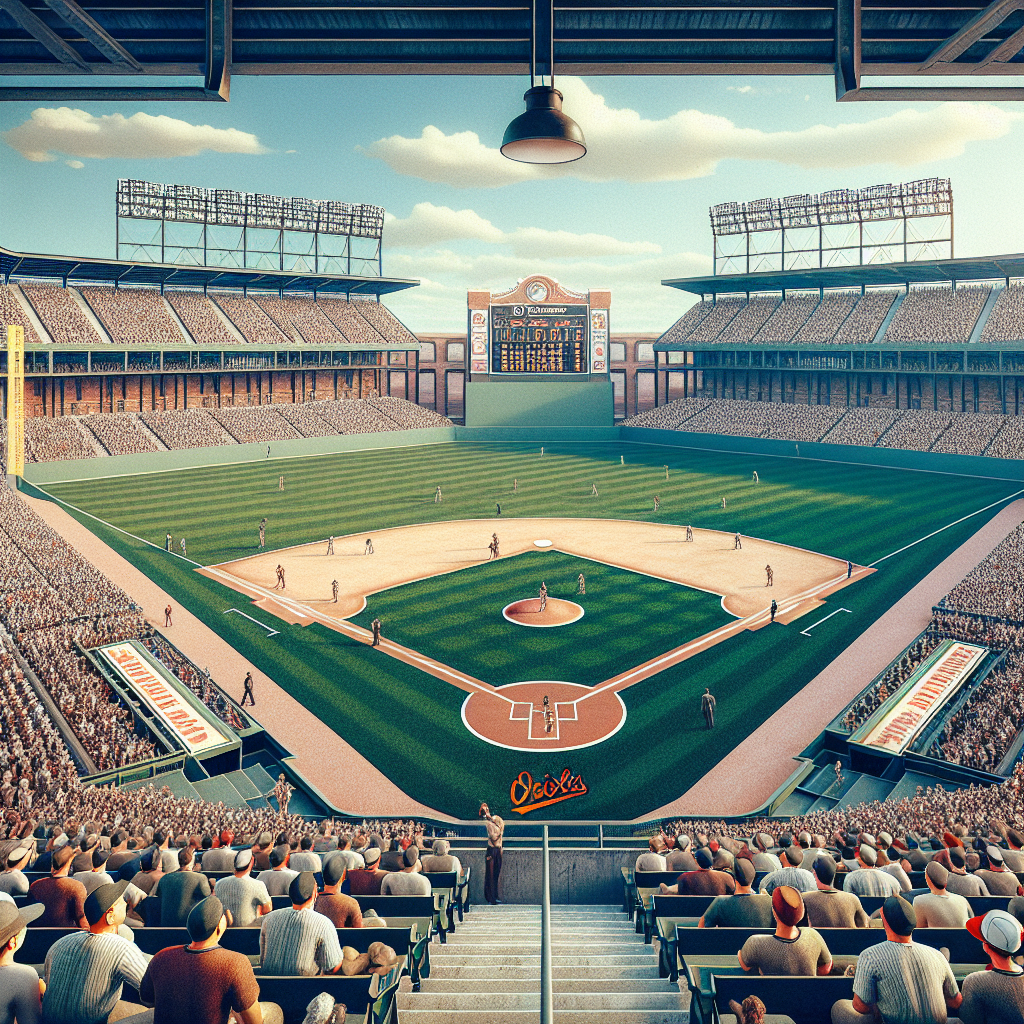
Before Camden Yards entered the scene as one of the premier ballparks in Major League Baseball, Baltimore’s sports landscape was dominated by one historic ground: Memorial Stadium. This stadium, with its rich and storied history, served as the beloved home to the Baltimore Orioles for nearly four decades, from 1954 to 1991. The very structure of Memorial Stadium was not just a sports arena but a towering testament to Baltimore’s undying love for baseball and its legendary moments. With its multi-use design, the venue also hosted football games, adding another layer to its broad cultural and recreational significance. Understanding the importance of Memorial Stadium in the annals of baseball history means appreciating the role it played in the lives of fans, players, and the city itself.
As we delve into the vivid past of Memorial Stadium, we’ll explore its origins, noteworthy architectural features, and its indelible impact on the Baltimore community and the sport of baseball. From the resonant cheers echoing across its stands during pivotal games to the heart-breaking goodbyes said by fans when it was finally retired, every brick and blade of grass in Memorial Stadium has a story to tell. Our journey will also encompass the memorable moments etched in the annals of baseball history, recounting iconic games, legendary players, and the indescribable ambiance that made the stadium a hallowed ground.
This in-depth examination is not just a nostalgic trip down memory lane but a tribute to an icon of American sports history. For long-time Orioles fans, it will be a walk through cherished memories, and for the newer generation, it is an opportunity to understand why Memorial Stadium was more than just a place for watching baseball – it was a cultural landmark. So, as we peel back the layers of history, let’s pay homage to the original nest of the Baltimore Orioles.
The Birth and Evolution of Memorial Stadium
The story of Memorial Stadium begins in the late 1940s when it was initially constructed as a multi-purpose facility, aptly named Municipal Stadium. Opening its gates in 1950, this early incarnation was primarily used for football but had provisions for baseball. A few years later, as the city’s passion for baseball grew, it was decided that a more official and tailored structure was needed. This led to an extensive renovation and expansion, transforming the venue into what we now remember as Memorial Stadium.
Officially reopened in 1954, Memorial Stadium became a dedicated baseball park, announcing Baltimore’s entry into Major League Baseball with the Orioles’ homecoming from St. Louis. Its very name was a tribute to the armed forces, particularly those who fought in World War II, further embedding the stadium into the emotional fabric of the community. Over the years, the stadium underwent several modifications, each enhancing its capacity and functionality, allowing it to cater to both baseball and football fans while staying rooted in its original purpose.
The design elements of Memorial Stadium were as functional as they were symbolic. The renowned “memorial wall” that graced the entrance was etched with commemorations of soldiers, serving as a constant reminder of the stadium’s deeper significance beyond sports. The stadium featured a simple yet effective design, boasting unobstructed views from almost every seat, and concourses that efficiently handled the influx of fans on game days. This careful attention to both aesthetics and functionality made Memorial Stadium a cherished landmark.
Over the years, Memorial Stadium evolved alongside the city of Baltimore, reflecting the changing dynamics of its populace and the sport. By the late 1980s, however, the need for a more modern facility became evident, paving the way for the birth of Oriole Park at Camden Yards. Nevertheless, Memorial Stadium’s role in shaping the early history of the Orioles and its enduring legacy remain unequivocal.
Legendary Moments and Iconic Games
Memorial Stadium witnessed some of the most memorable moments in the history of baseball, becoming a stage where legends were born and history was written. From thrilling last-minute victories to poignant defeats, the stadium bore witness to the emotional highs and lows that compose the heartbeat of sports.
One of the most iconic moments that every Oriole fan vividly recalls is the 1966 World Series. The Orioles, led by Hall of Fame outfielder Frank Robinson, clinched their first World Series title, sweeping the Los Angeles Dodgers in a dramatic fashion. The stands of Memorial Stadium erupted in jubilation, marking the Orioles’ dominance in the mid-60s and solidifying the stadium’s place in history.
Another unforgettable event was Cal Ripken Jr.’s historic consecutive game streak that began at Memorial Stadium. On September 14, 1987, Ripken broke the record for most consecutive games played by a shortstop, an inspiring milestone in what would become one of baseball’s most revered career records. The dedication and tenacity exhibited by Ripken resonated deeply with fans, symbolizing the very ethos of the Orioles and becoming a defining moment for Memorial Stadium.
Beyond the confines of baseball, Memorial Stadium also hosted significant NFL games, serving as home to the Baltimore Colts until their controversial move to Indianapolis in 1984. Moments like the Colts’ NFL Championship victory in 1958, often heralded as “The Greatest Game Ever Played,” added to the stadium’s storied legacy, ensuring its place in the broader fabric of American sports history.

Famous Faces: Players and Personalities
Memorial Stadium is remembered not just for the games it hosted but also for the constellation of baseball stars who graced its field, contributing to its legendary status. The exploits of these players brought fans to their feet, leaving an indelible mark on the sport and on Baltimore’s sporting heritage.
Frank Robinson’s arrival in 1966 was a game-changer for the Orioles. Robinson’s performance in that year earned him the Triple Crown, the MVP award, and yet more accolades, leading the Orioles to their first World Series championship. His prowess at Memorial Stadium made him an enduring hero in Baltimore lore.
Cal Ripken Jr. could be considered the heart and soul of Memorial Stadium during his tenure. Known as “The Iron Man” for his record-breaking streak of 2,632 consecutive games, Ripken embodied the resilience and dedication that fans adored. His connection to the stadium was palpable, with countless fans pouring in to witness every game of his remarkable streak.
Other names such as Brooks Robinson, Jim Palmer, and Eddie Murray each added their chapters to the history of Memorial Stadium. Brooks Robinson’s defensive mastery at third base earned him the nickname “The Human Vacuum Cleaner,” and he spent his entire 23-season career with the Orioles, creating unforgettable memories for the fans at Memorial Stadium.
Architectural Features and Fanfare
Memorial Stadium’s architecture was a fusion of practicality and homage, designed to celebrate both sports and the community. The iconic memorial wall at the entrance, bearing inscriptions commemorating war veterans, greeted every fan and player walking into the arena, serving as a strong reminder of the broader significance of the stadium.
The seating arrangement was designed for maximum visibility, allowing fans to enjoy an unobstructed view of the action on the field. The stadium had a maximum capacity of about 54,000 for baseball games, but its structure was versatile enough to accommodate football as well. The design itself was no frills, but highly functional, a testament to the era it was built in.
Concession stands and social areas were well-placed to ensure fans didn’t miss much of the game while grabbing a snack or drink. The atmosphere was infused with Baltimore’s unique cultural flavor, from the local food offerings to the friendly and communal nature of the fans. Game days often felt like large community gatherings, with fans deeply invested in every play.
One of Memorial Stadium’s standout features was its field. Maintained meticulously, the natural grass field was often praised by players for its quality. The dimensions of the field also played a role in memorable game moments, with its deep left-field and shorter right-field porch posing unique challenges to hitters and defenders alike.
The Final Farewell
Memorial Stadium saw its final game in 1991, marking the end of an era for the Baltimore Orioles and their fans. The decision to move to the modern Oriole Park at Camden Yards was driven by the need for improved facilities and amenities, but it was a bittersweet moment for many.
The closing of Memorial Stadium was met with a mixture of nostalgia and sadness. The last game, held on October 6, 1991, was a fitting tribute to the legacy of the stadium. Fans filled the stands, and former players took to the field, embracing one last homage to the hallowed ground that had been their second home. The final pitch thrown at Memorial Stadium symbolized not just the end of a game but the closing chapter of a vibrant, storied history.
The years following the closure saw a gradual process of deconstruction, until the stadium was completely demolished by 2001. In its place now stands a memorial park, a fitting commemoration reflecting the venue’s name and purpose, ensuring that the memories and significance of Memorial Stadium continue to live on.
Even though Memorial Stadium no longer stands, the impact it had on the city of Baltimore and the sport of baseball is eternal. Fans who grew up watching games there still reminisce about the electrifying atmosphere, the thrill of watching their favorite players, and the communal bonds formed through their shared love for the Orioles.
Legacy and Indelible Impact
Memorial Stadium’s legacy transcends the realm of mere sports; it is interwoven with the cultural and social fabric of Baltimore itself. For generations, it was more than just a stadium; it was a sanctuary of sportsmanship, community spirit, and shared memories.
The present-day Oriole Park at Camden Yards, often hailed as one of the best ballparks in the league, continues the tradition begun at Memorial Stadium. The spirit of Memorial Stadium lives on in Camden Yards, whether through design elements or the passion of the fans who continue to support the Orioles with unwavering loyalty. Viewing Camden Yards as the heir to Memorial Stadium helps trace a seamless lineage of history, passion, and pride.
The reverence for Memorial Stadium remains strong among the local community. Landmark games, exceptional players, and the collective experience of fans have shaped a legacy that has been passed down through generations. Annual memorial events, fan gatherings, and local stories keep the memory of the stadium vividly alive.
In conclusion, Memorial Stadium was not just a physical structure; it was a beacon of hope, pride, and unity for Baltimore. Its influence reaches far beyond the boundaries of sport, capturing the essence of a community bound by a shared love for baseball. The stories of Memorial Stadium, its players, and its fans will forever be a fundamental chapter in the rich history of America’s pastime.
Frequently Asked Questions
1. What is the historical significance of Memorial Stadium to Baltimore?
Memorial Stadium held a special place in Baltimore’s heart, embodying the city’s rich sports history for nearly four decades. From 1954 to 1991, it served as the cherished home of the Baltimore Orioles. This was not merely a stadium; it was a symbol of the city’s passion for baseball and sports at large. The structure itself was a monument dedicated to the spirit of athletic competition and the community’s love for America’s pastime. With its robust location, Memorial Stadium was a communal gathering place where generations of fans shared unforgettable memories. Whether it was witnessing legendary games or just spending a sunny afternoon watching America’s game with family and friends, it cemented its role in cultivating the city’s vibrant sports culture.
2. Can you describe some legendary moments that took place at Memorial Stadium?
Memorial Stadium was the backdrop for countless legendary moments that enriched Baltimore’s sports legacy. One of the most iconic events was the 1970 World Series, where the Orioles triumphed over the Cincinnati Reds in five games, a testament to their dominance and prowess on the field. Such exhilarating victories exemplified the thrilling history created on this hallowed ground. Moreover, the stadium also hosted Hall of Famers like Cal Ripken Jr., who made major league history by breaking records, etching their names permanently into the annals of baseball greatness. From unforgettable rallies to exhilarating home runs, Memorial Stadium was a stage where fans witnessed the unfolding of sports history time and again.
3. What was unique about the structure and location of Memorial Stadium?
Memorial Stadium’s design and location were quintessential to its allure and functionality. Situated at 33rd Street against a backdrop of Baltimore’s urban landscape, it was nicknamed “The Old Gray Lady of 33rd Street.” This location was easily accessible, making it a popular spot for fans from all walks of life to converge and celebrate the spirit of baseball. The architecture itself, featuring towering stands, offered fans a classic stadium experience, where every seat seemed to bring them closer to the game. Although not as architecturally advanced as modern ballparks like Camden Yards, its simplicity and intimacy created an unmatched experience that fostered a deep bond between the community and their team.
4. How did Memorial Stadium contribute to Baltimore’s sports culture beyond baseball?
While primarily recognized for its baseball legacy, Memorial Stadium was much more than just a baseball ground. It played a significant role in shaping Baltimore’s broader sports culture. The stadium was a shared host for the Baltimore Colts (now the Indianapolis Colts), illustrating its versatility and importance in the city’s athletic heritage. By serving multiple sports, it became a year-round destination for sports enthusiasts, thus fostering a robust sports environment in Baltimore. This multifunctionality ensured that the stadium was always a hub of activity and excitement, where fans could come together to celebrate not just baseball, but all sports that the city had to offer.
5. Why was Memorial Stadium eventually replaced by Camden Yards?
Memorial Stadium, despite its storied history and sentimental value was eventually replaced by Oriole Park at Camden Yards due to evolving demands for modern amenities and facilities. By the late 1980s, there was a growing trend in Major League Baseball towards incorporating newer stadium designs that offered improved seating, better sightlines, and an overall enhanced spectator experience. Camden Yards emerged as a pioneering player in this trend, heralding a new era of retro-style ballparks that both honored traditional ballpark design and embraced modern conveniences. While the decision to move was bittersweet for fans, Camden Yards allowed the Orioles to continue attracting new generations of baseball lovers while preserving the essence of what made attending an Orioles game special. The love for Memorial Stadium remains, but Camden Yards represented a necessary advancement to meet the demands of the contemporary sports landscape.