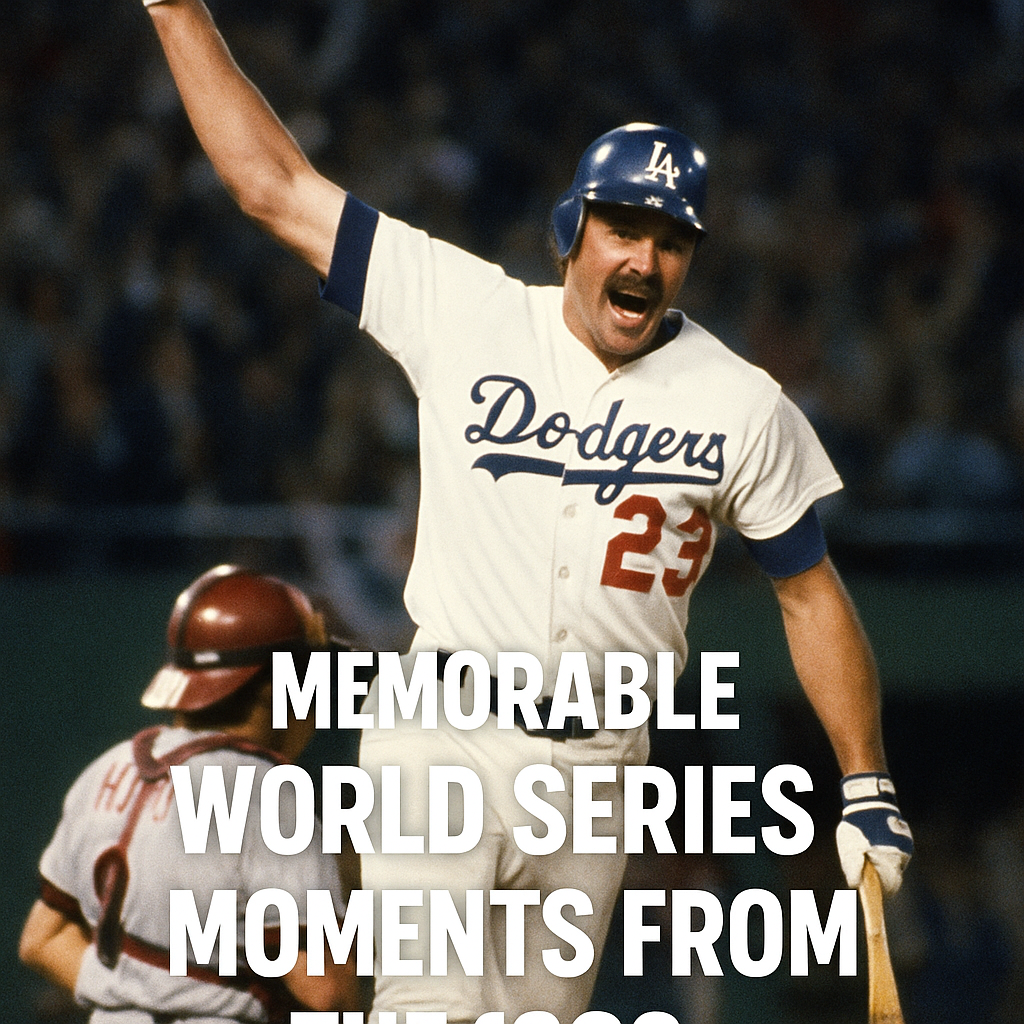
The World Series has provided some of baseball’s most iconic moments, especially throughout the 1980s. This decade was a golden era for the sport, characterized by memorable games, spectacular athletic performances, and dramatic victories. From underdog triumphs to heartbreaking defeats, the World Series of the 1980s encapsulated the competitive spirit and grandeur of Major League Baseball. It’s essential to delve into these legendary moments to appreciate how they helped shape the sport, influenced baseball culture, and captured the imagination of fans around the world. By exploring these highlights from the 1980s World Series, we can better understand the lasting legacy and impact of these pivotal events in baseball history.
Some of the highlights from the World Series of the 1980s stood out due to their dramatic finishes, profiles of emerging stars, and the breaking of long-standing records. The 1980s were marked by strategic plays, emotional games, and a few surprises that would go down in the annals of baseball history. This article will examine some of the most unforgettable World Series moments of that era, giving fans a chance to relive these thrilling events. The passion and drama experienced during the World Series provided incredible entertainment and demonstrated the sheer unpredictability and excitement of the game. These moments not only made the decade memorable for baseball but also defined the tenacity and artistry of the sport itself.
Let’s enter a journey through these historic moments, reflecting on how they have molded not only the athletes involved but the culture and ethos of the game at large. With each pitch and swing, the 1980s World Series proved that baseball was more than just a game—it was a legacy being forged in real-time, watched by millions and cherished for generations to come.
1980: Philadelphia Phillies Breakthrough
The 1980 World Series was particularly significant as it marked the Philadelphia Phillies’ first championship victory in the franchise’s history. For a team with a storied past but often seen as perennial underachievers, this triumph served as a monumental moment. The Phillies, led by Hall of Famers like Mike Schmidt and Steve Carlton, showcased extraordinary prowess and teamwork, battling the Kansas City Royals in a compelling series that went to six games. Game 6 was a thrilling spectacle, with Tug McGraw, the Phillies’ celebrated relief pitcher, recording the final out, famously raising both arms triumphantly as Veterans Stadium erupted in an uproarious celebration. This victory was not just significant for the team, but it also brought jubilation to the City of Brotherly Love, providing Phillies fans with their long-awaited moment of glory.
1981: Dodgers Best the Yankees
The 1981 World Series featured a matchup between two storied franchises: the Los Angeles Dodgers and the New York Yankees. Amidst the chaos of a strike-shortened season, the Dodgers, led by manager Tommy Lasorda, rose to the challenge, taking on the mighty Yankees. This series saw the emergence of a young pitcher named Fernando Valenzuela, who captured the hearts of fans with his dazzling pitching performances and distinct screwball. Valenzuela played a vital role in transporting his team to victory. Another pivotal moment was Pedro Guerrero’s tremendous Game 6 performance, where his offensive powerhouse contributions helped push the Dodgers to a resounding 9-2 win, clinching the championship. This victory was sweet revenge for the Dodgers, toppling the team that bested them in the 1977 and 1978 World Series.
1982: The Brewers and Cardinals Clash
Set against the backdrop of heated competition and great drama, the 1982 World Series featured the St. Louis Cardinals and the Milwaukee Brewers, two teams playing in contrasting styles. Dubbed the “Suds Series,” this matchup saw the Brewers, known then as “Harvey’s Wallbangers” after manager Harvey Kuenn, competing with their robust offensive lineup against the speed and defensive finesse of the Cardinals. Game 7 was a pinnacle of excitement, with the Cardinals orchestrating a thrilling comeback to triumph 6-3, securing their first World Series title since 1967. The series highlighted the dynamic performances of players like Cardinals’ closer Bruce Sutter, who effectively closed the game, and Darrell Porter, whose exceptional displaying of power and strategic at-bats earned him the series MVP award.
1983: Orioles Overcome Phillies
The 1983 World Series, nicknamed the “I-95 Series,” was a regional affair between the Baltimore Orioles and the Philadelphia Phillies, featuring a battle of experience and guile. The Orioles, guided by manager Joe Altobelli, managed to overturn a Game 1 defeat and outplayed the Phillies in successive games, winning four straight to clinch the series in five games. The legendary Baltimore bullpen, led by Mike Flanagan and Scott McGregor, stifled the Phillies’ offense in critical moments. A memorable standout was Rick Dempsey, whose exceptional batting throughout the series led to him receiving the World Series MVP award. This championship was significant for the Orioles as it was their first since 1970, solidifying their reputation as a powerhouse team in the league.
1984: Tigers Roar to Victory
The 1984 World Series marked a dominant campaign by the Detroit Tigers, a team on a mission under the guidance of manager Sparky Anderson. The Tigers faced the San Diego Padres in a highly anticipated matchup that ended in a resounding victory for Detroit. The defining moment of the series came in Game 5 when Kirk Gibson’s dramatic three-run homer heightened the excitement and pushed the Tigers to an emphatic win, securing the series by a four-games-to-one margin. This power display was instrumental in eclipsing the Padre’s hopes, ending Detroit’s decade-long wait for championship success. The series saw outstanding performances from key figures in the Tigers lineup, such as MVP Alan Trammell, who showcased his prowess with a combination of hitting and fielding excellence.
1985: Cardinals vs. Royals Controversy
In 1985, a historic World Series unfolded between the Kansas City Royals and the St. Louis Cardinals, remembered for its unforgettable moments and controversial calls. The “Show-Me Series,” as it was dubbed, witnessed Kansas City’s first championship. The series became infamous for a pivotal moment in Game 6, known as the “Denkinger Call,” named after umpire Don Denkinger. The controversial officiating incident on a play at first base led to the Royals extending the game, ultimately forcing a Game 7, where they carried the momentum to a decisive 11-0 triumph. The Cardinals contested the call but the Royals had already solidified their place in history, with key performances by George Brett and Brett Saberhagen, the latter winning the World Series MVP.
1986: Mets’ Miraculous Comeback
The 1986 World Series is celebrated for the New York Mets’ unprecedented and miraculous comeback against the Boston Red Sox. The gritty series stretched over seven games, with the Mets exhibiting remarkable tenacity. Game 6 went into extra innings, providing a climactic narrative twist. With Boston just a strike away from victory, Mets’ Mookie Wilson’s consistent at-bat saw a crucial blunder by Red Sox first baseman Bill Buckner, allowing Ray Knight to score the winning run. This error translated into a one-run victory for the Mets, tying the series. The Mets carried their newfound momentum into Game 7, eventually securing a 8-5 victory and crowned champions of the Series, with Ray Knight earning the MVP accolade for his consistent contributions.
1987: Twins Triumph Indoors
The 1987 World Series pitted the Minnesota Twins against the St. Louis Cardinals in a first for the sport: all games were played indoors at the Metrodome. The Twins’ unique home advantage catapulted them to victory, succeeding in one of the most extraordinary home-field win patterns in World Series history. Game 7 saw a brilliant performance by Frank Viola, solidifying the trend throughout the series, leading to a 4-2 Minnesota victory and their first championship since moving to Minnesota from Washington. The Twins showcased team spirit and determination, crowned by Kirby Puckett’s stellar play and Viola’s award-winning pitching exploits. This remarkable triumph underscored the strategic benefits of the Twins’ distinctive home environment and innovative tactics.
1988: Gibson’s Legendary Homer
The 1988 World Series is eternally etched in baseball lore due to the unforgettable moment delivered by Kirk Gibson for the Los Angeles Dodgers. Facing the heralded Oakland Athletics, the Dodgers were underdogs, especially as Gibson, struggling with injuries, wasn’t expected to play. However, in Game 1, the stage was set for an electrifying climax. Sent in as a pinch-hitter against legendary closer Dennis Eckersley, with two outs and the Dodgers trailing, Gibson remarkably drilled a game-winning home run. His slow, heroic trot around the bases, punctuated by his iconic fist pumps, is perhaps the decade’s most enduring image. This breathtaking moment inspired the Dodgers throughout the series, guiding them to secure a stunning but decisive four-games-to-one victory, demonstrating the sheer unpredictability and drama inherent in baseball.
Conclusion
The World Series in the 1980s gifted baseball aficionados with countless memorable moments that etched themselves deeply into the fabric of the sport’s history. Each spectacular event was a testament to the unpredictable drama and breathtaking excitement baseball delivers, as well as presenting a canvas where athletes could showcase their talent. The decade bore witness to underdog triumphs, grand comebacks, and controversial calls, all contributing to the rich tapestry recorded in baseball lore. The indelible marks left by these events continue to inspire both current players and fans, reminding us of baseball’s enduring appeal.
The 1980s showed why baseball is known as America’s pastime and how the World Series remains the ultimate stage for athletic valor and surprise twists. Each year, the teams waged battles not just for victory but for lasting legacy. As fans reminisce these seminal moments, the competition’s spirit is kept alive, ensuring these stories are forever shared across generations. The passion born from these games remains vibrant, illustrating the immutable power of sport. Ultimately, these spectacular memories set the tone for the future of baseball, serving as timeless tales that resonate with both new audiences and seasoned devotees of the game.
These stories from the 1980s World Series not only honor past glories but continue to shape the game’s ethos, encouraging a relentless pursuit of excellence and sportsmanship both on and off the field. The climactic episodes and endearing memories of this formative decade will undoubtedly stay etched in the hearts of baseball fans for many, many years to come.
Frequently Asked Questions
1. What made the 1986 World Series between the New York Mets and Boston Red Sox so memorable?
The 1986 World Series is often highlighted due to its nail-biting finish and dramatic Game 6. The New York Mets were facing off against the Boston Red Sox, and Game 6 became legendary, particularly for the infamous error by Red Sox first baseman Bill Buckner. In a stunning turn of events, Buckner missed a slow ground ball, allowing the Mets to score the winning run. This error shifted the momentum and ultimately led the Mets to clinch the Series in Game 7. The 1986 World Series encapsulates the highs and lows of baseball, illustrating the unpredictability of the sport and solidifying its place as one of the most unforgettable matchups in World Series history.
2. How did the 1988 World Series showcase Kirk Gibson’s heroics?
The 1988 World Series is forever emblazoned in the minds of baseball fans mainly due to Kirk Gibson’s heroic home run during Game 1. Gibson, hobbled by injuries to both legs, was unlikely to play. However, in a dramatic ninth-inning at-bat against Oakland Athletics’ ace closer Dennis Eckersley, Gibson hit a two-run walk-off home run. This moment remains iconic not only for its incredible sporting feat despite physical limitations but also because it set the tone for the underdog Los Angeles Dodgers to take the Series from the heavily favored Athletics. Gibson’s homer became a symbol of perseverance and the indomitable spirit of competition.
3. Why is the 1985 World Series known as the “I-70 Showdown” significant?
The 1985 World Series, famously dubbed the “I-70 Showdown,” pitted the Kansas City Royals against the St. Louis Cardinals in an intrastate battle that thrilled baseball fans. This series is significant for its dramatic turn of events, particularly the infamous blown call in Game 6 by umpire Don Denkinger, which played a pivotal role in deciding the outcome. The Cardinals were ahead 1-0 in the ninth inning when Denkinger erroneously called Royals’ Jorge Orta safe at first base. This call opened the door for the Royals to mount a comeback, eventually clinching the game and going on to win the decisive Game 7. This Series exemplifies how a single pivotal moment can change the trajectory of a championship.
4. What was unique about the 1987 World Series involving the Minnesota Twins and St. Louis Cardinals?
The 1987 World Series was unique for several reasons. Most notably, it was the first time a team with a home field advantage won all its home games en route to a championship, as the Minnesota Twins went unbeaten at the Metrodome. The architecture and acoustics of the Metrodome created a challenging environment for the visiting St. Louis Cardinals due to its comparatively high noise levels. Additionally, the Twins, who had not been favored at the outset, capitalized on their home advantage and won the World Series, marking their first championship since 1924. The 1987 Series underscores the significance of the home field advantage in baseball’s postseason.
5. How did the 1980 World Series mark a milestone for the Philadelphia Phillies?
The 1980 World Series marked a historic milestone for the Philadelphia Phillies as they captured their first-ever championship in the franchise’s history. Facing the Kansas City Royals, the Phillies secured their victory in six games. It was a celebration decades in the making and was led by standout performances from players like Mike Schmidt and Steve Carlton. Schmidt earned the Series MVP honors, hitting .381 and driving in key runs. This landmark victory was a crowning achievement for the long-suffering Phillies fans and provided a jubilant moment in Pennsylvania’s sporting history.