
In the annals of baseball history, few pitchers have cemented their legacy as firmly as Lefty Grove. Born Robert Moses Grove on March 6, 1900, in Lonaconing, Maryland, this southpaw’s flame-throwing prowess left an indelible mark on Major League Baseball. Grove’s name is synonymous with domination on the mound, and his reign during the 1920s and 1930s is a period worthy of close examination.
Grove’s early years were spent in the rough-and-tumble world of coal mining, which helped to build the strength and determination that would define his career. His journey to the major leagues began inauspiciously, playing semi-professional baseball before catching the eye of minor league scouts. Grove’s rise through the ranks was rapid, and by the mid-1920s, he had become one of the most feared pitchers in baseball.
Known for his blazing fastball and pinpoint control, Grove’s presence on the mound was both intimidating and awe-inspiring. Fans and players alike would gather to see Grove in action, marveling at his ability to dominate hitters with ease. Over a career that spanned 17 seasons, Grove amassed numerous accolades, solidifying his place among the all-time greats of the game.
This article delves into the life and career of Lefty Grove, from his humble beginnings to his peak performance in the major leagues. We will explore the key moments that defined his career, his unique pitching style, and his lasting legacy in the world of baseball.
Early Life and Minor League Career
Lefty Grove’s journey to the big leagues was marked by determination and resilience. Growing up in a small Maryland town, Grove’s early life was far from glamorous. His father worked in the coal mines, and young Robert was expected to follow in his footsteps. However, Grove’s passion for baseball provided a different path.
Grove’s raw talent was evident even in his teenage years. He played for local semi-professional teams, where his fastball quickly garnered attention. In 1920, he was signed by the Baltimore Orioles, a prominent minor league team at the time. Grove’s minor league career was characterized by dominance – his overpowering fastball and fierce competitive spirit made him a standout.
During his time with the Orioles, Grove honed his skills under the guidance of manager Jack Dunn. Dunn, who had previously discovered Babe Ruth, recognized Grove’s potential and worked tirelessly to refine his pitching mechanics. Grove’s tenure in the minors was relatively short, a testament to his prodigious talent.
By 1925, Major League scouts had taken notice, and Grove was sold to the Philadelphia Athletics for a then-record sum. This marked the beginning of a storied major league career that would see Grove establish himself as one of the premier pitchers of his era.
The Philadelphia Athletics Era
Upon joining the Philadelphia Athletics, Lefty Grove quickly proved that the investment was worth every penny. Under the stewardship of legendary manager Connie Mack, Grove flourished. The combination of his natural abilities and Mack’s strategic acumen made for a formidable partnership.
Grove’s debut season with the Athletics was solid, and he quickly established himself as a force to be reckoned with. However, it was in the late 1920s and early 1930s that Grove truly came into his own. His performance during the 1929 season was nothing short of spectacular, as he led the Athletics to a World Series championship.
One of the defining aspects of Grove’s game was his fastball, which was complemented by an outstanding curveball. His control was impeccable, allowing him to consistently place pitches exactly where he wanted them. Grove’s ability to mix speeds and locations kept hitters guessing and often left them flailing at the plate.
During his time with the Athletics, Grove won two World Series titles and earned six All-Star selections. His record-setting 1931 season, where he posted 31 wins, remains one of the greatest single-season pitching performances in baseball history. This period solidified Grove’s reputation as the most dominant pitcher of his generation.
Transition to the Boston Red Sox
After a remarkable tenure with the Athletics, Lefty Grove was traded to the Boston Red Sox in 1934. While some may have viewed this as the twilight of his career, Grove had other plans. Although he was now in his mid-30s, Grove continued to display exceptional skill and resilience on the mound.
Grove’s transition to the Red Sox was seamless, and he quickly became the ace of the pitching staff. Despite the team struggling to compete for championships, Grove’s individual performances remained stellar. His ability to adapt to a new team and league is a testament to his versatility and determination.
One of Grove’s most significant accomplishments with the Red Sox came in 1939, when he won his 300th career game. This milestone solidified his place in baseball history as one of the elite pitchers to achieve such a feat. Grove’s competitiveness and skill enabled him to achieve consistency, even as he aged.
Grove’s tenure with the Red Sox, though not as decorated as his time with the Athletics, further showcased his enduring talent. His final season in 1941 concluded with a career total of 300 wins against only 141 losses, a record that many historians regard as a testament to his brilliance and longevity in the game.
Pitching Mechanics and Style
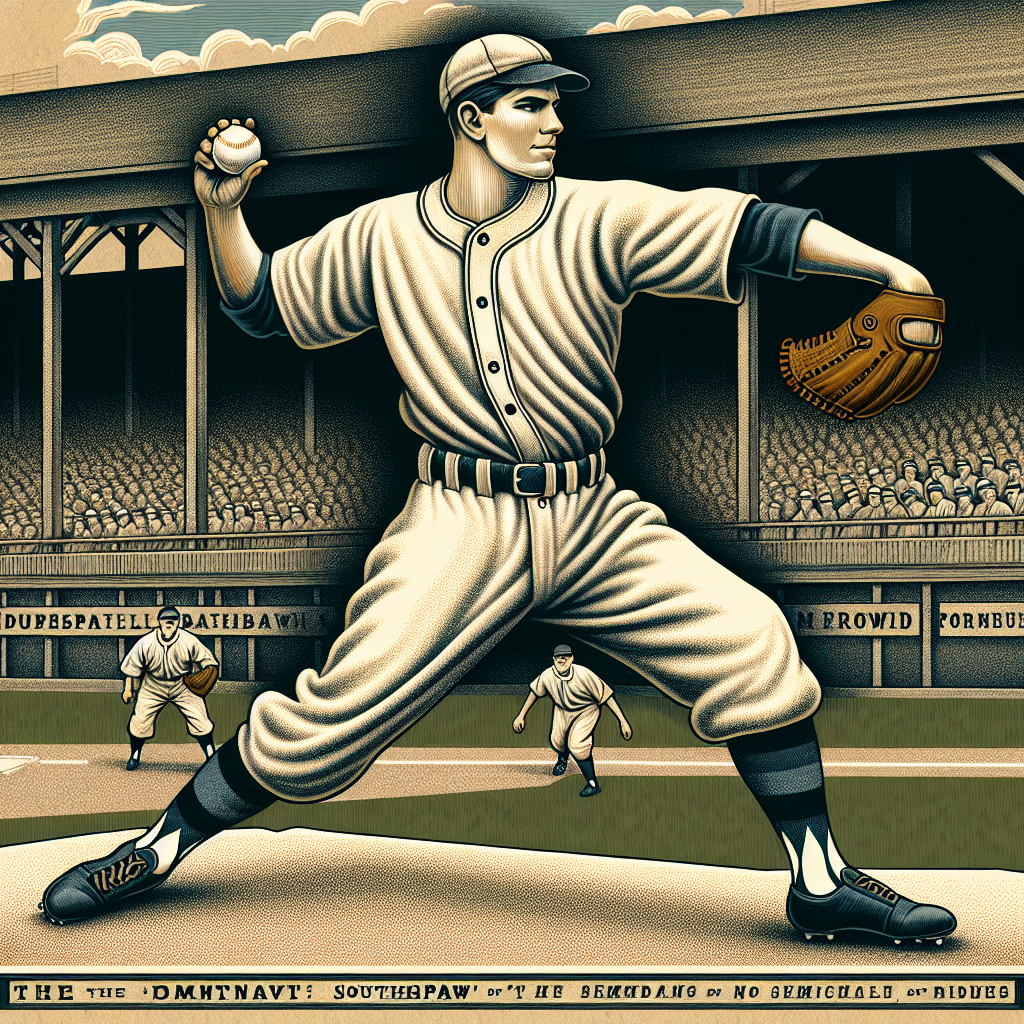
The true artistry of Lefty Grove lay in his impeccable pitching mechanics and unique style. At the core of his skill set was a blistering fastball that consistently hit the high 90s, a rarity for his era. Complementing his fastball was a sharp, devastating curveball that left hitters bewildered.
Grove’s delivery was a marvel to watch. With a smooth, almost effortless motion, he hid the ball well, making it difficult for batters to pick up the pitch until it was too late. His mechanics were refined and efficient, minimizing injury risks and allowing him to maintain peak performance throughout his career.
Control was another hallmark of Grove’s pitching. Unlike many power pitchers, who often struggled with walks, Grove had phenomenal command of the strike zone. His ability to locate pitches with precision added an extra layer of difficulty for opposing hitters.
Mentally, Grove was as tough as they come. His intense focus and competitive spirit were evident every time he took the mound. He had an uncanny ability to rise to the occasion in critical moments, a trait that separated him from his peers. Grove’s pitching mechanics, combined with his mental fortitude, made him the epitome of a dominant southpaw.
Accolades and Legacy
Lefty Grove’s career is adorned with numerous accolades that highlight his dominance in the sport. A six-time All-Star and two-time World Series champion, Grove’s contributions to baseball are immeasurable. He won the American League MVP award in 1931, further cementing his status as one of the game’s greats.
Grove led the American League in strikeouts seven times and in ERA nine times, showcasing his ability to both overpower and outthink hitters. His career ERA of 3.06 is impressive, considering the era in which he played. Moreover, his .680 winning percentage remains one of the highest among Hall of Fame pitchers.
In 1947, Grove was inducted into the National Baseball Hall of Fame, an honor that recognized his exceptional contributions to the sport. His legacy is not only defined by his statistics but also by the respect and admiration he garnered from peers and fans alike.
Grove’s impact on the game extends beyond his playing years. His pitching techniques and mechanics have been studied and emulated by generations of pitchers. Coaches often cite Grove as an example when teaching aspiring pitchers the fundamentals of control and efficiency on the mound.
Conclusion
Lefty Grove’s reign as the dominant southpaw in baseball history is a story of exceptional talent, unwavering determination, and timeless legacy. From his humble beginnings in Maryland to his towering achievements in Major League Baseball, Grove’s journey is a testament to what can be achieved through hard work and passion.
Grove’s career serves as an inspiration to aspiring athletes, demonstrating that greatness is not solely defined by raw talent but by the relentless pursuit of excellence. His pitching style, mechanics, and mental toughness offer invaluable lessons for pitchers at all levels of the game.
As we reflect on the contributions of Lefty Grove, it is clear that his influence on baseball endures. His name is etched alongside the legends of the sport, and his legacy continues to be a source of fascination and admiration for fans and players alike.
In celebrating the life and career of Lefty Grove, we honor not just a remarkable athlete but also a pioneering figure whose impact on baseball will be felt for generations to come. Lefty Grove’s era of dominance remains a golden chapter in the rich tapestry of America’s pastime, a chapter that will forever be remembered and revered.