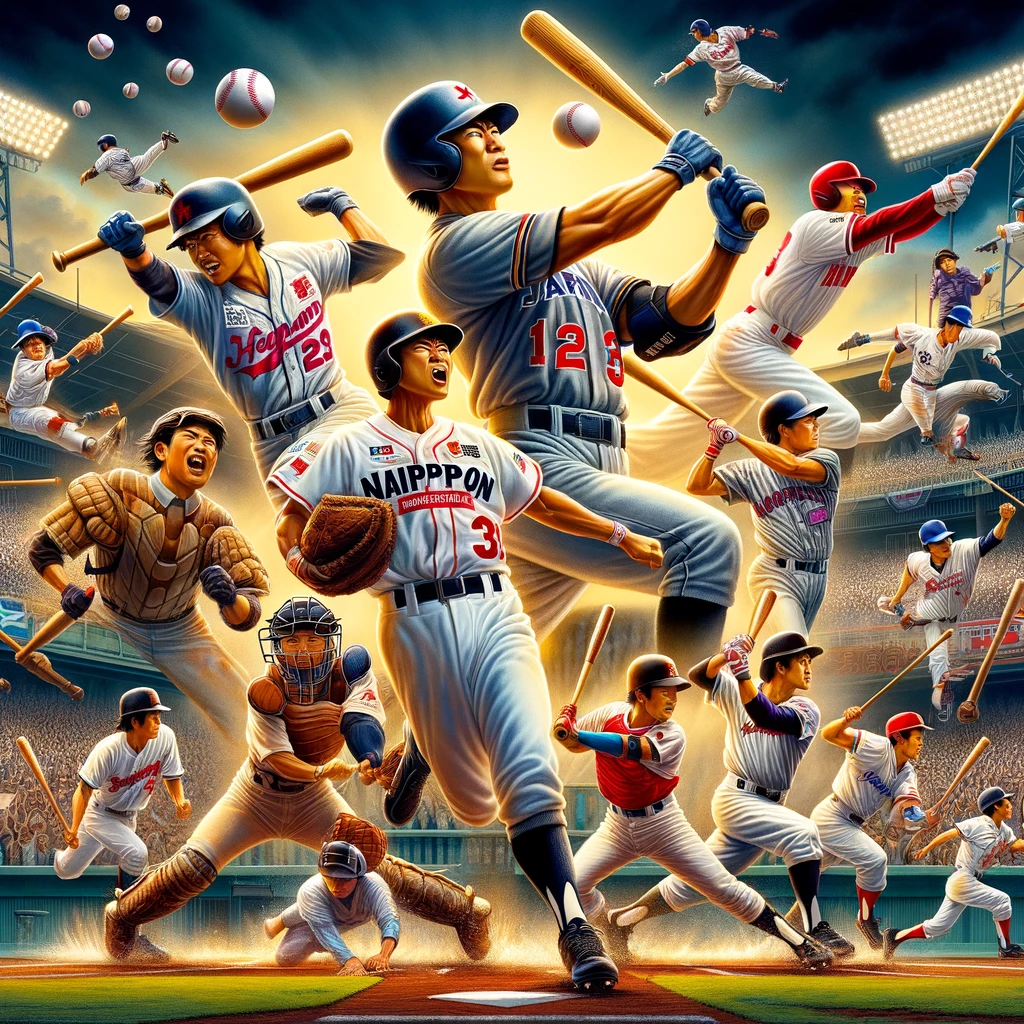
Baseball, a sport often synonymous with American culture, has found a passionate and enduring home in Japan. Nippon Professional Baseball (NPB), Japan’s premier baseball league, has not only embraced the game but has also produced some of the most legendary batters in baseball history. This article delves into the careers of these titans, exploring their achievements and the indelible marks they have left on the sport.
The Early Years: Pioneers of Japanese Baseball
The history of Japanese baseball dates back to the late 19th century, but it was in the post-World War II era that the NPB was formed, laying the foundation for professional baseball in Japan. Early stars like Fumio Fujimura and Makoto Kozuru were instrumental in popularizing the sport, showcasing a level of play that rivaled their American counterparts.
Fumio Fujimura: “Mr. Giants”
Fumio Fujimura, affectionately known as “Mr. Giants,” was a key figure in the Osaka Kintetsu Buffaloes and the Yomiuri Giants. Renowned for his powerful hitting, Fujimura became the first player in NPB history to hit 100 home runs, paving the way for future sluggers.
Makoto Kozuru: The Home Run King of the Early Era
Makoto Kozuru, another early icon, set a single-season home run record in 1950 with 51 homers, a record that stood for over three decades. His achievement was a testament to the growing talent in Japanese baseball.
The Golden Era: The Rise of Home Run Heroes
The 1960s and 1970s are often regarded as the golden era of NPB, marked by fierce rivalries and the emergence of home run kings who captured the nation’s imagination.
Sadaharu Oh: The Legendary Slugger
No discussion of Japanese baseball is complete without mentioning Sadaharu Oh. With an iconic flamingo stance, Oh dominated Japanese baseball like no other. His record of 868 career home runs remains a world record. Playing for the Yomiuri Giants, Oh won numerous batting titles and MVP awards, etching his name as a baseball legend.
Katsuya Nomura: A Catcher with a Mighty Bat
Katsuya Nomura, a catcher for the Nankai Hawks and several other teams, was another standout hitter. With over 500 home runs in his career, Nomura combined power with remarkable longevity, playing into his forties.
The Modern Era: Continuing the Legacy
The legacy of Japanese home run hitters continued into the modern era, with players like Hideki Matsui and Koji Yamamoto maintaining the tradition of powerful hitting.
Hideki Matsui: The Bridge to Major League Baseball
Hideki Matsui, known as “Godzilla,” made a significant impact in both NPB and MLB. His power-hitting prowess with the Yomiuri Giants led to a successful career in Major League Baseball, becoming a symbol of the talent present in Japanese baseball.
Koji Yamamoto: The Hiroshima Carp Legend
Koji Yamamoto, a star for the Hiroshima Toyo Carp, was another significant figure in this era. His consistent power-hitting helped his team to numerous championships, solidifying his status as a NPB legend.
The International Influence
The success of Japanese batters has not been limited to their homeland. Players like Ichiro Suzuki and Shohei Ohtani have shown that the skills honed in NPB can translate to success in Major League Baseball. Their achievements have further elevated the status of Japanese baseball on the global stage.
Ichiro Suzuki: The Hit King
Ichiro Suzuki, who began his career with the Orix Blue Wave, went on to become one of the most successful hitters in MLB history. His unique batting style and unmatched consistency made him an international icon.
Shohei Ohtani: A Modern Phenomenon
Shohei Ohtani, a dual-threat as a pitcher and hitter, has taken the baseball world by storm. His achievements in MLB, including an MVP award, have showcased the evolving nature of Japanese baseball talent.
The history of Nippon Professional Baseball is rich with the tales of its home run kings. From the early pioneers to modern-day legends, these players have not only defined the sport in Japan but have also left an indelible mark on baseball globally. Their stories are a testament to the skill, dedication, and passion that Japanese players bring to the game, inspiring new generations to step up to the plate.

The Impact on Future Generations
The influence of Japan’s legendary sluggers extends into the nurturing of future talent. Young players in Japan grow up idolizing these figures, drawing inspiration from their careers. Baseball academies and high school programs often incorporate training philosophies and techniques popularized by these players, ensuring their legacy persists in the fundamentals of Japanese baseball.
The Integration of Technology and Modern Training
In recent years, the approach to hitting in Nippon Professional Baseball has evolved, integrating advanced technology and modern training methods. This shift reflects the league’s commitment to maintaining its competitive edge and is a testament to the evolving legacy of the home run kings. The use of data analytics, biomechanical analysis, and high-tech training equipment is now common, blending traditional approaches with new-age insights.
The Role of International Exchanges
The exchange of talent between Nippon Professional Baseball and other leagues, particularly Major League Baseball in the United States, has been pivotal in enhancing the skills of Japanese players. This cross-pollination of styles and techniques has enriched the quality of play in Japan, with returning players often bringing new perspectives and skills learned abroad.
The Cultural Significance of Baseball in Japan
Baseball in Japan is more than just a sport; it is a cultural phenomenon. The legends of the NPB have not only contributed to the sport’s popularity but have also influenced Japanese culture in various ways. From manga and anime centered around baseball to its presence in festivals and educational institutions, the impact of these players is deeply woven into the fabric of Japanese society.
Challenges and the Future of Japanese Baseball
Despite the rich history and successes, Japanese baseball faces challenges, including competition from other sports and the lure of Major League Baseball for top talent. However, the enduring legacy of the home run kings, combined with the continuous evolution of the league, positions Nippon Professional Baseball to overcome these challenges and thrive.
Celebrating Diversity and Inclusivity
The NPB has also seen a growing diversity in its players, including foreign talents who have made significant contributions to the league. This inclusivity has not only enriched the level of play but has also fostered a more global understanding of the sport, furthering the legacy of the home run kings beyond Japan’s borders.
The Role of Media and Broadcasting
The media’s role in popularizing these baseball heroes cannot be understated. Television broadcasts, print media, and, more recently, social media and online streaming services have brought the exploits of these players into the homes and hearts of millions, both in Japan and globally. This widespread coverage has been instrumental in immortalizing their achievements.
The Economic Impact
The success of these players has also had a significant economic impact. Merchandise sales, ticket revenues, and sponsorships driven by the popularity of these home run kings have contributed substantially to the financial health of the NPB and its teams.
Looking Ahead
As the NPB continues to evolve, the future looks bright for the next generation of home run kings. With a rich history as their foundation and a world increasingly attentive to Japanese baseball, the legacy of these legendary batters is set to inspire and influence countless future stars.
Conclusion
Japan’s home run kings have not only left an indelible mark on the baseball field but have also become integral parts of the nation’s cultural and sporting identity. Their achievements, character, and influence continue to resonate, ensuring that their legacies will endure for generations to come. As we celebrate these legendary figures, we also look forward to the future stars who will carry on the tradition of excellence in Nippon Professional Baseball.
Frequently Asked Questions
1. Who are some of the most legendary home run hitters in the history of Nippon Professional Baseball (NPB)?
Japan takes its baseball incredibly seriously, and the Nippon Professional Baseball (NPB) league stands as a testament to the country’s passion for the sport. Over the years, several players have etched their names into NPB’s history books with staggering home run records. Some legendary figures include Sadaharu Oh, who ranks as arguably the greatest home run king with 868 home runs – more than anyone else in professional baseball worldwide. Then there’s Kazuhiro Kiyohara and Hideki Matsui, both of whom struck fear into the hearts of pitchers with their phenomenal hitting prowess. Katsuya Nomura also deserves a mention; as a power hitter, his career was decorated with 657 home runs, making him one of the top sluggers in the league’s history. Each of these athletes not only dazzled with their power at the plate but also personified the spirit and dedication that baseball demands, leaving an indelible mark on Japanese sports and culture.
2. How did Sadaharu Oh achieve his monumental home run record?
Sadaharu Oh’s journey to becoming the world home run king is both inspirational and remarkable. Born to a Chinese father and Japanese mother, Oh faced challenges both on and off the field, but his perseverance and unique approach to hitting set him apart. His career with the Yomiuri Giants spanned from 1959 to 1980, during which he hit a jaw-dropping 868 home runs. Oh’s success largely stemmed from his distinctive batting stance – the Flamingo Leg Kick – where he lifted his right leg, allowing for a more explosive swing. He was coached by the revered Shigeo Nagashima and alongside Nagashima, formed a dynamic duo that dominated Japanese baseball. Oh’s dedication to continual improvement, strategic insights into each opposing pitcher, and his mental discipline enabled him to achieve such an extraordinary record, cementing his legacy in the annals of the sport.
3. What was Katsuya Nomura’s contribution to Japanese baseball, beyond his home run hitting?
Katsuya Nomura’s influence on Japanese baseball transcended his remarkable career as a home run hitter. While known for his power at the plate—hitting 657 homers—Nomura was also a highly skilled catcher. His strategic brilliance behind the plate elevated his teams’ defensive play, making him a central figure in the game. Nomura’s insights into opponents’ strategies and the effective handling of pitchers were second to none. Beyond his playing days, Nomura went on to become a successful and much-respected manager. His managerial career was distinguished by his ability to develop teams and lead clubs like the Yakult Swallows and the Hanshin Tigers to success. As a manager, he implemented contemporary techniques and emphasized the importance of mental toughness and preparation, thus significantly influencing the development of future generations of players and managers alike. His holistic contribution to the sport cements his standing as one of Japan’s baseball greats.
4. How has Hideki Matsui impacted Japanese baseball and its relationship with Major League Baseball (MLB)?
Hideki Matsui, affectionately known as “Godzilla” due to his enormous frame and powerful swing, stands as a monumental figure in Japanese baseball. His impact on the game was profound both in Japan and internationally. Matsui’s illustrious career began in the NPB with the Yomiuri Giants, where his stellar performance earned him two MVP awards and a home run championship. Transitioning to Major League Baseball (MLB) in 2003 with the New York Yankees, Matsui was part of the wave of NPB stars paving their way to MLB, thus bridging Japanese baseball with America’s MLB more tightly. He showcased his skills on baseball’s largest stage, culminating in a World Series MVP in 2009. Matsui’s success helped elevate the status of NPB players, showing that Japanese talent could compete at the highest level globally. His presence in the MLB also fostered deeper appreciation and mutual respect between the leagues, promoting further talent exchanges and collaborations over the years.
5. What factors contribute to a player’s status as a ‘home run king’ in NPB?
Succeeding as a home run king in NPB requires a combination of talent, skill, and commitment. Players must develop extraordinary batting skills, including precise hand-eye coordination, power, and the ability to read pitchers effectively. Discipline and mental resilience are crucial as they contend with the challenges that come with sustaining high performance over long seasons. Moreover, innovation in batting techniques, like Sadaharu Oh’s Flamingo Leg Kick, can give hitters an edge over their contemporaries. A player’s impact extends beyond sheer numbers; they must also embody the spirit of the sport, becoming role models for younger players. Home run kings in Japan often inspire on and off the field, contributing to their teams’ success and even national pride. Their legacies are built not only on statistics but also on their influence, perseverance, and the inspiration they provide to future generations of players. This combination of performance and character makes being a home run king in NPB an esteemed and hard-earned title.