
Baseball, a sport often regarded as America’s pastime, has a profound and storied history in Cuba, a nation that has produced some of the world’s most formidable and celebrated pitchers. The journey of Cuban baseball, particularly its pitchers, is a tale of talent, resilience, and extraordinary achievement. This article delves into the rich history of Cuban baseball, highlighting the legacy of its pitching maestros who have left an indelible mark on the game.
The Early Days of Cuban Baseball
Baseball arrived in Cuba in the 1860s, brought by Cubans who had studied in the United States and American sailors docking in Cuban ports. The first official baseball game in Cuba was played in 1874. This period marked the genesis of Cuba’s love affair with baseball, which soon became the nation’s most popular sport.
The Amateur Era
The early days of Cuban baseball were characterized by amateur play, where passion and national pride overshadowed commercial interests. Clubs like Almendares, Habana, and Matanzas became the breeding grounds for the first generation of Cuban pitching talent. During this era, pitchers like José Méndez and Dolf Luque began to make their mark. Méndez, known for his exceptional control and deceptive speed, earned the nickname “El Diamante Negro” (The Black Diamond). Luque, with his fiery temperament and sharp-breaking curveball, later became one of the first Cubans to achieve significant success in Major League Baseball (MLB).
Integration into Professional Baseball
The early 20th century saw Cuban players, including pitchers, start to integrate into professional baseball in the United States. This was a pivotal moment, as it allowed Cuban talent to be showcased on a larger stage. However, racial segregation policies of the era limited these opportunities, confining many talented players to the Negro Leagues or other international leagues.
The Golden Age of Cuban Baseball
The mid-20th century is often referred to as the golden age of Cuban baseball. This era was marked by the emergence of several pitchers who would dominate both the Cuban leagues and international play.
Conrado Marrero
Conrado Marrero, also known as “Connie,” became a legend in both Cuban and American baseball circles. Known for his longevity and resilience, Marrero’s career spanned from the 1930s to the 1950s. Despite his small stature, he was known for his remarkable control and a wide array of pitches that baffled hitters.
Camilo Pascual and Pedro Ramos
During the same period, pitchers like Camilo Pascual and Pedro Ramos rose to prominence. Pascual was famed for his devastating curveball, while Ramos was known for his fastball and durability. Both players made significant impacts in MLB, earning multiple All-Star selections.
The Post-Revolution Era
The Cuban Revolution of 1959 had a profound impact on baseball in the country. Professional baseball was abolished, and the sport was reorganized under state control. This led to the creation of the Cuban National Series in 1961, a league that would become the showcase for the island’s top talent.
The Rise of Cuban Pitchers in International Competitions
In the decades following the revolution, Cuban baseball focused on international amateur competition. Cuban pitchers played a pivotal role in the country’s dominance in events like the Olympic Games, Baseball World Cups, and the Intercontinental Cup. Pitchers like Omar Linares, who was not only an excellent hitter but also a formidable pitcher, and José Contreras, known for his powerful arm, helped Cuba secure numerous international titles.
The Defection Phenomenon
The late 20th and early 21st centuries saw a new trend: the defection of Cuban players to the United States to play in MLB. This was a complex and often perilous journey, driven by the desire for greater opportunities and financial rewards. Pitchers like Orlando “El Duque” Hernández and Aroldis Chapman are notable examples. Hernández achieved fame with the New York Yankees, becoming a key part of their late-1990s dynasty. Chapman, known for his blistering fastball, has become one of MLB’s most dominant closers.
Cuban Pitching Today
Today, Cuban pitching continues to be a force in both international competitions and major leagues around the world. The legacy of Cuba’s pitching maestros is carried on by a new generation of talented arms who continue to make their mark in MLB and other leagues globally.
The Influence on Modern Pitching
The impact of Cuban pitchers extends beyond their individual achievements. They have influenced the art of pitching itself, bringing unique styles and approaches that have been adopted and adapted by pitchers worldwide. Their legacy is not just in the records they set or the games they won but in the way they have shaped the craft of pitching.
The history of Cuban baseball is a tapestry of triumph, challenge, and extraordinary talent, with pitchers playing a central role in its narrative. From the early pioneers to the modern-day stars, Cuban pitchers have consistently demonstrated a level of skill and dominance that has earned them a special place in the annals of baseball history. Their story is not just about the sport but also about the spirit, resilience, and passion of the Cuban people. As baseball continues to evolve, the legacy of Cuba’s pitching maestros will undoubtedly endure, inspiring future generations of players and fans alike.
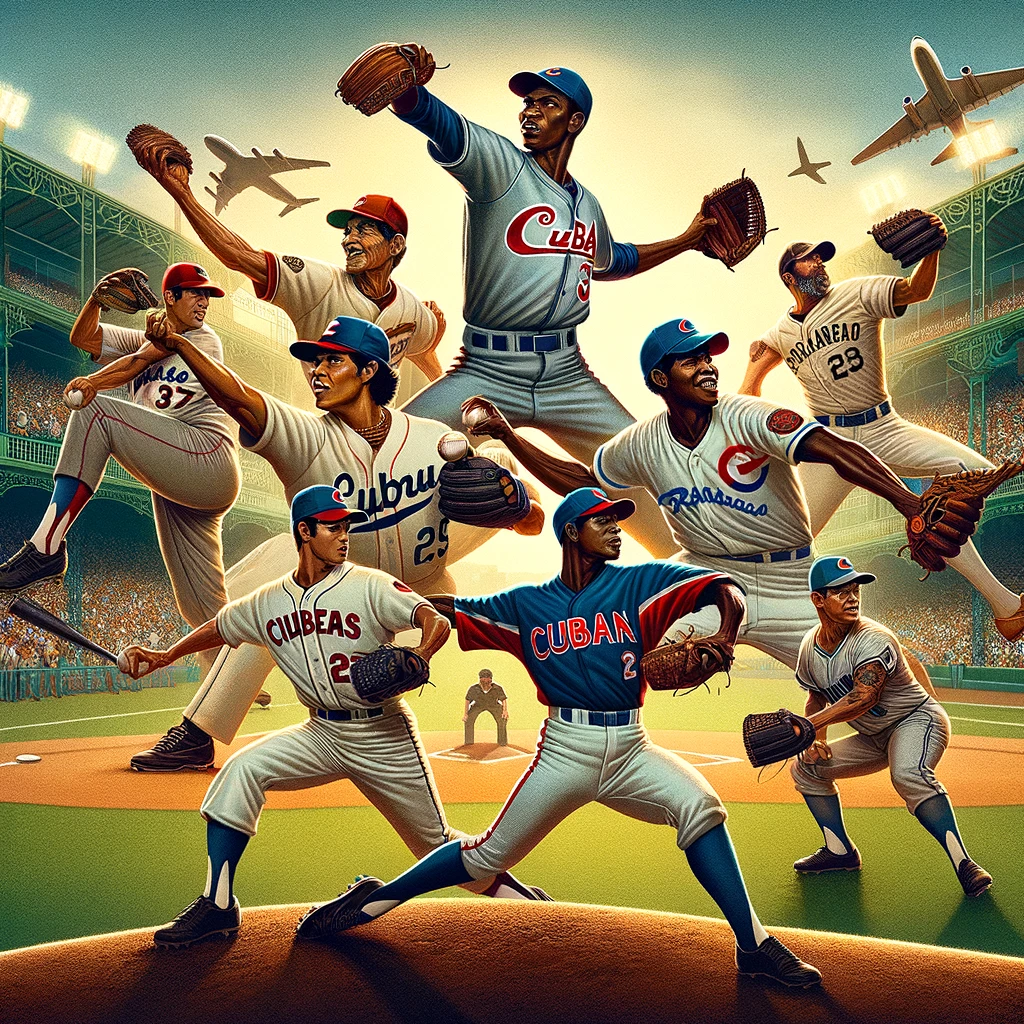
The Evolution of Cuban Pitching Style
Cuban pitchers are renowned for their unique style, characterized by a blend of power, finesse, and an array of pitches. This evolution can be traced back to early pitchers who had to rely on skill and guile in the absence of modern training facilities.
Innovations in Pitching Techniques
Cuban pitchers have been known for their innovative approaches to pitching. They often developed unique grips and deliveries, sometimes out of necessity due to limited resources. This creativity led to an array of pitches that baffled batters, including deceptive off-speed pitches and breaking balls with exceptional movement.
The Impact of Cuban Pitchers in MLB
The influence of Cuban pitchers in Major League Baseball has been profound. They have not only showcased their exceptional talent but also brought a distinct flair and competitiveness to the game.
Pioneers in the Major Leagues
Pioneers like Luis Tiant and Mike Cuellar set the stage for future generations. Tiant, known for his unorthodox delivery and longevity in the game, left an indelible mark with the Boston Red Sox. Cuellar, a crafty left-hander, was a key figure in the Baltimore Orioles’ success in the late 1960s and early 1970s.
Modern Stars
In recent years, players like José Fernández and Yasiel Puig have continued this legacy. Fernández, with his electric fastball and charismatic personality, was one of the most dominant pitchers in MLB before his tragic passing. Puig, though primarily an outfielder, brought the same intensity and flair that has been a hallmark of Cuban players.
Challenges and Triumphs
The journey of Cuban pitchers to MLB is often fraught with challenges, including the perilous defection process and cultural adjustments. Yet, their successes have been a testament to their resilience and talent.
The Defection Process
The decision to defect is a life-changing and often risky endeavor for Cuban players. It involves leaving behind family and the familiar in pursuit of a dream. The stories of players like Orlando Hernández, who defected via boat in 1997, and Aroldis Chapman, who defected in 2009, highlight the complex and emotional nature of this journey.
Cultural and Professional Adaptation
Once in MLB, Cuban players face the challenge of adapting to a new culture and the highly competitive nature of the league. Despite these challenges, many have excelled, demonstrating adaptability and resilience, traits that are emblematic of the Cuban spirit.
The Future of Cuban Baseball
The landscape of Cuban baseball continues to evolve, with increasing numbers of players making their way to leagues around the world. This trend suggests a bright future for Cuban talent in the global baseball community.
Continued Dominance in International Play
Despite the departure of many talented players, Cuba continues to be a powerhouse in international baseball competitions. The Cuban National Series and other development programs on the island continue to produce high-caliber players who excel on the international stage.
The Next Generation
The legacy of Cuban pitching maestros is in the hands of the next generation of players. Young talents, both on the island and those who have moved abroad, carry the rich heritage of Cuban baseball, poised to write the next chapter in this storied history.
Conclusion
The history of Cuban baseball, particularly its pitchers, is a narrative of extraordinary talent, resilience, and innovation. From the early days of amateur play to the modern era of professional leagues, Cuban pitchers have consistently demonstrated a level of dominance and flair that has left an indelible mark on the sport. As the game continues to evolve, the legacy of Cuba’s pitching maestros will remain a source of inspiration and admiration, a testament to the enduring spirit and skill of Cuban baseball.
Frequently Asked Questions
1. How did baseball become so ingrained in Cuban culture, and what role did it play in the island’s sporting traditions?
Baseball’s integration into Cuban culture can be traced back to the late 19th century when it was introduced by Cuban students returning from the United States and American sailors docking in Cuban ports. The sport rapidly gained popularity, resonating with the Cuban spirit of resilience and flair. Unlike any other sport, baseball offered a platform for citizens to showcase their skills and unify different demographics across the island. Post-independence, it became a symbol of freedom and national pride, cementing its place in Cuban society. The sport’s inherent competitive nature and the charisma required for pitching made it a natural fit for a country known for its passion and determination.
2. Who are some of the iconic figures in the history of Cuban pitching, and what made them stand out?
Cuba boasts a rich legacy of pitching legends who not only dominated local leagues but also made a significant impact internationally. Some standout figures include Conrado Marrero, known for his precise control and longevity, and Martín Dihigo, whose versatility and excellence in both pitching and batting made him a legend. Another iconic figure is Pedro Luis Lazo, famous for his fiery fastball and strikeout prowess, as well as José Contreras, who achieved success on both the national and MLB levels. These players, among others, possessed exceptional talent, a deep understanding of the game, and an unwavering dedication that set them apart as true maestros of Cuban baseball.
3. What challenges did Cuban pitchers face when attempting to play internationally, especially in Major League Baseball (MLB)?
Cuban pitchers have faced numerous challenges when pursuing careers internationally due to complex political relations between Cuba and the United States. For decades, the Castro regime enforced strict restrictions on Cuban athletes, limiting their ability to join foreign leagues without defection. Those who managed to escape and seek opportunities abroad often encountered cultural adaptation issues, language barriers, and the pressure of living up to their reputations. Despite these obstacles, many Cuban pitchers, renowned for their resilience and adaptability, succeeded in making a name for themselves in MLB, contributing to the rich narrative of Cuban athletic achievement.
4. How has the legacy of Cuban pitching evolved over the years, and what is its current state in both domestic and international arenas?
The legacy of Cuban pitching has evolved remarkably over the years, maintaining its status as a cornerstone in Cuban baseball. In the domestic sector, despite economic challenges and an evolving political climate, youth academies continue to nurture talent, ensuring the continuation of high-caliber pitching skills. Internationally, Cuban pitchers have broken new ground, with many finding success in MLB, Japan, and other esteemed leagues. This global presence underlines the enduring influence and expertise of Cuban pitching, as well as a hopeful future where political and economic barriers may gradually dissolve, allowing more players to emerge on the world stage.
5. In what ways have Cuban pitchers contributed to baseball’s global appeal, and what impact have they had on international perceptions of the sport?
Cuban pitchers have had a profound impact on baseball’s global appeal by consistently demonstrating exceptional skill, passion, and a unique style that captures the imagination of audiences worldwide. Their legacy includes not just personal achievements but also contributions to the narrative of baseball as a global sport. Cuban pitchers bring a flair and strategic complexity that challenge international players, raising the competitive standards of leagues. Moreover, the charisma and backstory of their journeys often inspire narratives of hope and ambition, enhancing baseball’s human element. Such contributions reinforce baseball’s status as a sport that transcends borders and continues to captivate hearts across cultures.