
Exhibition Stadium, once proudly standing on the northern shore of Lake Ontario, was more than just a sports venue to Toronto’s baseball fans. Before the SkyDome (now known as Rogers Centre) revolutionized the baseball experience in Toronto, Exhibition Stadium was where it all began for Major League Baseball (MLB) in Canada’s largest city. This venerable ballpark was home to the Toronto Blue Jays from their inaugural season in 1977 until 1989, playing a foundational role in the early history of the franchise. Known for its unique and sometimes problematic structure, unpredictable weather, and an undeniable charm that captivated fans, Exhibition Stadium holds a special place in the hearts of those who remember it. However, many new baseball fans and general audiences may not be fully aware of the significant moments and challenges that shaped Exhibition Stadium’s history. This article aims to provide a comprehensive look at the stadium’s journey, from its origins and architectural peculiarities to its memorable events and eventual demise.
The Origins of Exhibition Stadium
Exhibition Stadium, initially conceived as a multi-purpose venue, opened its doors in 1959. Instead of starting its life as a baseball park, it was primarily designed for football and Canadian National Exhibition events. Situated within Exhibition Place, a large fairground site, it became a natural choice when Toronto’s bid for an MLB team was finally successful. Interestingly, the stadium was known as CNE Stadium, reflecting its roots tied to the Canadian National Exhibition. Its versatility and location made it a central hub for various types of entertainment beyond football and baseball, including concerts and auto racing. As part of the broader vision to bring a major league baseball team to Toronto, modifications were made to accommodate the sport properly. Despite these efforts, the makeshift nature of the stadium’s design often led to a tug-of-war between the fans’ love for the team and their less-than-ideal experience at the ballpark.
Architectural Quirks and Challenges
The architectural design of Exhibition Stadium brought immense character to the venue but also invited many challenges. Originally constructed as an open-air football stadium, it faced significant issues when adapted for baseball. One of its most curious features was the asymmetrical field dimensions, resulting from the need to fit an MLB-compliant diamond inside a structure not initially intended for it. This led to exceptionally long distances to right field and relatively short distances down the left field, causing unusual gameplay dynamics. Mother Nature also had a say in games hosted at Exhibition Stadium. Located close to Lake Ontario, weather conditions were frequently unpredictable. Wind gusts from the lake often turned simple fly balls into baffling plays. Fans endured bone-chilling cold during early and late-season games, particularly in April and October. On at least one occasion, the combination of cold and snow forced the postponement of a game, leading to a wry moniker among fans: the “Mistake by the Lake.”
Memorable Moments
Despite the various challenges, Exhibition Stadium was home to several momentous occasions in Toronto Blue Jays history. The team’s first-ever game on April 7, 1977, against the Chicago White Sox, marked a historic day for Canadian baseball. Under a blanket of snow, the Blue Jays won their debut game by a score of 9-5, setting a precedent for the unpredictable yet exciting experiences to follow. Another notable event was the first no-hitter in Blue Jays history, accomplished by Dave Stieb on September 2, 1990. Although this game took place after the team had moved regular-season games to the SkyDome, it was a perfect encapsulation of the memorable performances linked to Exhibition Stadium. Exhibition Stadium also played host to remarkable concerts that catalyzed its cultural significance. Legendary artists like Pink Floyd, the Rolling Stones, and David Bowie performed sold-out shows, imprinting memories that transcended sports and etched the stadium deeper into Toronto’s collective consciousness.
Fan Experience and Legacy
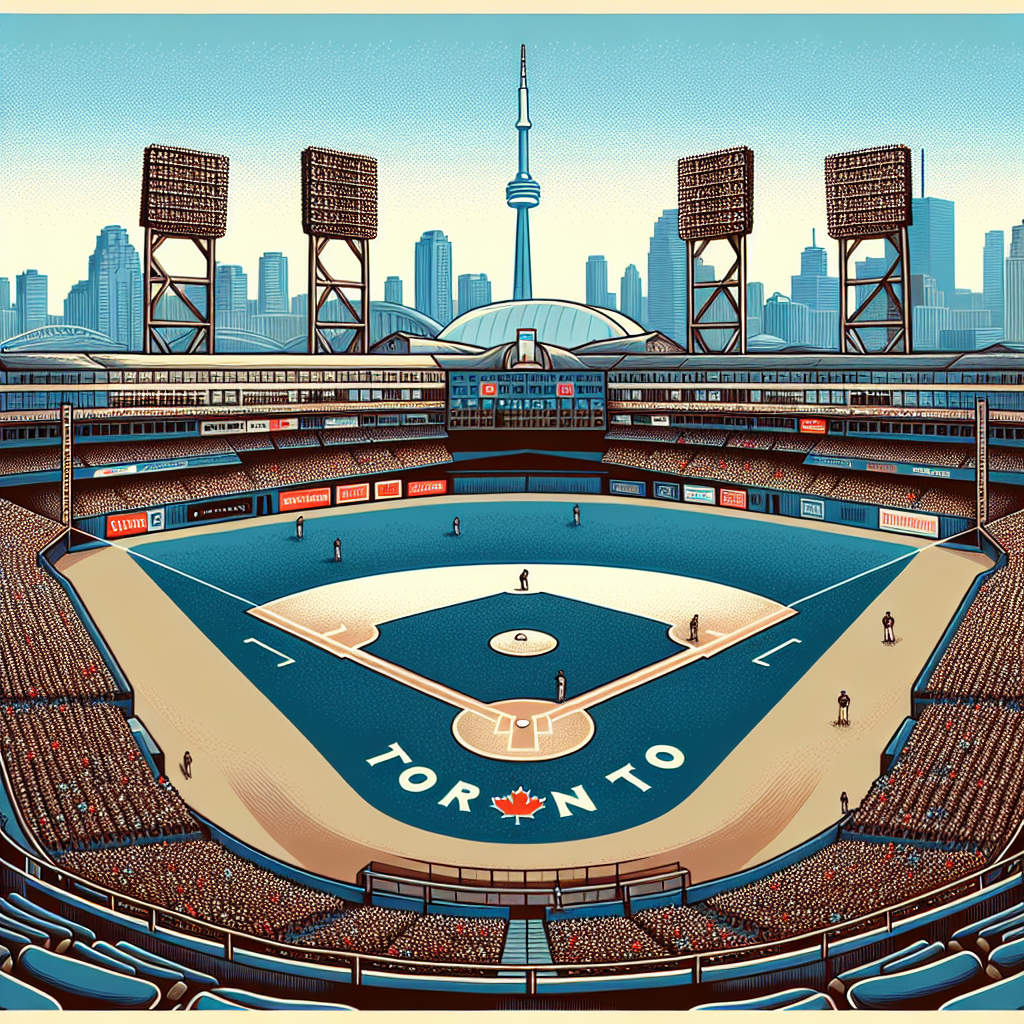
For Blue Jays fans, attending a game at Exhibition Stadium was an adventure, to say the least. The stadium’s flaws were often offset by the sheer joy of watching live baseball, a new experience for many Toronto residents. Fans braved harsh winds and frigid weather, displaying a dedication that spoke volumes about their love for the team. Concessions and amenities at the stadium were rudimentary compared to modern standards. The seating arrangement, designed for a football audience, sometimes afforded less than ideal sightlines for ballgames. Yet, the intimacy and raw atmosphere created a unique bond between fans and their team. This tenacity and support played a critical role in pushing for a more advanced, baseball-specific ballpark, eventually resulting in the construction of the SkyDome. In that sense, Exhibition Stadium not only paved the way for the Blue Jays’ future but also cultivated a foundational fan base that saw the franchise through its formative years.
Demise and Legacy
As significant as Exhibition Stadium was, its time as a major baseball venue was always seen as a temporary measure until a more modern facility could be constructed. The announcement of a new domed stadium in Toronto was met with great enthusiasm, marking the beginning of the end for Exhibition Stadium as the home of the Blue Jays. The last MLB game played at Exhibition Stadium occurred on May 28, 1989. Fans bid farewell to the stadium, which had housed many milestones in the team’s early years. The Blue Jays moved to the state-of-the-art SkyDome mid-season, signaling a new era in Toronto sports history. Exhibition Stadium was eventually demolished in 1999, but its legacy endures. Though its structure is long gone, the memories created within its walls continue to resonate with veteran Blue Jays fans. It stands as a testament to an era of perseverance, growth, and undying love for baseball. The spirit of those early years still echoes in conversations among long-time Toronto residents, retired players, and sports historians, ensuring that Exhibition Stadium’s impact on Toronto’s baseball history will never be forgotten.
Conclusion
Exhibition Stadium’s story is a fascinating chapter in the annals of Toronto and Major League Baseball history. As the first major league baseball venue in Toronto, it was a unique blend of triumphs and trials. From its origin as a multi-purpose stadium to its adaptation to baseball, the quirks and challenges it presented, the memorable moments, and the mixed fan experiences—the stadium was a vital canvas on which the early days of Blue Jays baseball were painted. The legacy of Exhibition Stadium extends beyond its original function. While it may not have been perfect, it served as the backdrop for unforgettable memories and laid the foundation for what would become a successful MLB franchise. The passion and dedication of the fans who supported the team, despite less-than-ideal conditions, reflect the undying love for the sport and the Blue Jays. Today, the Rogers Centre stands as a modern marvel, a testament to the growth and progress that began at Exhibition Stadium. It’s easy to forget the humble beginnings when looking at the grandeur of the present, but historical staples like Exhibition Stadium remind us of where it all started. Its story continues to be an essential part of Toronto’s baseball narrative, teaching new generations about the past’s struggles, achievements, and enduring spirit. As we celebrate the Blue Jays’ ongoing journey and look forward to more remarkable seasons, it’s important to remember these foundational aspects. Exhibition Stadium may no longer stand physically, but it undeniably occupies a special place in the heart of Toronto and its rich baseball lore.