
Baseball has long captivated sports enthusiasts with its unique blend of strategy, skill, and suspense. At the intersection of all these elements stands one resounding event: the home run. This singular feat has evolved from a rare occurrence to the hallmark of batting prowess, capturing the imaginations of fans and shaping the history of the game. Let’s take a comprehensive look at the history of home runs, notable records, and the players who have become household names because of their power-hitting capabilities.
Introduction
The roots of baseball stretch back to the mid-19th century, and it’s during these early days that the tradition of the home run began. Initially, baseball was a low-scoring game, prioritizing strategy over power. Home runs were an infrequent delight, exciting fans but not defining the sport. Players like Babe Ruth, with their visionary prowess, would later transform this perspective, making the home run emblematic of baseball’s promise of excitement and entertainment.
Home runs, in their simplest essence, involve a batter hitting the ball out of the field’s reaches, allowing them to round all four bases and score a run with one swing. The strategic shift towards power-hitting didn’t happen overnight. It evolved as the sport grew and players sought new ways to excel within it. This transition was pivotal in cementing baseball’s place in American culture and, eventually, global sports history.
Our journey begins in those early, formative years, traversing through the golden eras marked by the rise of power hitters, and culminating in the modern age where the home run remains the sport’s most electrifying spectacle. From record-breaking moments to the fascinating statistics that give these achievements context, the history of the home run is a testament to baseball’s enduring appeal.
The Emergence of Power Hitters
The 1920s ushered in a new era for baseball, largely due to the indomitable presence of George Herman “Babe” Ruth. Before Ruth, home runs were somewhat sporadic, celebrated but not common enough to define a player’s career. Ruth’s exceptional ability to hit the ball out of the park transformed baseball strategy and altered the competitive landscape. Ruth began his career as a pitcher for the Boston Red Sox but found his true calling as an outfielder for the New York Yankees. His incomparable home run record started taking shape in 1919 when he hit 29 home runs, setting a single-season record at the time. However, it was his astounding 1927 season, where he set an incredible record of 60 home runs, that cemented his legacy. This feat would stand for 34 years and helped define a new era of power-hitting in baseball.
Other players naturally followed in Ruth’s footsteps, such as Jimmie Foxx, Lou Gehrig, and Hank Greenberg, each contributing to an era where the home run grew in significance. These players captured the public’s imagination and diverse fan base, providing thrilling spectacles with towering home runs that transcended the game itself and became cultural milestones. The 1930s through the early 1960s witnessed an ongoing evolution and refinement in hitting techniques, aided by innovations in bat design and advancements in player training regimes.
The Steroid Era and Its Impact
The late 20th and early 21st centuries brought unprecedented attention to home run statistics, albeit under the shadow of controversy. This period, often referred to as the “Steroid Era,” saw an explosion in the number of home runs. Fans were treated to record-breaking spectacles by players like Mark McGwire, Sammy Sosa, and Barry Bonds, whose physically impressive performances seemed almost superhuman. In 1998, the baseball world was riveted by the home run race between Mark McGwire and Sammy Sosa, who smashed 70 and 66 home runs, respectively. These figures shattered the previously sacred record set by Roger Maris in 1961, who had surpassed Babe Ruth with 61 home runs in a single season. Then came Barry Bonds, who eclipsed McGwire’s single-season record with 73 home runs in 2001, and subsequently broke Hank Aaron’s all-time record with 762 career home runs. However, these monumental achievements were later marred by revelations and widespread allegations of steroid use. The tainted history led to debates about the integrity of records and the ethical dimensions of performance enhancement in sports. Major League Baseball (MLB) instituted stringent measures and testing protocols, aiming to restore faith in the sport and honor the true spirit of competition. Despite the controversies, it cannot be denied that the Steroid Era had a lasting impact on the home run narrative, adding layers of complexity to the appreciation of power-hitting records.
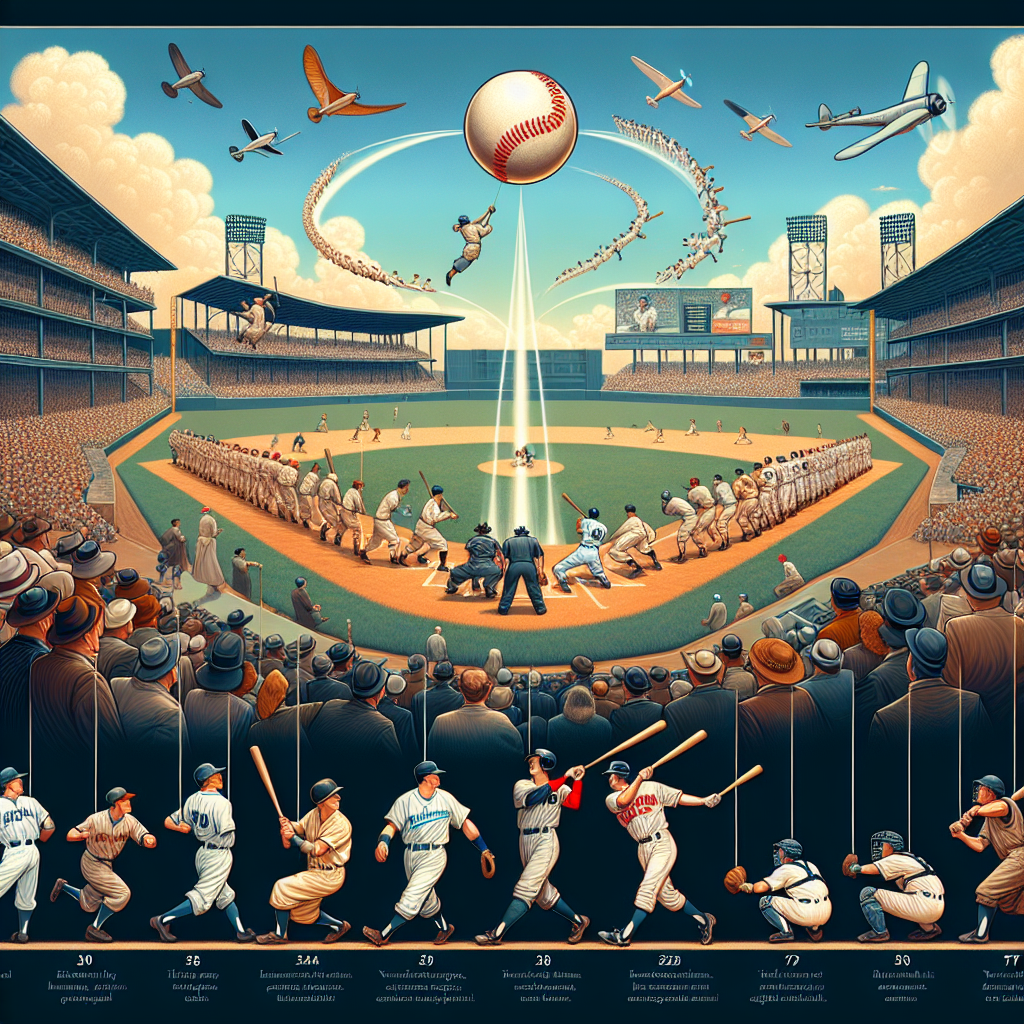
Modern Power Hitters and Sabermetrics
In the post-Steroid Era, Major League Baseball has made significant strides to not only ensure a clean sport but also to innovate in the ways we understand and appreciate the game, largely through sabermetrics. Advanced metrics and analytics have delved deep into player performances, offering a granular view of the factors contributing to home run statistics. Today’s players benefit from precise training techniques, diet regimens, and cutting-edge equipment that all converge to make the modern hitter incredibly efficient. Current stars like Mike Trout, Giancarlo Stanton, and Aaron Judge continue to keep the excitement alive, each possessing a combination of strength, skill, and discipline that defines the contemporary power hitter. Aaron Judge’s record-setting rookie season in 2017, where he hit 52 home runs, highlighted the perfect melding of raw power and studied efficiency that characterizes today’s game. These players are supported by a robust analytical ecosystem that helps refine their swings, predict pitcher tendencies, and optimize every aspect of their at-bats.
Sabermetrics, a term coined by Bill James, has revolutionized the way the game is viewed and played. Metrics like OPS (on-base plus slugging) and WAR (wins above replacement) give deeper insights into a player’s total value, beyond just home run counts. Through this lens, players who might not lead the league in sheer home run numbers can still be highly valued for their contribution to team success. However, the allure of the home run remains undiminished, continually enshrined as a pivotal measure of excellence in the sport.
Memorable Home Run Moments
Throughout baseball history, certain home run moments have stood out, etching themselves into the collective memory of fans. These moments transcend mere statistics and become iconic landmarks within the sport. One such instance is Bobby Thomson’s “Shot Heard ‘Round the World” in 1951. Thomson’s dramatic three-run homer in the final game of the National League playoff series catapulted the New York Giants over the Brooklyn Dodgers, epitomizing the sheer drama and volatility of baseball competition. Another unforgettable moment came in the 1977 World Series when Reggie Jackson of the New York Yankees hit three home runs in a single game. This display of power earned him the nickname “Mr. October” and solidified his reputation as one of baseball’s greatest postseason performers. Similarly, Kirk Gibson’s walk-off home run in Game 1 of the 1988 World Series remains a legendary moment, memorable not only for the high stakes but also because Gibson was injured and not expected to play.
In more recent history, the 2016 World Series saw the Chicago Cubs end a 108-year championship drought. Kris Bryant and Anthony Rizzo led the charge with powerful hitting performances, exemplifying how pivotal home runs can be in the most crucial of situations. These occasions highlight that beyond the numbers, home runs have an indelible impact on the narrative of the game, creating heroes and unforgettable memories.
Conclusion
The history of the home run is inseparable from the history of baseball itself. From Babe Ruth’s transformative power-hitting in the 1920s to the modern-day stars enhanced by advancements in analytics and training, the evolution of the home run mirrors the growth and changes in the sport over more than a century. It remains the act most emblematic of baseball’s combination of skill, strength, and spectacle.
The journey has been dotted with remarkable achievements and controversial moments. The Steroid Era, despite its murky ethical implications, was a pivotal period that altered the statistical landscape of home runs. In the current era, advanced metrics and technology aid hitters in reaching new heights, keeping fans enthralled by each swing that sends the ball soaring out of the park.
As the sport moves forward, the home run will undoubtedly continue to evolve. Emerging players will aim to etch their names alongside the legends, contributing their unique chapters to this ongoing saga. For fans and historians alike, each home run is a moment to be savored—a blend of history, mathematics, and sheer athleticism that captures the heart of baseball. The enduring allure of the long ball promises that as long as there is baseball, there will be heroes waiting to hit the next unforgettable home run.
Frequently Asked Questions
1. What is the historical significance of the home run in baseball?
The home run holds an exalted place in baseball folklore, being more than just a scoring play; it is the epitome of power and precision. Historically, the home run was a rare feat in the early days of baseball when the focus was more on strategy, like stealing bases and bunting. However, as baseball evolved, the allure of the long ball began capturing fans’ imaginations. Players like Babe Ruth brought attention to the sheer thrill of the home run, revolutionizing how the game was perceived. Ruth’s prolific home run hitting in the early 20th century transformed baseball into a more exciting spectacle, ushering in what many call the ‘live-ball era.’ This shift marked a distinct evolution, with teams and players rethinking strategies and skills to capitalize on the crowd-pleasing potential of home runs. As time progressed, the home run became the yardstick for measuring batting excellence, influencing player training and fan engagement. In essence, the home run changed baseball from a slow-paced game into the thrilling, dynamic sport that captivates audiences today.
2. How has the frequency of home runs changed over the years?
The frequency of home runs in baseball has seen a remarkable increase over the decades. In the early 1900s, home runs were infrequent due to various factors, such as the dead-ball era, characterized by softer balls and more pitcher dominance. It wasn’t until the 1920s that the home run began to gain prominence, thanks largely to technological advancements in equipment and changes in player physique and technique. The ‘live-ball era’ brought an emphasis on power hitting, where heavier bats and improved ball designs contributed to more robust offensive play. Fast forward to the modern era, especially in the mid to late 1990s, when the ‘Steroid Era’ ushered in unprecedented home run records. Many credit this surge to enhancement drugs, though the era was also marked by enduring debates over performance ethics. Despite controversies, the evolution continued as analytics emphasized launch angles and exit velocities, further optimizing players’ approaches at the plate. Today, hitters are trained to swing for the fences more than ever, making the home run a common yet still exhilarating part of every game.
3. Who are some of the most notable home run hitters in baseball history?
Over the years, various iconic players have come to define what it means to be a home run hitter in baseball. Babe Ruth, perhaps the most legendary of them all, set the benchmark with his unprecedented power in the 1920s, tallying a then-record 714 career home runs. This feat stood until the 1970s when Hank Aaron broke Ruth’s record, emphasizing consistency with his 755 home runs. Fast forward to the tail end of the 20th century, Barry Bonds eclipsed both with his controversial 762 home runs, achieved amid the backdrop of suspected steroid use. Each of these players left an indelible mark on the sport not solely for their totals but for how they changed strategic approaches and fan experiences. Other notable power hitters include Willie Mays, Alex Rodriguez, and Ken Griffey Jr., each of whom brought their flair and personalities to the home run race, becoming icons in their own right. While these players are among the most storied names, a host of others like Mark McGwire and Sammy Sosa, known for their home run battles during the 1998 season, rewrote temporary records and brought renewed interest to the baseball diamond.
4. How have changes in technology and training affected home run statistics?
The impact of technology and refined training techniques on home run statistics cannot be overstated. With advancements such as high-speed cameras, players can analyze their swings with real-time data, allowing for optimization in power and efficiency. This era of ‘sabermetrics’ has introduced terms like launch angle and exit velocity into the baseball lexicon, concepts that players leverage to tailor their hitting approach for maximum distance. Bat technologies, using composite materials and state-of-the-art manufacturing processes, have also played a pivotal role, maximizing the potential for making solid contact. With fitness and nutritional science making strides, players today boast enhanced physical conditioning, contributing not just to increased power output but to durability over lengthy seasons. These factors combined have seen home run numbers inflate, yielding seasons where players, on average, achieve jaw-dropping home run numbers relative to earlier times. While the pureness of the game remains a topic for debate, most agree there’s a skillful proliferation of knowledge that has revolutionized how players and coaches treat batting techniques in pursuit of that breathtaking home-run swing.
5. What impact did the ‘Steroid Era’ have on the perception of home run records?
The ‘Steroid Era’ of the late 1990s and early 2000s had a profound impact on both the perception and legitimacy of home run records in baseball. During this time, players shattered long-standing records with ease, and epic home run races captivated the world. Noteworthy seasons included Mark McGwire’s astonishing 70 home runs and Barry Bonds’ single-season record of 73. However, this era was marred by allegations and later confirmations of performance-enhancing drug use among many athletes, casting shadows of doubt over the integrity of those statistical achievements. Fans and historians find themselves in a quandary over how to regard this period’s towering numbers. It led to intense scrutiny and eventual reform in Major League Baseball’s drug policies, aimed at preserving the sport’s integrity. Consequently, while the ‘Steroid Era’ injected unprecedented excitement into the game, it also left a legacy of skepticism, prompting future players to achieve greatness in clean play, striving to reconstruct the narrative around power hitting. It remains a touchstone for debates on sports ethics and the evolution of competition standards in modern athletics.