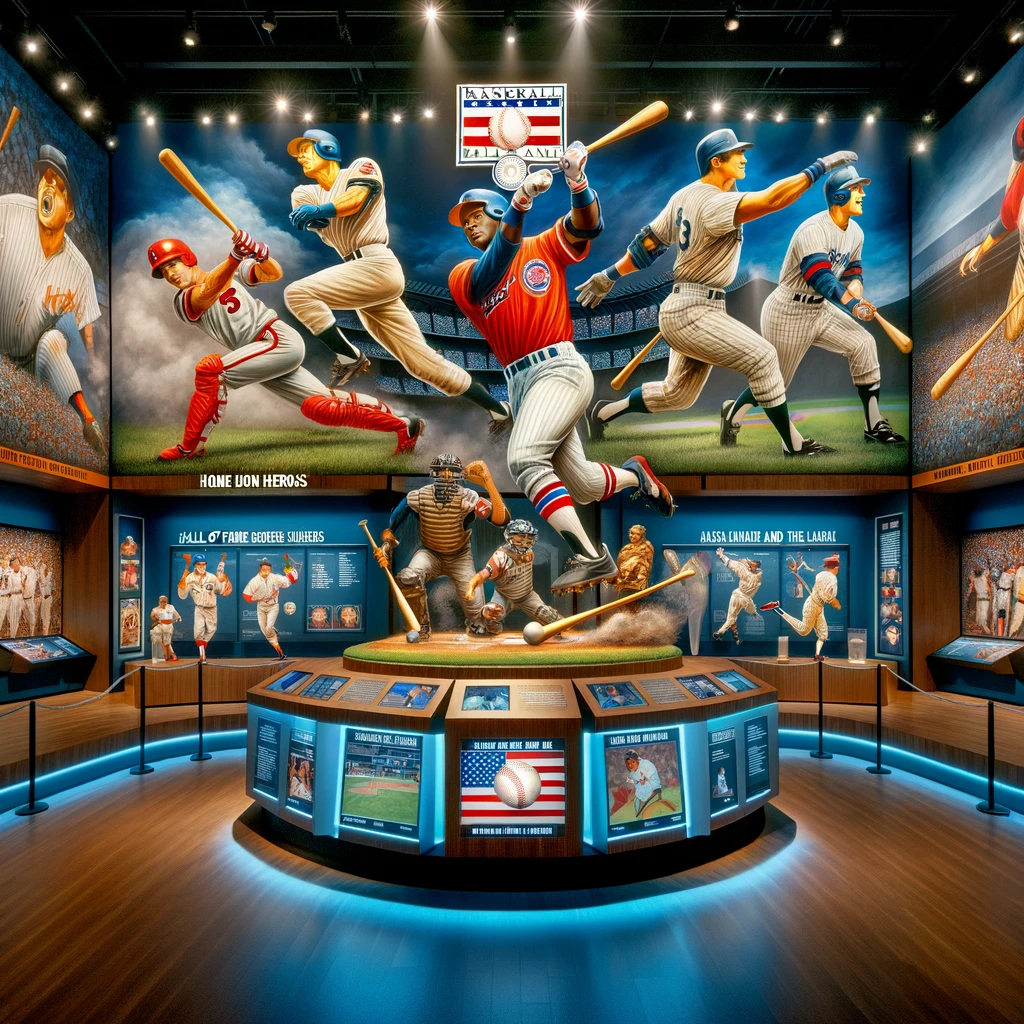
Baseball, known as America’s pastime, has a rich history brimming with legendary figures whose talents have transcended time. Among these, the sluggers – players known for their home run hitting prowess – hold a special place. Their ability to change the game with a single swing has captivated fans for generations. The Baseball Hall of Fame, located in Cooperstown, New York, serves as the pantheon for these greats, celebrating their achievements and preserving their legacies for future generations.
The Early Days: Ruth, Gehrig, and Foxx
Babe Ruth: The Sultan of Swat
Babe Ruth, the “Sultan of Swat,” is perhaps the most iconic figure in baseball history. Ruth began his career as a pitcher but quickly made a name for himself as one of the greatest hitters of all time. He revolutionized the sport with his unprecedented power hitting, amassing 714 home runs over his career. Ruth’s charisma and larger-than-life personality helped popularize baseball during the 1920s and 1930s, making him a timeless icon in the sport.
Lou Gehrig: The Iron Horse
Lou Gehrig, known as “The Iron Horse,” was a model of consistency and durability. Playing for the New York Yankees, Gehrig’s career was marked by remarkable feats of endurance, including playing 2,130 consecutive games – a record that stood for 56 years. With 493 home runs and a lifetime batting average of .340, Gehrig’s prowess at the plate was undeniable. His career, sadly cut short by amyotrophic lateral sclerosis (ALS), left an indelible mark on baseball history.
Jimmie Foxx: Double X
Jimmie Foxx, or “Double X,” was another pre-war slugger who left an indelible mark on the game. Playing primarily for the Philadelphia Athletics and Boston Red Sox, Foxx was a three-time MVP and a two-time World Series champion. With a career total of 534 home runs, he was the second player to surpass 500 home runs, following only Babe Ruth. Foxx’s power and ability to drive in runs made him one of the most feared hitters of his era.
Post-War Power Surge: Mantle, Mays, and Aaron
Mickey Mantle: The Commerce Comet
Mickey Mantle, known as “The Commerce Comet,” played his entire career with the New York Yankees. A switch-hitter known for his incredible power from both sides of the plate, Mantle hit 536 home runs and won three MVP awards. His dynamic play and charismatic personality made him a fan favorite and a central figure of the Yankees’ success in the 1950s and 1960s.
Willie Mays: The Say Hey Kid
Willie Mays, “The Say Hey Kid,” is often considered the greatest all-around player in baseball history. Playing mostly for the New York and San Francisco Giants, Mays hit 660 home runs and won two MVP awards. His famous over-the-shoulder catch in the 1954 World Series remains one of the most iconic moments in baseball history. Mays’ combination of power, speed, and defensive prowess set a new standard for future generations.
Hank Aaron: Hammerin’ Hank
Hank Aaron, known as “Hammerin’ Hank,” broke Babe Ruth’s long-standing home run record in 1974, ultimately finishing his career with 755 home runs. Playing for the Milwaukee and Atlanta Braves, Aaron was a model of consistency, hitting 20 or more home runs in 20 consecutive seasons. His quiet dignity and resilience in the face of racial hostility as he approached Ruth’s record highlighted his strength of character and determination.
Modern Era Marvels: Bonds, Griffey Jr., and Pujols
Barry Bonds: The Home Run King
Barry Bonds, often a controversial figure, holds the record for the most home runs in Major League Baseball history with 762. Playing for the Pittsburgh Pirates and San Francisco Giants, Bonds was a seven-time MVP and 14-time All-Star. His late-career surge in home run hitting, amidst allegations of steroid use, has sparked debates about his legacy. Nonetheless, his achievements on the field have left an indelible mark on the sport.
Ken Griffey Jr.: The Kid
Ken Griffey Jr., known simply as “The Kid,” was one of the most beloved players of his generation. Playing primarily for the Seattle Mariners and Cincinnati Reds, Griffey hit 630 home runs and was a 13-time All-Star. His smooth swing, infectious smile, and outstanding play in the outfield made him a fan favorite and a symbol of the sport in the 1990s.

Albert Pujols: The Machine
Albert Pujols, nicknamed “The Machine,” emerged as one of the most consistent power hitters of the modern era. Playing for the St. Louis Cardinals, Los Angeles Angels, and briefly for the Los Angeles Dodgers, Pujols amassed over 600 home runs and maintained a batting average well over .300 for most of his career. A three-time MVP and ten-time All-Star, his remarkable consistency at the plate and excellence in the field made him a standout figure in 21st-century baseball.
The Impact of Sluggers on Baseball
Changing the Game
These legendary sluggers did more than just hit home runs; they changed how the game of baseball was played and perceived. Players like Babe Ruth transformed baseball from a strategy-driven, small-ball game into a dynamic sport where power hitting became a central element. The excitement and spectacle of home runs brought new fans to the sport and helped elevate baseball to new heights of popularity.
Influence Beyond the Field
The impact of these players extended beyond the diamond. They became cultural icons, influencing generations of athletes and fans alike. Figures like Mickey Mantle and Ken Griffey Jr. became synonymous with American sports culture, appearing in movies, commercials, and on countless pieces of memorabilia. Their larger-than-life personas and achievements made them household names, further embedding baseball into the fabric of American life.
Role Models and Heroes
Many of these Hall of Fame sluggers also served as role models and heroes to young fans. Players like Hank Aaron and Willie Mays, who excelled in the face of racial prejudice, became symbols of courage and perseverance. Their successes and conduct on and off the field inspired countless young players and helped to break down racial barriers in sports.
The Future of Slugging in Baseball
Evolving Standards
As the game of baseball continues to evolve, so too do the standards for power hitters. Advanced analytics and changes in player training and strategy are shaping a new generation of sluggers. Players are hitting home runs at unprecedented rates, and the pursuit of power has never been more prominent in the sport.
The Next Generation
The legacy of past sluggers paves the way for future stars. As young players aspire to reach the heights of their predecessors, they carry forward the tradition of power hitting that has become a hallmark of baseball. The future Hall of Famers, currently making their mark on the game, will undoubtedly add new chapters to the storied history of baseball’s home run heroes.
Conclusion: The Legacy of Sluggers
The Baseball Hall of Fame serves not just as a repository of statistics and accolades, but as a testament to the impact these players have had on the game and its fans. From Ruth’s charismatic power to Aaron’s dignified resilience, and from Mays’ all-around brilliance to Bonds’ record-breaking feats, these sluggers have shaped the narrative of baseball. They have inspired countless young players and have woven their stories into the fabric of American culture.
The legacy of these Hall of Fame sluggers is not merely in the numbers they posted or the records they broke. It lies in the excitement they brought to the fans, the inspiration they provided to future generations, and the enduring mark they have left on the game of baseball. As we reflect on their careers and contributions, we are reminded of the sheer joy and awe that these home run heroes brought to America’s favorite pastime.
Frequently Asked Questions
1. What makes a baseball player eligible for the Hall of Fame?
Becoming eligible for the Baseball Hall of Fame is a significant milestone in a player’s career, often seen as the ultimate recognition of talent and achievement. To qualify, players need to meet specific criteria. First, they must have played in Major League Baseball for at least 10 seasons. This ensures that only those with substantial contributions to the game are considered. After retiring, they are eligible to be inducted after five years, allowing time for their careers to be evaluated within the broader context of history. The voting is conducted by members of the Baseball Writers’ Association of America, who consider players’ on-field accomplishments, sportsmanship, contributions to teams, and impact on the game. For sluggers, home runs are a key metric, but overall performance and consistency throughout their careers play vital roles in determining their hall-worthiness.
2. Why are home runs such a significant measure for Hall of Fame induction?
Home runs are often referred to as the ultimate display of power in baseball. They’re dramatic, game-changing events that not only score runs but can shift momentum and electrify both players and fans. The ability to hit home runs consistently over a career is a testament to a player’s skill, strength, and precision, given the difficulty of connecting with a baseball traveling at high speeds. Because of this, sluggers – players known for their home-run hitting prowess – hold exceptional value. A Hall of Famer slugger isn’t just someone who can hit a lot of home runs in a season, but one who does it consistently over many seasons, cementing their reputation as a game-changer every time they step to the plate. Historical figures like Babe Ruth and Hank Aaron set benchmarks with their incredible home run counts, making home runs a key personal achievement that solidifies a player’s legacy in the sport’s history.
3. Who are some of the most legendary sluggers in the Hall of Fame?
The Baseball Hall of Fame is home to a plethora of legendary sluggers who have made their mark with extraordinary performances. Babe Ruth, often heralded as the greatest of them all, changed the perception and excitement of the game with his ability to hit home runs at an unparalleled pace during the early 20th century. Then there’s Hank Aaron, who set the record for career home runs, a mark that stood until Barry Bonds broke it decades later. Other revered sluggers include Willie Mays, whose athleticism and consistent ability to hit home runs made him one of the most complete players. Mickey Mantle, with his iconic switch-hitting ability, captivated fans and overcame injuries to compile impressive stats. Each of these players has contributed uniquely to baseball’s storied history, and their induction into the Hall of Fame immortalizes their contributions to the game.
4. How does the Hall of Fame celebrate the legacies of these sluggers?
The Baseball Hall of Fame, located in Cooperstown, New York, meticulously honors and celebrates the achievements of legendary sluggers. It does so through various means that enable fans and enthusiasts to engage with the past. The Hall of Fame houses extensive exhibits that detail the careers of these players, showcasing memorabilia like uniforms, bats, and balls hit for landmark home runs. Interactive displays and detailed player biographies immerse visitors in the history of baseball, connecting them with the sluggers’ iconic moments. Annual induction ceremonies celebrate new inductees, highlighting their careers and contributions to the sport. Moreover, the Hall regularly updates its digital archives, making the legacies of these players accessible to a global audience who can explore their accomplishments from anywhere in the world. By preserving and presenting these historic artifacts and stories, the Hall of Fame ensures that the impact of these baseball legends will inspire future generations.
5. How has the role of sluggers evolved in baseball over the years?
The role of sluggers in baseball has evolved considerably over the decades, reflecting broader trends in how the game is played and perceived. In the early 1900s, home runs were rare feats, with games focused more on strategy, speed, and finesse. However, the emergence of players like Babe Ruth in the 1920s popularized the home run, turning it into the focal point of excitement and drawing a new audience to the sport. As pitchers became more skilled and analytics started to play a role in the game, sluggers adapted by honing their skills and approach to counteract advances in pitching strategies. In the era of Sabermetrics, the evaluation of sluggers has expanded beyond merely counting home runs to include on-base plus slugging percentage (OPS) and wins above replacement (WAR), which provide a broader picture of a player’s contributions. Despite the changes, sluggers continue to hold a cherished role as game changers, captivating audiences with their power and giving teams a critical advantage. Their ability to hit home runs consistently remains a hallmark of their talent and a fundamental aspect of what makes them Hall of Fame worthy.