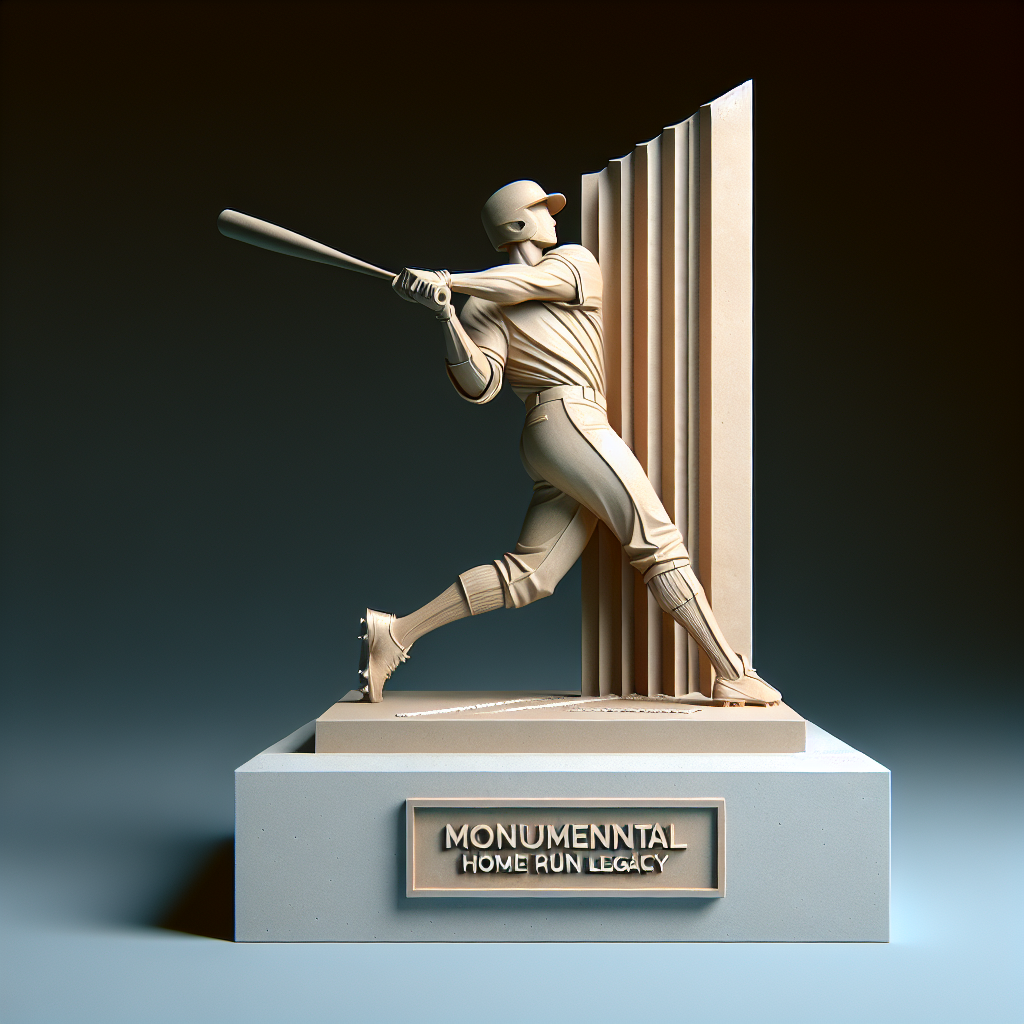
When you think of the game of baseball, it’s impossible not to consider the titans who have played and left an indelible mark on its history. Among these legends stands Harmon Killebrew, affectionately known as “Killer.” His imposing power at the plate and his monumental home run legacy have etched his name into the annals of baseball history. Over a career spanning 22 seasons, Killebrew captivated fans with his prodigious strength and ability to send a baseball into the stratosphere. But his contributions to the game went beyond just numbers on a stat sheet; they cemented him as an iconic figure in Major League Baseball (MLB). This article aims to delve deep into Harmon Killebrew’s monumental home run legacy, exploring the milestones, challenges, and triumphs that defined his remarkable career.
Powder blue uniforms, chunky wooden bats, and the crack of a ball meeting its destiny; these are elements that define the golden age of baseball. Within this context, Harmon Killebrew emerged as not just a player but a force of nature. The American League Most Valuable Player of 1969, Killebrew was a model of consistency and power. But how did a kid from Payette, Idaho, who once herded cattle, become a Hall of Famer and an icon in the baseball world? What made Killebrew’s home run heroics so special, and how did he manage to sustain his power over two decades in the big leagues? As we journey through his life and career, we’ll uncover the essence of what made Killebrew’s contributions so monumental.
From his early days with the Washington Senators to his years with the Minnesota Twins, and finally, his twilight season with the Kansas City Royals, every phase of his career offers unique insights. With 573 career home runs, Killebrew left a legacy that is still studied and revered by baseball aficionados today. Join us as we explore the life, career, and lasting impact of Harmon Killebrew—an extraordinary athlete who did more than just play baseball; he inspired generations to dream of rounding the bases with the same power and grace that he exhibited throughout his storied career.
Harmon’s Early Career: The Rise of a Home Run King
Killebrew’s journey to MLB stardom began in a rather unassuming manner. Born in 1936 in Payette, Idaho, he grew up in a setting far removed from the glamour of professional sports. His father, a sheriff and former football player at the University of Oregon, instilled in Harmon a disciplined work ethic. Early on, Killebrew showed promise in multiple sports, excelling in football, track, and of course, baseball. The young athlete’s skills caught the eye of Washington Senators scout Ossie Bluege, who signed him to a contract in 1954, just after he turned 18.
Killebrew made his major league debut later that year, but his early MLB seasons were a mix of promising moments and frustrating spells. Batting inconsistently and facing stiff competition, he saw limited playing time. Despite these challenges, Killebrew’s power was evident. His ability to hit exceptionally long home runs earned him a reputation that sent ripples through baseball circles. Consistency, however, remained elusive.
His breakthrough came in 1959, when he played a full season for the Senators and led the team with 42 home runs, making him an overnight sensation. That year, he finished tied for the American League lead in home runs alongside Rocky Colavito. It was a meteoric rise that validated the power potential that so many scouts had seen in him. Now an All-Star, Killebrew’s name started to gain traction beyond Washington. His massive shots were frequently the highlight of evening news reels, and “Killer” became synonymous with long-ball prowess.
The move to Minnesota in 1961, when the Senators became the Twins, didn’t hinder his progress—in fact, it may have accelerated it. Killebrew thrived in the friendly confines of Metropolitan Stadium, continuing to rack up home runs at an astonishing rate. By the early 1960s, he had cemented his reputation as one of the most feared sluggers in the game. The groundwork was laid for what would become a legendary career, one filled with towering homers and unforgettable moments.
The Peak Years: Dominance in the 1960s
The 1960s were undoubtedly the golden years of Harmon Killebrew’s career. As the Minnesota Twins’ marquee player, Killebrew exemplified power and consistency. The 1960s were marked by unprecedented home run totals, a barrage of accolades, and a series of unforgettable performances. His achievements during this decade not only solidified his position as a prominent slugger but also etched his name into the echelons of baseball greatness.
The zenith of Killebrew’s career arguably came in 1969, a season that saw him capture the American League MVP award. That year, Killebrew belted 49 home runs and drove in an astounding 140 RBIs. Impressively, he also led the league in walks with 145, showcasing his disciplined approach at the plate. These achievements guided the Minnesota Twins to an AL West Division title, although they fell short in the playoffs against the Baltimore Orioles. Nevertheless, Killebrew’s heroics during the regular season earned him the recognition he so richly deserved.
Consistency remained Killebrew’s hallmark. Between 1961 and 1965, he hit at least 40 home runs each season, a testament to his enduring power and technical aptitude. His 1961 campaign, during which he hit 46 home runs, became a landmark moment as it solidified his standing as one of baseball’s premier power hitters. Fans flocked to the stadium to witness Killebrew’s awe-inspiring feats, each swing potentially turning into a game-changing home run.
In addition to his offensive prowess, Killebrew also exhibited admirable versatility on the field. Though he played primarily as a first baseman and left fielder, he occasionally took on third base and even designated hitter roles as required. This adaptability further emphasized his value to the Twins, making him an indispensable asset. As the 1960s came to a close, Killebrew’s legacy as a top-tier home run hitter was unequivocally established. He had not only met the lofty expectations placed upon him but exceeded them in a fashion few could have anticipated.

Late Career and the Twilight Years
As Killebrew transitioned into the 1970s, the physical toll of two decades in the demanding Major Leagues began to show. Yet, even as the years caught up with him, Killebrew’s essence of power and resilience remained undiminished. He persisted in belting home runs, even if not at the astronomical rates of his peak years. The period was marked by a balancing act of experience and waning physical prowess, a common narrative for aging athletes.
In 1971, Killebrew delivered an impressive performance, smashing 28 home runs and contributing significantly to the Twins’ lineup. He continued to serve as a critical element of the team’s offense, albeit in a slightly reduced capacity. Despite the drops in home run totals, one aspect remained constant—the respect he commanded in the clubhouse and among fans.
However, the years of playing through injuries began to catch up with him. A nagging knee injury beset Killebrew’s later years, significantly impacting his ability to contribute as consistently as he once did. Nevertheless, his drive was unshaken. His determination to keep playing the game he loved was nothing short of inspirational. In 1975, at the age of 39, Killebrew made the final move of his career to the Kansas City Royals. Although his stint with the Royals was brief, featuring only 14 home runs in his final season, it allowed him to reach milestones and give fans one last glimpse of the legendary slugger.
Killebrew retired in 1975, leaving behind a storied career filled with unforgettable moments, record-breaking achievements, and above all, a lasting legacy. His departure from the game marked the end of an era for fans who had grown up idolizing Harmon Killebrew, the powerful slugger who could change the course of a game with a single swing. Despite the passage of time, Killebrew’s influence on the game of baseball endures, a testament to his extraordinary career and life.
The Hall of Fame and Lasting Legacy
Harmon Killebrew’s legacy was formally recognized in 1984 when he was inducted into the Baseball Hall of Fame in Cooperstown. This enshrinement was the crowning moment of a career filled with impressive statistics and unforgettable performances. His plaque in Cooperstown speaks to his influence on the game, notably highlighting his 573 home runs, 1,584 RBIs, and his status as one of the most feared sluggers of his era.
Beyond the confines of home run stats and accolades, Killebrew’s impact stretched into the larger cultural fabric of baseball. He epitomized the virtues of hard work, perseverance, and humility, elements vital to the spirit of baseball. His genuine affection for the game and its fans fostered a lasting connection that extended well beyond his active playing days. Even after his retirement, Killebrew remained a beloved figure in the baseball community, frequently participating in charity events and youth baseball clinics to impart his wisdom to future generations.
The Minnesota Twins honored Killebrew in various ways, including retiring his number 3 jersey—a symbol of his indelible impact on the franchise. Furthermore, Target Field, the current home of the Twins, features a statue of Killebrew, capturing him in the midst of his iconic swing. This statue stands as a tangible reminder to every fan and player of the legacy Killebrew left behind.
Even today, decades after his last game, Harmon’s contributions to baseball continue to reverberate. Young sluggers across the league often cite Killebrew as an inspiration, a role model for how to approach both the game and life. His name is frequently mentioned in conversations about the greatest power hitters of all time, and his career is an enduring testament to the impact one player can have on a sport and its community.
Conclusion
Harmon Killebrew’s monumental home run legacy is not merely confined to the impressive numbers he achieved but also encompasses his profound influence on the game of baseball. From his early days as a young prospect with the Washington Senators to his ascension as a home run king with the Minnesota Twins, and his twilight moments with the Kansas City Royals, Killebrew’s career is a narrative of dedication, power, and resilience.
The affinity fans had for Killebrew was not solely due to his ability to hit jaw-dropping home runs. It was also because of his approachability, humility, and genuine love for the game. These qualities made him a beloved figure in Major League Baseball, and they continue to endear him to new generations of fans. His induction into the Hall of Fame, the retiring of his number, and the statues that commemorate his legacy are testament to the respect and admiration he commanded.
As baseball continues to evolve, the contributions of players like Harmon Killebrew serve as touchstones for understanding the game’s rich history and the individuals who shaped it. His legacy is a cornerstone for discussions about power hitting, sportsmanship, and the sheer joy that baseball brings to millions of people. Killebrew didn’t just play baseball; he embodied its spirit, one towering home run at a time.
In a sport that values consistency, adaptability, and heart, Harmon Killebrew exemplified all three exceedingly well. His home run heroics and unyielding dedication to the game will forever be a source of inspiration. As long as there are fans who appreciate the history of baseball, the name Harmon Killebrew will always be remembered, celebrated, and revered.