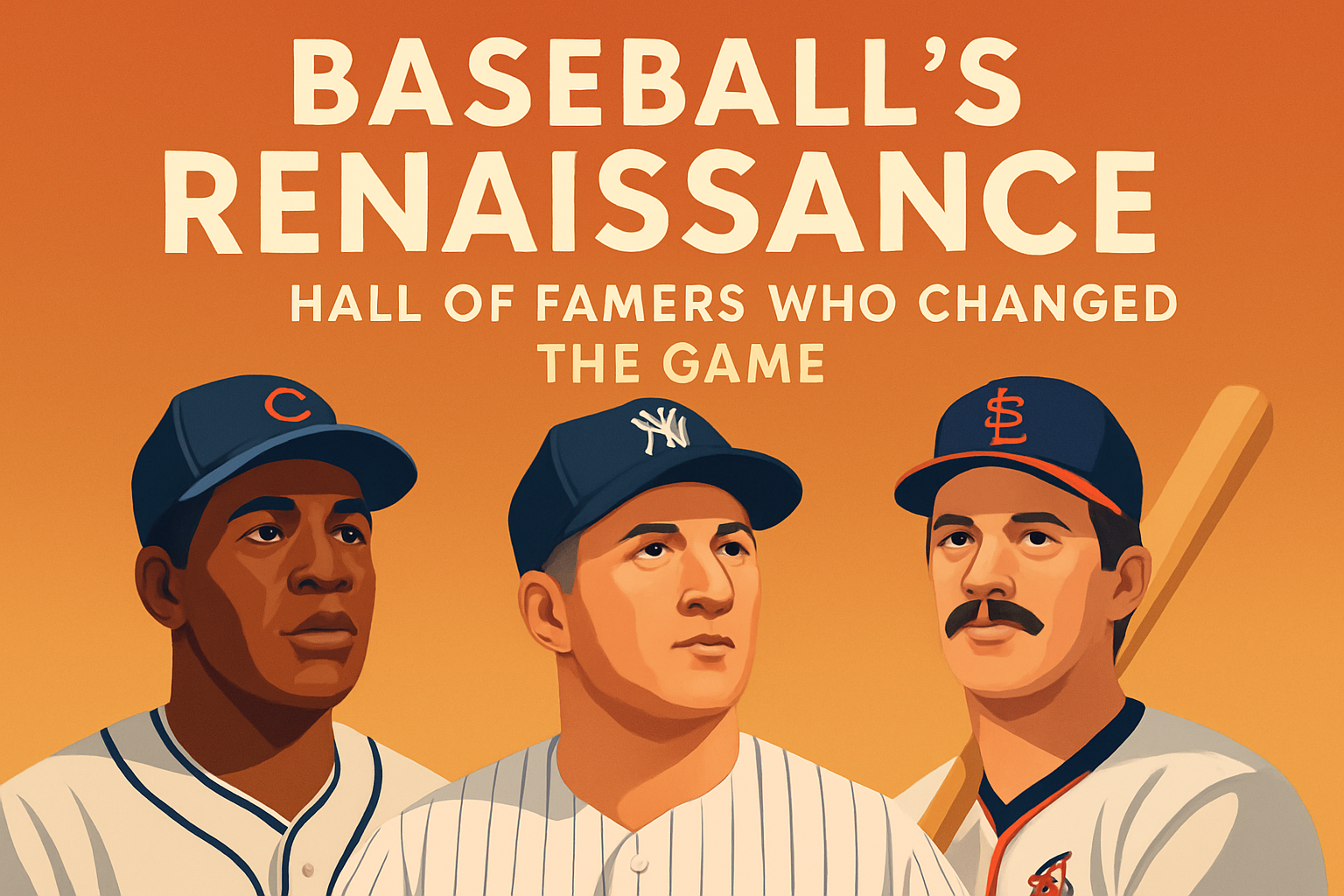
Every Hall of Famer was once an unproven prospect riding buses, chasing roster spots, and learning how professional baseball actually works. “From the Minors to the Majors: Hall of Famers’ Early Careers” matters because the road to Cooperstown rarely begins with instant dominance. It begins in small towns, on rough fields, in developmental leagues where talent is obvious but greatness is still incomplete. When people discuss baseball immortals, they usually start with MVP awards, milestone home runs, Cy Young seasons, and October legends. In my experience studying player development histories and early scouting reports, the more revealing story comes earlier: the first contracts, the first adjustments, the first failures, and the first signs that a player could become something historic.
In baseball terms, the minors are the network of developmental leagues affiliated with major league clubs, designed to turn raw ability into major league readiness. An early career includes amateur scouting, signing, minor league assignments, instructional work, and often the first major league trial. For Hall of Famers, those early years tell us three important things. First, elite talent often needs refinement. Second, the development path is rarely linear. Third, organizations that identify specific strengths and weaknesses early can accelerate a player’s progress dramatically. Those lessons still shape modern front offices, player development departments, and scouting models.
Understanding Hall of Famers’ beginnings also corrects a common myth: that greatness is always obvious from the start. Some future legends tore through the minors immediately, like Mickey Mantle and Willie Mays. Others struggled, changed positions, rebuilt swings, or developed one pitch at a time. Nolan Ryan’s control issues were visible long before he became the all-time strikeout leader. Reggie Jackson’s power was unmistakable, but his complete offensive game took time. Joe Morgan was overlooked physically despite skills that later transformed second base play. These examples matter because they show that early performance, while meaningful, never tells the whole story.
The developmental environment itself shaped these careers. Before today’s biomechanics labs, bat-speed sensors, and pitch-design systems, players learned through repetition, coaching instincts, and survival. Travel was harder, salaries were lower, and instruction was less standardized. Yet the minors still served the same core purpose they serve now: expose players to better competition, reveal weaknesses under pressure, and force adaptation. For future Hall of Famers, that environment sharpened tools into professional weapons. Looking closely at those first seasons gives a fuller picture of how baseball greatness is built, one adjustment at a time.
How Hall of Fame careers usually begin in the minor leagues
The most direct answer to how Hall of Famers start is this: they enter pro ball with one standout trait, then spend their early years proving they can handle everything else. Scouts might sign a hitter for bat speed, a pitcher for velocity, or a shortstop for athleticism and arm strength. In the minors, organizations test whether that carrying tool survives advanced competition. If it does, the next step is improving the weaker parts of the profile. I have consistently found that early reports on Hall of Famers sound less like finished portraits and more like blueprints. The greatness is present in fragments.
Take Hank Aaron. He signed out of the Negro Leagues and reached the Braves system with exceptional hand-eye coordination and bat control, but his swing mechanics were unconventional. The Braves did not erase what made him dangerous. They refined timing and approach while allowing his natural style to play. Aaron hit .362 in Jacksonville in 1953, forcing the organization to treat him not as a project but as a near-ready impact bat. That season is a classic developmental marker: once a player’s elite trait produces consistently against quality minor league pitching, promotion becomes a matter of roster timing rather than possibility.
Willie Mays offers a similar but distinct example. His reputation often starts with his spectacular major league prime, yet his Birmingham Black Barons experience and rapid transition into affiliated baseball showed unusually advanced instincts. Mays did not simply possess tools; he processed the game quickly. That difference matters. Many prospects run fast or throw hard, but Hall of Fame trajectories often become visible when physical gifts combine with elite baseball cognition. Organizations may describe it today as processing speed, swing decisions, route efficiency, or pitch recognition. Earlier generations just called it baseball sense.
Pitchers often travel an even more complex route. Tom Seaver, for example, was not signed as a complete ace. In his earliest pro work, what stood out was delivery quality, competitiveness, and a foundation for command. Those traits suggested durability and projection. Organizations cannot manufacture every attribute equally. A player with repeatable mechanics and feel for the strike zone gives coaches more to work with than a thrower surviving purely on raw arm strength. Hall of Fame pitchers frequently show that pattern early: not perfection, but repeatability, aptitude, and one elite pitch or movement profile around which a full arsenal can be built.
What early struggles reveal about eventual greatness
One of the most useful truths for modern readers is that early adversity is not a contradiction of future Hall of Fame ability. It is often part of the proof. Players who eventually dominate the majors usually encounter a level in the minors or an early major league stretch that exposes a specific weakness. What separates stars from legends is their response. Mike Schmidt, later one of the greatest third basemen ever, struck out frequently as a young hitter. The power was visible, but so was swing-and-miss risk. Philadelphia stayed patient because the quality of contact was extraordinary. That patience paid off.
Nolan Ryan is an even clearer example. As a young pitcher, he had electric velocity but erratic command. If judged narrowly by early walk totals, he might have been mislabeled as too wild to lead a rotation. Instead, the key evaluation question was whether his control problems came from unfixable scatter or from a hard-throwing body still learning repeatability. The answer emerged over time. Ryan never became Greg Maddux, but he improved enough for his stuff to overwhelm hitters for decades. His case shows why player development is about thresholds, not perfection. A pitcher does not need flawless command if the arsenal is historically dominant.
Position changes also reveal how flexible Hall of Fame development can be. Robin Yount signed as a shortstop and reached the majors young, but his path later included a move to center field. Craig Biggio began as a catcher before shifting to second base and then the outfield. Although those changes occurred across broader early-career windows, the principle starts in the minors: organizations evaluate where athleticism, bat, and defensive value align best. Hall of Famers are not always developed by preserving the original plan. Sometimes they emerge because a team recognizes a better fit before ego or habit gets in the way.
Even inner-circle players were not immune to rough starts. Mickey Mantle struggled badly in his first major league trial and briefly returned to the minors in 1951. That demotion did not diminish his ceiling; it clarified that talent and readiness are different things. Mantle needed confidence, reps, and time to recalibrate. The Yankees used the minors as they were meant to be used: not as punishment, but as a developmental reset. For anyone asking whether a prospect can recover from an early setback, Hall of Fame history gives an emphatic yes, provided the underlying tools, mindset, and support system remain intact.
Case studies: how specific Hall of Famers climbed from prospect to star
Some Hall of Fame early careers are especially instructive because they show different development models working successfully. The table below highlights several legends, the defining feature of their minor league or early pro stage, and what it foreshadowed in the majors.
| Player | Early-career signal | What it predicted |
|---|---|---|
| Hank Aaron | Elite bat control and production in high minors | Immediate offensive consistency in MLB |
| Willie Mays | Advanced instincts with five-tool athleticism | Complete superstar value on both sides of the ball |
| Nolan Ryan | Overpowering velocity with inconsistent control | Historic strikeout ability if command improved enough |
| Mike Schmidt | Massive raw power despite swing-and-miss concerns | Game-changing power at a premium defensive position |
| Tony Gwynn | Exceptional contact skill and athletic coordination | Elite batting average and sustainable approach |
Tony Gwynn’s development is especially useful for understanding how one elite skill can carry a player quickly. Gwynn was a multisport athlete, and that athletic background showed in his balance and hand-eye coordination. Early in pro ball, he was not projected as a classic slugger. What evaluators saw instead was uncommon barrel control. In practical terms, he could get the bat to the ball against varied pitch shapes and speeds. That skill is one of baseball’s rarest traits. Once Gwynn paired it with disciplined strike-zone judgment, he became the model of sustainable offensive excellence, winning eight batting titles.
Reggie Jackson followed a different script. His early profile centered on explosive power, physicality, and game-changing impact, but there were contact questions and the challenge of harnessing aggression. In the minors and early majors, Jackson’s development was about managing the tradeoff between damage and swing length. Great organizations and coaches do not always try to eliminate risk from a hitter’s profile; often they try to preserve the attribute that creates star upside while reducing the most harmful inefficiencies. Jackson remained a high-strikeout slugger for his era, but his power was so decisive that the tradeoff was worth it.
Cal Ripken Jr. is a strong example of developmental patience aligned with positional vision. Early in his career, there were debates about whether his size would eventually push him off shortstop. Baltimore allowed the broader evaluation to unfold. What became clear was that Ripken’s instincts, hands, and arm worked at the position, even if he did not match a traditional shortstop template. That is an important player development lesson I have seen repeated across eras: rigid prototypes can hide elite outcomes. Ripken not only stayed at shortstop; he redefined what offense from the position could look like over a durable career.
Pedro Martínez’s rise demonstrates another pattern: Hall of Fame ability can be underestimated when scouts focus too heavily on body type. Early on, Martínez lacked the imposing frame many evaluators preferred, yet his arm speed, life on the fastball, and feel for pitching were exceptional. Once his command sharpened and his secondary pitches matured, his size became irrelevant compared with his effectiveness. His story remains a caution against overvaluing physical aesthetics at the expense of actual pitch quality, deception, and competitive skill. The minors revealed what the body-only view missed.
How scouting, coaching, and context shape a Hall of Fame path
No Hall of Famer develops alone. Early careers are shaped by scouting decisions, organizational philosophy, coaching quality, and opportunity. Scouts identify the initial traits, but player development staff determine how those traits are cultivated. The best organizations build plans around individual players rather than forcing everyone through identical instruction. A power hitter may need swing path and pitch-selection work. A young starter may need a usable third pitch. A premium athlete may need thousands of defensive reps. Hall of Fame outcomes still depend on the player, but context can accelerate or delay what the talent becomes.
This is where historical comparisons get interesting. In earlier decades, instruction was less data-driven, but many coaches excelled at pattern recognition. They understood, often from years in uniform, whether a hitter was leaking forward, whether a pitcher’s arm slot was drifting, or whether a defender’s first step was costing him plays. Today, systems like Statcast, Hawk-Eye, Rapsodo, and force-plate analysis provide more precise measurements, yet the basic developmental questions are familiar. What is the carrying tool? What breaks under better competition? What adjustment unlocks the next level? Hall of Famers answered those questions before the technology existed to name every variable.
Opportunity matters just as much as instruction. Some future Hall of Famers broke in because injuries opened a job. Others had to wait behind established veterans. Service-time realities, roster construction, and pennant-race pressure all influence when a prospect gets his chance. Albert Pujols, not yet a Hall of Famer on paper but widely expected to be one, is a modern reminder of how spring performance and roster need can accelerate a timeline dramatically. Earlier legends benefited from similar openings. Once promoted, the players who lasted were the ones who adjusted fastest to the speed of major league decision-making.
There are also real limitations to any retrospective reading of early careers. Survivor bias is powerful. For every Hall of Famer whose struggles became part of a triumphant story, many other talented prospects never solved the same problems. That is why responsible analysis must avoid saying that adversity automatically predicts greatness. It does not. What it does is reveal whether a player has the tools, aptitude, health, and support to respond productively. Hall of Fame early careers are valuable case studies not because they make success look inevitable, but because they show how rare successful adaptation truly is.
What modern fans, coaches, and prospects can learn from these early careers
The clearest takeaway from Hall of Famers’ beginnings is that development should be evaluated in layers. Fans often want a simple answer: Is this prospect a star or not? Baseball rarely works that way. Better questions are more specific. Does the hitter control the strike zone? Does the pitcher repeat his delivery? Can the shortstop stay at the position? Is the player making adjustments after the league reacts? Those are the same questions embedded in the early careers of Hall of Famers. Greatness usually appears first as an identifiable pattern, then as sustained adaptation.
For coaches and player development staff, the lesson is to separate fixable flaws from limiting flaws. Strikeouts may be manageable if the contact quality is elite. Walks may be tolerable if a pitcher has uncommon stuff and improving mechanics. Defensive inconsistency may fade with repetition if instincts are strong. The minors exist to test exactly those boundaries. For prospects, the message is even more direct: early failure is information. The players who eventually reach the majors, and especially those who reach Cooperstown, tend to treat each exposed weakness as a problem to solve rather than a verdict on their ceiling.
For fans, looking back at Hall of Famers’ early careers adds texture to baseball history. It makes legends feel more human without making them less impressive. Hank Aaron was not born with 755 home runs. Tom Seaver was not born with 311 wins. Tony Gwynn was not born with 3,141 hits. They built those careers through developmental stages, corrections, confidence swings, promotions, and lessons learned far from national attention. If you want to understand baseball deeply, do not start at the plaque. Start with the bus rides, the box scores from Class A, and the scouting notes that first hinted at greatness.
The path from the minors to the majors is where Hall of Fame careers become possible. Early seasons reveal carrying tools, expose weaknesses, and test whether talent can survive better competition. Some legends, like Aaron and Mays, looked advanced almost immediately. Others, like Ryan, Schmidt, and Mantle, needed time, adjustment, or a reset. In every case, the same truth holds: Cooperstown careers are built long before the headlines arrive. They are built in development systems, through coaching, opportunity, and the player’s ability to adapt when the game gets harder.
If there is one benefit to studying Hall of Famers’ early careers, it is perspective. Prospect evaluation becomes smarter, baseball history becomes richer, and greatness becomes easier to recognize in its unfinished form. The minors are not a footnote to the Hall of Fame story; they are the foundation. The next time you follow a top prospect or revisit a baseball legend, look closely at the beginning. That is where the real blueprint lives. Keep reading player development histories, compare scouting reports with outcomes, and you will see the game with sharper eyes.
Frequently Asked Questions
Why do the minor league years matter so much when studying Hall of Famers?
The minor league years matter because they reveal how greatness is built before the spotlight ever arrives. Long before a player becomes a Hall of Famer, he has to prove he can handle failure, adjust to better competition, and develop the consistency that separates raw talent from lasting excellence. In the minors, future legends often deal with exhausting travel, uneven playing conditions, smaller crowds, and far less security than they later enjoy in the major leagues. Those environments test not just athletic ability, but discipline, confidence, and adaptability. For many Hall of Famers, the minors were the place where they refined a swing, learned command of a secondary pitch, improved defensive instincts, or simply figured out how to survive the daily grind of professional baseball.
These early seasons also help explain why Hall of Fame careers do not always begin with immediate dominance. A player who later becomes an icon may have spent years learning plate discipline, building strength, or recovering from poor first impressions. Looking at those developmental years gives fans a more complete picture of the player’s journey. It shows that baseball immortality is often the result of steady growth rather than instant brilliance. In other words, the minors are where future Hall of Famers become complete professionals, and that process is essential to understanding what made them great in the first place.
Did most Hall of Famers dominate the minor leagues right away?
Not always, and that is one of the most interesting parts of their stories. Some future Hall of Famers absolutely overwhelmed minor league competition from the beginning, making it clear they were destined for the majors. Others showed flashes of elite talent but needed time to sharpen their approach, mature physically, or adapt to professional pitching and hitting. A legendary major league career does not automatically mean a player looked like a finished product at age 19 or 20. In fact, many Hall of Famers had uneven starts, modest early numbers, or stretches where scouts and executives were still debating exactly what kind of player they would become.
This is important because development in baseball is rarely linear. A hitter may have natural bat speed but struggle with pitch recognition. A pitcher may have velocity but lack command. A future great defender may still need work on positioning and fundamentals. The minor leagues exist to help players bridge that gap between promise and performance. For Hall of Famers, early inconsistency often became part of the foundation for later success. They learned how to make adjustments, accept coaching, and compete through adversity. So while some Hall of Famers looked extraordinary from day one, many others became great by evolving over time rather than by dominating every level immediately.
What challenges did future Hall of Famers commonly face early in their professional careers?
Future Hall of Famers often faced the same obstacles that challenge almost every professional prospect, just without the benefit of hindsight that tells us they would eventually become legends. They had to earn promotions, adjust to life away from home, and perform under constant evaluation. Financial uncertainty was common, especially in earlier eras when minor league pay and travel conditions were far less comfortable than they are today. Long bus rides, inconsistent training resources, rough fields, and unfamiliar towns were part of the routine. Those conditions could wear down even gifted players, making mental toughness just as important as talent.
On the field, the challenges were just as demanding. Young hitters had to face experienced pitchers who knew how to exploit weaknesses. Young pitchers had to learn how to retire disciplined batters without relying only on raw stuff. Defensive mistakes, slumps, injuries, and confidence issues were all part of the process. For some players, the challenge was proving they belonged. For others, it was living up to enormous expectations. In both cases, the minors forced them to improve. What makes these stories so compelling is that Hall of Famers were not born with polished major league résumés. They had to endure setbacks, respond to criticism, and gradually build the habits that later defined their careers.
How did the minor leagues help shape the skills that eventually led Hall of Famers to Cooperstown?
The minor leagues served as the laboratory where future Hall of Famers turned tools into dependable strengths. A player might arrive with obvious athletic gifts, but the minors taught him how to apply those gifts within the rhythm and strategy of professional baseball. Hitters learned to manage the strike zone, recognize sequencing, and adjust when pitchers attacked them differently. Pitchers learned how to mix pitches, control tempo, and work through lineups more intelligently. Fielders improved footwork, reaction time, positioning, and decision-making. These are the less glamorous parts of player development, but they are exactly what turn a prospect into a complete major leaguer.
Just as important, the minors taught routine. Hall of Fame careers are built on repetition, durability, and the ability to produce over many seasons, and those qualities do not appear overnight. The daily nature of the minor league schedule teaches players how to prepare, recover, and stay focused through both success and failure. Coaches and managers often use those years to reshape mechanics, redefine roles, or challenge players to grow in ways that are not obvious in a box score. By the time many Hall of Famers reached the majors, they were not simply more talented than everyone else. They were more prepared. Their early professional seasons helped form the habits, instincts, and baseball intelligence that later made their greatness sustainable.
Why is it important for fans to remember that Hall of Fame careers began far from stardom?
Remembering those humble beginnings makes Hall of Fame careers feel more human, more earned, and ultimately more impressive. It is easy to look at plaques, statistics, awards, and iconic moments and assume greatness was inevitable. But the truth is that even baseball’s immortals once fought for lineup spots, tried to impress skeptical scouts, and dealt with the uncertainty of whether they would ever truly make it. Their stories begin in places that feel ordinary compared with the grandeur of Cooperstown: small ballparks, developmental leagues, and road trips that tested patience as much as talent. That contrast deepens our appreciation for what they achieved.
It also changes how we think about baseball development in general. When fans understand that Hall of Famers were once unfinished players, they become more patient and more realistic about how talent grows. Not every future star arrives in the majors as a superstar, and not every rough beginning predicts failure. The long view matters. Studying the early careers of Hall of Famers reminds us that greatness is often the product of persistence, adjustment, and resilience. That perspective adds richness to baseball history because it connects the game’s most celebrated figures to the universal struggle of trying to improve, prove yourself, and keep moving forward until talent and opportunity finally meet.