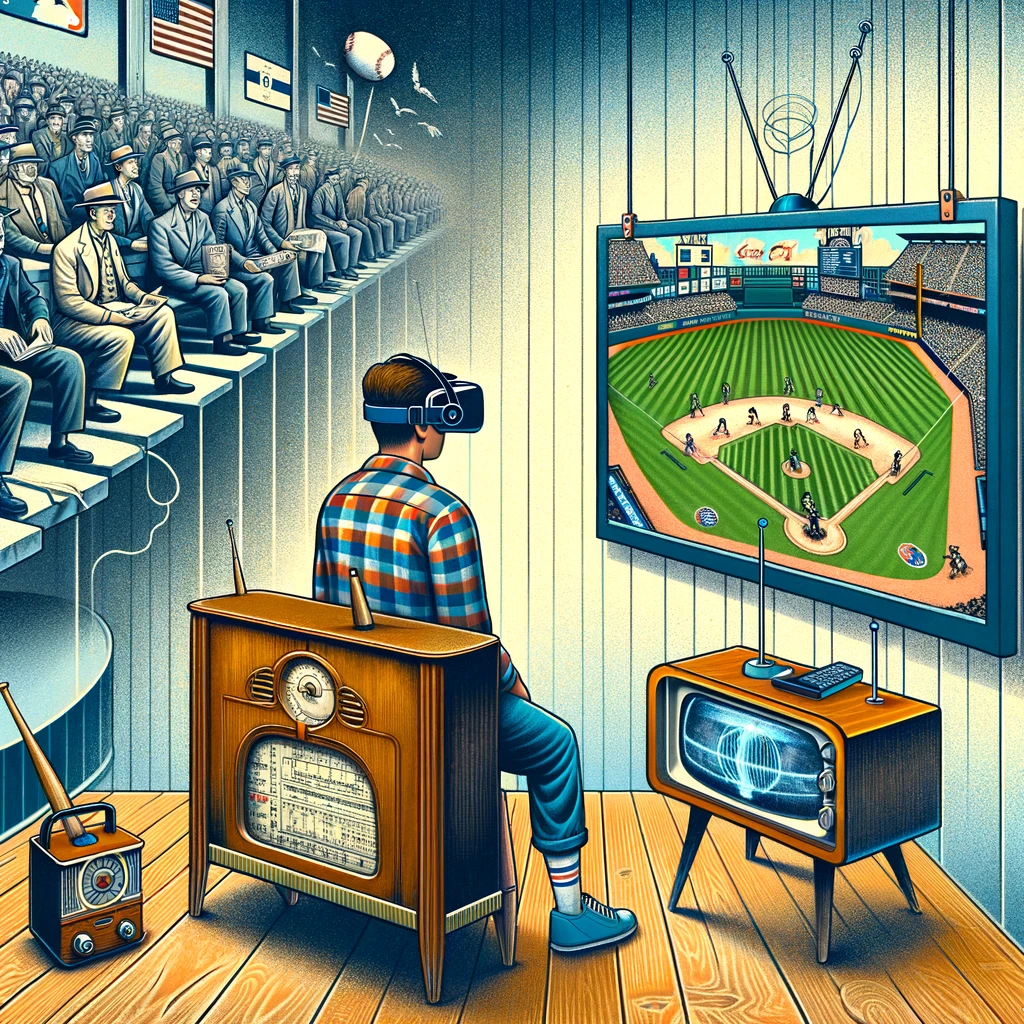
Baseball, often referred to as America’s pastime, has a rich history not only in the sport itself but also in how it has been broadcast to its legion of fans. From the crackly radio broadcasts of the early 20th century to the latest virtual reality (VR) experiences, the way we consume baseball has evolved dramatically. This article delves into the innovations and changes in baseball broadcasting, exploring how each era has shaped the way fans engage with the game.
The Early Years: Radio Days
The journey of baseball broadcasting began with radio, fundamentally changing how fans followed the sport. Prior to radio, baseball fans had to be present at the games or wait for the next day’s newspaper to find out the results. The first live radio broadcast of a baseball game was on August 5, 1921, a game between the Pittsburgh Pirates and the Philadelphia Phillies. This event marked a pivotal moment in sports broadcasting, making baseball more accessible to fans nationwide.
Impact of Radio
Radio brought the game to life in the imaginations of listeners. Families would gather around their radios, hanging on every word of the commentators. The descriptive power of broadcasters like Red Barber and Mel Allen became legendary. They painted vivid pictures of the game, making listeners feel as if they were right there in the stands.
Television Era: Bringing the Game to Life
The introduction of television in the late 1940s brought another significant shift. The 1947 World Series was the first to be televised, reaching a small audience primarily in New York. Television brought visuals to the narrative, allowing fans to see the players, the stadiums, and the action as it happened.
Technological Advancements in TV Broadcasting
Over the years, technological advancements have vastly improved the television viewing experience. Color broadcasts, slow-motion replays, and different camera angles added depth and detail to the viewing experience. In the 1980s, graphics displaying players’ statistics and scores from other games were introduced, making the broadcast more informative.
Cable Television and Regional Sports Networks
The 1980s saw the rise of cable television and with it, regional sports networks (RSNs). RSNs allowed fans to follow their local teams more closely than ever before. This era also saw the birth of networks dedicated entirely to sports, like ESPN, which began broadcasting MLB games in 1990.
Personalized Viewing Experience
Cable TV and RSNs provided a more personalized viewing experience. Fans no longer had to rely on national broadcasts; they could watch their favorite teams and players, getting coverage tailored to their interests.
The Digital Age: Internet and Streaming Services
The advent of the internet and streaming services in the late 20th and early 21st century again transformed baseball broadcasting. Online platforms provided new ways to access games, whether through a computer, smartphone, or tablet. MLB.tv, launched in 2002, allowed fans to watch live and on-demand games from anywhere in the world.
Interactive and On-Demand Viewing
This era introduced a level of interactivity and control previously unavailable. Fans could choose which games to watch, access a wealth of statistical information, and even view games from different camera angles. Social media platforms also became integral, providing a space for fans to discuss games in real-time.
The Cutting Edge: Virtual Reality (VR) and Augmented Reality (AR)
The latest innovation in baseball broadcasting is the incorporation of VR and AR. These technologies offer an immersive experience, transporting fans into virtual stadiums where they can watch live games as if they were there.
The Immersive Experience of VR
VR provides a 360-degree view of the game, with the ability to look around the stadium, watch the game from various angles, and even focus on specific players or parts of the game. This level of immersion is a game-changer, offering a viewing experience that closely resembles attending a game in person.
The Future of Baseball Broadcasting
As we look to the future, emerging technologies like 5G and further advancements in VR and AR promise to continue transforming baseball broadcasting. The potential for more interactive and personalized experiences is vast, and these technologies may well define the next era of baseball consumption.
Personalization and Interactivity
Future broadcasting may offer even more personalized content, with AI-driven systems providing real-time statistics, player bios, and more, tailored to each viewer’s preferences. Interactive elements, such as choosing camera angles or participating in live polls and discussions, could become standard features of broadcasts.
The evolution of baseball broadcasting from radio to VR reflects broader technological and cultural shifts. Each era brought new ways for fans to connect with the game, from listening to vivid radio narrations, to watching games in full color on TV, to experiencing games in virtual reality. As technology continues to advance, the way we experience baseball will undoubtedly continue to evolve, bringing us ever closer to the game we love.

Exploring the Sociocultural Impact
As we have traversed through the technological evolution of baseball broadcasting, it is crucial to recognize its sociocultural impact. Baseball broadcasts have not only changed the way fans view the game but also how they interact with each other and the sport itself.
Community Building and Shared Experiences
Radio and television broadcasts of baseball games played a significant role in building communities. Fans, irrespective of their physical location, shared a common bond over their favorite teams and players. This sense of community was further enhanced by the advent of social media, allowing fans to engage in real-time discussions, creating a virtual community of baseball enthusiasts.
Influence on Popularity and Accessibility
Broadcasting has also made baseball more accessible and popular. International broadcasts and streaming services have introduced the game to new audiences worldwide. This global reach has not only expanded the fanbase but also influenced the game’s development, with more international players joining Major League Baseball (MLB).
The Role of Advertising and Sponsorships
The evolution of broadcasting has also reshaped the economics of baseball. Advertising and sponsorships have become a significant revenue source for the sport. From simple radio advertisements to sophisticated digital marketing campaigns, the way brands engage with baseball fans has transformed alongside broadcasting technologies.
Impact on Revenue Streams
Television rights deals have become increasingly lucrative, providing a substantial income for teams and leagues. This influx of revenue from broadcasting rights has impacted player salaries, stadium developments, and overall investment in the sport.
Challenges and Controversies
However, the journey through these innovations has not been without challenges and controversies. The shift to cable and streaming services, while beneficial in many ways, has also led to issues like regional blackouts and increased subscription costs, potentially limiting access for some fans.
Balancing Tradition and Innovation
Moreover, there is a constant balance to be struck between honoring baseball’s traditions and embracing new technologies. While innovations like VR offer exciting new ways to experience the game, there is also a need to preserve the essence of baseball that has made it America’s pastime.
The Role of Data and Analytics
An interesting aspect of modern broadcasting is the integration of data and analytics into broadcasts. The use of sabermetrics (the empirical analysis of baseball statistics) has not only changed how teams play the game but also how broadcasters and fans understand it.
Enhanced Viewing Experience
Data-driven insights, such as player performance metrics, have enhanced the viewing experience, making it more informative and engaging. Broadcasts now often include advanced statistics like exit velocity, spin rate, and launch angle, providing a deeper understanding of the game.
The Future: Blending Tradition with Technology
Looking forward, the future of baseball broadcasting seems poised to blend tradition with technology in increasingly innovative ways. Technologies like 5G will enable even faster and more reliable streaming, enhancing live broadcasts and enabling new interactive features.
Embracing Emerging Technologies
Emerging technologies like augmented reality (AR) could provide new ways to enhance the viewing experience, such as overlaying player stats and information in real-time during a live game. The integration of AI could lead to personalized highlights, game analysis, and even predictive insights about game outcomes.
Conclusion: A Dynamic and Evolving Landscape
The landscape of baseball broadcasting is dynamic and continually evolving. From the days of radio broadcasts to the potential future of VR and AR experiences, each innovation has profoundly impacted how fans connect with the game. As technology advances, these changes will continue to shape the experience of baseball, ensuring that it remains not only America’s pastime but also a sport at the forefront of broadcasting innovation.
As we embrace these changes, one thing remains constant: the love for the game. Whether through a radio, a TV screen, or a VR headset, the essence of baseball continues to captivate and unite fans across generations.
Frequently Asked Questions
1. How did baseball broadcasting start with radio?
The origins of baseball broadcasting can be traced back to the early 20th century when radio became a revolutionary medium for bringing the game into homes across America. The first-ever radio broadcast of a Major League Baseball game occurred on August 5, 1921, featuring the Pittsburgh Pirates and the Philadelphia Phillies. Back then, radios were seen as a modern marvel, and this innovation allowed fans to experience the game live without being physically present at the stadium. Announcers played a critical role by vividly describing each play, helping listeners visualize the action through words alone. Radio broadcasting was particularly significant during the Great Depression in the 1930s when going to games in person was financially challenging for many. This period laid the foundation for baseball’s widespread popularity, connecting fans to the sport like never before.
2. What was the impact of television on baseball broadcasting?
Television brought another significant shift in the world of baseball broadcasting starting in the late 1940s and early 1950s. The introduction of television allowed fans not only to hear the game but also to see it unfold in real-time. The visual element added depth to the viewer’s experience — for the first time, fans could witness player gestures, facial expressions, and the intricacy of plays directly from their living rooms. This period also ushered in innovations like instant replay, which transformed how fans understood pivotal moments in the game. Television networks began to invest heavily in broadcasting rights, significantly boosting baseball’s revenue and popularity. Iconic broadcasters like Vin Scully and Harry Caray became household names, contributing to the lore and narrative of baseball through their unique storytelling abilities. The advent of cable television in the 1980s further expanded baseball’s reach, offering dedicated sports channels that increased coverage and accessibility.
3. How did the internet and streaming change baseball consumption?
The digital age introduced a paradigm shift in how fans consumed baseball, marked notably by the advent of the internet and streaming services. The launch of MLB.com in 2001 and subsequent initiatives like MLB.TV allowed fans to stream games live, blurring geographical limitations and catering to a global audience. This gave fans control over when and how they watched games, introducing features like game recaps, highlights, and condensed game formats. Social media platforms also became crucial in broadcasting, enabling instant updates, commentary, and fan interaction. The ability to watch games on various devices, from computers to smartphones, created a more dynamic and personalized viewing experience. Additionally, fantasy baseball and advanced analytics gained popularity during this era, fostering a more engaged and interactive fanbase.
4. What role does VR play in modern baseball broadcasting?
The latest frontier in baseball broadcasting is virtual reality (VR), heralding a revolutionary immersive experience for fans. VR technology allows fans to experience the game as if they were physically present in the stadium. Companies have developed VR broadcasts that provide multiple vantage points, from behind home plate to a greater field overview, offering unique perspectives unattainable in traditional broadcasts. With VR headsets, viewers can experience interactive elements like tracking player movements, reviewing plays from various angles, and even playing virtual games. This engaging technology aims to replicate the stadium experience right at home, adding a new dimension to how baseball is enjoyed. Despite being in its nascent stages, VR’s potential to transform sports broadcasting is immense, continually enhancing how fans connect emotionally and visually with baseball.
5. What does the future hold for baseball broadcasting? Will technology continue to evolve?
The future of baseball broadcasting seems poised for ongoing evolution, driven by technological advancements that promise even more sophisticated and interactive experiences. Augmented reality (AR) is emerging as a promising tool to further enhance live viewing by overlaying real-time stats and analytics directly onto the game footage viewers watch. Innovations in artificial intelligence may offer predictive analytics, coaching viewers on potential play outcomes and strategic decisions mid-game. Personalized viewing experiences will likely advance, where AI could tailor content, commentary, and camera angles according to a fan’s preferences. Moreover, 5G technology will further improve the quality and accessibility of live-streamed games, offering smooth, high-definition broadcasts with near-zero latency. As these technologies continue to develop, baseball broadcasting will undoubtedly find new ways to deepen fan engagement and expand its reach globally.