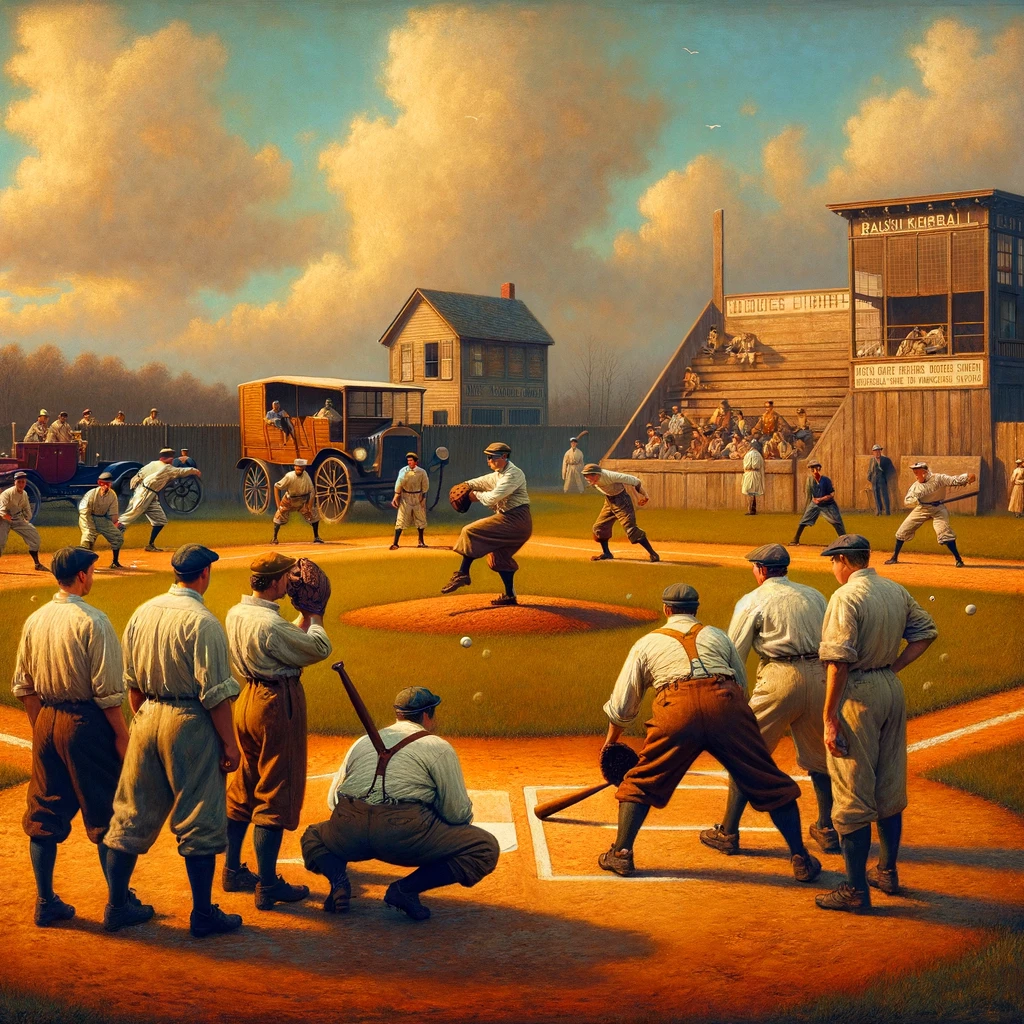
Baseball, often referred to as America’s pastime, has a rich and storied history that intertwines deeply with the fabric of American literature and culture. This article delves into the early days of baseball, exploring how this sport became more than just a game, influencing literature, culture, and society in profound ways.
The Origins of Baseball
The early history of baseball is somewhat shrouded in myth and folklore. Contrary to popular belief, Abner Doubleday did not invent baseball in Cooperstown, New York, in 1839. The game evolved from older bat-and-ball games such as cricket and rounders. By the mid-19th century, baseball began to take on its modern form in the United States, with the establishment of the New York Knickerbockers in 1845, one of the first organized baseball clubs.
The New York Game
The New York Knickerbockers drafted the Knickerbocker Rules in 1845, which played a crucial role in standardizing the game. These rules were significant as they shifted the game from its rural, recreational roots to an urban, organized sport. This transition laid the groundwork for baseball to become a cornerstone of American culture.
Baseball in Literature
As baseball grew in popularity, it naturally found its way into American literature, reflecting the social and cultural values of the time. The game became a symbol of fairness, democracy, and the pursuit of the American dream.
Walt Whitman and Baseball
One of the earliest literary figures to embrace baseball was Walt Whitman. Whitman saw baseball as the embodiment of American democracy. In his writings, he often glorified the game, seeing it as a unifying force, transcending social and economic boundaries. His famous quote, “Baseball is our game: the American game,” reflects his belief in the sport as a symbol of the American spirit.
Ernest Thayer and “Casey at the Bat”
In 1888, Ernest Thayer penned the famous poem “Casey at the Bat,” which became one of the most famous pieces of baseball literature. The poem, published in the San Francisco Examiner, captured the drama and excitement of the game, while also highlighting the theme of heroism and failure. This poem reflects not just the game’s influence on culture but also the way baseball narratives were woven into the American psyche.
Baseball and American Culture
The impact of baseball on American culture extends beyond literature. It played a significant role in shaping the country’s identity, particularly during the tumultuous times of the late 19th and early 20th centuries.
Baseball and the American Identity
Baseball mirrored the changing American society. It was a melting pot where people from different backgrounds could come together. The game was particularly significant in the integration of immigrants into American society. For many new Americans, understanding and playing baseball was a way to assimilate into American culture.
The Role of Baseball Cards and Memorabilia
The emergence of baseball cards in the late 19th century further entrenched the sport in American culture. These cards, initially included as promotional items in tobacco products, became coveted collectibles. They not only fueled the popularity of the game but also created a new cultural phenomenon that brought players into the everyday lives of Americans.
Women in Early Baseball
While early baseball was predominantly a male sport, women also played a significant role. Women’s baseball clubs began to form in the late 19th century, challenging the gender norms of the time. Although these teams often faced societal resistance, they were instrumental in paving the way for future generations of female athletes.
The Bloomer Girls
One of the most notable examples of early women’s baseball teams were the Bloomer Girls, who toured the country playing against male and amateur teams. These teams were named after the bloomers they wore, a type of clothing that symbolized women’s emancipation. The Bloomer Girls not only promoted the sport among women but also championed broader social change.
Baseball in the Arts and Entertainment
Baseball’s influence extended into other forms of art and entertainment, reflecting and shaping public perceptions of the game.
Baseball in Music and Theater
Songs and theatrical productions about baseball became popular in the late 19th and early 20th centuries. These works often portrayed baseball as a symbol of American values, such as teamwork and perseverance. They played a significant role in popularizing the sport and making it an integral part of American culture.
Baseball and Early Cinema
With the advent of cinema, baseball found a new medium to influence American culture. Early films often featured baseball themes, capturing the essence of the game and its role in American life. These films not only entertained but also reinforced the cultural significance of baseball.

The Integration of Baseball into American Society
As baseball gained popularity in the late 19th and early 20th centuries, it became deeply integrated into the fabric of American society. The game was not just a pastime; it reflected and influenced the social and cultural dynamics of the era.
Baseball and Social Change
Baseball mirrored the social changes occurring in the United States. During the Civil War, soldiers from different states played baseball to pass the time, helping to spread the game’s popularity across the country. After the war, as America industrialized and urbanized, baseball clubs became central to community life in cities and towns. The sport provided a unifying recreational activity that transcended social and class divisions, albeit within the limits of the racial attitudes of the time.
The Color Line in Baseball
While baseball was a unifying force for many, it also reflected the racial segregation prevalent in American society. The “color line” in baseball, established in the late 19th century, excluded African American players from the major leagues, leading to the formation of separate Negro leagues. This segregation was not just a baseball phenomenon but a reflection of the broader racial divide in America. The eventual breaking of the color line by Jackie Robinson in 1947 was not only a significant moment in baseball history but also a crucial event in the civil rights movement.
Baseball and the American Dream
The narrative of baseball often intertwined with the concept of the American Dream. The sport was seen as a field of opportunity, where talent and hard work could lead to success, regardless of one’s background. This ethos was particularly appealing in a nation of immigrants and reflected the broader narrative of America as a land of opportunity.
The Rise of Baseball Heroes
The early 20th century saw the rise of baseball heroes like Babe Ruth, whose larger-than-life persona and home run hitting prowess captivated the nation. These players became symbols of American success and the embodiment of the American Dream. Their stories, often rags-to-riches tales, resonated with a public that sought hope and inspiration during challenging times, such as the Great Depression.
Baseball in the Roaring Twenties and the Great Depression
The 1920s and 1930s were transformative decades for baseball. The Roaring Twenties saw a surge in the sport’s popularity, with new stadiums and record attendances. Baseball became a symbol of the prosperity of the times. However, the Great Depression brought new challenges. Despite economic hardships, baseball remained a source of affordable entertainment and an escape for many Americans. The game’s resilience during this period further cemented its place in American culture.
The Golden Age of Radio and Baseball
The advent of radio broadcasting in the 1920s brought baseball into American homes, expanding its reach and popularity. Legendary broadcasters like Red Barber and Mel Allen narrated the games, bringing the excitement of the ballpark to listeners nationwide. This era marked the beginning of baseball’s golden age, as it became a shared experience for millions of Americans.
Baseball Literature in the 20th Century
In the 20th century, baseball continued to inspire writers, leading to a rich body of baseball literature. Books like Bernard Malamud’s “The Natural” and Ring Lardner’s “You Know Me Al” captured the essence of baseball, blending myth and reality. These works explored deeper themes such as heroism, failure, and the human condition, using baseball as a backdrop.
Baseball as a Literary Metaphor
In literature, baseball often served as a metaphor for life’s struggles and triumphs. The game’s unpredictability, the tension between individual performance and team effort, and the balance of failure and success mirrored the complexities of life. Authors used baseball to explore themes of identity, morality, and the pursuit of happiness.
Conclusion: The Legacy of Early Baseball
The early history of baseball is a reflection of American society, mirroring its triumphs and challenges, its complexities and contradictions. From its humble beginnings to its emergence as a national pastime, baseball has been more than just a game. It has been a lens through which the American experience can be understood and appreciated.
As we look back on the early days of baseball, we see a sport that not only entertained but also inspired and united. Its influence on literature and culture is a testament to its significance in the American narrative. Baseball’s legacy lies not just in the records set or the games won but in its enduring impact on the heart and soul of a nation.
Frequently Asked Questions
1. How did baseball influence early American literature?
Baseball’s emergence as a leisure activity in the 19th century ignited the imaginations of writers who portrayed the sport as a metaphor for American ideals and the burgeoning nation’s identity. Authors like Mark Twain and Walt Whitman celebrated baseball’s simplicity and egalitarianism, capturing the democratic spirit of the game in their work. Beyond symbolism, the sport provided a rich narrative backdrop filled with tales of triumph, struggle, and camaraderie, inspiring poets and novelists alike. The many accounts of ball games, written in newspapers and novels, served as early predecessors to the sports journalism we know today.
Baseball’s influence extended beyond fiction and poetry, impacting non-fiction and journalism. The sport’s development paralleled the rise of mass media, leading to the distribution of news and stories about games across the country, crafting a shared cultural experience that writers chronicled extensively. Thus, baseball became enshrined in American literature not just as a pastime but as a symbol interwoven with themes of hope, nostalgia, and America’s defining characteristics.
2. What role did baseball play in shaping American culture and society in its early years?
Baseball is more than a sport; it’s a cultural institution that has played a significant role in shaping American society. In its infancy, it provided a communal activity that fostered regional and, eventually, national unity during a time of significant change and division, such as the Civil War period. The game was seen as an accessible form of entertainment that everyone could participate in or watch, breaking down barriers between various social and economic classes.
Its early adoption by various communities as a unifying social event helped propagate cultural values such as fair play, teamwork, and meritocracy. Baseball was seen as a microcosm of American society, reflecting both its achievements and inequalities. As it became institutionalized, baseball parks served as melting pots where people from different walks of life converged, fostering a shared national identity and further embedding the sport in American cultural consciousness.
3. How did the public perception of baseball evolve in the 19th century?
The public perception of baseball in the 19th century evolved from a simple pastime to a respected and cherished American tradition. Initially seen as a playful and informal activity, often participated in by children, it grew into an organized sport with established rules, teams, and leagues. The formation of amateur clubs in major cities paved the way for professional competition, shifting the perception to one of seriousness and prestige.
As the sport became more structured and events like the National Association of Base Ball Players formed, public enthusiasm soared. The competitive nature of the games heightened interest and attendance, turning baseball into a spectator sport with passionate followers. Newspaper coverage contributed to this cultural shift, as the stories of star players and dramatic games were romanticized and disseminated widely, forging a deeper cultural connection and transforming public perception significantly.
4. In what ways did baseball serve as a metaphor in American literary works?
In American literature, baseball often serves as a rich metaphor for the American experience, embodying themes of freedom, individuality, and collective aspirations. For many authors, baseball symbolizes the American Dream—an arena where hard work and talent could lead to success regardless of one’s origin. The sport’s unpredictability and drama reflect life’s uncertainties and the hope embedded in each new season.
Writers also used the game to explore issues of race, class, and identity. Baseball endeavors echoed the broader societal struggles faced by individuals and groups trying to find their place in the nation. For example, the integration of baseball’s major leagues paralleled the civil rights movements, serving as a metaphor for progress and equality. By aligning baseball’s narrative with broader social themes, authors were able to craft poignant, nuanced works that engaged with the complexities of America’s cultural and social landscape.
5. How did baseball contribute to the development of American journalism in its early years?
The rise of baseball in America provided fertile ground for the development of sports journalism, shaping how sports are covered today. As baseball became increasingly popular in the mid to late 19th century, newspapers began dedicating more space to its coverage. This not only raised awareness and enthusiasm for the sport but also elevated its place in society by offering detailed recounting of games and player profiles.
Journalists like Henry Chadwick, often regarded as the ‘father of baseball,’ pioneered innovative reporting techniques, introducing box scores and statistics to provide more profound insights into the game. These innovations laid the groundwork for modern sports analytics and changed how games were reported and analyzed. The colorful narratives and critical commentary in newspapers helped spark local and national interest, contributing to baseball’s ascendance as a cultural phenomenon and securing its role in journalism as a critical facet of American culture. This early interaction between baseball and the press not only promoted the sport but also revolutionized how sports stories were told and consumed across the nation.