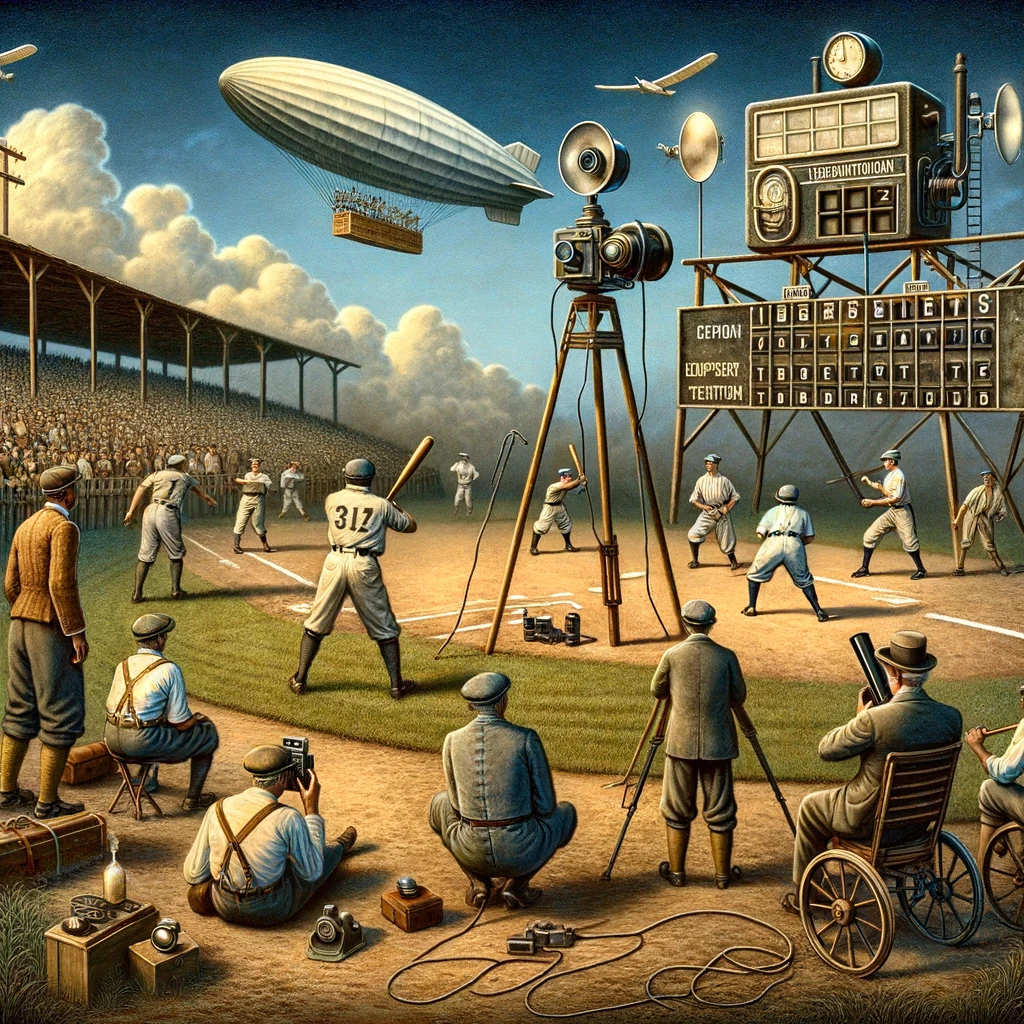
Baseball, often referred to as America’s pastime, has a rich and complex history deeply intertwined with technological advancements. From its nascent forms in the early 19th century to the more structured game we recognize today, baseball has evolved significantly. This article delves into the technological influences that have shaped early baseball, exploring how each innovation played a pivotal role in the game’s development and popularity.
Origins and Early Forms
The Birth of Baseball
The roots of baseball can be traced back to older bat-and-ball games like rounders and cricket. However, it wasn’t until the 19th century in the United States that the game began to take a distinct form. This early period saw a myriad of local rules and styles, but the essence of hitting a ball with a bat and running bases was a constant.
Influence of the Industrial Revolution
The Industrial Revolution played a crucial role in the early development of baseball. The rapid urbanization and the creation of a working-class with leisure time provided the perfect environment for baseball to flourish as a spectator sport. Moreover, the advancements in transportation, like the steam engine, facilitated teams’ travel and the spread of the game.
Technological Innovations and Their Impact
Equipment Evolution
Bats and Balls
Early baseball equipment was rudimentary and varied widely. The first bats were often handmade from available wood, leading to significant variations in size and shape. The introduction of lathe technology in the mid-19th century standardized bat production, allowing for more uniform and specialized designs.
The baseball itself saw significant changes. Early versions were made from a rubber core wrapped in yarn and leather, handmade by players or local craftsmen. The industrialization of ball manufacturing led to a more consistent and durable product, impacting the game’s playability and standardization.
Gloves and Protective Gear
Initially, players did not use gloves, and injuries were common. The introduction of leather gloves in the 1870s, initially met with skepticism, gradually became essential, enhancing players’ safety and changing defensive strategies.
The Role of the Printing Press
The printing press was instrumental in popularizing baseball. Newspapers and periodicals began to cover games, providing scores, player statistics, and game narratives. This not only spread the game’s popularity but also led to a more standardized set of rules, as discrepancies in play across different regions became apparent.
The Telegraph and Game Reporting
The telegraph revolutionized how scores and game details were reported. Prior to its advent, game results were often delayed by days. The telegraph enabled same-day game reporting, increasing fan engagement and facilitating the rise of baseball journalism.
Baseball’s Standardization and Professionalism
The Formation of the National League
In 1876, the National League (NL) was formed, marking a significant step towards professionalizing baseball. The NL established a uniform set of rules, regularized schedules, and organized competition, setting the stage for the modern era of baseball.
Impact of Photography
Photography, emerging during baseball’s early years, had a significant impact on the game. It allowed for the visual documentation of players and games, enhancing the sport’s cultural impact and aiding in the creation of baseball icons.
Scorecards and Statistics
The standardization of scorecards and the rise of baseball statistics can be linked to technological advancements in printing and record-keeping. These developments allowed for a more analytical approach to the game, influencing strategies and the way fans engaged with baseball.
The Cultural Impact of Baseball
Baseball and American Identity
As baseball’s popularity grew, it became intertwined with American cultural identity. The technological advancements in transportation, communication, and media not only spread the game geographically but also ingrained it in the American social fabric.
The Role of Baseball in Community Building
Baseball games became social events, fostering community interaction and identity. This was particularly evident in urban areas, where the sport’s rise paralleled industrialization and urban growth.
The Evolution of Ballparks and Spectatorship
Early Baseball Fields
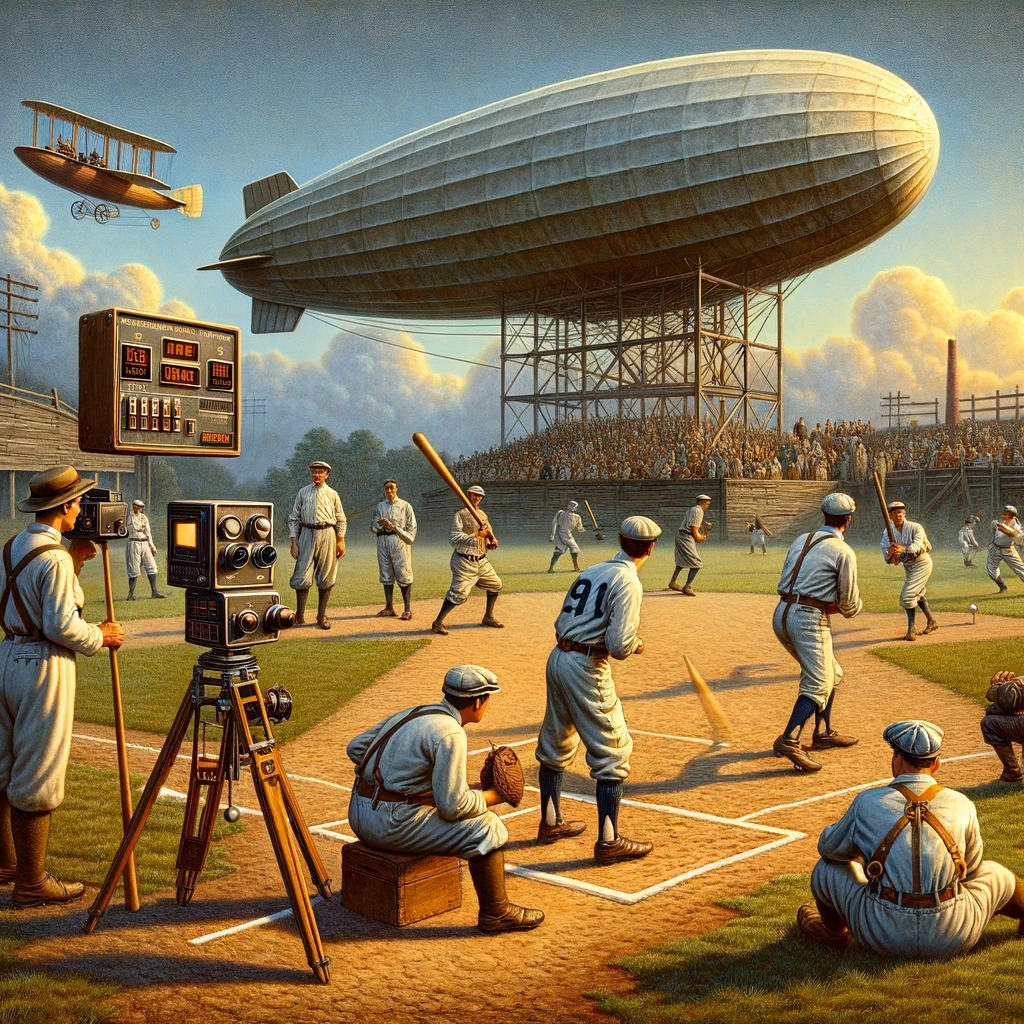
In the game’s infancy, baseball was played on open fields without formal structures. The advent of enclosed ballparks in the late 19th century was a significant technological and cultural shift. These venues not only provided a dedicated space for play but also transformed the spectator experience.
Influence of Architecture and Design
The design of early ballparks, such as the Polo Grounds and Fenway Park, reflected a blend of architectural innovation and practical necessity. Wooden bleachers evolved into grandstands with amenities, enhancing spectator comfort and accommodating larger crowds. This shift not only influenced the economics of baseball, promoting ticket sales and commercial opportunities, but also contributed to the game’s growing popularity.
The Introduction of Electric Lighting
The introduction of electric lighting in ballparks was a groundbreaking development. Night games, first played in the 1930s, made baseball more accessible to working-class fans who could not attend daytime games. This technological advancement significantly expanded baseball’s fan base and altered the game’s traditional schedule.
The Role of Media in Baseball’s Expansion
Radio Broadcasting
The advent of radio broadcasting in the early 20th century had a profound impact on baseball. Live broadcasts of games allowed fans to follow their teams and players, regardless of their geographic location. This innovation not only expanded baseball’s reach but also created a new form of entertainment and connection to the game.
Impact of Television
Television further revolutionized how baseball was consumed. The visual medium brought the game into living rooms across the country, providing a new perspective and understanding of baseball. Televised games increased the sport’s visibility, contributing to its growth and the commercialization of professional sports.
Technological Innovations in Training and Performance
Early Training Methods and Equipment
Initially, baseball players relied on basic physical conditioning and practice. However, as the game evolved, so did training methods. The development of specialized equipment, such as pitching machines and batting cages, allowed players to hone their skills more effectively.
Advances in Medical Technology
Medical technology also played a crucial role in player performance and career longevity. The evolution of sports medicine, from basic first aid to advanced surgical techniques and rehabilitation practices, has significantly impacted player health and injury recovery.
The Impact of Statistical Analysis
The Birth of Sabermetrics
The introduction of statistical analysis in baseball, known as sabermetrics, revolutionized how teams evaluated players and strategized games. This analytical approach, enabled by advancements in data collection and processing, has had a profound influence on decision-making in baseball.
Technology and Data-Driven Decisions
The integration of technology in data analysis has allowed for more sophisticated and accurate assessments of player performance and game dynamics. Teams now utilize a range of technologies, from high-speed cameras to wearable sensors, to gain insights and competitive advantages.
Conclusion: The Ongoing Evolution of Baseball
Baseball’s early history is a narrative of technological adaptation and innovation. From the basic equipment and rules of its early days to the sophisticated, data-driven sport it has become, baseball’s evolution is intrinsically linked to technological progress. As we look to the future, it is evident that technology will continue to shape and redefine the game, just as it has since the days of hand-made bats and makeshift ball fields.
This exploration into the technological advances and their impact on early baseball provides a comprehensive understanding of how technology has shaped the sport. The journey from baseball’s rudimentary beginnings to its current status as a highly sophisticated and globally followed sport underscores the dynamic interplay between sports and technological innovation.
Frequently Asked Questions
1. How did technology influence the development of early baseball equipment?
In the early days of baseball, the equipment players used was quite rudimentary. Bats were often handmade, using whatever wood was available, and their sizes and weights varied significantly. The introduction of technology started with more standardized bat manufacturing processes, which improved the consistency and performance of the bats. Over time, this technology evolved to incorporate better materials and design principles, ensuring players could deliver more powerful and controlled swings.
Baseballs themselves underwent significant changes with technological advancements. Initially, they were made by hand, resulting in significant inconsistencies in size and weight. The development of machine-made baseballs brought about standardization, improving the overall game experience. These technological improvements allowed players to focus more on the skill aspect of the game rather than dealing with unpredictable equipment, marking a major milestone in baseball’s evolution.
2. What role did communication technology play in the popularization of baseball?
Communication technology, particularly the invention of the telegraph, played a significant role in the popularization of baseball across the United States. Before the telegraph, news about baseball games and teams spread slowly, primarily by word of mouth or printed media. The telegraph changed all that by allowing almost instantaneous dissemination of game results, player statistics, and sports news. This real-time communication allowed fans from all over the country to follow their favorite teams more closely, increasing the sport’s appeal and avid fan base.
Furthermore, as radio technology took hold in the early 20th century, it further revolutionized how fans engaged with baseball. Radio broadcasts brought the excitement of the game into living rooms, making it possible for more people to experience the thrill of live games without being physically present. This not only helped maintain baseball’s status as America’s pastime but also expanded its audience well beyond those who could attend games in person, solidifying the sport’s cultural significance.
3. In what ways did improvements in transportation impact early baseball?
The advancements in transportation technology had a profound impact on baseball’s evolution. In the early days, teams were often limited to playing regional opponents due to the daunting task of travel. However, with the advent of more reliable rail and, eventually, automobile transportation, teams were able to travel greater distances with more ease and comfort.
This improvement in transportation capabilities led to the establishment of formal leagues and regular schedules, as teams could now traverse state lines efficiently, joining wider circuits and facing other teams. It facilitated the expansion of the game beyond its New England roots, contributing significantly to its national popularity. Additionally, fans were now able to travel to different cities to watch games, further spreading baseball fever and building community ties through the shared experience of the game.
4. How did advancements in printing technology affect baseball’s growth?
Printing technology was a crucial factor in baseball’s growth during its early years. The transition from manual typesetting to more advanced printing presses allowed for the mass production of newspapers, books, and later, baseball cards. This made it easier to publish detailed news reports, game scores, and player statistics regularly, which in turn kept fans engaged and informed.
Programs, pamphlets, and other printed materials could be distributed at games, helping to educate new fans on the rules and nuances of the sport. Moreover, baseball cards became a cultural phenomenon, serving as both collectibles and a means of promoting players and teams to a wide audience. Each of these printing advancements ensured that baseball maintained a constant presence in American culture, steadily weaving itself into the fabric of everyday life through timely and widespread dissemination of information.
5. What impact did early photographic technology have on the perception and popularity of baseball?
Early photographic technology allowed baseball to reach new heights in terms of its perception and popularity. Photographs of players, games, and significant moments helped to immortalize baseball heroes and create a visual culture around the sport. Images from the ballpark captured the drama and athleticism of baseball, bringing the game to life for those who couldn’t witness it in person.
Photography allowed fans to connect with their favorite players on a more personal level. The ability to see their expressions and traditional baseball stances made these players feel more like relatable, real-life heroes rather than distant celebrities. Additionally, the distribution of player portraits and action shots in newspapers and magazines helped promote the sport nationwide, enhancing its reach and allure.
Over time, as photographic equipment and techniques improved, baseball photography itself became an art form, becoming more vibrant, dynamic, and accessible—setting the stage for the storied history that millions would come to cherish for generations.