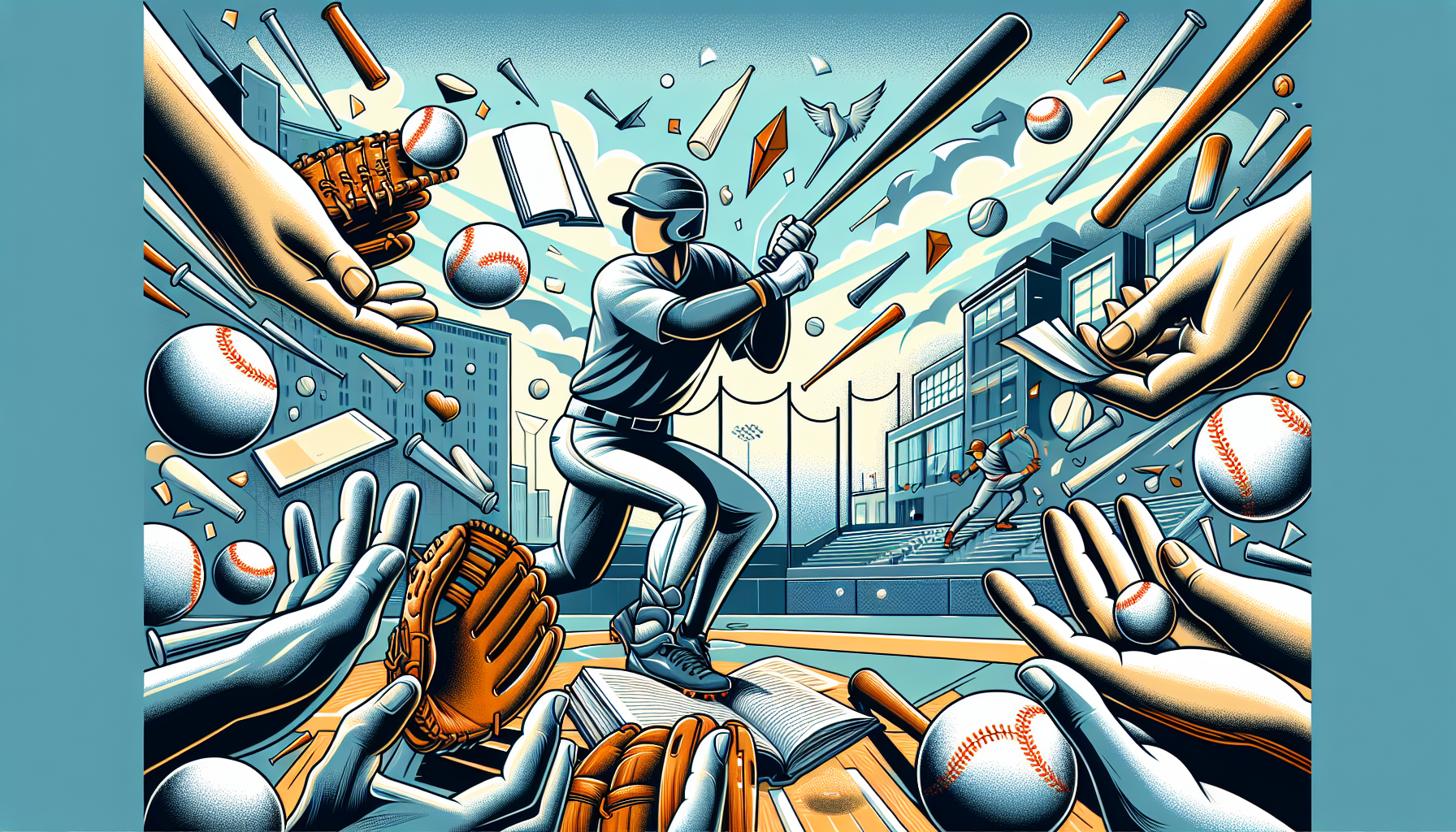
Baseball in graphic novels turns the sport into something readers can see, feel, and pace panel by panel, making every pitch, pause, and dugout conversation part of a larger visual story. In this hub for the miscellaneous corner of Baseball in Literature and Film, graphic novels matter because they bridge sports writing, comics craft, memoir, history, and youth culture in a format that can dramatize motion better than prose alone. A graphic novel is a long-form comic narrative, usually published as a single volume or series, using sequential art, lettering, and page design to control rhythm and emphasis. When the subject is baseball, those formal tools become especially powerful. A nine-pitch at-bat can stretch across a full spread, while a season’s rise and collapse can be compressed into a page of repeated frames. I have worked with baseball reading lists for students and adult book clubs, and graphic narratives consistently pull in readers who might resist conventional sports books. They also open serious discussions about race, labor, memory, superstition, statistics, and national identity. This subtopic deserves a hub because baseball graphic novels are not one narrow genre. They include biographies of players, manga series about youth development, literary adaptations, historical reconstructions, humor collections, and memoir-inflected works about fandom. Readers searching this area usually want more than a title list. They want to know what makes the medium distinct, which themes recur, how age category changes tone, and where to go next. This article provides that map and connects the visual storytelling of baseball to the wider literary and cinematic tradition surrounding the game.
Why Baseball Works So Well in Sequential Art
Baseball is unusually compatible with comics because the sport already unfolds as a sequence of discrete moments. Pitch, swing, foul ball, reset, sign exchange, lead at first, mound visit: each action has a natural frame around it. Unlike continuous-flow sports, baseball invites stoppage and anticipation, and comics thrive on that tension between one image and the next. Artists can isolate the batter’s hands, the catcher’s target, the infield shift, and the runner’s jump in a way that mirrors how fans actually watch a game. The gutter, the space between panels, does narrative work similar to the fan’s imagination between pitches. Readers supply movement, probability, and consequence.
Visual storytelling also captures baseball’s spatial logic with unusual clarity. A well-designed page can show defensive alignment, baserunner pressure, and stadium atmosphere simultaneously. In prose, the writer must choose an order for those details. In film, the camera directs the viewer’s eye and time moves forward relentlessly. In comics, the eye can roam. You can study a scoreboard in one corner, an outfielder’s route in another, and a silent reaction shot beneath both. That flexibility lets artists communicate tactics without making the story feel like a coaching manual. It is one reason baseball instruction manga has remained popular: the medium can explain mechanics while still delivering character drama.
Another strength is interiority. Baseball is full of waiting, self-talk, ritual, and memory. Graphic novels can layer thought balloons, narration boxes, symbolic imagery, and repeated motifs to show what pressure feels like. A pitcher’s confidence might literally crack across the page. A rookie’s fear can be represented by an exaggerated empty outfield or a crowd drawn as abstract noise. These choices are not decorative; they translate a slow, mentally demanding sport into lived emotion.
Major Types of Baseball Graphic Novels
Baseball graphic novels fall into several recurring categories, and understanding them helps readers choose the right entry point. Some are historical biographies, focusing on figures such as Jackie Robinson, Roberto Clemente, or Babe Ruth. These books often combine documented events with stylized art to make major episodes legible for younger readers and visually compelling for adults. Others are coming-of-age stories in which baseball serves as the structure for friendship, discipline, class tension, or family expectation. Japanese manga has been especially influential here, treating baseball not only as competition but as a system for moral development and team identity.
A third category is memoir or autobiographical reflection. In these works, baseball may not dominate every page, yet it acts as the emotional center of childhood, migration, grief, or community life. Because comics can juxtapose present narration with remembered images, they are effective for showing how fandom and personal history intertwine. There are also humor and parody collections that use baseball’s eccentric language, elaborate routines, and endless statistics as comic material. Finally, some graphic novels adapt baseball stories from prose or echo the aesthetics of classic sports cinema, creating a dialogue across media.
| Type | Core focus | Typical audience | What readers gain |
|---|---|---|---|
| Historical biography | Real players, eras, social context | Middle grade to adult | Accessible history with vivid character framing |
| Coming-of-age fiction | Teamwork, ambition, adolescence | Young adult and crossover adult | Emotional investment beyond game results |
| Manga sports saga | Training arcs, rivalry, mechanics | Teen to adult | Detailed development and strong pacing |
| Memoir/autobiography | Memory, family, fandom | Adult and literary readers | Personal meaning attached to baseball culture |
| Humor/parody | Rituals, stats, absurdity | Broad audience | Fresh perspective on the game’s quirks |
As a hub page, this miscellaneous subtopic should point readers toward each of these branches. A reader interested in baseball history may begin with biographical comics, then move to broader studies of race and integration in literature and film. Another reader may start with sports manga and then explore baseball anime, youth sports novels, or films about high school competition. The value of the hub is not only coverage but orientation.
Key Themes: Identity, Memory, and the Myth of the Game
The strongest baseball graphic novels are rarely just about winning. They use the game to explore identity under pressure. Race is a recurring theme because baseball history is inseparable from segregation, integration, and representation. Graphic biographies of Jackie Robinson or Satchel Paige can show hostile crowds, segregated travel, and media scrutiny in ways that are immediate even for younger readers. A page layout can contrast the public spectacle of the field with the private exhaustion of the clubhouse, conveying both achievement and burden. That duality is essential to honest baseball storytelling.
Memory is equally central. Many baseball comics work through the gap between the game as lived experience and the game as remembered myth. A parent teaching a child to score a game, a neighborhood lot game recalled decades later, or a final minor league season revisited in hindsight can all become meditations on time. Sequential art is good at handling these shifts because style itself can mark memory. Softer linework, limited palettes, or repeated imagery can signal recollection without explanatory overload. In editorial work, I have found that readers often respond most strongly when baseball functions as a memory system rather than just a plot engine.
Myth matters too. Baseball has long been presented as a national mirror, a repository of nostalgia, and a stage for moral narratives about fairness, grit, and redemption. Graphic novels can embrace or challenge those myths. Some intentionally echo Norman Rockwell Americana. Others expose how selective that image has been, asking who was excluded from the pastoral fantasy. The best works do not discard baseball’s romance; they test it against labor realities, injury, migration, and commercial pressure. That tension gives the genre substance.
Influence from Manga and International Storytelling
No overview of baseball in graphic novels is complete without acknowledging the major influence of Japanese manga. Series such as Touch, Cross Game, Ace of Diamond, and Rookies helped define how baseball can sustain long-form visual storytelling across many volumes. These works often devote substantial attention to training, mechanics, team hierarchy, and emotional maturation. They are also patient. A single tournament game can span chapters, allowing readers to understand adjustments, fatigue, and psychological shifts with unusual depth. That pacing has influenced global expectations for sports comics.
Manga also broadens what counts as a baseball story. In many series, the sport is inseparable from school culture, first love, grief, or deferred dreams. Success is measured not only by championships but by personal growth and collective responsibility. That differs from some American sports narratives, which lean more heavily on individual stardom or a clean underdog arc. Neither tradition is superior, but they create different reading experiences. When curating recommendations, I often suggest that readers alternate between North American and Japanese works to see how the same sport can carry distinct cultural values.
International storytelling further highlights baseball’s reach beyond Major League nostalgia. Graphic works tied to Latin American baseball, Caribbean winter leagues, or transnational player journeys can reveal recruitment pipelines, language adaptation, and economic stakes that mainstream U.S. narratives sometimes flatten. As this hub expands, those perspectives deserve dedicated companion articles because they connect comics to larger discussions of baseball as a global industry and cultural language.
How Graphic Novels Compare with Baseball Prose and Film
Graphic novels occupy a middle space between prose and film, and that position explains their growing importance within baseball media. Prose excels at interior analysis and historical exposition. Film excels at sound, embodied motion, and crowd energy. Graphic novels combine selective visual immediacy with the reflective control of reading. A reader can pause on a stolen-base sequence, reread a caption, and inspect body positioning without disrupting the experience. That makes the format especially strong for baseball, where meaning often lies in tiny shifts rather than constant spectacle.
Compared with baseball films, graphic narratives can also be more structurally adventurous. They are not constrained by production budgets, actor ages, or the logistics of staging convincing game action. An artist can move from a sandlot in one decade to a packed stadium in another on the same page. They can use diagrams, fantasy imagery, newspaper collage, or scorecard motifs without worrying about tonal whiplash. In prose, those transitions may require explanation; in comics, they can feel intuitive. This flexibility helps baseball stories move between documentary and dream.
For readers using this page as a hub inside Baseball in Literature and Film, the comparison matters because it suggests where to click next. If you are drawn to visual motion and adaptation, explore baseball cinema. If you want internal monologue and social context, baseball novels and memoirs may be your next stop. If you want both image and reflective pacing, graphic novels are the right lane.
Who Should Read Baseball Graphic Novels and How to Choose
Baseball graphic novels are not only for comics fans. They work well for reluctant readers, visual learners, adult sports readers looking for something more literary, and educators building cross-disciplinary units. For younger readers, graphic biographies and school-team stories provide accessible entry into baseball history and terminology. For teens, manga and young adult titles often handle rivalry, burnout, injury, and identity with honesty. For adults, memoir-driven or historically grounded works tend to offer the richest payoff. Libraries increasingly shelve these books in both sports and graphic literature sections, which reflects how broadly they appeal.
Choosing the right title starts with the reader’s goal. If the goal is baseball fundamentals and progression, sports manga is usually the strongest fit. If the goal is learning about a player or era, choose a documented biography with back matter, timelines, or source notes. If the goal is literary reflection, look for memoir or hybrid nonfiction. Pay attention to art style as well. Realistic art often suits biography and history, while exaggerated or kinetic styles can make action more immediate for younger audiences. Format matters too: standalone works are better for casual readers, while long series reward commitment.
This miscellaneous hub should ultimately function as a launch point. From here, readers can branch into baseball biographies, baseball manga, baseball memoirs, baseball stories for children, or baseball adaptations across screen and page. Graphic novels deserve that central place because they reveal the game’s visual grammar and emotional architecture at once.
Baseball in graphic novels offers one of the clearest ways to understand why the sport has inspired so much storytelling across media. The format translates baseball’s stop-and-start rhythm, tactical space, and inner tension into pages that readers actively assemble, making each inning both dramatic and readable. As a hub within Baseball in Literature and Film, this miscellaneous page shows that the field is broader than many readers expect. Historical biographies bring major players and social change into focus. Coming-of-age stories and manga turn training, rivalry, and teamwork into deep character studies. Memoirs and literary comics use baseball as a language for memory, family, migration, and loss. Across all of these forms, the best works balance affection for the game with a clear view of its pressures, exclusions, and myths.
The main benefit of exploring baseball graphic novels is perspective. You do not just follow a score; you see how artists build suspense, depict mechanics, and connect a single play to a larger cultural story. That makes these books ideal for fans, students, educators, and curious readers who want something richer than a highlight reel or a nostalgic anecdote. Use this hub as your starting point, then move into the related articles on biographies, manga, youth reading, and baseball across film and prose. Pick one graphic novel, read it with an eye for both the art and the game, and you will understand baseball storytelling in a new way.
Frequently Asked Questions
What makes baseball such a strong subject for graphic novels?
Baseball adapts especially well to graphic novels because the sport already unfolds in vivid, highly structured moments that suit sequential art. A single at-bat contains tension, anticipation, body language, strategy, and release, all of which can be expanded across panels in ways prose alone cannot always match. A graphic novel can slow down a pitcher’s windup, isolate a batter’s expression, linger on a catcher’s signal, and then explode into motion when the ball leaves the bat. That ability to control visual pacing is one of the medium’s greatest strengths. Baseball is not a constant blur of action; it is a rhythm of pauses, glances, memories, and decisions. Graphic storytelling captures that rhythm naturally.
Just as importantly, baseball carries layers of cultural meaning that graphic novels can show rather than simply tell. Uniforms, stadium architecture, neighborhood ballfields, scoreboards, dugouts, and fans all help situate a story in a specific era or community. Through artwork, creators can evoke the nostalgia of sandlot games, the pressure of school competition, the hardship of segregation, or the commercial spectacle of professional baseball. In that sense, baseball in graphic novels becomes more than a sports story. It becomes a visual record of identity, family, ambition, history, and belonging. The sport’s mix of action and reflection gives artists and writers an ideal framework for emotionally rich, visually memorable narratives.
How do graphic novels portray baseball differently from traditional novels or sports journalism?
Graphic novels portray baseball through the combined force of words and images, which changes how readers experience the game. In a traditional novel, the author must describe movement, environment, and expression through language, asking readers to imagine each step. Sports journalism, by contrast, usually prioritizes facts, analysis, outcomes, and commentary. A graphic novel occupies a different space. It can deliver the emotional intimacy of literature while also presenting the physical immediacy of a visual performance. Readers do not just read about a close play at the plate; they see the collision, the dust cloud, the umpire’s posture, and the reactions in the stands.
This visual dimension also allows the medium to dramatize what baseball feels like from the inside. Panels can emphasize silence before a pitch, compress time during a tense inning, or stretch a split-second swing into multiple frames that highlight mechanics and emotion. Internal monologue can appear alongside facial expressions, flashbacks, or symbolic imagery, giving readers access to a player’s fear, confidence, frustration, or memory in ways that feel immediate. That combination makes graphic novels particularly effective for stories that connect baseball to adolescence, migration, race, family expectations, or personal growth. Rather than merely recounting events, the format stages baseball as lived experience, balancing realism with artistry and analysis with feeling.
Are baseball graphic novels usually fictional, or do they also include memoir and history?
Baseball graphic novels include all of those forms, which is one reason the category is so compelling. Many works are fictional coming-of-age stories that use baseball as a framework for competition, friendship, rivalry, or self-discovery. These narratives might focus on Little League teams, high school seasons, minor league dreams, or imagined versions of professional stardom. Fiction gives creators freedom to heighten drama, build symbolic moments, and shape the sport around broader themes such as resilience, teamwork, failure, and ambition.
At the same time, memoir and history are central to the field. Graphic memoirs can use baseball to explore childhood, family tradition, immigration, gender expectations, or the meaning of fandom. Because comics can depict memory in fluid, nonlinear ways, they are especially well suited to showing how a player, parent, or fan remembers the game across time. Historical graphic novels also have enormous value. They can introduce readers to the Negro Leagues, labor disputes, wartime baseball, changing stadium cultures, or landmark figures whose stories deserve visual retelling. Through carefully researched art, these books can reconstruct uniforms, ballparks, city streets, and social conditions in a way that is both accessible and informative. So while fictional sports drama remains popular, baseball in graphic novels is just as much about documentary storytelling, personal testimony, and cultural history.
Why do baseball graphic novels appeal to both sports fans and general readers?
Baseball graphic novels appeal to sports fans because they honor the details that make the game meaningful: mechanics, rituals, strategy, clubhouse dynamics, fan culture, and the emotional stakes of competition. Readers who know baseball appreciate seeing these elements translated into a visual language that respects how the game actually feels. A well-made graphic novel can capture the geometry of the diamond, the tension of a full count, and the psychology of defense and base running in a form that is dramatic without losing authenticity. For fans, that creates a satisfying blend of recognition and artistic interpretation.
General readers are drawn in for a different but equally important reason: the best baseball graphic novels are rarely only about baseball. They are about people under pressure, communities in transition, generational conflict, dreams that may or may not come true, and the search for identity. Because the medium is visually inviting, it can lower the barrier for readers who might not usually pick up a sports book. The art provides emotional cues, world-building, and momentum, making it easier to connect with characters even if the reader does not know every rule of the game. In practice, baseball becomes the stage on which larger human stories play out. That broadens the audience considerably and helps explain why these works sit comfortably at the intersection of sports writing, comics craft, memoir, and literary storytelling.
What should readers look for when choosing a great baseball graphic novel?
Readers should start by looking for a strong balance between storytelling and visual clarity. In a baseball graphic novel, action scenes should be easy to follow, but they should also feel expressive and purposeful. Good creators understand where to place panels, when to widen the frame, when to zoom in on a hand gripping the ball, and how to use page turns for suspense. If the artwork cannot convey motion, tension, and spatial relationships on the field, the baseball itself may feel flat. On the other hand, a truly effective work uses composition, pacing, and facial expression to make every pitch and pause matter.
It is also worth paying attention to theme, voice, and perspective. Some readers may want an inspirational underdog story, while others may prefer a historical account, a memoir about growing up with the game, or a more literary meditation on loss and memory. The strongest baseball graphic novels usually do more than present a series of games. They connect the sport to character development and a larger social or emotional context. Finally, consider the intended audience. Some books are designed for younger readers and focus on access, encouragement, and teamwork; others are aimed at adults and take on more complex questions about race, labor, family, failure, or national mythology. A great baseball graphic novel is one that not only depicts the sport well, but also uses the form to reveal why baseball continues to matter on and off the field.