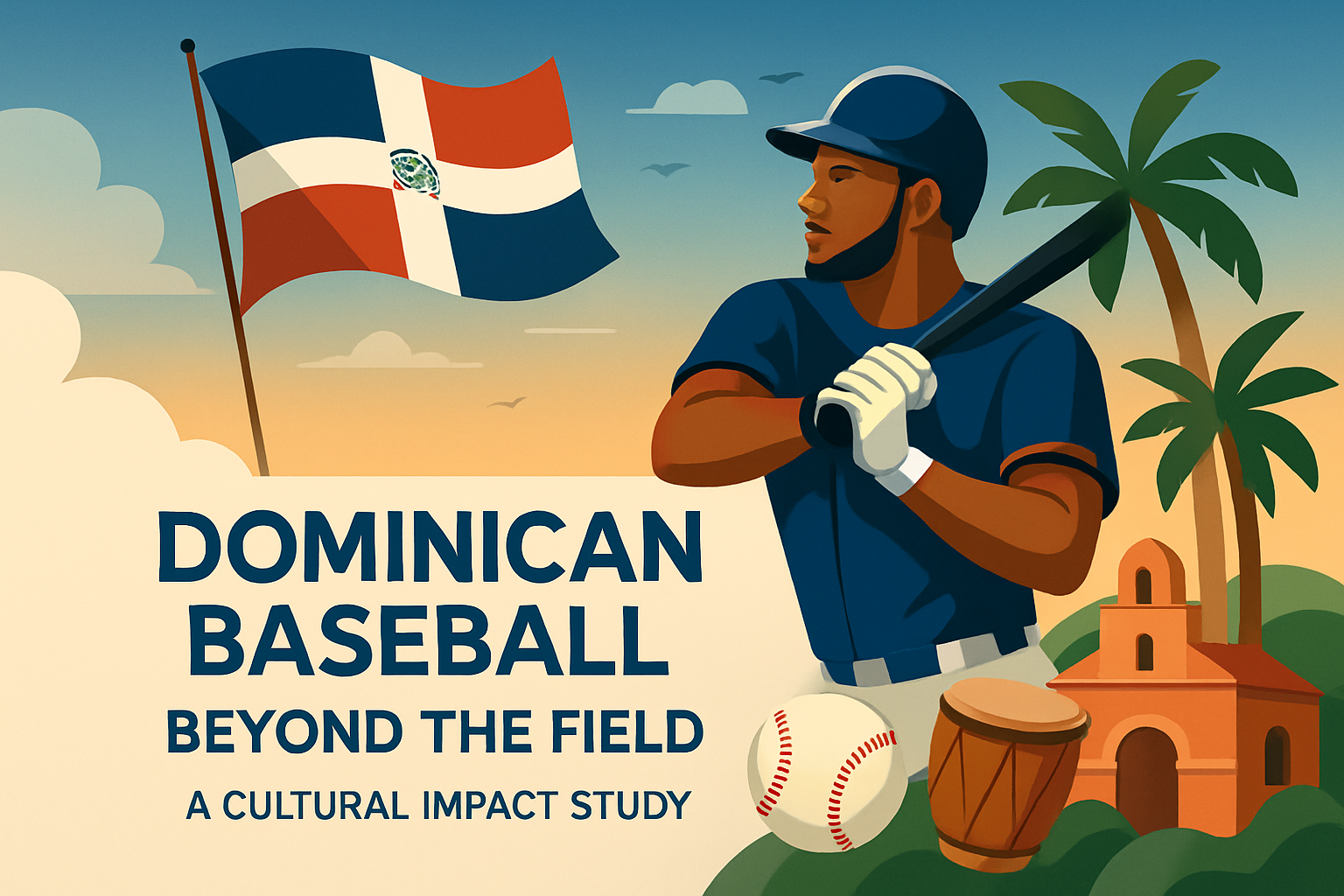
Baseball, the quintessential sport revered by nations across the globe, has a profound cultural impact. Nowhere is this cultural imprint more pronounced than in the Dominican Republic, where baseball has evolved from mere recreation to a fundamental aspect of societal identity. Often referred to as “pelota,” baseball serves not just as a game in this vibrant Caribbean nation but as a vehicle for economic, social, and cultural transformation. This article explores the substantial impact of baseball on the Dominican Republic’s culture, showcasing how this sport transcends the boundaries of the field to influence other societal domains.
It matters because for the people of the Dominican Republic, baseball is more than just a sport—it’s a symbol of national pride and aspiration. Understanding how baseball functions as a cultural conduit sheds light on the driving factors behind its popularity and the significant benefits it contributes to the community. Through this cultural impact study, we aim to dissect the integral role baseball plays in Dominican society, unraveling a narrative intertwined with dreams, challenges, and cultural evolution.
The Economic Influence of Baseball
The economic influence of baseball in the Dominican Republic is both profound and multifaceted. At the forefront of this economic surge are Major League Baseball (MLB) academies, strategically dotted across the country. These academies not only nurture athletic talent but also contribute significantly to local economies by creating jobs, stimulating local businesses, and fuelling infrastructural development.
- Job creation for trainers, administrative staff, and maintenance workers in MLB academies.
- Local businesses, from restaurants to transportation, benefit from increased patronage associated with international scouts and visitors.
- Financial gains are reinvested into community projects, improving public facilities, and services.
A real-world example of this influence is the San Pedro de Macorís province, often referred to as a baseball heaven, where the economy has seen significant improvements due to the presence of MLB academies. The financial boost from baseball trickles down to various sectors, thereby enhancing the socio-economic status of its residents.
Social Dynamics and Community Engagement
Baseball serves as a social glue in Dominican communities. It is a sport that brings together people of all ages and backgrounds, fostering a sense of unity and camaraderie. Communities rally around their local teams, much like extended families, sharing collective experiences that bridge social gaps.
In this context, youth leagues play a crucial role. They offer young Dominicans a path to discipline, teamwork, and, for some, eventually the opportunity to play professionally—both nationally and internationally. These leagues act as a supportive network, promoting social engagement and mutual support.
Moreover, the influence of baseball extends to philanthropy, with many former major league players giving back to their communities. For instance, players like Pedro Martínez and David Ortiz have established foundations and initiatives that focus on educational programs and health services, lending a hand to forge better opportunities for future generations.
Baseball as a Cultural Identity
For Dominicans, baseball is not just a sport but a cultural emblem. It is deeply woven into the national identity, encapsulated in the pride felt by Dominicans as they watch compatriots succeed in global arenas.
The iconic Estadio Quisqueya in Santo Domingo is more than just a stadium—it is a cultural symbol, a place where history meets the present. It hosts a myriad of events that celebrate national pride, featuring ceremonies and celebrations that emphasize baseball’s role in Dominican culture.
The following table outlines key cultural festivals connected with baseball:
| Festival | Date | Significance |
|---|---|---|
| Season Kick-off Parade | October | Celebrates the start of the professional baseball season |
| Baseball Hall of Fame Induction | January | Honors national players’ contributions to the sport |
| World Baseball Classic Celebrations | March | Highlights the country’s participation in international play |
These events provide the Dominican people with opportunities to express their cultural identity, solidifying the societal role that baseball plays in their lives.
Challenges and Opportunities
While baseball presents numerous benefits, it also comes with a set of challenges. The aspiring players often face severe competition and social pressures, paired with the risk of exploitation by unscrupulous agents promising success. The Dominican Republic seeks to address such issues through comprehensive regulations and player education programs.
Conversely, these challenges have spurred significant opportunities for societal development. By emphasizing education alongside sports, the Dominican Republic is paving the way for a more equitable playing field, ensuring that young athletes are well-prepared for a future beyond sports.
Initiatives such as MLB’s educational programs within the academies are crucial. These ensure players gain valuable life skills, from financial literacy to communication, fostering well-rounded individuals who can contribute positively to society beyond their athletic endeavors.
The Future of Dominican Baseball
As the Dominican Republic moves forward, baseball’s role will undoubtedly expand, continuing to enhance its cultural and societal fabric. The interplay between globalization and local traditions is shaping new paradigms, where local leagues are gaining strength and contributing to both the cultural landscape and international reputation of Dominican baseball.
Future prospects bring the potential collaboration with digital technology, possibly revolutionizing how baseball connects with younger demographics through innovative platforms and media.
With continued emphasis on holistic development, the Dominican Republic is poised to sustain its legacy in baseball, reinforcing its standing as a cradle of exceptional baseball talent.
Conclusion
Through the lens of Dominican baseball, we gain insight into how sports can transcend mere entertainment, functioning instead as pivotal cultural, economic, and social forces. Baseball in the Dominican Republic is more than just a pastime—it’s a cornerstone of identity and unity, extending opportunities and promoting societal growth.
The key takeaways emphasize the sport’s substantial impact on various community facets, inspiring us to appreciate cultural phenomena beyond the conventional understanding of sports. For the reader, recognizing these dynamics provides a deeper appreciation of how intertwined baseball is with Dominican life’s fabric.
For those interested in further exploring this topic, visiting the Dominican Republic or engaging with local baseball initiatives may provide a richer, firsthand perspective on this cultural tapestry. As we continue to cheer for baseball, let us remember its profound influence and strive to support these communities and their vibrant cultural expressions.
Take a moment today to reflect on your local sports and their cultural significance. Engage with your community’s sports ventures, fostering the essence of unity, passion, and local identity, much like the Dominicans have with baseball.
Frequently Asked Questions
1. How has baseball become so culturally significant in the Dominican Republic?
Baseball, or “pelota” as it is fondly referred to in the Dominican Republic, is more than just a sport—it’s a vital part of the nation’s identity and cultural fabric. Its significance has historical roots, dating back to the late 19th century when the sport was introduced by Cuban immigrants. Over decades, it burgeoned into a national pastime, becoming tightly woven into the social and cultural structures of the country. Baseball’s cultural significance is partly due to its role as an avenue for social mobility and economic opportunities. Many young Dominicans see baseball as a path to improve their livelihoods, inspired by the many successful Dominican players who have made it to Major League Baseball (MLB) in the United States. Moreover, the passion for the sport is embedded in the nation’s communal practices, from local games to national tournaments, making it a consistent thread in the Dominican lifestyle. These elements combine to make baseball a symbol of hope, pride, and unity in the Dominican Republic.
2. What economic impact does baseball have on the Dominican Republic?
Baseball significantly contributes to the Dominican Republic’s economy. The sport’s industry creates numerous jobs and business opportunities, from those directly related, such as athlete management, coaching, and training facilities, to ancillary services like marketing and merchandise sales. The presence of many MLB academies on the island provides substantial economic inflows, offering prospects to young athletes and stimulating local economies. These academies draw attention and resources, increasing investment and infrastructure development in nearby areas. Additionally, Dominican players who succeed abroad often contribute to the local economy through remittances or investments in local businesses. The international success of Dominican players also enhances tourism, with fans traveling to the country to experience its baseball culture firsthand. Consequently, baseball is not just a sport in the Dominican Republic; it is an economic engine that plays a crucial part in the nation’s economic landscape.
3. In what ways does baseball influence the social structures within the Dominican Republic?
Baseball deeply influences social structures in the Dominican Republic. The sport acts as a social equalizer, bridging gaps between different social strata. Community baseball games and tournaments are common social events where people from diverse backgrounds come together, fostering community cohesion and collective identity. The sport also serves as an avenue for social mobility, as many young Dominicans aspire to become professional players and elevate their families’ social status through their baseball careers. Moreover, baseball instills values such as discipline, teamwork, and perseverance, essential characteristics beneficial beyond the field. It also influences gender roles and family dynamics, as families often rally around their children’s baseball aspirations, investing time, hope, and support in their potential careers. Through its impact on local communities and familial relationships, baseball plays a pivotal role in shaping the social landscape of the Dominican Republic.
4. How does baseball affect the cultural expression in the Dominican Republic?
The influence of baseball on cultural expression in the Dominican Republic is profound and multifaceted. It is a vital aspect of national pride and identity. Celebrations of baseball victories, both locally and internationally, are times of vibrant cultural expression, with parades, music, and public gatherings reflecting national pride and joy. Baseball also shapes artistic and literary elements within Dominican culture. It inspires numerous works of art, literature, and music that both celebrate and critique the cultural dynamics surrounding the sport. The sport influences language, with unique Dominican baseball slang and expressions often used in everyday conversations. Additionally, the sport affects fashion trends, with baseball caps and jerseys common attire for many Dominicans. The sport contributes to the cultural tapestry of the country by providing a narrative that intertwines with and enriches the broader cultural history of the nation.
5. What challenges does the Dominican baseball industry face today?
While baseball remains a cornerstone of culture in the Dominican Republic, the industry faces numerous challenges. One primary issue is the exploitation of young players. There are cases where young athletes are misled by unlicensed agents, known as “buscones,” who exploit their aspirations for financial gain. Furthermore, the intense competition among aspiring players can lead to high dropout rates, with many young individuals pinning all their hopes on becoming professional athletes, often neglecting educational pursuits. This puts them at risk of lacking skills for alternative careers if their baseball dreams do not materialize. Another challenge is the enhancement of ethics and accountability within both the local and international baseball infrastructure to better tackle issues like steroid use and fair play. Despite these challenges, continuous efforts by organizations, governments, and players aim to address and manage these concerns, preserving baseball’s esteemed place in Dominican cultural and social life.