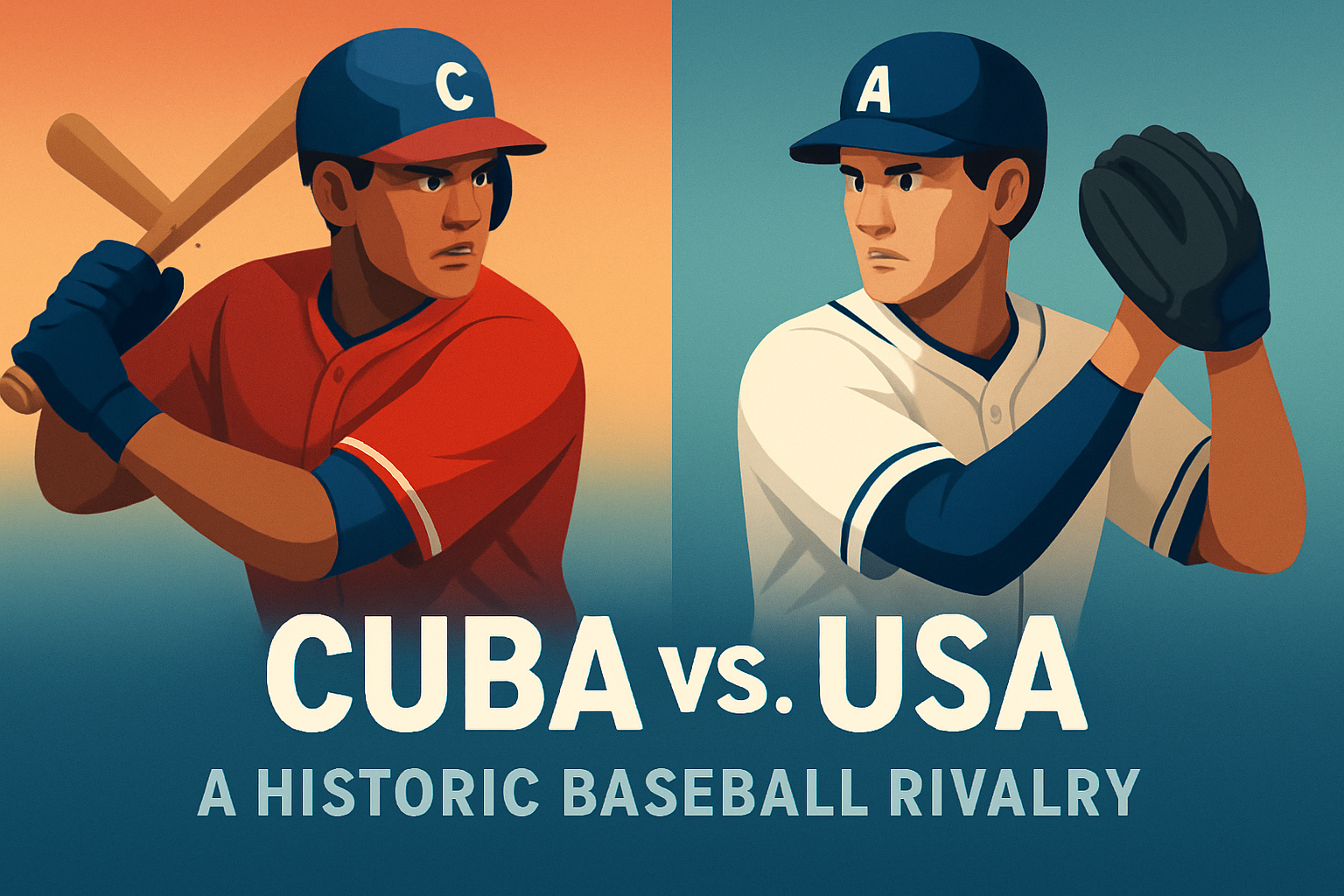
Baseball, known as “pelota” in Spanish-speaking countries, has long been a beloved sport that transcends borders and cultures. One of the most fascinating aspects of baseball is the historic rivalry between Cuba and the United States. This rivalry is not only a tale of two nations competing on the field but also reflects deep cultural exchanges, political tensions, and the enduring love both countries have for the sport. Understanding this rivalry is crucial because it offers insights into the political, cultural, and social dynamics between the two nations, particularly in the context of baseball—a sport often referred to as America’s pastime. This discussion aims to unravel the layers of this rivalry, exploring its origins, key moments, and its impact on the sport and the respective societies.
The rivalry dates back to the early 20th century when baseball became a prominent sport in both countries. For the United States, baseball was already ingrained in its culture, and by the 19th century, it solidified its place as the national pastime. Meanwhile, Cuba embraced baseball in the late 1800s, as it became a symbol of independence from colonial Spanish rule. This shared passion for the sport naturally led to competitive encounters on the field, each with its own narrative and significance. As we delve deeper into the history and aspects of this rivalry, it becomes evident why it remains a topic of fascination and importance for baseball enthusiasts and historians alike.
The Early Days of Cuba-US Baseball Encounters
During the early 1900s, as baseball was solidifying its position in both Cuba and the United States, the first contests between teams from these countries began. American teams would often travel to Cuba during the winter months to participate in exhibition games. Notably, Negro League teams played a significant role in this early period, with many African American players taking advantage of the opportunities to compete in Cuba, free from the racial discrimination they faced in the United States.
This era marked the beginning of an enduring exchange that went beyond mere competition. The presence of American teams in Cuba helped elevate the level of play and developed a deeper interest in the sport among Cubans. Conversely, American players experienced a different style of play and a passionate fan base that enriched their understanding of the game.
- The Cuban Giants, a prominent Negro League team, frequently faced local Cuban teams, setting the stage for a lasting competitive spirit.
- Cuba’s Almandares and Habana teams became popular rivals for visiting American squads.
- This period reinforced baseball as a bridge rather than a barrier between the two countries.
Political Tensions and Olympic Battles
As the political landscape between Cuba and the United States evolved, baseball rivalries also took on deeper meanings. The 1959 Cuban Revolution led by Fidel Castro marked a significant turning point. While the United States implemented an embargo on Cuba, severing diplomatic and economic ties, baseball remained a crucial link.
During the Cold War, international competitions, particularly the Olympics and the Pan American Games, became arenas of ideological battles. The encounters between the Cuban national team and Team USA were often imbued with political significance, as victories were celebrated as triumphs over ideological opponents.
Key Games: 1996 Olympics
One of the most iconic moments in this rivalry occurred during the 1996 Atlanta Olympics. Cuba had long been dominant in amateur baseball, while the United States aimed to showcase its prowess on home soil. The gold medal match saw Cuba defeating the USA in a tightly contested game.
This victory not only reinforced Cuba’s status as a baseball powerhouse but also became a point of pride for a nation under political and economic pressure. For Americans, the match underscored the global competitiveness of baseball, challenging the idea of baseball as purely an American sport.
Cuban Defectors and Their Impact on Major League Baseball (MLB)
Another fascinating dimension of this rivalry has been the movement of Cuban players to Major League Baseball (MLB) in the United States. Many Cuban players, drawn by the opportunity to compete at the highest levels and often driven by economic and political factors, defected from Cuba and established successful careers in the MLB.
The tales of players like Livan Hernandez, Aroldis Chapman, and Yasiel Puig are steeped in drama and often involve secretive plans to escape Cuba. Once in the United States, these players introduced a fresh, dynamic style of play that enriched and diversified the MLB.
| Player | Year of Defection | Notable MLB Team(s) | Accolades |
|---|---|---|---|
| Livan Hernandez | 1995 | Florida Marlins | World Series MVP (1997) |
| Aroldis Chapman | 2009 | New York Yankees | 6-time All-Star |
| Yasiel Puig | 2012 | Los Angeles Dodgers | MLB All-Star (2014) |
Friendship Through Baseball Diplomacy
Despite the competitive nature and political undertones of their relationship, baseball has also been a tool for diplomacy and friendship between Cuba and the United States. Over the years, baseball has offered a platform for pioneering exchanges and initiatives, aimed at bridging the divide between the two nations.
One significant instance was the goodwill tour by the Baltimore Orioles in 1999, when they played an exhibition game against the Cuban national team in Havana. This event was a milestone, signaling a potential thaw in relations and highlighting the unifying power of sport.
More recently, during the presidency of Barack Obama, there was a renewed push to improve relations, with baseball again taking center stage. The Tampa Bay Rays visited Cuba for a historic match against the Cuban national team in 2016, watched by President Obama and Cuban leader Raul Castro. These events reminded the world of baseball’s potential to act as a conduit for cultural exchange and political diplomacy.
The Future of the Cuba-USA Baseball Rivalry
As the world of baseball continues to evolve, so too will the rivalry between Cuba and the USA. With ongoing changes in the political arena, there is hope for more regular exchanges and less restrictive movement of players between the two countries. This might eventually lead to a new era of cooperation where the skills, talents, and passion for baseball are shared more freely.
The future could see a revitalization of the partnership model that benefited both nations in the early days of baseball, creating pathways for cultural exchange, economic opportunities, and perhaps even a new chapter in baseball history where the rivalry exists as a friendly competitive spirit.
Conclusion
The Cuba versus USA baseball rivalry represents far more than just a series of games; it is a rich tapestry interwoven with historical, cultural, and political threads. From early 20th-century exhibition games to intense Olympic showdowns and the stories of players who transcended borders, this rivalry captures the essence of what makes baseball a global sport. Through this lens, we can appreciate not only the shared love for the game but also the unique narratives it creates, influencing societal trends and diplomatic relations.
Understanding this rivalry offers valuable insights into how sports can transcend geopolitical barriers and foster mutual respect and admiration. As we look to the future, there is an opportunity for both nations to leverage their rich baseball traditions to promote dialogue, collaboration, and unity.
Whether you’re a baseball fan, a historian, or someone interested in international relations, exploring the nuances of this historic rivalry can provide a deeper appreciation of the sport’s impact worldwide. For those inspired by this story, consider engaging with baseball communities, attending games, or learning more about the individuals who have shaped this dynamic rivalry over the years.
Embrace the legacy of Cuba and the USA’s baseball rivalry, celebrate the shared history, and look forward to future narratives that will continue to unfold on the diamond. Play ball!
Frequently Asked Questions
What makes the baseball rivalry between Cuba and the United States so historic?
The historic baseball rivalry between Cuba and the United States is a fascinating blend of sportsmanship, culture, and politics. Baseball, or “pelota” as known in Spanish-speaking countries, was introduced to Cuba in the 1860s by Cuban students returning from studying in the United States and American sailors who docked in Cuban ports. Since then, the sport has become deeply ingrained in both countries, with each boasting a rich history of remarkable players and memorable games.
This rivalry is historic because it extends beyond the baseball diamond into larger narratives of international relations and cultural exchange. During the Cold War, the tensions between the two nations often mirrored on the baseball field, especially as Cuba’s national team sought to prove itself against American players. The games between Cuban and American teams became a form of diplomatic expression, embodying the pride and determination of each nation.
How did political tensions affect the baseball rivalry between Cuba and the USA?
The political landscape has played a significant role in shaping the baseball rivalry between Cuba and the United States. After the Cuban Revolution in 1959, which led to the establishment of a communist government under Fidel Castro, the relationship between the US and Cuba dramatically shifted. Political hostility spilled over into sports, and baseball was no exception.
For decades, the US imposed a trade embargo on Cuba, severely restricting exchanges, including sports competitions. Professional Cuban baseball players were unable to play in Major League Baseball (MLB), and American teams rarely faced Cuban counterparts. Despite these obstacles, baseball continued to serve as a bridge that connected the two nations on a competitive, albeit unofficial, level. The defection of Cuban players to the US over the years also added a layer of complexity and intrigue to the rivalry, reflecting the broader socio-political context of migration and freedom.
In what ways has the cultural exchange between Cuba and the USA enriched their baseball rivalry?
The cultural exchange between Cuba and the USA has significantly enriched their baseball rivalry. Both nations bring unique styles and traditions to the game, influencing each other over the years. Cuban baseball is known for its flair, passion, and strategic play, often emphasizing speed and agility. Meanwhile, American baseball highlights power hitting, tactical pitching, and a strong competitive spirit.
Throughout history, Cuban coaches have brought their expertise to American leagues and vice versa, fostering a mutual appreciation of each nation’s approach to the game. Additionally, the Cuban-American community has played a vital role in bringing elements from both cultures together, adding a rich layer of diversity to baseball in the United States. This blending of styles and traditions has made games between Cuban and American teams not only competitive but also a celebration of baseball’s universal appeal and cultural significance.
Who are some notable players that have emerged from the Cuba-USA baseball rivalry?
Over the years, many notable players have emerged from the Cuba-USA baseball rivalry, representing the best of both nations’ baseball talent. From Cuba, players such as Luis Tiant, Tony Oliva, and José Abreu have left indelible marks on MLB, with their skills and achievements celebrated by baseball fans worldwide. These players, among many others, often faced the difficult decision of leaving their homeland to pursue their professional careers in the United States, contributing to the dynamic and sometimes poignant narrative of the rivalry.
On the American side, players like Babe Ruth and Jackie Robinson have been part of teams that have faced Cuban opponents, adding to the rich history shared between the two countries. These legendary figures not only showcased their talent but also embodied the larger cultural and competitive spirit emblematic of the Cuba-USA baseball rivalry. Their contributions have further cemented the rivalry as a defining feature of baseball history.
Why is it important to understand the historic baseball rivalry between Cuba and the USA today?
Understanding the historic baseball rivalry between Cuba and the USA is important today for several reasons. First, it serves as a reminder of how sports can transcend political and cultural barriers, fostering connections and exchanges even amid geopolitical tensions. The resilience of this rivalry highlights baseball’s enduring power to unite and inspire, reflecting the deep-seated love both nations have for the sport.
Moreover, the rivalry offers valuable insights into the broader historical and cultural narratives of both countries. It shines a light on the impact of diplomacy, migration, and cultural exchange, demonstrating how these forces have shaped national identities and relations. As Cuba and the USA continue to navigate their complex relationship, the lessons and legacies of their baseball rivalry remain relevant and instructive, enriching our understanding of sports as a powerful form of international dialogue and diplomacy.