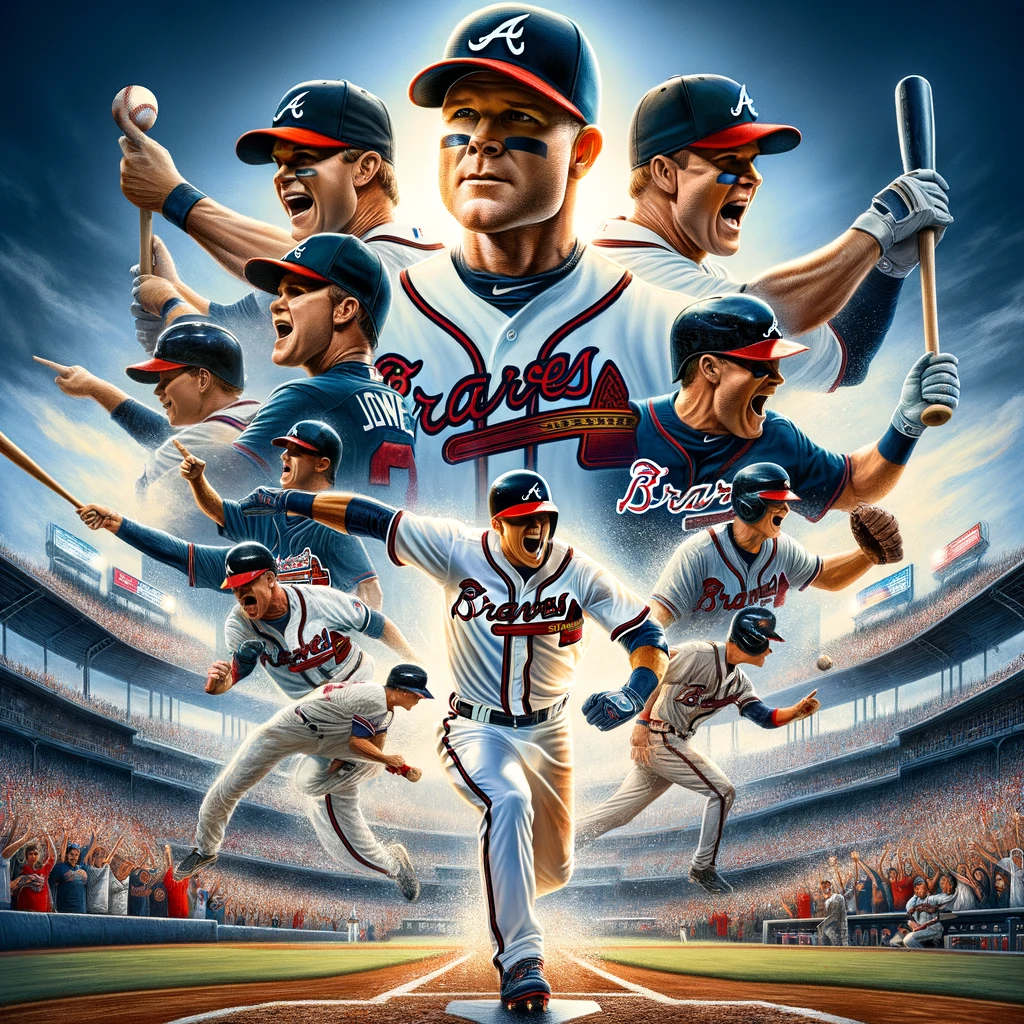
Baseball, America’s pastime, is a sport rich in history and filled with legendary figures. Among these is Larry Wayne “Chipper” Jones Jr., whose career with the Atlanta Braves stands as a testament to talent, perseverance, and love for the game. This article delves into the life and career of Chipper Jones, tracing his journey from a promising rookie to one of the greatest players in baseball history.
Early Life and Minor League Career
Chipper Jones was born on April 24, 1972, in DeLand, Florida. Growing up in a family that cherished baseball, Jones’s talent was evident from a young age. He excelled at baseball at The Bolles School in Jacksonville, Florida, where he drew the attention of major league scouts.
In the 1990 MLB Draft, the Atlanta Braves selected Jones as the first overall pick. This decision would prove to be one of the most significant in the Braves’ history. In the minor leagues, Jones quickly distinguished himself as a top prospect. His time in the minors was marked by rapid development, particularly in hitting, a skill that would become a hallmark of his career.
Rookie Season and Early MLB Career
Jones made his MLB debut on September 11, 1993. His rookie season in 1995 was phenomenal, earning him a reputation as one of the brightest young talents in baseball. He played a crucial role in the Braves’ successful season, which culminated in a World Series Championship. This achievement set the tone for what would be an illustrious career.
In the following years, Jones continued to excel. He developed into a switch-hitting powerhouse, a rarity in the MLB. His ability to hit effectively from both sides of the plate made him a formidable opponent for pitchers.
The 1999 MVP Season
The 1999 season was a standout year for Chipper Jones. He posted an impressive .319 batting average, hit 45 home runs, and had 110 RBIs. His performance was instrumental in leading the Braves to another division title. For his efforts, Jones was named the National League’s Most Valuable Player (MVP), an honor that solidified his status as one of the game’s greats.
Leadership and Consistency
Beyond his statistical achievements, Jones was known for his leadership and consistency. He was a mainstay in the Braves lineup, rarely missing games and always contributing. His presence in the locker room was just as important as his presence in the batter’s box. Younger players looked up to him, and he became a mentor to many.
Later Career and Achievements
As his career progressed, Jones continued to put up impressive numbers. He reached the 400 home run milestone in 2006 and consistently ranked among the league’s best in on-base percentage and slugging. Despite dealing with injuries, he remained a key player for the Braves, contributing to their continued success.
One of Jones’s most significant achievements came in 2008, when he won the National League batting title with a .364 average at the age of 36. This accomplishment was a testament to his skill and longevity in the sport.
Retirement and Legacy
In 2012, Chipper Jones announced his retirement, ending a 19-year career that was spent entirely with the Atlanta Braves. His final season was marked by accolades and tributes, celebrating his contributions to the game. Jones left the sport as one of the most respected and accomplished players in baseball history.
His career statistics are a testament to his greatness: a .303 career batting average, 468 home runs, and 1,623 RBIs. But numbers only tell part of the story. Jones’s impact on the game, particularly on the Braves organization and its fans, is immeasurable.
Chipper Jones’s journey from a rookie to a baseball legend is a story of talent, hard work, and dedication. He not only left an indelible mark on the Atlanta Braves but also on the sport of baseball. His election to the Baseball Hall of Fame in 2018 was a fitting tribute to a career that was nothing short of legendary.
As we reflect on the history of baseball and its many great players, Chipper Jones stands out as a true icon of the game. His story is not just about the runs he scored or the games he won; it’s about the passion he brought to the field every day and the inspiration he provided to countless fans and aspiring players. Chipper Jones’s legacy is one that will endure, a shining example of what it means to be a great baseball player and an even greater ambassador of the sport.

A Deeper Look at Jones’s Impact and Playing Style
Impact on the Braves and MLB
Chipper Jones’s impact on the Atlanta Braves and Major League Baseball (MLB) goes beyond his impressive statistics. He was a cornerstone of the Braves’ dynasty in the 1990s and early 2000s, a period during which the team won an unprecedented 14 consecutive division titles. His consistency and ability to perform under pressure made him a pivotal figure in many of the Braves’ playoff runs.
Jones’s influence extended beyond his own team. He was widely respected across MLB for his sportsmanship and his approach to the game. His presence raised the level of competition and he was often praised for his baseball IQ and understanding of the game’s nuances.
Playing Style and Characteristics
As a switch-hitter with power from both sides of the plate, Jones posed a unique challenge to opposing pitchers. He was known for his disciplined approach at the plate, often working deep counts and taking walks. This discipline, combined with his power, made him one of the most feared hitters of his era.
Defensively, Jones started his career as a shortstop but eventually found a home at third base. His transition to third base was smooth, and he became a reliable defender known for his strong arm and good range.
Key Moments and Memorable Games
Throughout his career, Jones had numerous memorable games and key moments that defined his legacy. One such moment came in the 1999 National League Championship Series against the New York Mets. Jones hit two home runs in Game 3, including a dramatic tie-breaking shot in the eighth inning, showcasing his ability to perform in clutch situations.
Another memorable moment occurred on June 16, 2012, when Jones hit a walk-off home run against the Philadelphia Phillies. It was a poignant reminder of his skill and flair for the dramatic, even in the twilight of his career.
Influence on Younger Players and Fans
Chipper Jones’s impact on younger players and fans cannot be overstated. He was a role model for aspiring baseball players, demonstrating how to play the game with respect and dedication. His longevity and success in the MLB made him an inspirational figure for many young athletes.
Jones was also beloved by Braves fans and baseball enthusiasts for his approachable personality and connection with the community. He frequently engaged with fans, whether through autograph signings, charity work, or simply interacting with them during games.
Post-Retirement Endeavors and Honors
After retiring, Jones remained active in the baseball community. He has served as a mentor and occasional instructor for the Braves, passing on his knowledge to the next generation of players. His insights and experience are invaluable resources for young athletes in the organization.
Jones’s induction into the Baseball Hall of Fame in 2018 was a crowning achievement in his career. It was a recognition of his excellence on the field and his contributions to the game. The ceremony in Cooperstown was attended by legions of Braves fans, illustrating the deep connection he had forged with the baseball community.
Legacy and Conclusion
Chipper Jones’s legacy in baseball is multifaceted. He was a supremely talented player, a leader, a mentor, and an ambassador for the sport. His journey from a rookie to a legend is a story of resilience, adaptation, and unwavering dedication to baseball.
In the annals of baseball history, Jones’s name is etched alongside the greats of the game. His career serves as an inspiration for future generations, a reminder of what can be achieved through hard work, talent, and a deep love for baseball. Chipper Jones, a Brave’s journey from rookie to legend, is a tale that will be told for generations to come, a testament to the enduring spirit of America’s pastime.
Frequently Asked Questions
1. Who is Chipper Jones and what is his significance in baseball history?
Chipper Jones, born Larry Wayne Jones Jr. on April 24, 1972, in DeLand, Florida, is a legendary baseball player known for his incredible career with the Atlanta Braves. His impact on baseball is profound, as he is recognized for his talent, dedication, and leadership on and off the field. Jones played his entire career with the Braves, from 1993 until his retirement in 2012, which is a testament to his loyalty and the key role he played in the team’s success. His career highlights include winning the National League MVP Award in 1999 and having a career batting average over .300. As one of the greatest switch hitters in the history of the game, he has left an indelible mark on Major League Baseball (MLB).
2. How did Chipper Jones begin his career in baseball, and what were his early achievements?
Chipper Jones showed promise from a young age, excelling in baseball during his high school years. He first gained national attention for his exceptional performances in high school, which led the Atlanta Braves to select him as the first overall pick in the 1990 MLB Draft. Starting his professional career in the Minor Leagues, Jones quickly made a name for himself, displaying remarkable skills as a third baseman. His rapid rise through the minor league system was characterized by an impressive ability to hit both for average and power, alongside his agility and defensive skills on the field. His hard work and dedication paid off when he was called up to the major leagues, making his debut in 1993.
3. What were some of the key highlights and accomplishments during Chipper Jones’ MLB career with the Braves?
Chipper Jones’ MLB career is decorated with numerous achievements that have solidified his place as a Braves legend. One of the standout moments was during the 1999 season when he was named the National League MVP, a year when he also helped lead the Braves to the World Series. Throughout his 19-year career, Jones was an eight-time All-Star, underscoring his consistent performance and valuable contribution to the team. In addition to these accolades, he won the Silver Slugger Award twice and claimed the National League batting title in 2008, with a .364 average. Jones’ career numbers include 468 home runs and over 1,600 RBIs, making him one of the most accomplished hitters in MLB history.
4. Why is Chipper Jones considered one of the greatest switch hitters in baseball?
Chipper Jones’ reputation as one of the greatest switch hitters in the history of baseball stems from his unique ability to perform equally well from both sides of the plate. This skill set made him a versatile and strategic asset for the Braves, as he could exploit pitching matchups against any opposing team. Throughout his career, he posted a batting average over .300, both as a right-handed and left-handed hitter. His career achievements as a switch hitter are unmatched, with Jones being one of only a few players to hit over 400 home runs and maintain a batting average over .300. His relentless work ethic and natural ability to adjust to different pitchers’ styles set the standard for proficiency in switch-hitting.
5. What impact did Chipper Jones have on the Atlanta Braves and their legacy?
Chipper Jones played an instrumental role in the Atlanta Braves’ success during his tenure. He was a cornerstone of the team, both as a player and leader in the clubhouse. His influence extended beyond his own performances to inspiring and mentoring younger teammates. Throughout the 1990s and 2000s, Jones was pivotal in the Braves’ dominance in the National League, contributing to several pennant wins and a World Series title in 1995. Even after his retirement, Jones’ legacy continues to shape the Braves’ culture, with many players citing him as a role model. His induction into the Baseball Hall of Fame in 2018 further cements his status as an essential figure in the history of the Braves and Major League Baseball itself.