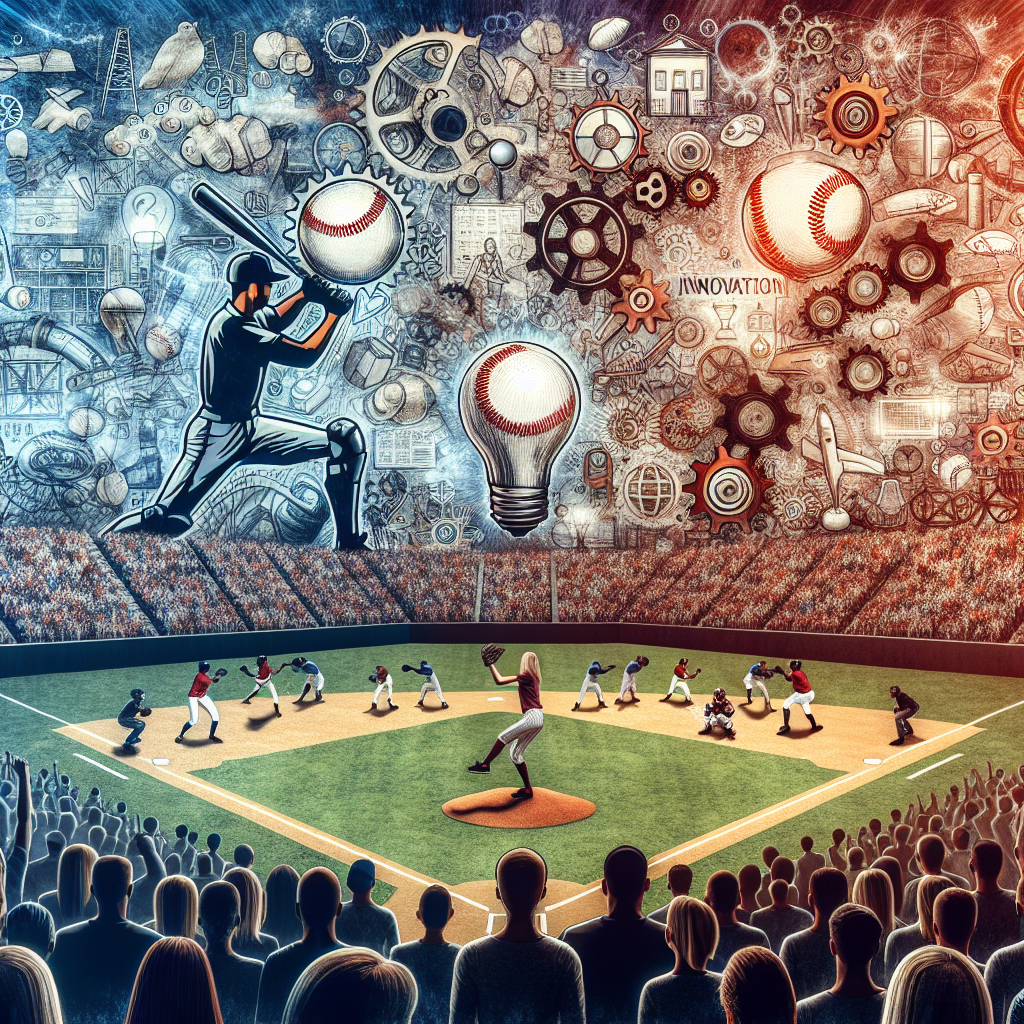
Baseball, often dubbed “America’s pastime,” is more than just a sport; it embodies a deep-seated tradition woven into the cultural fabric of the United States. Since its rise in popularity in the late 19th century, baseball has influenced various aspects of American society, including entertainment, economics, and even politics. However, one of the less explored yet profound influences of baseball is its contribution to the American spirit of innovation. From the strategic evolution of the game to the technological advancements it has spurred, baseball has continually inspired innovation in ways that extend far beyond the diamond. This article delves into how baseball’s inherent culture of adaptation, competition, and technological adoption mirrors and influences broader American innovation.
The Evolution of Gameplay and Strategy
The game of baseball itself is a testament to innovation, evolving significantly since its inception. Initially a leisurely pastime, baseball gradually transformed into a highly competitive sport that demanded strategic innovation. Early players and managers began developing sophisticated techniques and strategies like the stolen base, curveball, and defensive shifts, forever altering the way the game is played. Each of these advancements required players to think differently, encouraging a culture that revered innovation. Such strategic evolutions reflect the sports’ influence on critical thinking and problem-solving, traits that are hallmarks of renowned innovators across all fields.
The introduction of new strategies continually pushed the boundaries of what was possible within the sport, much like how breakthrough ideas propel industries. Baseball, with its complex balance of individual performance and team dynamics, mirrors the organizational processes found in successful companies. The ability to innovate within these strategies provided a framework for understanding and executing change, something that resonates deeply with American industry leaders and entrepreneurs.
Technological Innovations in Baseball
Baseball’s rich history of technological innovation is particularly notable. The sport has often been at the forefront of adopting and promoting technologies that later permeate into broader societal use. One of the most significant technological shifts was the introduction of the electronic scoreboard, which provided immediate updates and enhanced fan engagement. This innovation marked the beginning of a deeper relationship between technology and sports, paving the way for real-time data availability and interactive experiences now common in many aspects of life.
Another groundbreaking advancement was the development of live broadcasting. As early as the 1920s, baseball games were broadcast over the radio, a pioneering development in media that heightened public access to sports and entertainment, setting the stage for today’s multi-billion dollar sports media market. Eventually, this led to televised games, which not only revolutionized how sports were consumed but also how companies engaged in marketing and fan interaction, forming the early bedrock of modern sports marketing strategies.

The Impact of Baseball on Social Innovation
Baseball has also played an instrumental role in social innovation. Historically, the sport has often reflected and influenced societal changes and reforms. A prime example is the integration of baseball in the mid-20th century, most notably marked by Jackie Robinson breaking the color barrier in 1947. This bold move was not just a milestone for baseball but a crucial moment in American civil rights history, showcasing sports as a potent catalyst for social change.
These movements within baseball have often acted as microcosms of broader political and social struggles, with the sport offering a platform for marginalized voices. The willingness of the sport to embrace these changes led to significant social discussions and innovations in team management and player relations, contributing to broader societal understandings about inclusivity and diversity. Today, such dialogues continue to inspire innovations in equality and civil rights, both within and outside sports.
Economic Contributions of Baseball
Economically, baseball has been a driver of innovation, influencing everything from local businesses to national economic policies. The sport’s business model has continuously evolved to incorporate new streams of revenue, from merchandise and sponsorship deals to digital content and interactive fan experiences. Such economic evolution showcases how industries can innovate to remain relevant amid changing landscapes.
The construction of iconic ballparks and the growth of franchise systems illustrate how baseball has shaped urban development and economic forecasting. By analyzing how baseball teams and leagues manage growth and handle economic challenges, businesses and policymakers can extract valuable insights into efficient economic management and innovative business practices, fostering an environment that echoes those foundations found within America’s economic leadership.
Baseball’s Influence on Education and Research
Beyond economics and social aspects, baseball has significantly impacted education and research, demonstrating the sport’s expansive reach. Statistical analysis in baseball, best exemplified by the use of sabermetrics, has been a fundamental innovation in sports analytics. This approach, which involves analyzing in-game statistics to improve team performance, has inspired data-driven decision-making across various industries.
Academic institutions study baseball’s analytical frameworks to teach principles of probability, statistics, and economics, while researchers have drawn parallels between baseball strategies and business decision-making processes. This focus on analysis and empirical evidence reflects a broader trend in American society, where data science and analytics are becoming bedrocks of innovation in nearly every sector. By highlighting these connections, baseball continues to foster a culture of research and intellectual growth.
Baseball as a Cultural Innovator
Culturally, baseball has also inspired innovation in ways that extend into art, music, and literature, fostering a rich narrative tradition that shapes American identity. Authors like W.P. Kinsella, who penned “Shoeless Joe” which became the film “Field of Dreams,” have used baseball to explore complex themes of hope, ambition, and resilience. These narratives encourage creative exploration and innovation within storytelling and artistic expressions.
Music and art celebrating baseball serve as a testament to its influence on cultural innovation. From songs like “Take Me Out to the Ball Game” to vivid depictions of baseball in murals and performances, the sport evokes emotions that fuel creativity and community spirit. Such innovation through culture helps reinforce baseball’s position as a timeless source of inspiration, continually inviting new generations to dream and create.
Baseball’s Enduring Legacy of Innovation
The enduring legacy of baseball’s contribution to American innovation is profound. As a sport that blends strategic depth and technological advancement with cultural narratives and social progression, baseball continues to embody the spirit of innovation. By examining the ways baseball has influenced various aspects of society, we gain insight into how innovations in seemingly niche areas can have far-reaching impacts.
Looking to the future, baseball will likely continue its role as a crucible for innovation. As technology advances and societal values evolve, baseball’s core principles of adaptation, teamwork, and strategic foresight will offer lessons applicable across the global stage. This capacity for innovation ensures that baseball remains not only America’s pastime but also a symbol of how profound change can arise from traditions deeply embedded in cultural history.
Frequently Asked Questions
1. How has baseball contributed to technological innovations in America?
Baseball, true to its nature as “America’s pastime,” has been a catalyst for numerous technological advancements. Historically, the sport’s demand for efficiency and precision led to trailblazing innovations, particularly in the development of broadcasting technologies. The need to capture the heart-pounding action of the games for radio and eventually television audiences spurred innovations in broadcasting equipment and techniques. Moreover, the pursuit of perfecting the game’s nuances also accelerated the development of advanced graphics, slow-motion replays, and digital statistics tracking that we often take for granted today.
Baseball’s embrace of technology has not stopped at media; the implementation of data analytics and biometric measurements to analyze player performance is at the forefront of sports innovation. This trend began with the statistical revolution initiated through “sabermetrics” — a term originating from the acronym SABR, the Society for American Baseball Research. The use of detailed data and statistics analysis has influenced beyond baseball, as seen in various sports and industries looking to optimize performance.
2. What role did baseball play during the economic development of America?
Baseball has been an economic powerhouse since its inception, fueling economic growth at local and national levels in America. The construction of baseball stadiums has historically acted as catalysts for urban development. These stadiums transform neighborhoods, encouraging local businesses and tourism that stimulate economic activity. The industry surrounding baseball, including merchandise sales and media rights, generates significant revenue, contributing to the national economy.
During challenging times like the Great Depression and in the aftermath of World Wars, baseball emerged as a symbol of hope and resilience, providing entertainment and a sense of normalcy for the American people. Its consistent presence spurred continuous economic engagement and became a vehicle for innovation even in those tough periods. The packs of cards, memorabilia sales, and the emerging fantasy leagues spotlight baseball’s enduring financial contributions. As an economic stimulator, baseball has helped ensure that the American innovative spirit takes initiatives in diverse economic sectors.
3. How has baseball influenced America’s cultural and social dynamics?
Baseball’s role in shaping America’s cultural and social landscape is deeply ingrained, serving as both a melting pot and a mirror of societal changes throughout history. As a microcosm of society, baseball has been pivotal in breaking down barriers and driving social change. The integration of Major League Baseball in 1947, when Jackie Robinson broke the color barrier, stood as a landmark event in advancing the civil rights movement. It highlighted baseball as not just a sport but as a force for social progress, echoing its impact across the American fabric.
Furthermore, baseball has played a role in improving gender equality through platforms like the All-American Girls Professional Baseball League during World War II and the recent rise in women’s professional baseball opportunities. Such developments oblige America to reflect on inclusion and diversity principles, with the spirit of innovation empowering societal progress.
4. In what ways has baseball influenced the political landscape in America?
A seemingly apolitical arena, baseball has frequently intersected with American politics. In the early 20th century, baseball games were commonly attended by politicians seeking to connect with constituents, using the national pastime as a campaign avenue and a means to display patriotism. Presidential ceremonial first pitches, a revered tradition, further underscore baseball’s intertwining with the political narrative. This American tradition offers leaders a stage to exhibit camaraderie and spirit while fostering a sense of national unity.
Baseball has also been influential in advocating reforms and leading diplomatic engagements. The ‘ping-pong diplomacy’ of the Cold War, where events like exhibition baseball games served as ice-breakers between estranged nations, illustrates how sport can transcend mere gamesmanship. As a diplomatic tool, baseball has continually played an instrumental role in defining and reflecting the political spirit of innovation ingrained in American society.
5. Can you explain the historical impact of baseball on American entertainment?
Baseball has long stood at the heart of American entertainment since its early days. As one of the first sports to be broadcast on radio and later on television, it helped lay the groundwork for modern sports entertainment. The evolution of technologies to capture and convey the excitement of baseball games led to advancements in broadcasting and entertainment media at large. Iconic moments, such as Babe Ruth’s legendary home runs and unforgettable World Series battles, have captivated audiences, creating a rich tapestry of lore that spans generations.
The influence of baseball extends into film and literature, with countless movies and books inspired by the game adding various dimensions to America’s creative culture. This synergy between baseball and entertainment signifies how innovation in storytelling and media presentation continues to enrich the cultural narrative. Baseball’s ability to enchant audiences and inspire creators resonates with America’s heart, deepening its historical impact on the entertainment industry.