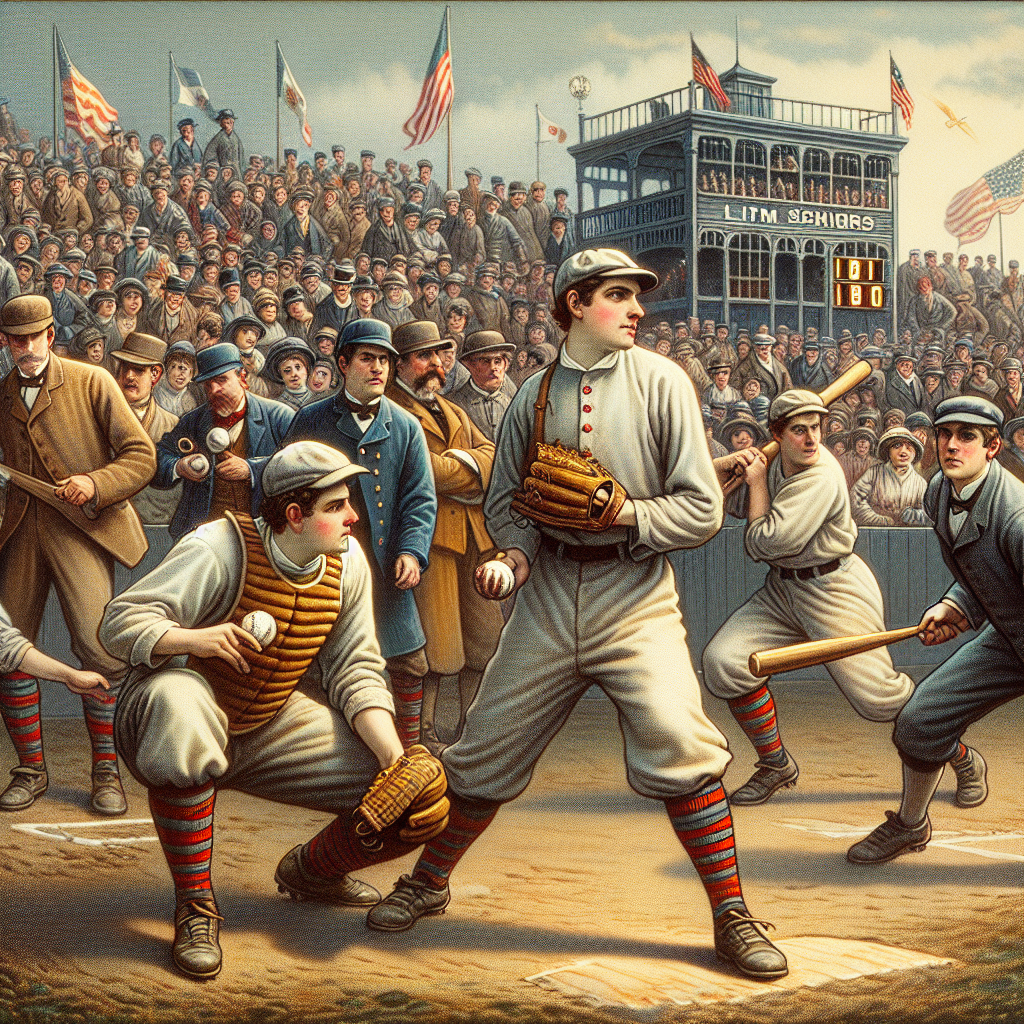
Baseball, often called America’s pastime, has a rich history not only within the United States but also internationally. While many associate the sport’s origins and early competitions with fields in the U.S., its international dimensions are equally intriguing. From early exhibition games to formal competitions, baseball’s early travels across borders played a critical role in establishing its global footprint. This article explores these formative years, shedding light on baseball’s journey beyond its American heartland in the 19th and early 20th centuries. Let’s embark on a journey to understand the pioneering events, competitive spirit, and influence of early international baseball competitions and exhibitions.
As baseball’s popularity surged in the United States in the late 19th century, it was only natural for the sport to cross international borders. Initial exhibitions mainly featured American teams traveling abroad, which served as both cultural exchange and an introduction of the sport to foreign audiences. These tours often left significant impacts on the hosting countries, prompting local adaptations and growing interest in the sport. For instance, early trips to Cuba, Mexico, and other Latin American nations sowed the seeds for baseball’s popularity in those regions.
One pivotal moment in this international expansion was in 1874 when a group of American baseball players toured Europe, specifically England and Ireland. These exhibitions were part entrepreneurial venture, part cultural ambassador, and part competitive outing. The tours were met with mixed success in terms of spectator turnout and financial gain but were crucial in sowing the seeds for baseball’s nascent international presence. By demonstrating the passion and athleticism of baseball, these events planted initial ideas for the sport in European minds, even if widespread adoption took longer.
American Tours in Latin America
The late 1800s and early 1900s saw a series of significant baseball tours in Latin America. These tours played a fundamental role in establishing baseball as a popular sport south of the U.S. border. American players and teams traveled to countries like Cuba, Mexico, and even further into Central and South America, bringing the sport along with them. In Cuba particularly, the arrival of American baseball teams sparked immense local interest. The island quickly became one of the strongest baseball nations outside the United States.
The Cuban League, established in 1878, grew largely through the influence of visiting American teams. The league drew in diverse talent, including African American players at a time when racial segregation prevented them from playing in Major League Baseball back home. This integration allowed the sport to grow rapidly, setting the stage for Cuba’s long-standing love affair with baseball.
Similarly, in Mexico, American teams’ visits in the early 20th century generated significant interest. Established Mexican baseball leagues gained from the experience and exposure to American styles of play and rules. The influence extended into Central and South America, albeit at a slower pace, laying foundational stones for the sport’s growth in these regions.
Early International Competitions: The Spalding World Tour
One of the most ambitious early international baseball endeavors was undoubtedly the Spalding World Tour of 1888-1889. Organized by Albert Spalding, a former player turned sports goods magnate, the tour aimed to promote both baseball and Spalding’s sporting goods. Featuring a group of Major League players, including notable names like Cap Anson and John Montgomery Ward, the tour covered vast distances, taking baseball to unfamiliar territories.
The Spalding World Tour was a grand spectacle that saw the players travel to several countries, including Australia, Egypt, Italy, France, and the United Kingdom. Though often more demonstration-focused than purely competitive, these exhibitions provided a critical introduction to baseball for international audiences. The tour signaled that baseball had grown beyond a national pastime and was becoming a sport with global aspirations.
These games also highlighted the cultural exchange aspect, with local audiences witnessing and sometimes participating in the play. Despite varying levels of success in different regions, the tour showcased baseball as a well-developed sport with a global appeal. This tour set an early precedent for the international promotion of baseball that would continue to evolve in the coming decades.

Europe’s Adoption and Adaptation
While Europe was initially more resistant to baseball’s charm compared to Latin America, there were notable early efforts to establish the sport. The 1874 tour mentioned earlier laid some groundwork, but it took time for organized baseball to take root in Europe. Early adopters included teams in England and a few scattered efforts across the continent.
The British Baseball Federation, formed in the early 20th century, was among the first formal organizations to promote the sport in Europe thoroughly. Stadiums and fields were set up, and leagues were organized to foster local talent. These early leagues, while not as robust as their American counterparts, demonstrated the sport’s growing international reach.
Additionally, World War I and World War II played unexpected roles in spreading baseball in Europe, as American soldiers stationed abroad often organized games and tournaments to pass the time. These wartime baseball matches were, in many ways, impromptu exhibitions that increased European familiarity with the sport. Over time, Europe began to develop its own baseball culture, albeit at a slower and smaller scale.
Baseball in Asia: The Early Years
Asia’s introduction to baseball is a fascinating chapter in the sport’s history. Japan, in particular, embraced baseball with remarkable enthusiasm. The first recorded baseball game in Japan took place in the 1870s, introduced by American educator Horace Wilson. By the early 20th century, Japanese schools and universities had adopted baseball as a major sport.
The travel of American teams to Japan, such as the 1908 Reach All-Americans, further solidified the game’s popularity. These exhibitions were met with large crowds and intense media coverage, demonstrating Japan’s growing interest in baseball. In turn, Japanese teams began to form, and local leagues started to develop.
Korea and Taiwan also saw early introductions to baseball through Japanese influence and American missions. Both nations developed their own unique baseball cultures over time, becoming integral parts of the sport’s global tapestry.
The Role of Global Events: Olympics and World Fairs
Global events like the Olympics and World Fairs played a considerable role in promoting baseball internationally. Although baseball did not become an official Olympic sport until much later, demonstration games in earlier Olympics provided substantial visibility. The 1912 Stockholm Olympics, for example, featured a baseball exhibition that introduced the sport to a diverse international audience.
World Fairs also served as platforms for baseball exhibitions. The 1904 St. Louis World’s Fair included a baseball tournament that attracted international visitors. These events acted as global showcases, allowing baseball to reach audiences who might never have seen the game otherwise.
Furthermore, these events fostered a sense of international competition and camaraderie. They highlighted baseball not just as an American pastime but as a sport with universal appeal, capable of being appreciated and played worldwide.
Conclusion
The early international history of baseball is rich and multifaceted, marked by pioneering exhibitions, competitive spirit, and a deep-rooted cultural exchange. From American teams touring Latin America and Europe to the Spalding World Tour’s ambitious global reach, these early efforts set the stage for baseball’s international development. The sport was introduced to Japan and other parts of Asia, where it quickly took root and flourished.
Through global events like the Olympics and World Fairs, baseball gained further international exposure, cementing its status as a global sport. These early international competitions and exhibitions were not just games; they were cultural exchanges that showcased baseball’s universal appeal and potential for global growth.
While the sport’s international journey began over a century ago, the foundations laid by these early efforts continue to influence baseball today. As we look back on these formative years, it becomes clear that baseball’s international success is a testament to its enduring appeal and the vision of those early pioneers.