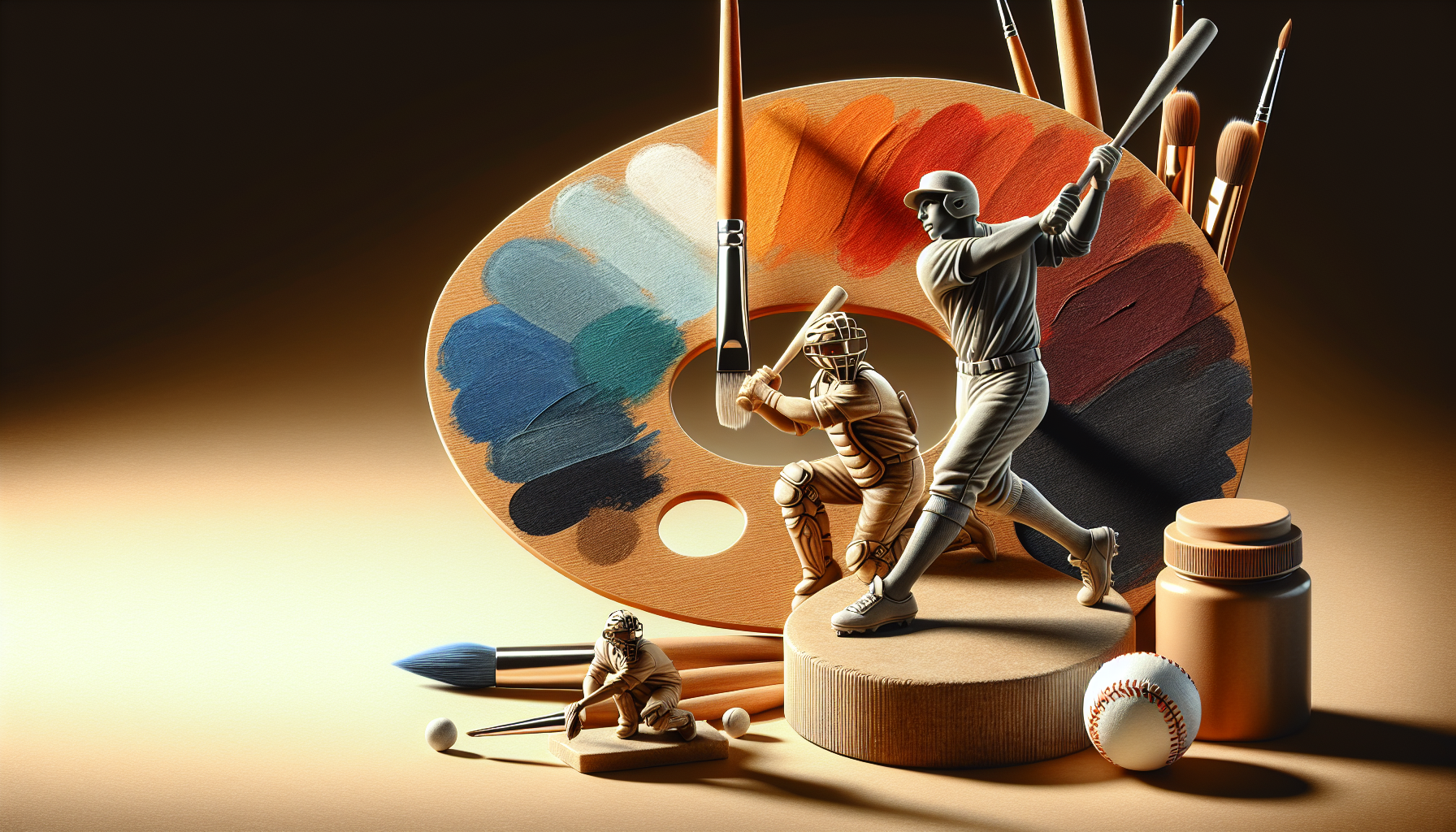
Baseball has inspired painters, sculptors, photographers, printmakers, muralists, and installation artists for more than a century, making it one of the richest subjects in American visual culture. “Baseball in art” refers to creative work that uses the game’s players, equipment, rituals, ballparks, and mythology as subject matter or symbolic language. It matters because baseball is not only a sport; it is a durable set of images through which artists explore memory, labor, race, place, celebrity, masculinity, community, and national identity. In curating sports-related collections and reviewing exhibition catalogs, I have seen how often baseball appears outside obvious fan spaces. It shows up in major museums, public monuments, street murals, folk art environments, documentary photography, and conceptual projects that barely depict a diamond at all yet still speak in the game’s visual vocabulary.
As a hub within the broader subject of baseball in literature and film, this miscellaneous guide maps the visual side of that cultural landscape. It explains how baseball became a recurring artistic subject, what forms those artworks take, which artists and institutions matter most, and how readers can connect these works to books, movies, and wider baseball storytelling. The best baseball art does more than illustrate a swing or a crowd. It captures tension between stillness and motion, private ritual and public spectacle, individual heroics and shared history. That range is why baseball remains unusually adaptable in art: a single bat, glove, or chalk line can evoke childhood, commerce, segregation, nostalgia, loss, or civic pride.
Understanding baseball art also helps readers make sense of the sport’s broader cultural archive. Novels and films often rely on visual tropes first developed in painting, photography, and poster design: the lonely pitcher on the mound, the weathered sandlot, the monumental stadium façade, the aging fan clutching a scorecard. When you know those images, you can trace how baseball meaning travels across media. This article serves as a central guide to paintings, sculptures, photography, public art, and experimental work, while pointing toward the themes that connect them all. If you want a complete overview of baseball as a visual subject, start here and use it as the foundation for deeper reading across this subtopic.
How Baseball Became a Major Subject in Visual Art
Baseball entered art early because it offered what artists need most: recognizable forms, repeated gestures, and social significance. By the late nineteenth and early twentieth centuries, illustrators and painters were already treating the game as a sign of modern American life. Urbanization, mass spectatorship, newspaper reproduction, and the rise of professional leagues made baseball instantly legible to viewers. A crowd in grandstands, a baseman stretching for a throw, or children improvising a game in an empty lot could communicate class, geography, season, and emotion with remarkable efficiency. American realist painters found the sport useful because it sat at the intersection of ordinary life and national myth.
One pivotal figure is Norman Rockwell, whose baseball images for The Saturday Evening Post helped codify a sentimental but powerful visual language around youth baseball, spectatorship, and small-town ritual. Rockwell was not alone, but he demonstrated how baseball scenes could crystallize broader ideas about American belonging. Earlier Ashcan School artists, including William Glackens and George Bellows, also represented urban recreation and crowds in ways that inform baseball imagery even when the game was not always their sole focus. Later artists expanded the subject beyond nostalgia, examining labor, race relations, migration, and mass media. After Jackie Robinson integrated Major League Baseball in 1947, baseball imagery increasingly carried explicit political weight in fine art and public memory.
The sport’s visual staying power comes from structure. Baseball has pauses. Those pauses let artists isolate a stance, a gaze, or a field geometry. Unlike games with constant motion, baseball offers compositions that naturally become images: a batter framed against outfield distance, infield dirt cut by white baselines, bullpen benches arranged like a stage set. Artists also respond to baseball’s layered time. Every game contains anticipation, repetition, and afterimage, which is why baseball lends itself equally well to realism, abstraction, and conceptual art. A painter can document a specific stadium, while a sculptor can distill the game to the curve of a ball seam or the upright axis of a bat.
Baseball Paintings and Prints: From Realism to Symbolism
Baseball painting often begins with realism, but its best examples do more than record athletic action. They use the game to organize space and meaning. Rockwell’s baseball works are important because they dramatize spectatorship and ritual, not because they offer technical analysis of play. In another vein, Jacob Lawrence approached sports subjects through his signature angular rhythms and social awareness, showing how Black life and public performance could be rendered with formal intensity. Though Lawrence is not solely identified with baseball, his approach helps explain why the game appealed to modern painters interested in movement, labor, and communal identity.
Print culture is equally important. Lithographs, posters, trading-card art, magazine covers, and limited-edition prints brought baseball imagery into homes long before museums gave sports art much institutional attention. That circulation shaped public memory. The heroic batting pose, the dust cloud at second base, and the panoramic ballpark scene became standard visual templates through repeated reproduction. In practical terms, prints democratized baseball art. A fan who never visited a gallery could still own baseball iconography, and that wide distribution fed later nostalgia markets as well as scholarly interest in vernacular sports imagery.
Contemporary painters often push the subject beyond straightforward depiction. Some focus on empty fields and abandoned backstops to evoke memory and regional decline. Others isolate uniforms, equipment, or archival photographs to explore race, celebrity, and historical erasure. In exhibitions I have followed, one pattern appears consistently: baseball painting is strongest when artists resist generic sentiment and root the image in a specific social world. A Negro leagues scene, a Little League practice under cheap lights, or a rain-delayed major league stadium can each carry different emotional and historical claims. The medium rewards specificity.
Baseball Sculpture and Public Monuments
Sculpture gives baseball physical permanence. Bronze statues outside stadiums are the most visible example, from figures of Jackie Robinson, Willie Mays, Ernie Banks, and Roberto Clemente to team-specific commemorations in plazas and concourses. These works function as public memory devices. They tell visitors which values a franchise or city wants to honor: courage, grace, integration, philanthropy, local loyalty, or transcendent skill. The best statues succeed because they capture both likeness and posture. A convincing baseball sculpture must understand mechanics. The angle of a stride, the rotation of the torso, and the balance over planted feet determine whether the figure feels alive or merely decorative.
Not all baseball sculpture is monumental bronze. Contemporary artists have built installations from bats, balls, gloves, ticket stubs, fencing, and reclaimed stadium materials. These works often move away from hero worship and toward commentary on consumption, memory, and the business of sports. A wall assembled from broken bats can suggest repetition, failure, and the industrial throughput hidden behind athletic glamour. Assemblage and found-object sculpture are especially effective with baseball because the equipment is instantly recognizable and materially evocative: scuffed leather, pine-tar-darkened wood, red stitching, rusted chain-link, sun-faded signage.
Public art connected to baseball also extends into memorial design. Monuments to the Negro leagues, local sandlot histories, or community coaches often matter more socially than celebrity statues because they restore overlooked histories. The Negro Leagues Baseball Museum in Kansas City is especially important as a cultural anchor, not only for its exhibits but for how it frames baseball as African American history, business history, and visual history at once. When public sculpture works well, it does not simply celebrate the sport. It anchors baseball in a city’s civic narrative and gives form to who has been remembered and who has been excluded.
Photography, Murals, and New Media
Photography transformed baseball art by preserving fleeting moments while also documenting the environments around the game. Charles M. Conlon’s early twentieth-century photographs remain foundational because they captured players with clarity and authority in an era when sports imagery was still developing as a serious visual record. Later photographers such as Walter Iooss Jr. brought magazine-era polish and intimacy, showing both action and personality. Baseball photography matters because it bridges journalism and art. A dugout portrait, a rain-soaked tarp, or a minor league parking lot can carry as much emotional force as a game-winning hit.
Murals are another major category, especially in neighborhoods where baseball serves as local history. Stadium exteriors, school walls, and community centers frequently use painted baseball scenes to honor hometown players, commemorate integrated teams, or sustain intergenerational memory. These murals often do what museums historically neglected: they place baseball heritage in everyday public space. In cities with strong immigrant or Black baseball traditions, mural programs have preserved stories that official institutions once minimized. Because murals are site-specific, they also tie the sport to particular streets, parks, and civic identities rather than treating baseball as a generic national symbol.
Digital and new media artists now use baseball footage, data visualization, sound art, and interactive archives to reinterpret the game. Some projects map pitch trajectories or stadium histories; others remix broadcasts to study repetition, commentary, and spectacle. These works matter because they treat baseball not just as imagery but as information and mediated experience. They also connect directly to film and literature by showing how baseball narratives are constructed through editing, statistics, voice, and memory. For readers exploring this hub, that crossover is essential: baseball in visual art is not isolated from storytelling forms. It constantly exchanges techniques and symbols with cinema, memoir, fiction, and documentary culture.
Key Themes, Notable Works, and Where to Explore Further
The most useful way to study baseball in art is by theme. Across media, the same questions recur: How does art represent motion in a still form? How does baseball imagery shape national identity? How do artists address exclusion, especially around race and gender? What visual differences separate major league spectacle from sandlot intimacy? The table below outlines the core themes that organize most baseball art and can guide deeper reading across related articles in this subtopic.
| Theme | What it looks like in art | Representative examples | Why it matters |
|---|---|---|---|
| Nostalgia and childhood | Sandlots, worn gloves, summer light, neighborhood games | Norman Rockwell covers, regional folk paintings | Connects baseball to memory, family, and idealized community |
| Heroism and monument | Statues, heroic poses, stadium memorials | Jackie Robinson and Roberto Clemente public sculptures | Shows how cities and teams construct public memory |
| Race and social history | Negro leagues imagery, integration scenes, community murals | Negro Leagues Baseball Museum exhibits, public memorial art | Places baseball within civil rights and historical repair |
| Architecture and place | Ballparks, bleachers, scoreboards, empty fields | Stadium photography, urban landscape painting | Reveals baseball as civic geography, not just athletic action |
| Material culture | Bats, balls, uniforms, tickets, fences used as subjects or media | Assemblage sculpture, conceptual installations | Turns equipment into evidence of labor, use, and commerce |
If you are building knowledge from this hub outward, start with recognizable anchor points and then branch into less obvious forms. Begin with Rockwell for mass-cultural imagery, Charles Conlon for early photography, and major public statues for memorial practice. Then move to Negro leagues exhibitions, community murals, and contemporary installations that challenge nostalgia. This sequence helps readers see that baseball art is not one tradition but several overlapping ones: commercial illustration, museum art, documentary image-making, public commemoration, and experimental practice.
It also helps to visit institutions and archives that preserve sports imagery seriously. The National Baseball Hall of Fame and Museum in Cooperstown holds extensive visual material beyond memorabilia. The Smithsonian has sports-related collections that place baseball within broader American art and history. Local historical societies, university special collections, and city mural archives are often even more revealing because they preserve regional baseball culture that national institutions overlook. For a sub-pillar under baseball in literature and film, these resources matter because they supply the visual context behind stories, adaptations, biographies, and screen representations. Many filmmakers and authors borrow heavily from preexisting baseball iconography whether they realize it or not.
Baseball in art is expansive because the game itself is expansive: ritual and industry, childhood play and professional spectacle, private memory and public myth. Paintings translate its pauses into composition. Sculpture gives lasting form to heroes, communities, and overlooked histories. Photography records both famous moments and ordinary spaces around the game. Murals and installations keep baseball tied to neighborhoods, materials, and contemporary questions rather than trapping it in nostalgia. Taken together, these forms show that baseball’s visual culture is not a decorative side topic. It is one of the main ways the sport has been imagined, debated, and remembered.
For readers using this page as a hub, the practical takeaway is simple. Treat baseball art as a map to the larger cultural history of the sport. Study images of players, stadiums, equipment, and crowds alongside novels, memoirs, films, and documentaries. Look for recurring themes such as race, place, labor, heroism, and loss. Pay attention to who is centered, who is absent, and what materials or settings carry meaning. That approach will make every related article in this subtopic clearer and richer.
If you want to go deeper, use this guide to choose your next path: classic baseball painting, public sculpture, documentary photography, community murals, or experimental media. Each route reveals a different version of baseball’s story, and together they show why the game remains one of the most visually powerful subjects in modern culture. Explore the connected articles in this hub and build from image to story, and from story back to image.
Frequently Asked Questions
What does “baseball in art” mean, and why has the game inspired so many artists?
“Baseball in art” refers to visual works that use the game as their subject, setting, or symbolic framework. That includes paintings of pitchers and ballparks, sculptures of players in motion, photographs of neighborhood diamonds, prints of famous moments, murals in urban communities, and contemporary installations built from bats, gloves, scorecards, or stadium debris. In other words, the phrase covers far more than simple sports illustration. Artists often turn to baseball because its imagery is instantly recognizable and deeply layered: the bat, the mound, the outfield fence, the uniform, the crowd, and even the chalk lines can all carry emotional and cultural meaning.
Baseball has remained attractive to artists for more than a century because it operates on several levels at once. It is a competitive sport, a public spectacle, a ritual of seasonal time, and a visual language tied to memory, labor, identity, race, migration, celebrity, and place. A neighborhood sandlot can evoke childhood and improvisation, while a grand stadium can suggest ambition, commerce, and national mythology. The game’s pauses and bursts of action also make it especially compelling for visual interpretation. Artists can focus on the stillness before a pitch, the geometry of the field, the drama of a swing, or the communal experience of spectatorship. That flexibility helps explain why baseball has become one of the richest and most enduring subjects in American visual culture.
How have painters and sculptors represented baseball differently?
Painters and sculptors often approach baseball through different strengths of their mediums. Painters tend to emphasize atmosphere, color, composition, narrative, and memory. A painting can capture the glow of stadium lights at dusk, the dusty texture of an infield, the loneliness of a lone fielder, or the emotional charge of a historic game. Some artists use realism to document recognizable players and parks, while others work more symbolically or abstractly, turning baseball into a vehicle for exploring motion, repetition, American identity, or personal recollection. In painting, even an empty field can feel full of meaning because artists can shape mood as much as event.
Sculptors, by contrast, often concentrate on physical presence, gesture, mass, and space. A sculpture of a batter, catcher, or base runner can make viewers feel the body mechanics of the game in a direct way. The twist of a torso, the tension in a stride, and the balance of a pitching motion become central expressive tools. Public sculpture also allows baseball art to live in civic space, where monuments to players, managers, or local teams can shape community memory and regional pride. Contemporary sculptors may move beyond figurative representation altogether, using found equipment, stadium materials, or repeated forms to comment on nostalgia, fandom, labor, and the commercialization of sports. Together, painting and sculpture show how baseball can be represented as both image and object, as both remembered story and embodied action.
Why is baseball such an important subject in American visual culture?
Baseball occupies a special place in American visual culture because it has long functioned as more than entertainment. It has served as a public stage on which broader national stories are told and contested. Artists have used baseball to engage with immigration, industrialization, urban growth, regional identity, segregation, integration, hero worship, masculinity, leisure, and the tension between myth and reality. Because the sport has been woven into everyday life through schoolyards, local fields, radio, newspapers, television, and now digital media, its images are widely shared and emotionally durable. That shared recognition gives artists a powerful set of symbols to work with.
At the same time, baseball’s visual culture is rooted in contradiction, which makes it artistically rich. It can signify innocence and nostalgia, but also exclusion and inequality. It can represent small-town tradition, yet it is also deeply tied to mass media, commerce, and celebrity. Images of the game can evoke summer rituals and family memory, while also opening discussions about race, labor, nationalism, and public space. This layered quality is exactly why artists keep returning to the sport. Baseball offers a familiar visual language, but one capable of carrying complex ideas about who gets remembered, how communities define themselves, and how national myths are built, celebrated, or challenged.
How have artists used baseball to explore race, memory, and social history?
Many artists use baseball as a lens through which to examine the larger social histories surrounding the game. Race is especially central to this story. Visual artists have addressed the exclusion of Black players from Major League Baseball, the significance of the Negro Leagues, the cultural force of Jackie Robinson’s integration of the majors, and the ways baseball spaces reflected broader patterns of segregation and unequal opportunity. In paintings, photographs, murals, and installations, the ballfield can become a site where artists confront both triumph and injustice. Rather than treating baseball as a simple symbol of national unity, these works often reveal the social struggles embedded within the sport’s history.
Memory is equally important. Baseball often carries associations with childhood, family rituals, neighborhood life, and intergenerational storytelling, so artists frequently use it to reflect on personal and collective remembrance. A worn glove, an empty bleacher section, or a faded scoreboard can become a powerful trigger for themes of loss, time, and inheritance. Social history enters when artists connect these intimate memories to broader public narratives: migration to industrial cities, changing urban neighborhoods, postwar suburbia, civic identity, and the disappearance or redevelopment of local ballparks. In this way, baseball art often operates on two tracks at once. It preserves emotional memory while also questioning whose stories have been celebrated, whose have been marginalized, and how visual culture helps shape historical understanding.
Does baseball in art include photography, murals, prints, and contemporary installation work, or only traditional paintings?
Baseball in art absolutely includes far more than traditional paintings. Photography has played a major role in shaping how the game is seen and remembered, from action shots and portrait studies to documentary images of fans, minor league towns, and aging ballparks. Printmaking has also been important because it allows baseball imagery to circulate widely and often encourages bold, graphic approaches to movement, repetition, and iconography. Murals bring the sport into public view on walls in neighborhoods, schools, stadium districts, and community centers, where baseball can function as a shared language of local pride, remembrance, or activism. These forms are not secondary to painting; they are essential parts of the visual history of the game.
Contemporary installation and mixed-media work have expanded the field even further. Artists may incorporate actual baseball objects such as bats, balls, gloves, tickets, uniforms, fencing, turf, or archival material to create immersive environments or conceptual statements. Some works focus on fandom and memory, others on labor and spectacle, and still others on the economics and mythmaking that surround professional sports. By moving beyond framed images into assembled spaces and found materials, installation artists can ask viewers to think about baseball not just as a scene to look at, but as a cultural system to inhabit and interpret. This broader definition is important because it reflects how flexible and influential baseball has been across artistic media, from traditional fine art to public and experimental forms.