
The early 1940s were a period of extraordinary upheaval, not only for the world but for America on a much more personal level. As World War II raged on, nearly every aspect of American daily life was affected, including one of its most beloved pastimes: baseball. At a time when morale was a precious commodity, baseball provided a form of escapism and continuity for citizens on the home front. This article delves into the pivotal role baseball played during World War II, examining the challenges it faced, the adaptations it undertook, and its lasting impact on American culture.
Introduction
When the United States entered World War II following the attack on Pearl Harbor in December 1941, the country mobilized for the war effort with unprecedented speed and determination. This mobilization permeated every facet of American life, including its favorite pastime—baseball. With many professional players joining the military service to assist in the war effort, the game faced unique challenges, from manpower shortages to travel restrictions and even debates about its appropriateness during wartime.
Despite these hurdles, baseball persisted and adapted in numerous ways. It wasn’t just a matter of continuing games; the sport had to redefine its role and significance amid the nation’s broader struggle. While soldiers fought overseas, baseball became an essential morale booster for those at home, symbolizing unbroken American spirit and unity. This story is one of resilience, innovation, and the indomitable nature of a cultural mainstay in times of national crisis.
The Impact of Military Enlistment on Major League Baseball
One of the most immediate effects of America’s entry into World War II was the significant manpower drain experienced by Major League Baseball (MLB). Over 500 professional players enlisted or were drafted into the military, including some of the sport’s brightest stars like Joe DiMaggio, Ted Williams, and Bob Feller. This mass exodus posed a considerable threat to the continuation of MLB, forcing teams to fill their rosters with inexperienced players, including those usually overlooked in peacetime.
Despite the absence of many of its top athletes, the league continued to operate. Commissioner Kenesaw Mountain Landis and President Franklin D. Roosevelt famously exchanged letters discussing the future of baseball during the war. Roosevelt’s “Green Light Letter” explicitly supported the continuation of the sport, proposing that watching baseball could serve as a recreational outlet for Americans and boost the overall morale of the nation.
This encouragement did not mean the league operated unaffected. The level of play declined noticeably, given the loss of top-tier talent. Many teams resorted to signing older players, teenagers, and even those with physical limitations. Despite these challenges, the continued operation of MLB provided a sense of normalcy and stability, emphasizing its role as a constant amid widespread change and uncertainty.
Women in Baseball: The All-American Girls Professional Baseball League
As men were drafted into military service, women’s roles in American society began to expand beyond traditional boundaries. This societal shift was also reflected in the realm of baseball. Established in 1943 by Philip K. Wrigley, the All-American Girls Professional Baseball League (AAGPBL) was a significant innovation in response to wartime conditions.
The AAGPBL aimed to fill the entertainment gap left by the absence of many male professional players and to keep the sport of baseball thriving. Women from across the country were recruited, and the league rapidly gained popularity, drawing large crowds and media attention. The rules of the AAGPBL were a hybrid between softball and baseball, adapting elements from both sports to create a unique and competitive game.
This league wasn’t merely a temporary fix but a ground-breaking development in the history of baseball, highlighting the growing acceptance of women in competitive sports. Although the AAGPBL disbanded in 1954, its legacy endured, symbolizing the broader transformation in gender roles and socio-cultural attitudes shaped by the war.
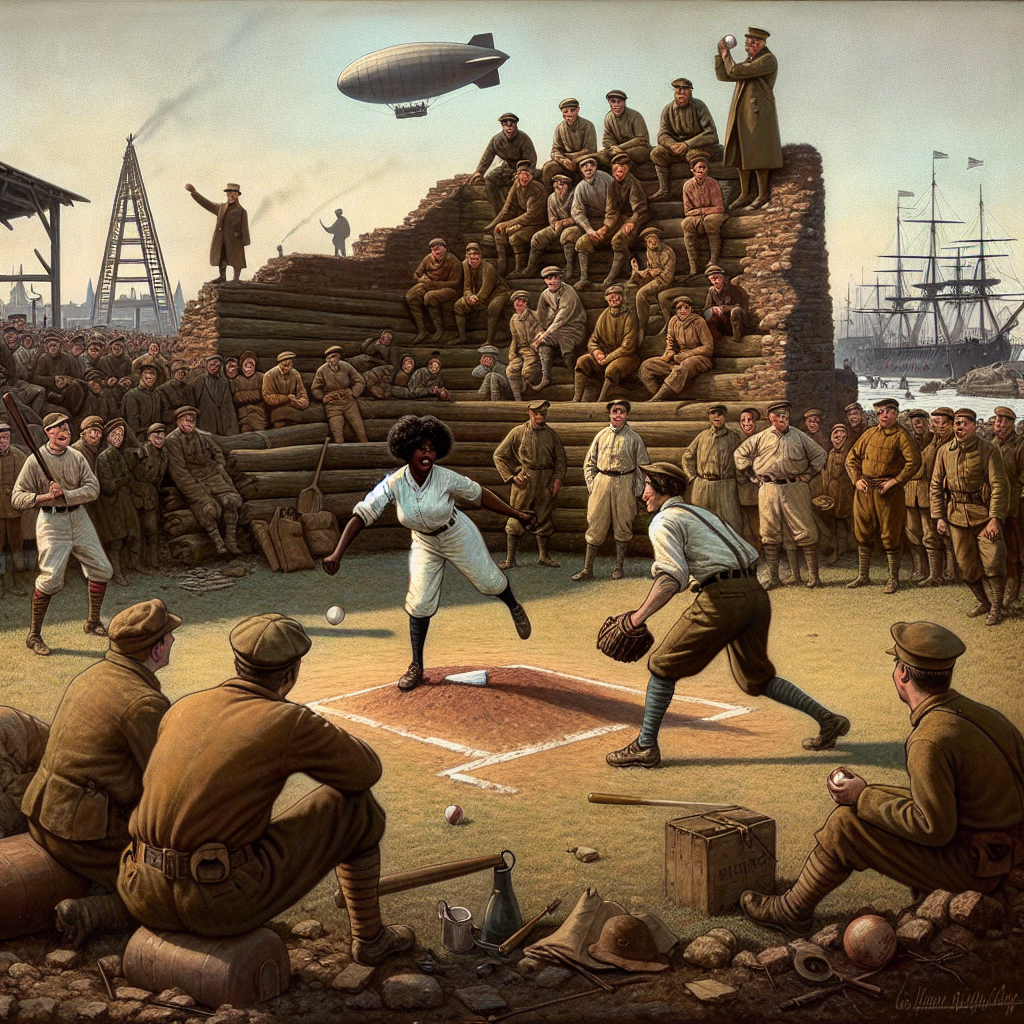
Baseball on the Front Lines: Armed Forces Teams and Exhibition Games
Baseball’s reach extended beyond the home front, finding its way to military camps and even battlefields. The U.S. Armed Forces recognized the value of baseball in maintaining morale among troops and organized countless exhibition games and leagues within military installations.
Many professional players who were enlisted took part in these games, providing high-quality entertainment and diversion for their fellow soldiers. Iconic figures like Joe DiMaggio and Bob Feller played in numerous military games, often in far-flung and austere environments. These exhibitions transcended mere recreation; they were crucial in forging camaraderie and providing a mental break from the rigors of war.
Moreover, these games fostered international goodwill. In places like the Pacific front, baseball exhibitions involving American troops attracted local spectators, helping to spread the sport’s popularity beyond U.S. borders. This served not only as an entertaining pastime but also as an informal tool of cultural diplomacy, illustrating the universal appeal of baseball and its potential role in fostering international unity.
The War Bond Games and Other Fundraising Efforts
Baseball’s patriotic role during World War II wasn’t confined to entertainment alone; it also played a vital part in fundraising efforts. The War Bond games were a notable example of this. Special exhibition games were arranged to raise money for war bonds, contributing significantly to the war effort.
These games often featured star players alongside celebrities from other walks of life, including Hollywood actors, creating a massive draw for the public. The War Bond games demonstrated the interconnectedness of sport and patriotism, illustrating how baseball could mobilize financial support for crucial national causes.
In addition to War Bond games, teams and individual players engaged in numerous other fundraising activities. From autograph sessions to memorabilia auctions, the baseball community rallied to contribute to the war effort in as many ways as possible. This period showcased the sport’s ability to galvanize public action and support for broader national objectives, further embedding baseball into the American cultural and patriotic fabric.
Technological Changes and Innovations during the War
While the war posed significant challenges, it also spurred technological developments within baseball. One such innovation was the increased use of night games. Before the war, night games were relatively uncommon, but wartime travel restrictions and the necessity to maximize the use of stadiums led to a surge in their popularity.
Night games allowed more flexibility in scheduling, which was crucial given the myriad constraints teams faced. This period helped to normalize night games, leading to their widespread adoption in the post-war era. This change was instrumental in attracting larger crowds, including working adults who couldn’t attend day games.
Additionally, the war hastened advancements in sports broadcasting. As technology improved, radio broadcasts of games became more sophisticated and widespread, ensuring that fans across the country could follow their favorite teams regardless of geographical limitations. These innovations not only sustained interest in baseball during the war but also paved the way for the sport’s modernization and expansion in subsequent decades.
Conclusion
The early 1940s were a transformative period for baseball, characterized by substantial challenges and profound adaptations. Amidst the backdrop of global conflict, the sport managed to not only survive but thrive in unexpected ways. From the depletion of its player base and the rise of the All-American Girls Professional Baseball League to the morale-boosting games held on battlefronts and the technological advancements in broadcasting and night games, baseball’s journey through World War II is a testament to its resilience and adaptability.
Baseball during World War II did much more than provide entertainment; it became a symbol of continuity and hope. It rallied communities, supported the war effort through fundraising, and contributed significantly to maintaining national morale. The era also underscored the inclusive and expanding nature of the sport, with women stepping into professional roles and baseball reaching international audiences through the presence of American troops.
The legacy of baseball during World War II is profound and lasting. The innovations and societal shifts it heralded had long-term implications for the sport and American culture at large. By navigating through this tumultuous period with tenacity and creativity, baseball strengthened its place as America’s pastime, solidifying its significance in the nation’s history.