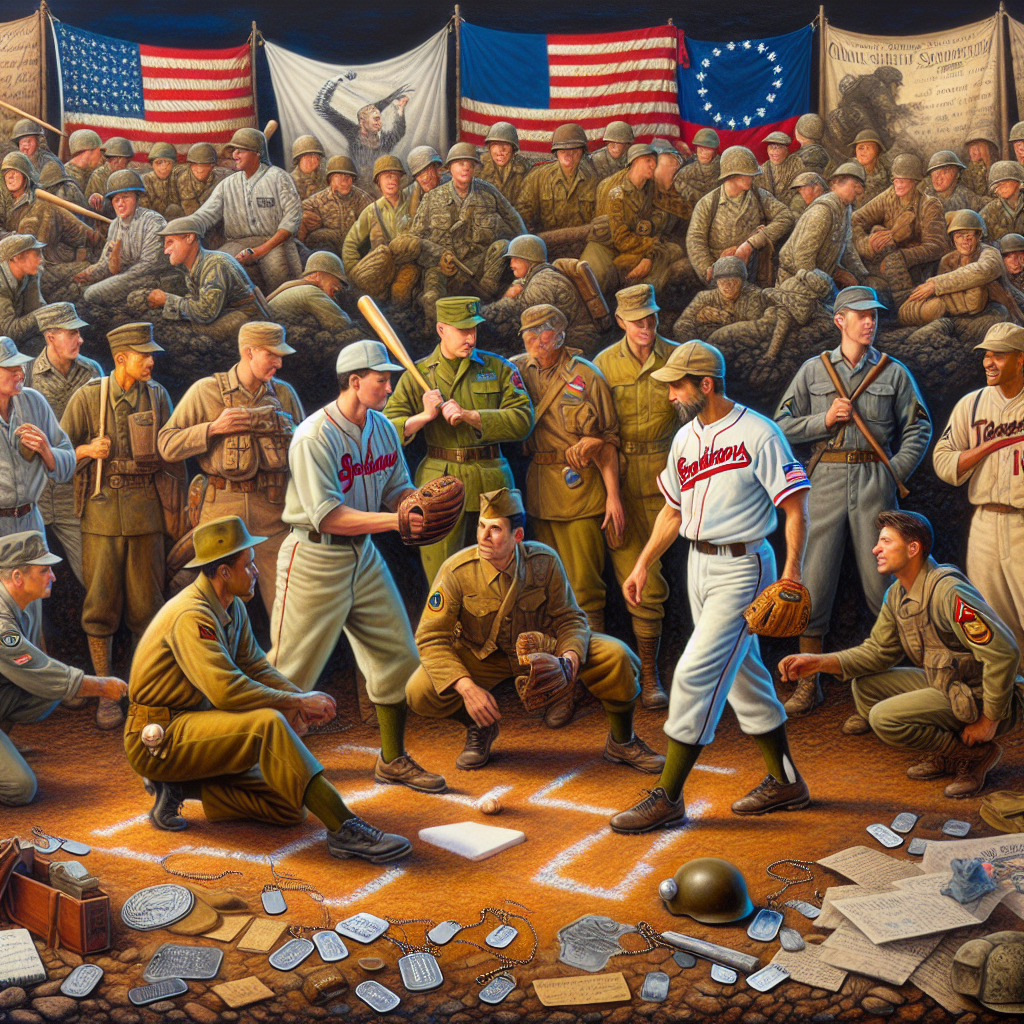
For over a century, the connection between baseball and the American soldier has been as enduring as America’s pastime itself. The unique bond began during the Civil War when soldiers played the game to relax and connect amidst the horrors of warfare. Since then, the sport has transcended its role as just a game, becoming a source of joy, camaraderie, and even therapy for servicemen and women across turbulent times. In the dusty fields and foreign lands where American soldiers have deployed, the crack of a bat and the unity of a team have brought solace, entertainment, and a sense of normalcy.
Baseball stands as a testament to the American spirit, its values mirrored in the resilience and perseverance of those who serve in the military. The fields of play have not only hosted professional athletes but also soldiers driven by duty; many have triumphed in the sport and sacrificed on the battlefield. From Abner Doubleday, who played a mythic role in the game’s formation, to Ted Williams, who paused a Hall of Fame career to serve in World War II and Korea, baseball and military service have been inextricably linked, illustrating a shared narrative of dedication and patriotism.
This article explores the historical footprint of baseball within the military, illustrating how this beloved sport has influenced and reflected the societal values of America through each generation. As we delve into the stories of players turned soldiers and soldiers turned players, we bear witness to the enduring connection between the national pastime and the American Armed Forces. These tales of courage and heroism on and off the field paint a vivid picture of the sacrifices made and the unique role baseball has played in soldier’s lives.
Civil War Beginnings:
The Civil War was a pivotal event not only in the history of the United States but also in the development and dissemination of baseball. During the tumultuous years of the 1860s, soldiers from both the Union and Confederate armies found themselves with downtime amidst the battles. Baseball provided a welcome distraction, offering soldiers a way to momentarily escape war’s brutal realities and forge bonds of camaraderie among their comrades. The game’s popularity soared as soldiers carried their passion for it back to their hometowns after the war’s conclusion that contributed significantly to its national spread.
Abner Doubleday, often mythologized as the founder of baseball, was, in fact, a Union general during the Civil War. While he did not invent the game as legend suggests, his connection to baseball underscored the sport’s presence during this formative period. Across battlefields and makeshift camps, baseball became a common sight. It was familiar to soldiers from various backgrounds, serving as a reminder of home, instilling a sense of normalcy, and bridging cultural divides—a true unifying force in a nation divided by conflict.
The Civil War thus served as an unwitting catalyst for the spread of baseball, embedding it deeply in the American consciousness. As soldiers returned home, they carried the love for baseball into civilian life, laying the groundwork for its expansion and solidifying its role as America’s pastime. This laid the foundation for baseball’s presence in the military and society at large, a relationship still cherished today.
World War I and the Military Baseball League:
As World War I engulfed the globe, the United States’ entry into the conflict brought baseball and the American soldier to the forefront. The need for morale-boosting activities became imperative, and baseball seamlessly fit the bill. Major League Baseball (MLB) faced the prospect of losing players to military service, so the “Work or Fight” order issued by the United States Provost Marshal General during 1918 required capable men to contribute to the war effort, either through work or active combat, and baseball was deemed an acceptable work for morale purposes.
Thus arose the Military Baseball League, formed to maintain the soldier’s morale during their service. Major and minor league players found themselves forming teams, competing against each other, and playing in stadiums erected in military camps both in the United States and Europe. The league not only entertained the troops but also sustained their spirits, creating an environment of familiarity and comfort amidst the chaos of war. Great players like Christy Mathewson and Ty Cobb donned military uniforms, exemplifying the intertwining of baseball and military duty.
This period saw the rise of military-specific baseball leagues that upheld and popularized the game within American and Allied forces. It highlighted the recognition of baseball as not just a game but a valuable ally to the morale and emotional welfare of the soldier. This concept would carry through subsequent wars as baseball firmly established a role within the military framework.

World War II and the Golden Age of Baseball:
World War II marked one of the most significant intersections of baseball and military service. As America plunged into global conflict, baseball became deeply woven into the fabric of wartime society. The event saw numerous baseball stars put down their bats and gloves to take up arms. Over 500 major league players, including legends like Joe DiMaggio, Stan Musial, and Yogi Berra, enlisted to serve their country. Baseball paused on its field to support the national effort, underscoring its cultural relevance.
Service personnel continued to play baseball during their deployment, where makeshift diamonds popped up from the South Pacific to Europe. The sport provided vital respite and a slice of home, affirming a sense of commonality and community among soldiers in harsh environments. Games were arranged whenever possible, and soldiers filled stadiums overseas or marked dusty grounds with makeshift bases; the spirit of the game lived on.
Women, too, played a crucial role in sustaining baseball’s presence during wartime through the All-American Girls Professional Baseball League (AAGPBL). With many male athletes conscripted, this league proved instrumental in keeping the sport alive on American soil, showcasing female talent and preserving baseball’s connection to American culture.
World War II demonstrated the power of baseball as both a motivational force for soldiers and a symbol of American endurance. The players who returned to baseball enriched the game with their experiences and strengthened the bond between baseball, the military, and society.
The Korean and Vietnam War Era:
The Korean and Vietnam Wars witnessed baseball once again knitting the fabric of American identity within its military. During the Korean War, players like Ted Williams, who had already served in World War II, returned to military service. He famously flew combat missions as a fighter pilot, echoing the shared sacrifices of many others in uniform. Despite the conflict’s grueling nature, baseball provided continuity and hope for soldiers who yearned for familiar comforts and distractions.
Similarly, during the Vietnam War, baseball played a central role in boosting troop morale. Stars like Joe DiMaggio and Mickey Mantle visited troops, playing in exhibition games that lifted spirits and forged connections across the frontlines. Even though the Vietnam War remains one of the most controversial, baseball’s comforting presence endured. The US military continued to understand baseball’s power to boost morale, using it as a unifying force to buffer the soldiers against the war’s emotional toll.
The evolution of baseball alongside these conflicts highlights its adaptive nature and its continued value as a touchstone of American and military life, weathering challenges alongside the nation it represents.
Modern Day Contributions and Baseball’s Role in Recovery:
Today’s military recognition of baseball’s positive impact continues through initiatives aimed at the physical and psychological rehabilitation of soldiers. Organizations like the Wounded Warrior Amputee Softball Team (WWAST) have proven pivotal, offering wounded veterans a renewed sense of purpose and community via baseball. Through these programs, soldiers find healing and solace in the time-honored traditions of the sport, gaining empowerment, camaraderie, and physical strength.
Current MLB players and the league frequently engage in activities that support veterans and active servicemen. Whether it is hosting Pretreatment of awareness games, veteran-focused community services or integrating ceremonial practices like the flag ceremony, baseball solidifies its enduring appreciation for military personnel. The MLB’s participation in initiatives such as the “Welcome Back Veterans” program exemplifies its commitment to supporting those who served, fostering a community of respect and admiration.
As technology and international relations evolve, baseball adapts its role, continuing to serve as a balm to the relentless pace of the modern-day soldier’s life. The sport remains woven into the nation’s identity, upholding its legacy of service, sacrifice, and societal contribution through the lens of history.
Conclusion:
Baseball and the American soldier share a storied relationship, forged through war, peace, sacrifice, and unity. From the Civil War’s makeshift diamonds to the modern touchpoints of soldier recovery programs, this bond transcends beyond the boundaries of time, reflecting the very essence of American culture. Both institutions stand as testaments to American resilience, intricately woven through each other’s narratives, resonating deeply with notions of heroism, camaraderie, and sacrifice.
This relationship has enriched the legacy of baseball, granting it an honored place in military history. Across generations, soldiers have turned to the sport for respite, morale, and healing, finding in baseball a second family and a familiar haven amidst the uncertainties of service life. The tales of soldier-players, their sacrifices, and triumphs serve as inspiring narratives that continue to shape and strengthen the cultural fabric of nations.
As America looks to the future, the intertwining stories of baseball and the military carry forth the best of American virtues: courage, commitment, and an indefatigable spirit. Together, they continue to inspire, proving that the fields of play and the fields of combat, while distinct, both hold the timeless truths of sacrifice and service that enrich the legacy of a nation’s heart and pastimes.