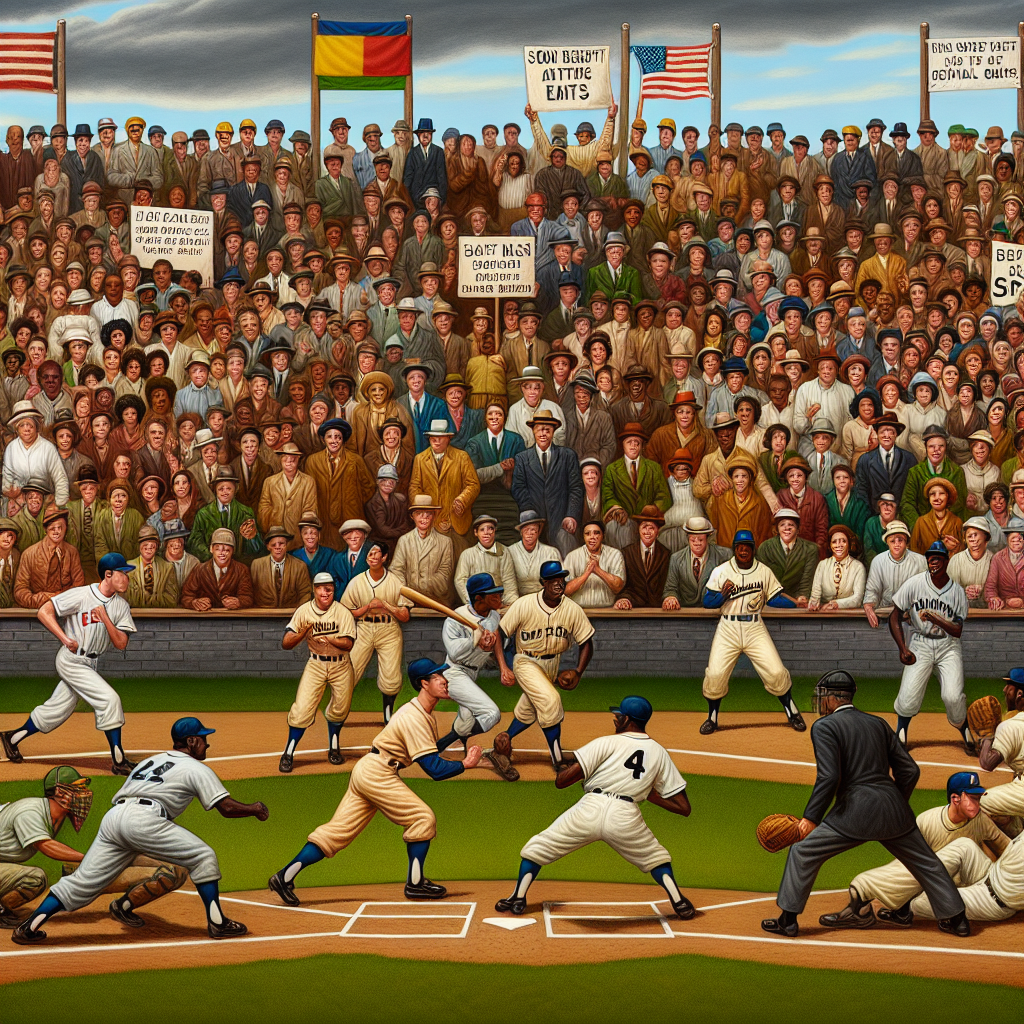
Baseball, often hailed as America’s favorite pastime, has played an integral role not just within the world of sports but across society as a whole. This has been especially poignant during pivotal moments of social change such as the Civil Rights movement. Baseball was more than just a game during this era; it was a social institution that mirrored the struggles, triumphs, and transformations occurring throughout the United States. Understanding the relationship between baseball and the Civil Rights movement provides insight into how the sport shaped and was shaped by the quest for equality and justice.
Before the integration of Major League Baseball (MLB), African American players were relegated to the Negro Leagues, where they displayed immense talent and prowess. The Negro Leagues were a beacon of hope within black communities, offering a sense of pride and a platform for African American athletes to showcase their skills despite systemic exclusion from MLB. The campaign for integration of these leagues with the major leagues was not only a sports issue but a milestone in the broader battle for civil rights.
The most legendary event marking baseball’s role in social change was the signing of Jackie Robinson to the Brooklyn Dodgers in 1947. Robinson broke the color barrier as the first African American to play in MLB in the 20th century. This landmark event symbolized not only a turning point in sports history but also a significant cultural shift. It forced baseball — and the larger society — to confront racial prejudice and added momentum to the burgeoning civil rights movement. Robinson’s presence on the field challenged the status quo and inspired many individuals both within and outside of sports to advocate for equality.
The Negro Leagues: A Legacy of Resistance and Triumph
Before Jackie Robinson, the Negro Leagues stood as a testament to resilience and excellence in the face of oppression. Established in the early 20th century, the leagues provided a space for black athletes to excel professionally, living by the mantra of “Separate but Superior.” These leagues were instrumental in fostering a vibrant community spirit and offering black athletes a chance to hone their talents at a professional level. Players such as Satchel Paige, Josh Gibson, and Cool Papa Bell were superstars who displayed unrivaled talent. Their performances were not just games; they were statements of existence and resistance against racial segregation.
The Negro Leagues served as an economic engine within black communities. Baseball games were social events that brought communities together and bolstered the black economy. The teams traveled widely, playing before sold-out crowds, and proved that the athletes were every bit as capable as their white counterparts. This legitimacy cast in stark relief the injustice of segregation and fueled the demand for civil rights and integration.
The integration of MLB began the dissolution of the Negro Leagues, as top players were gradually absorbed into MLB teams. While this was a significant step towards equality, it also signified the decline of a cherished institution that had fostered black pride and community during a challenging time. Nevertheless, the legacy of the Negro Leagues lives on as a critical chapter in both baseball and American history, symbolizing resilience in the face of adversity.
Jackie Robinson: Breaking Barriers
Jackie Robinson’s entry into the majors marked a watershed moment in not just sports, but in American history. When Branch Rickey, the Brooklyn Dodgers’ manager, approached Robinson with an invitation to join the team, it was not simply an offer to play baseball, but a call to action. Robinson’s debut in the majors came at a time when racial tensions in America were particularly high. His success and the grace with which he handled constant racism on and off the field put a spotlight on the possibilities of integration and equality.
Robinson’s career wasn’t just about him; it was about initiating conversation and action in a country struggling with its racial demons. His mere presence in white-dominated spaces forced audiences to confront the biases entrenched in society. Robinson’s perseverance in the face of adversity served as an inspiration for individuals engaged in the civil rights movement. He was more than just a baseball player; he was an activist and an enduring symbol of the fight for equality.
Beyond his contributions on the field, Robinson also made significant strides off it. He engaged in civil rights advocacy, working alongside leaders such as Martin Luther King Jr. Robinson used his platform to speak out against racial discrimination and advocate for equal opportunity, leaving a lasting impact on the Civil Rights landscape. His courage and determination made him a pivotal figure in advancing the cause of civil rights in America.

Impact on the Civil Rights Movement
Baseball played a vital role in the Civil Rights movement by providing a powerful platform from which issues of racial inequality were broadcasted and debated. The integration of baseball, spearheaded by courageous athletes like Jackie Robinson, demonstrated the potential for social change. This act of integration in one of the nation’s most beloved institutions served as a microcosm for what was possible on a broader societal level. It brought the idea of equality to households across the nation through the ubiquity of baseball games on the radio and eventually television.
This platform was invaluable during the Civil Rights era, a time when many other forms of entertainment, as well as daily life, were heavily segregated. The visibility of integrated teams and successful black athletes helped to subtly undermine the myths of racial superiority and inferiority, showing audiences that the only place race should matter was in the history books. In this way, baseball helped to humanize players of all races to those who might not have encountered them otherwise, helping to erode ingrained racial prejudices.
Moreover, the sport’s integration sent ripples of transformation through adjacent industries, contributing to societal shifts toward embracing diversity. From stadium hiring practices to team management, baseball’s influence extended beyond the diamond. These systemic changes showcased how sports could lead and not merely reflect cultural evolution, fostering an environment ripe for social justice advancement.
Baseball Icons and Their Continuing Influence
Long after Robinson’s historic debut, baseball continued to produce icons who became instrumental voices in the fight for civil rights. Players such as Curt Flood and Hank Aaron took up the mantle, confronting racial issues in their own right and setting the stage for subsequent generations of athletes who would leverage their celebrity for positive change.
Curt Flood’s refusal to accept a trade, leading to his challenge of the reserve clause, became a landmark in labor rights within sports, echoing broader societal concerns about fairness and autonomy. His actions culminated in the creation of free agency, reshaping professional sports and marking a significant win for athletes’ rights.
Hank Aaron, who faced severe racial animosity while breaking Babe Ruth’s home run record, became a poignant symbol of perseverance and dignity. His success in surpassing Ruth was not just a statistical triumph but a profound statement against racism and a victory for players of color everywhere. Aaron’s legacy, like Robinson’s, extended well beyond his time on the field, as he used his platform to engage in philanthropy and advocate for social justice.
The ripple effect of these players’ courage continues to influence not only baseball but all sports, as athletes today stand ever more willing to speak out against injustice and inequality, utilizing the sports platform as a formidable catalyst for societal reform.
Conclusion
Baseball’s intertwined history with the Civil Rights movement showcases how the sport has been an arena for social change, personal triumph, and enduring impact on American society. From the creation of the Negro Leagues to Jackie Robinson breaking the color barrier, and players like Curt Flood and Hank Aaron who continued the fight, the role of baseball has been both reflective and prescriptive of societal evolution.
The sport not only mirrored the struggles facing society but also actively participated in shaping the dialogue around civil rights. Its history is a testament to the power of sports to influence and inspire change beyond the confines of the box score. As players leveraged their influence to advocate for progress, baseball transitioned from a metaphorical battleground for equality to an emblem of what is achievable when sports and society unite in common cause.
Baseball in the era of the Civil Rights struggle wasn’t just about players on a field; it was about rewriting narratives, breaking barriers, and challenging the status quo. Even today, the legacy of those who fought for change through baseball continues to be felt, inspiring new generations of athletes who see the sport as a platform for social justice and equality.