
Baseball, America’s pastime, has evolved significantly since its inception in the 19th century. This transformation is epitomized in the figure of George Herman “Babe” Ruth, a legendary player whose influence reshaped the game, particularly through the emergence of the home run as a key element of baseball. This article delves into the history of baseball, focusing on its early rules and how Ruth’s era heralded a new age in the sport.
Early Days of Baseball
The origins of baseball are somewhat murky, with various forms of bat-and-ball games being played in different cultures for centuries. However, the version of baseball that evolved into the modern game started taking shape in the United States in the early 19th century. The New York Knickerbockers, formed in 1845, are often credited with standardizing many early rules of the game.
Early baseball, known as “town ball” or “rounders,” had varied rules depending on the region. The Knickerbocker Rules, established in 1845, began to standardize the game, including nine-player teams and three-strike counts, though it differed significantly from today’s game. For instance, pitchers threw underhand, and a ball caught after one bounce was considered an out.
The Deadball Era
The period from the 1900s to the early 1920s is known as the Deadball Era. It was characterized by low-scoring games and a lack of home runs. The ball, often made with a rubber core, did not travel far when hit. This era emphasized speed, strategy, and skills like bunting and base stealing.
Fielding gloves were rudimentary, and the fields themselves were often rough and uneven, affecting play. The style of play was dramatically different, focusing on small, incremental advances around the bases rather than the power hitting that would come to define later eras.
Babe Ruth and the Game’s Transformation
Enter George Herman “Babe” Ruth, a figure who would single-handedly change the face of baseball. Ruth started his major league career in 1914 as a pitcher for the Boston Red Sox. However, his prowess at the plate soon overshadowed his pitching skills. In 1919, Ruth hit a record 29 home runs in a season, a feat unheard of in the Deadball Era.
Ruth’s success with the home run coincided with several key changes in the game. In 1920, the rules were changed to count a ball that bounced into the stands as a home run rather than a double. The same year, a new live-ball era began as the construction of baseballs changed, making them bouncier and capable of being hit farther.
The Live-Ball Era
The Live-Ball Era, ushered in by Ruth and the new rules, was a dramatic shift from the Deadball Era. Scoring increased, and the home run became a central aspect of the game. Ruth’s style of powerful hitting changed team strategies and excited fans, drawing larger crowds and increasing baseball’s popularity.
This era also saw significant changes in how baseball was played and perceived. The emphasis on power hitting led to changes in batting techniques and strategies. Pitchers, in response, began to develop new pitches and strategies to counteract the powerful hitters.
Ruth’s Impact and Legacy
Babe Ruth’s impact on baseball extends beyond his impressive statistics. He became a larger-than-life figure, embodying the spirit of the Roaring Twenties. Ruth’s charismatic personality and unprecedented skill made him a national icon and helped to cement baseball as America’s national pastime.
His success also had a profound effect on how the game was marketed and consumed. Baseball games became major events, drawing crowds and media attention. Ruth’s celebrity status was leveraged to promote the game, laying the groundwork for the modern sports celebrity.
Reflection
The history of baseball, particularly through the lens of Babe Ruth’s career, is a story of transformation and evolution. From its early days with varied and informal rules to the thrilling spectacle of the live-ball era, baseball has mirrored changes in American society and culture. Babe Ruth, more than any other figure, symbolized and propelled this transformation, turning baseball into not just a game, but a cornerstone of American identity.
Babe Ruth’s legacy is not just in the records he set or the games he won, but in how he changed the nature of the game itself. His embrace of the home run captivated fans and altered the strategy and style of baseball, making it a more dynamic and exciting sport. His influence continues to be felt today, both in the ongoing popularity of baseball and in the enduring image of the home run as the pinnacle of sporting achievement.
The story of baseball is one of constant evolution, reflecting the changing times and tastes of America. As we look back on its history, it is clear that figures like Babe Ruth were not just athletes but catalysts for change, shaping the game in their image and leaving a legacy that endures well beyond their time on the field.
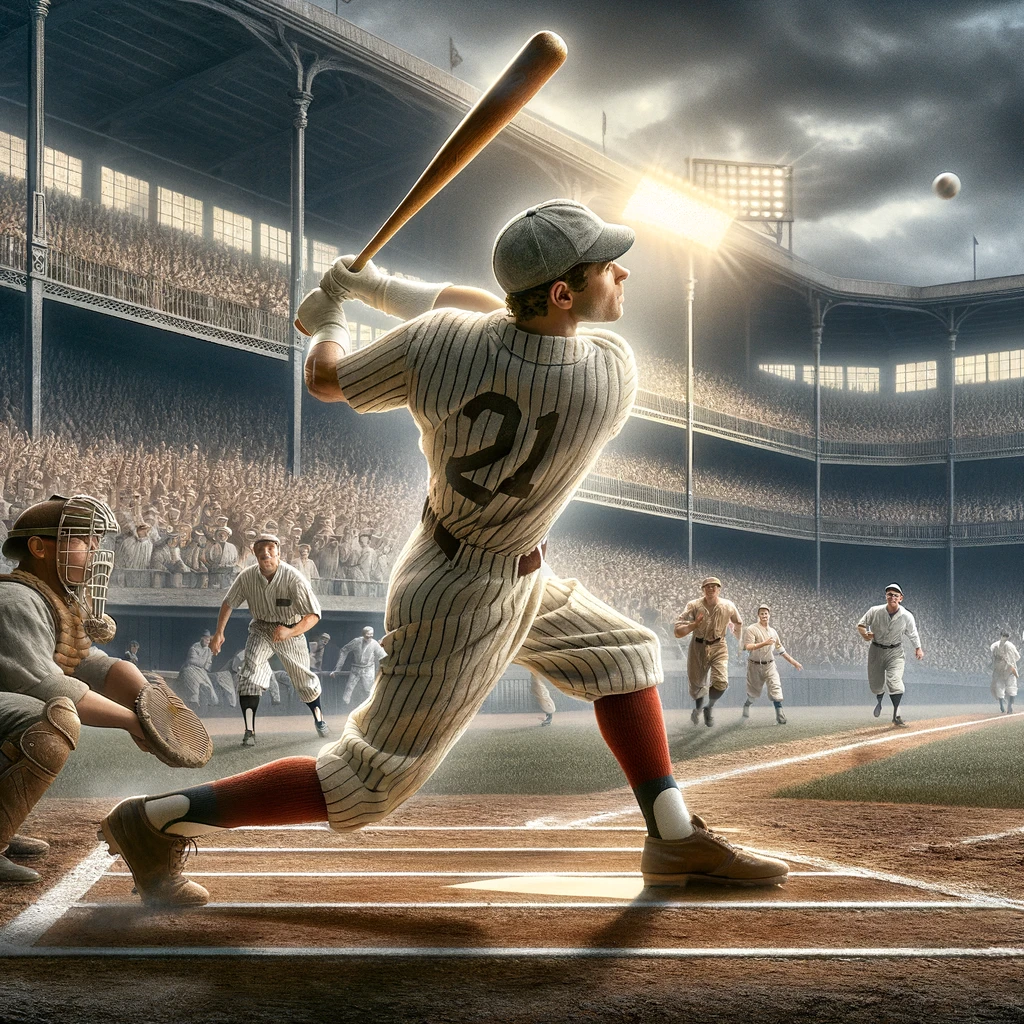
The Evolution of Baseball Rules
Babe Ruth’s era not only introduced the live-ball and the home run-centric style of play, but it also coincided with significant changes in the rules of baseball. One notable change was the introduction of a livelier ball, which was easier to hit for distance. This fundamentally changed how pitchers and batters approached the game.
The introduction of a uniform, harder ball also led to changes in pitching techniques. The spitball, a pitch where the ball was altered using saliva or other substances, was banned in 1920, though some existing spitball pitchers were allowed to continue using it until they retired. This change marked a move towards standardizing the equipment and playing conditions in baseball, creating a more predictable and fair game.
The Impact on Strategy and Player Roles
With the rise of power hitting, teams began to reevaluate their strategies. The emphasis shifted from small ball tactics like bunting and stealing bases to a focus on hitting home runs. This change also impacted player roles and the types of skills valued in players. Sluggers, or power hitters, became highly prized, changing the dynamics of team building and player development.
The rise of home runs also led to changes in how ballparks were designed. Newer stadiums started to accommodate the longer hits, with outfield walls placed farther from home plate. This architectural change was both a response to and a catalyst for the changing style of play.
Global Influence and Expansion
Babe Ruth’s impact wasn’t confined to the United States. His fame and the appeal of the home-run-heavy style of play helped to popularize baseball around the world. Ruth himself was part of several exhibition tours, including a famous trip to Japan in 1934, which played a significant role in popularizing baseball in Asia.
As baseball spread globally, it began to evolve in different ways in different countries, adapting to local cultures and preferences. However, the core aspects of the game, influenced heavily by the changes during Ruth’s era, remained largely consistent, demonstrating the universal appeal of the sport.
Legacy of the Babe Ruth Era
The legacy of Babe Ruth and the changes he brought to baseball are still evident today. The focus on power hitting, the excitement of the home run, and the celebrity status of top players can all be traced back to Ruth’s influence on the game.
Furthermore, Ruth’s era set the stage for the integration of baseball, which would occur a few decades later with players like Jackie Robinson breaking the color barrier. The increased popularity and commercialization of the sport, thanks in part to Ruth, made it a more significant platform for social change.
Conclusion
The history of baseball is rich and complex, with Babe Ruth’s era marking a pivotal chapter in its evolution. His influence reshaped the game from a strategic, technical, and cultural perspective, setting the stage for the modern era of baseball.
As we reflect on the history of baseball, it’s clear that the evolution of the game is a mirror to the changes in society. The rise of the home run, the transformation of player roles, and the global spread of the sport are all testaments to baseball’s ability to adapt and thrive. Babe Ruth, more than any other figure, embodies this spirit of change and progress, his legacy forever etched in the annals of baseball history.
In conclusion, the story of Babe Ruth and the changing game is not just a tale of sports evolution; it’s a narrative about innovation, adaptation, and the enduring appeal of America’s pastime. It’s a reminder that the game of baseball, like life itself, is always evolving, always presenting new challenges and opportunities.
Frequently Asked Questions
1. How did Babe Ruth transform the game of baseball with his playing style?
Babe Ruth revolutionized baseball fundamentally through his extraordinary talent for hitting home runs, an aspect of the game that wasn’t emphasized before his era. In the early days of baseball, the game was predominantly small-ball focused, meaning that teams played strategically, relying on bunts, singles, and base-stealing to score runs. Ruth’s emergence shifted the game’s perspective completely. He demonstrated that a single player could decisively impact the score by hitting home runs, driving in multiple runs at a time. This power-hitting approach not only increased the excitement for fans but also changed how teams and players strategized both offensively and defensively. Ruth’s ability to hit home runs consistently brought the long ball to the forefront, making it an integral part of the game and paving the way for future generations of sluggers.
2. What impact did Babe Ruth have on the rules of baseball?
Babe Ruth’s influence was so profound that it indirectly led to changes in some baseball rules and norms. Before Ruth, the “dead-ball” era was prevalent, characterized by low-scoring games and pitchers dominating. As Ruth popularized the home run, baseballs were manufactured to be livelier – a change often linked to the transition from this dead-ball period. Ruth’s popularity and success also influenced stadium designs, with more emphasis on dimensions favoring hitters and accommodating larger crowds eager to witness his power-hitting spectacles. Moreover, the rise of home-run hitting highlighted the need for better guidelines and officiating on home-run fair and foul balls, further refining the rules. In essence, while Ruth may not have directly caused rule changes, his playing style and its repercussions necessitated adjustments and innovations in the game’s framework.
3. How did Babe Ruth’s popularity affect baseball’s cultural significance in America?
Babe Ruth’s legendary status transcended the sport, elevating baseball to newfound popularity and helping to entrench it as America’s pastime. Previously, baseball was mostly a local affair, but Ruth’s charisma and awe-inspiring feats captivated national attention, drawing fans beyond the traditional local bases. Radio broadcasts of games expanded during his career, allowing millions of Americans to connect with games in real-time, creating a shared national experience. His larger-than-life personality and exceptional performances captivated not only regular enthusiasts but also inspired non-traditional audiences, including women and casual fans. Ruth effectively became America’s first sports superstar, paving the way for athletes’ roles as cultural icons and demonstrating how a single athlete could elevate a sport’s standing in national consciousness.
4. What were the major changes in baseball strategy following Babe Ruth’s career?
Following Babe Ruth’s career, baseball strategy underwent a significant transformation, primarily around the offensive approach. The emergence of the ‘home run’ as a pivotal scoring method shifted strategies from the previous small-ball tactics to more aggressive, power-centered approaches. Teams began recruiting and training players capable of powerful hits, recognizing the potential for immediate game-changing plays. Pitching strategies also evolved to counteract the power hitters, with an emphasis on developing pitchers who could control the long ball by using varied pitches aimed to induce swings and misses or ground balls. Additionally, defensive strategies were adapted to this new style of play, placing premium value on outfielders able to track deep fly balls effectively. In sum, Babe Ruth emphasized the value of the home run, leading teams to recalibrate their strategies both offensively and defensively in contemporary baseball.
5. How did Babe Ruth help advance baseball’s integration into mainstream media?
Babe Ruth played a crucial role in integrating baseball into mainstream media, significantly influencing the sport’s enormous growth in popularity during the early 20th century. Already in the era of burgeoning mass media like newspapers, radio, and newsreels, Ruth’s exploits were widely covered by the press, making him a household name. His charisma and knack for dramatic, memorable performances made him a media darling, ideal for the popularization of sports journalism. Ruth utilized his fame to engage actively with fans and the press, creating a media prototype for the athlete as a celebrity. Furthermore, his era coincided with the spreading influence of radio broadcasts, marking the beginning of live sports coverage. His appeal and athletic prowess made Ruth the perfect figure to establish baseball’s deep connection with media, turning the sport into a prime subject for widespread coverage, and ensuring its enduring place in American culture.