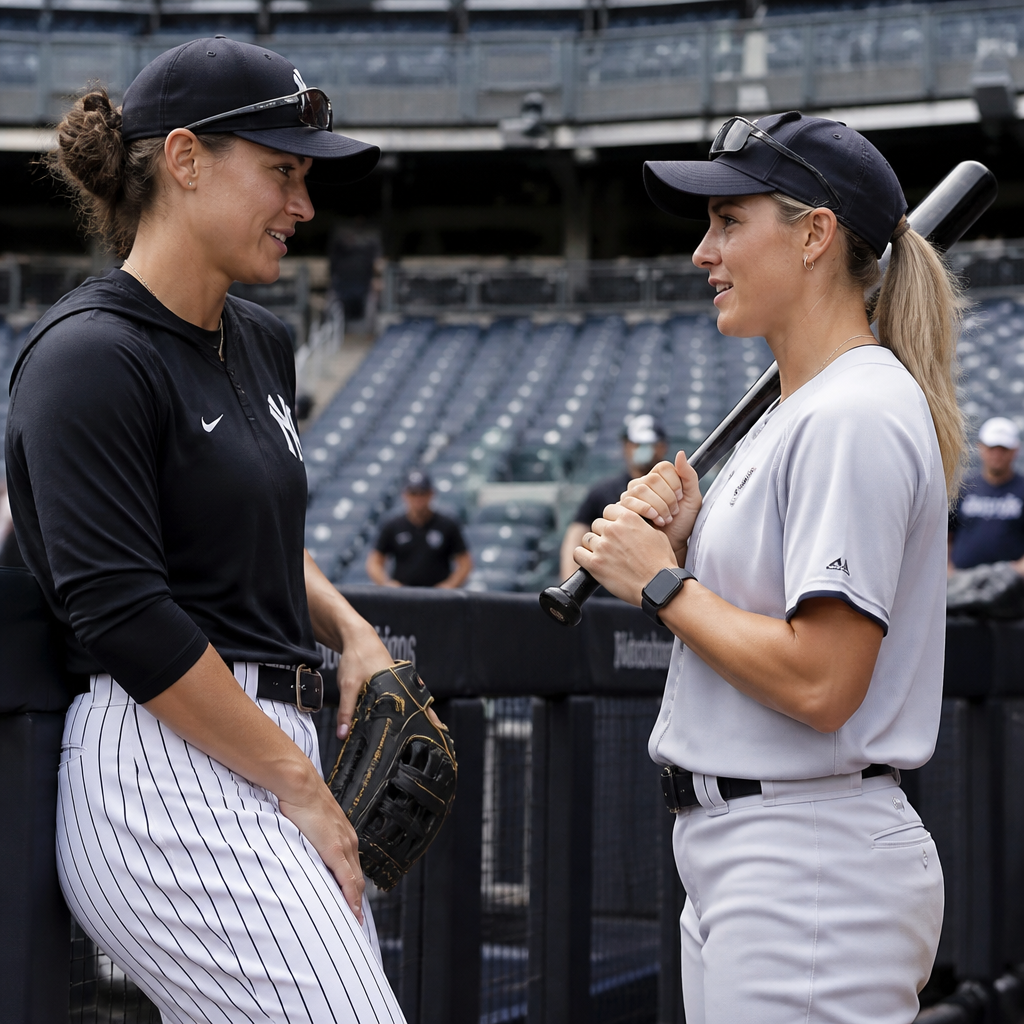
Baseball is changing in ways that would have seemed improbable even a generation ago, and women are driving much of that change from the dugout, broadcast booth, front office, training room, classroom, and grassroots field. In this hub article on women in baseball, “miscellaneous” does not mean marginal; it refers to the wide range of roles, pathways, and innovations that do not fit neatly into one lane yet collectively shape the sport’s future. Women in baseball now influence player development, scouting, operations, marketing, analytics, officiating, media coverage, and fan culture. That matters because baseball’s long-term health depends on widening participation, improving decision-making, and reflecting the communities that support the game. When more women enter baseball and advance on merit, the sport gains talent, perspective, and credibility.
To understand how women are shaping baseball, it helps to define the landscape. “Women in baseball” includes professional players, coaches, executives, umpires, athletic trainers, biomechanists, content creators, historians, and youth organizers. It also includes girls who play baseball rather than softball and women who work adjacent to the game in legal, sponsorship, event, and community roles. Over the past decade, I have watched clubs move from treating women’s participation as a novelty to recognizing it as a competitive advantage. The shift is not complete, and barriers remain real, but the direction is unmistakable. Major League Baseball, MiLB organizations, independent leagues, collegiate programs, and international federations are all expanding opportunities, sometimes unevenly, yet meaningfully.
The significance extends beyond representation. Diverse staffs make better decisions when they combine scouting instincts, performance data, medical insight, and communication styles. Youth baseball grows when girls can see credible pathways, not symbolic gestures. Media coverage improves when stories move past “first woman to” headlines and explain performance, strategy, and leadership with the same seriousness given to men. Fans benefit too. A broader baseball culture invites new audiences without weakening tradition. In practice, that means more informed broadcasts, better run academies, stronger player care systems, and smarter front offices. This article serves as a hub for the miscellaneous side of women in baseball by mapping the main areas where influence is already visible and likely to expand.
Any honest assessment must also acknowledge baseball’s structural constraints. Professional roster spots are scarce, hiring pipelines are relationship-driven, and old assumptions still affect who gets mentored, interviewed, and promoted. Baseball is also highly specialized. A woman entering player development may need fluency in Rapsodo data, TrackMan outputs, strength programming, and travel logistics, not just general sports knowledge. The encouraging reality is that many women now possess exactly that expertise. Their work is not symbolic. It is measurable in cleaner operations, better instruction, stronger community engagement, and more sophisticated analysis. The future of baseball will be shaped not by a single breakthrough, but by sustained contributions across many connected roles.
Women are expanding baseball careers far beyond the playing field
The biggest misconception I still encounter is that women in baseball are discussed mainly in relation to playing professionally. Playing matters, especially for visibility, but the sport’s future is also being built by women in jobs that directly affect wins, losses, and organizational stability. Front office leadership is a prime example. Kim Ng’s tenure as general manager of the Miami Marlins demonstrated that decades of scouting, league office experience, transaction expertise, and player personnel judgment translate into top baseball authority. Her appointment was not a ceremonial milestone. It put a highly qualified executive in charge of roster construction, budget choices, and competitive planning.
Coaching and player development show similar progress. Alyssa Nakken’s role with the San Francisco Giants helped normalize the presence of women on major league coaching staffs. Rachel Balkovec’s rise, including managing in the Yankees’ minor league system, proved that player development leadership depends on teaching skill, credibility, and preparation. In practical terms, coaches today must translate bat path concepts, defensive positioning models, recovery protocols, and game-planning information into actions players trust. Women doing this work successfully are changing baseball not by exception, but by competence that athletes recognize immediately.
Scouting and analytics are also opening doors. Modern evaluation blends live looks with video review, biomechanical analysis, and probabilistic models. Women with backgrounds in data science, kinesiology, sports management, and performance analysis are contributing to draft decisions, player acquisition, and injury prevention. I have seen organizations improve internal debate simply by adding staff who ask different but informed questions: Is this pitcher’s velocity gain sustainable? Does a hitter’s chase rate reflect approach or poor swing decisions under specific counts? Is a prospect’s defensive value being underrated because observers overfocus on body type? Better questions often produce better rosters.
Broadcasting and journalism should be included in this career expansion because storytelling shapes how the public values expertise. Analysts such as Jessica Mendoza helped move baseball commentary toward mechanics, strategy, and preparation rather than surface-level narrative. When women cover baseball with technical precision, they train audiences to hear authority without filtering it through outdated expectations. That shift matters for the next generation of hiring, because public legitimacy often precedes institutional change.
Girls’ baseball and grassroots development are creating the next pipeline
If the future of baseball is the question, grassroots access is the answer. Girls’ baseball remains one of the most important and underappreciated growth areas in the sport. For years, many girls who loved baseball were steered toward softball because it appeared to be the only organized option. Softball is a strong sport in its own right, but it is not a substitute for baseball for players who specifically want baseball’s field dimensions, pitching mechanics, game rhythms, and developmental pathways. Expanding girls’ baseball means preserving choice and building a true pipeline.
Organizations such as Baseball For All have played a decisive role here by creating tournaments, camps, and visibility for girls who want to stay in baseball. MLB’s Trailblazers Series has also provided elite instruction and national exposure. These programs matter because talent needs repetition, competition, and recognition. A girl who can pitch, catch, or hit at a high level improves faster when she faces peers with similar ambition and receives coaching tailored to baseball rather than a generic adaptation. I have seen confidence change almost overnight when players realize they are not alone and that their goals are legitimate.
The grassroots level also includes parents, local leagues, school administrators, and community sponsors. Small operational choices have outsized effects: whether registration forms assume boys only, whether coaches know how to integrate girls fairly, whether uniforms fit properly, whether media coverage features female players as athletes rather than curiosities. Inclusive infrastructure is not abstract policy. It is the set of details that determines who returns next season.
| Development area | Common barrier | What effective programs do |
|---|---|---|
| League access | Girls are redirected to softball automatically | Offer baseball-specific registration and clear eligibility policies |
| Coaching | Lack of instructors familiar with girls’ baseball pathways | Use trained coaches and visible female mentors |
| Competition | Few peer groups with similar skill levels | Create tournaments, showcases, and regional teams |
| Visibility | Players feel isolated or overlooked | Highlight achievements in local media and club channels |
| Retention | Facilities, equipment, and culture feel exclusionary | Standardize inclusive logistics and family communication |
International baseball adds another layer of momentum. The Women’s Baseball World Cup and national team programs show girls that baseball can lead to global competition, not just local participation. Countries including Japan, Canada, the United States, and several Latin American and Asian programs have contributed to higher standards of play. As more federations invest in women’s baseball, the grassroots pipeline becomes more credible, and credibility is what sustains long-term participation.
Leadership, technology, and operations are changing how clubs make decisions
Another major area within women in baseball miscellaneous coverage is operational influence. Baseball organizations are complex businesses wrapped around performance. Travel, nutrition, scheduling, medical coordination, compliance, communications, ticketing, partnerships, and clubhouse processes all affect results. Women increasingly lead and improve these systems. In my experience, some of the most respected people in baseball are not the loudest voices but the operators who make each day function without error. Their impact appears in reduced confusion, better athlete support, smoother call-ups, and more consistent standards across affiliates.
Technology has accelerated this shift because baseball now rewards interdisciplinary skill. A performance department may rely on Hawk-Eye tracking, force plates, motion capture, workload monitoring, and video synchronization. To convert those tools into value, clubs need people who can connect data to coaching language and risk management. Women working in sports science and analytics are doing exactly that. They help answer applied questions: whether a pitcher’s arm slot drift is fatigue related, whether a hitter’s timing issue stems from vision, mechanics, or decision-making, and whether return-to-play benchmarks are realistic. This is not support work at the margins. It is competitive infrastructure.
Leadership style matters too. Many successful women in baseball lead with clarity, preparation, and direct accountability rather than performative toughness. That is effective in a sport where long seasons expose empty management habits quickly. Players and staff do not care about slogans when travel breaks down, communication is inconsistent, or medical information gets lost between levels. They care about competence. Women who deliver that consistently are redefining what authority looks like in baseball, and that cultural recalibration may be one of the sport’s most durable changes.
There are still constraints. Hiring often depends on prior access, and baseball’s internship pathways can be underpaid or geographically limiting. Some organizations promote inclusion publicly while moving slowly in senior roles. Even so, the pattern is positive. Clubs that hire broadly tend to uncover talent others ignored, and once women prove value in technical or leadership roles, resistance usually weakens under the weight of results.
Culture, media, and fan expectations are moving the game forward
Culture change in baseball is often dismissed as secondary to on-field performance, but that misses how deeply culture influences recruitment, retention, and public trust. Women are helping modernize baseball culture by changing how the sport talks about expertise, ambition, and belonging. In media, that means more detailed coverage of women’s achievements and fewer novelty frames. In fan spaces, it means recognizing women not only as companions to the game but as statisticians, collectors, scorekeepers, historians, fantasy players, and deeply informed supporters. Baseball has always had these women; the difference now is that visibility is catching up to reality.
Digital platforms have accelerated this recognition. Podcasts, newsletters, short-form video, and social media analysis allow women to build audiences through insight rather than gatekeeper approval. That matters because baseball knowledge can now earn trust in public, one breakdown at a time. A creator explaining pitch tunneling, roster rules, or defensive run value with accuracy can influence fan understanding just as effectively as a traditional columnist. Teams notice this shift because modern fandom is partly educational. The people who explain the sport well help sustain interest in it.
For the game itself, the benefit is practical. A more inclusive baseball culture attracts more workers, smarter students, broader sponsorship interest, and families who want environments aligned with contemporary values. None of this requires lowering standards or rewriting baseball’s identity. It requires applying the same standard everywhere: if someone can teach, evaluate, lead, report, or compete at a high level, baseball should use that talent. Women are proving every day that the talent exists across the sport’s miscellaneous spaces, from youth diamonds to executive offices. If you follow women in baseball, treat this article as a starting hub, then keep exploring the people, programs, and pathways that are already reshaping the game for the better.
Frequently Asked Questions
How are women shaping the future of baseball beyond playing on the field?
Women are influencing baseball at nearly every level of the sport, and that wider impact is one of the biggest reasons the game is evolving so quickly. While public attention often focuses on players, the future of baseball is also being shaped by women working in coaching, scouting, player development, analytics, strength and conditioning, athletic training, sports psychology, broadcasting, officiating, education, and executive leadership. These roles affect how athletes are identified, how they are trained, how teams are built, and how fans understand the game.
In player development, for example, women are contributing to modern approaches that blend biomechanics, data analysis, communication, and individualized coaching. In front offices, they help organizations make smarter long-term decisions about recruitment, performance, and culture. In broadcasting and journalism, women are expanding the conversation around baseball by bringing expertise, nuance, and new perspectives to coverage. At the grassroots level, women are starting leagues, leading clinics, mentoring young athletes, and creating more inclusive pathways into the sport.
What makes this especially important is that baseball’s future depends on more than talent alone. It depends on access, innovation, leadership, and community. Women are helping strengthen all four. Their presence across so many areas of the game is not symbolic; it is practical, measurable, and increasingly central to how baseball grows and adapts.
Why does representation of women in baseball leadership and development roles matter so much?
Representation matters in baseball because the people making decisions shape the opportunities available to everyone else. When women are present in leadership and development roles, they do more than fill seats; they influence hiring practices, organizational values, communication styles, talent pipelines, and long-term strategy. That has a direct effect on who gets noticed, who gets supported, and how the sport defines excellence.
It also matters because visibility changes expectations. When young girls and women see female coaches, analysts, trainers, general managers, broadcasters, and executives thriving in baseball, the sport becomes easier to imagine as a realistic career path. At the same time, male players, colleagues, and fans become more accustomed to expertise that does not fit old stereotypes. That cultural shift is powerful because it normalizes women’s authority in spaces that have historically been closed or limited.
From a performance standpoint, representation can improve outcomes. Diverse leadership teams often ask better questions, challenge stale assumptions, and bring broader problem-solving approaches. In a sport that increasingly values information, adaptation, and player-centered development, those advantages matter. Baseball is at its best when it draws from the widest possible pool of intelligence and talent, and greater representation helps the game do exactly that.
What barriers have women historically faced in baseball, and how are those barriers beginning to change?
Women have historically faced a mix of structural, cultural, and visibility-related barriers in baseball. Structurally, there have been fewer formal pathways into the sport, especially in areas like coaching, scouting, and executive leadership. Culturally, women have often had to prove their expertise repeatedly in environments where they were viewed as outsiders. In many cases, they were excluded not because of lack of ability, but because of assumptions about who belongs in baseball and who does not.
Another major barrier has been limited access to networks. Baseball, like many industries, often relies on relationships, mentorship, and institutional familiarity. When women are underrepresented in leadership positions, it becomes harder for newcomers to find advocates and opportunities. Media coverage has also played a role by historically giving less attention to women’s contributions unless they were seen as unusual or groundbreaking, rather than as part of the sport’s normal functioning.
Those barriers are beginning to change through a combination of advocacy, hiring progress, grassroots development, and broader cultural awareness. More organizations are recognizing the value of inclusive hiring and more women are entering visible positions where they can mentor others. Educational programs, girls’ baseball initiatives, and professional development networks are helping build stronger pipelines. While meaningful challenges still remain, the difference today is that women’s participation in baseball is increasingly being treated as an asset to be expanded rather than an exception to be explained.
How do women contribute to baseball at the grassroots and youth levels?
Women play a foundational role in baseball’s future by helping shape the sport where it begins: in local communities, youth programs, schools, and developmental spaces. At the grassroots level, women serve as coaches, instructors, organizers, league administrators, teachers, volunteers, and mentors. They run camps and clinics, create access for beginners, advocate for girls’ participation, and often do the behind-the-scenes work that keeps baseball programs alive and growing.
This work matters because youth baseball is where confidence, skill development, and long-term connection to the sport are built. A great local coach or mentor can determine whether a child stays in the game, learns to love it, or sees baseball as a place where they belong. Women helping lead these early experiences make the sport more welcoming and more sustainable. They also often bring strong emphasis to communication, development, and inclusion, all of which are essential in keeping young athletes engaged.
Grassroots impact extends beyond player development. Women at the community level are also changing who gets access to facilities, instruction, competition, and support. They are creating environments where baseball is not limited by outdated ideas about gender. Over time, that kind of local leadership has a major ripple effect. It expands the future talent pool, strengthens community ties to the game, and helps ensure that baseball remains relevant to a broader and more diverse generation of participants and fans.
What does the rise of women in baseball mean for the sport’s long-term future?
The rise of women in baseball signals a healthier, smarter, and more adaptive future for the sport. Baseball has long depended on tradition, but its survival and growth depend on its ability to evolve. As women take on greater influence across development, leadership, media, science, and community outreach, they are helping the game modernize in ways that make it more innovative and more accessible.
In practical terms, this means stronger talent pipelines, more effective player support systems, better communication with fans, and more diverse leadership perspectives inside organizations. It also means baseball is becoming more reflective of the communities that sustain it. A sport that welcomes and values women’s expertise is better positioned to attract new participants, retain broader audiences, and respond creatively to challenges ranging from youth participation rates to changing media habits.
Just as importantly, the rise of women in baseball reframes what the sport can be. It moves baseball away from narrow definitions of authority and contribution and toward a model based on knowledge, skill, leadership, and impact. That shift is good for everyone connected to the game. It creates a deeper bench of ideas, a wider circle of opportunity, and a more dynamic future. In that sense, women are not simply joining baseball’s story; they are actively helping write its next chapter.