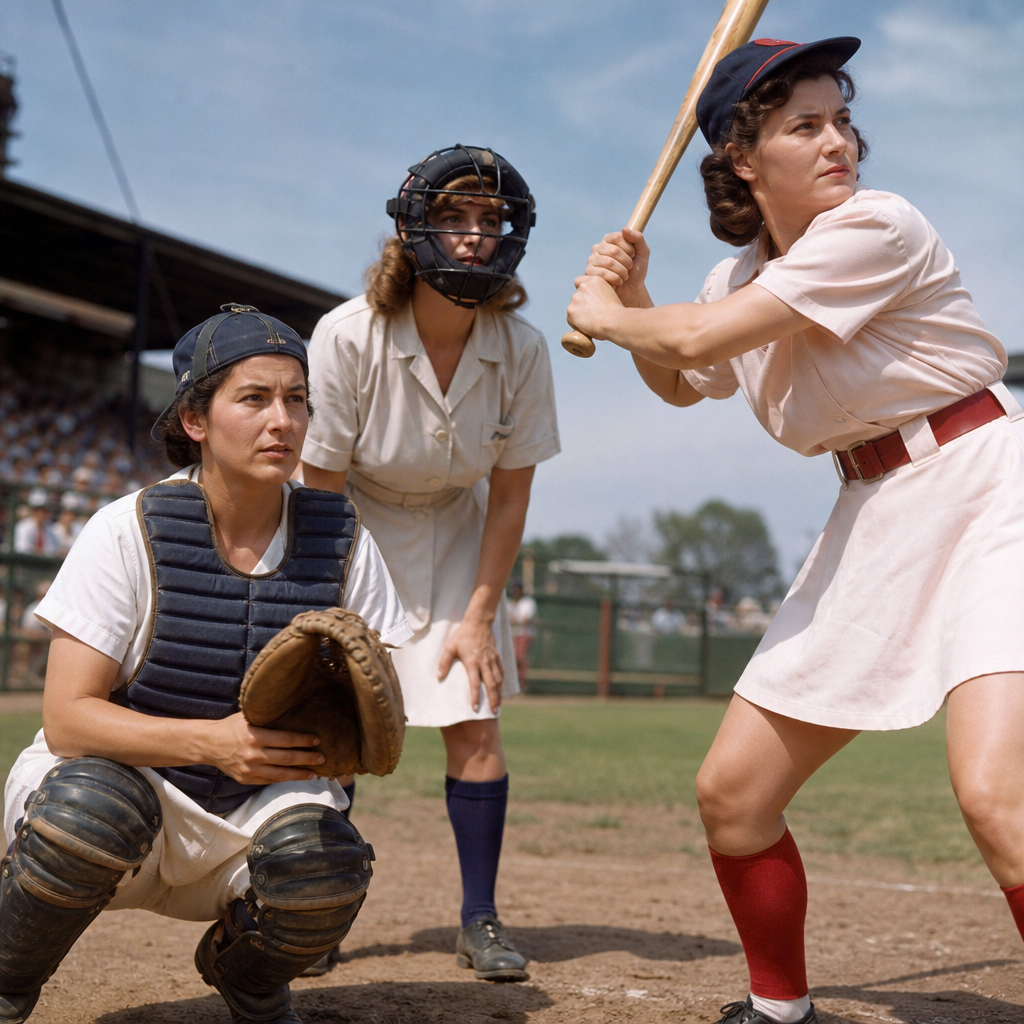
Baseball history is usually told through major league box scores, pennant races, and Hall of Fame plaques, yet women have shaped the game at nearly every level since its earliest decades. “Women in baseball” is not a niche footnote; it is a broad field that includes players, owners, executives, scouts, umpires, writers, broadcasters, medical staff, union advocates, and community builders whose work changed how the sport operates. A subtopic labeled miscellaneous matters because many essential contributions do not fit neatly into one category. Some women crossed several roles in one career. Others influenced baseball from outside the foul lines by financing teams, preserving archives, building fan cultures, or forcing institutions to confront exclusion.
When I have worked on baseball history content and archival projects, the biggest pattern I have seen is simple: women were present long before the sport was ready to credit them. Newspaper language often minimized achievement, records were scattered, and accomplishments were treated as novelties rather than evidence of sustained participation. Correcting that record matters for three reasons. First, it makes baseball history more accurate. Second, it helps readers understand how the sport’s labor, business, and cultural systems evolved. Third, it creates a useful hub for deeper reading across the wider Women in Baseball subject, connecting famous stories such as the All-American Girls Professional Baseball League to less discussed but equally important work in front offices, ownership groups, military service leagues, barnstorming clubs, journalism, and youth development.
This hub article covers those miscellaneous roles comprehensively. It explains where women entered baseball, what barriers they faced, and why certain names remain foundational. It also highlights how race, class, media access, and league structure affected recognition. If you want a practical definition, women’s roles in baseball history include direct game participation, decision-making authority, operational leadership, storytelling, and preservation of the sport’s memory. Understanding those layers gives a fuller answer to a common question: how have women influenced baseball if so few were allowed to play in the majors? The answer is that influence has never depended on one pathway alone. Women have sustained baseball as workers, innovators, investors, experts, and advocates, often while being excluded from the spotlight.
Early participation, barnstorming, and the fight to be taken seriously
Women were involved in baseball by the nineteenth century, both informally and in organized exhibitions. Colleges such as Vassar fielded women’s teams in the 1860s, and by the late 1800s Bloomer Girls clubs toured the country. These teams mixed entertainment with serious competition, often playing men’s semipro clubs and local nines. The name “Bloomer Girls” came from the athletic bloomers some players wore, but the label hides how skilled many of these athletes were. Barnstorming required endurance, adaptability, and commercial savvy. Teams traveled constantly, sold tickets town by town, and played under uneven field conditions. That environment rewarded players who could hit, field, promote games, and help keep a club solvent.
Because baseball institutions offered little structural support, women’s teams often lived or died on gate receipts. That made visibility both an opportunity and a trap. Promoters could market novelty, but novelty framing also gave skeptics an excuse to dismiss genuine talent. Historians still debate exact records for many early women’s clubs because newspapers prioritized spectacle over box-score precision. Even so, surviving accounts show that women were not merely symbolic participants. They learned strategy, drew crowds, and proved there was a market for women’s baseball long before wartime professional leagues made that fact impossible to ignore.
Among the most significant figures from this era is Toni Stone, who later played professional baseball with the Indianapolis Clowns in the Negro Leagues. Stone is often discussed as a pioneer player, but her importance is wider than that. She challenged assumptions about who could belong in elite men’s baseball spaces and exposed how race and gender barriers overlapped. Her career demonstrates a recurring theme in baseball history: women’s contributions are often easiest to see when they force institutions to reveal the rules they were using to exclude people.
Wartime leagues and the professionalization of opportunity
The All-American Girls Professional Baseball League, founded in 1943, remains the best-known chapter in women’s baseball history because it produced sustained professional play, recognizable stars, and a durable public memory. Yet the league matters for more than nostalgia. It was a serious business response to wartime uncertainty, created while many male players served in the military and major league owners worried about attendance. Philip K. Wrigley backed the venture, but the league’s success depended on women who could perform at a high level under national scrutiny and evolving rules that shifted from a softball-style game toward modern baseball.
Players such as Dottie Kamenshek, Sophie Kurys, Connie Wisniewski, and Dorothy Harrell combined athletic excellence with adaptability. They dealt with charm school requirements, restrictive presentation standards, grueling travel, and uneven pay, yet still produced elite baseball. Kamenshek was so respected that she reportedly drew attention from major league evaluators. Kurys stole bases at astonishing rates. Wisniewski dominated as a pitcher during the league’s later, more baseball-centered years. These athletes were not placeholders keeping seats warm until men returned. They were professionals whose level improved as coaching, scouting, and competition deepened.
The league also changed baseball operations. It required formal player recruitment across the United States, Canada, and Latin America; set standards for contracts and team management; and demonstrated that women could anchor regional sports brands. Although the league folded in 1954, its legacy reaches beyond one competition. It proved that women’s baseball could be organized at scale, documented, marketed, and remembered. For a hub page, this matters because many later conversations about girls’ baseball development, women’s pro leagues, and historical recognition trace back to the institutional blueprint this league created.
Ownership, executives, and decision-makers who moved the sport
Some of the most consequential women in baseball history never took an at-bat. Helene Hathaway Britton became the owner of the St. Louis Cardinals in 1911, making her the first woman to own a major league team. She inherited the club and was initially underestimated, but under her ownership the Cardinals won the 1914 National League pennant. Ownership is not a ceremonial role. It shapes payroll, leadership appointments, and franchise stability. Britton’s tenure showed that women could exercise authority in baseball’s business core even in an era hostile to female leadership.
Effa Manley stands as one of the clearest examples of high-level baseball executive talent. As co-owner and business manager of the Newark Eagles of the Negro National League, Manley handled contracts, promotions, scheduling, and community engagement with uncommon effectiveness. She was also an advocate for civil rights and fair treatment of players. In practical terms, that meant fighting for compensation when major league organizations signed Black talent from Negro League clubs without proper reimbursement. Her Hall of Fame induction in 2006 was overdue but important because it recognized executive labor, not only on-field fame.
Modern baseball has expanded these pathways, though slowly. Kim Ng’s appointment as general manager of the Miami Marlins in 2020 was historic because it placed a woman in the top baseball operations role of a major league club. Long before that milestone, Ng had built a substantial résumé with the Chicago White Sox, New York Yankees, Los Angeles Dodgers, and Major League Baseball. Her career illustrates a principle I return to often when assessing baseball leadership: breakthrough appointments usually follow decades of expert work that institutions were willing to use before they were willing to visibly reward it.
| Name | Primary role | Why it matters |
|---|---|---|
| Helene Hathaway Britton | Major league owner | First woman to own an MLB franchise, proving women could lead at the ownership level |
| Effa Manley | Negro League executive and co-owner | Set standards in business management, player advocacy, and civil rights leadership |
| Kim Ng | Major league general manager | Reached the highest modern baseball operations role after decades of front-office expertise |
| Jean Afterman | Assistant GM and contract specialist | Helped define modern roster construction through arbitration, negotiation, and compliance work |
Jean Afterman is another essential name for this hub. Her long tenure with the New York Yankees and later the Miami Marlins showed how legal, financial, and roster mechanisms shape winning organizations. Baseball fans often focus on managers and stars, but front offices run on contract analysis, service-time rules, collective bargaining interpretation, and talent valuation. Women have been integral to that infrastructure, even when public recognition lagged behind internal influence.
Scouting, coaching, umpiring, and player development
Baseball’s gatekeepers include the people who evaluate talent, teach mechanics, enforce rules, and build daily routines. Women have increasingly entered these areas, and each role carries outsized influence because it directly affects opportunity. Bernice Gera became the first woman to umpire a professional baseball game in 1972 after a lengthy legal fight. Her case mattered because umpiring is an authority position. Resistance to women behind the plate was not about competence alone; it was about who the sport believed had the right to command a field.
In coaching and player development, women have made visible gains in the last two decades. Alyssa Nakken became the first woman to coach on the field in a major league regular-season game with the San Francisco Giants in 2022, but that moment rested on years of preparation in player engagement and baseball operations. Rachel Balkovec broke another barrier by becoming the first woman to manage a minor league affiliate, the Tampa Tarpons, in 2022. Her background in strength and conditioning, biomechanics, and hitting development reflects where baseball instruction has moved: toward interdisciplinary performance science supported by high-speed video, bat-tracking data, and individualized planning.
Women have also contributed as scouts and development staff, though these roles often receive less coverage than a headline-making debut. Professional scouting demands detailed reporting on tools, mechanics, makeup, age-to-level context, and future projection. Development jobs require communication skills equal to technical knowledge. A coach may use force-plate data or motion-capture feedback, but players only improve when instruction is specific, trusted, and repeatable. From my perspective, this is one of the clearest areas where women have disproved outdated assumptions, because modern baseball values results, information quality, and relationship management more than performative machismo.
Journalism, broadcasting, medicine, and preservation
Another major miscellaneous category includes the women who explained baseball to the public and cared for the people inside it. Reporters and broadcasters shape what fans know, whose stories are remembered, and which trends become part of baseball’s common language. Claire Smith, the first woman to receive the Baseball Writers’ Association of America’s J.G. Taylor Spink Award, transformed sports journalism through rigorous reporting and persistence in the face of open discrimination. She did not simply gain access for herself; her work helped redefine who belonged in clubhouses and press boxes.
Suzyn Waldman, Jessica Mendoza, Melanie Newman, and many others expanded women’s presence in baseball broadcasting, each navigating the scrutiny that comes with discussing a sport whose audience often treats tradition as a test of legitimacy. Good baseball broadcasting is evidence-based storytelling. It requires knowledge of pitch design, lineup construction, platoon advantages, replay rules, travel realities, and clubhouse dynamics. Women in the booth have met that standard repeatedly, making broadcasts better and broadening who can imagine themselves as baseball authorities.
Women have also been indispensable in sports medicine, athletic training, mental skills, and historical preservation. Major league and minor league organizations now rely on multidisciplinary performance staffs that include physical therapists, nutrition specialists, psychologists, and data-informed rehab coordinators. These roles affect injury prevention, recovery timelines, and career longevity. Preservation work matters too. Museums, librarians, documentary producers, and researchers have recovered photographs, scorebooks, oral histories, and correspondence that keep women’s baseball history from disappearing. Without that labor, the public record would remain distorted by omission.
Why this hub matters now
Women’s roles in baseball history are not miscellaneous because they are minor. They are miscellaneous because baseball’s institutions have been interconnected for more than a century, and women have contributed across all of them. The key takeaway is accuracy: women have played, led, evaluated, negotiated, reported, healed, archived, and advocated. Their impact is visible in team ownership, Negro League administration, wartime professional leagues, player development systems, broadcast booths, and front-office strategy. Baseball is richer and more understandable when those contributions are treated as central rather than exceptional.
Use this page as a starting point for the broader Women in Baseball hub. From here, explore dedicated articles on pioneers such as Toni Stone and Effa Manley, the All-American Girls Professional Baseball League, women in broadcasting, women in baseball operations, and the ongoing push for girls’ baseball development. The more precisely we tell these stories, the better we understand the sport itself. Keep reading, follow the internal links across this subtopic, and build a fuller picture of baseball history with women where they have always belonged: at the center.
Frequently Asked Questions
Why are women’s roles in baseball history often overlooked?
Women’s contributions to baseball have often been overlooked because traditional baseball history has long centered on major league players, team records, championships, and the most visible male figures in the sport. That narrow framework leaves out many of the people who built baseball’s culture, business systems, labor structures, fan communities, and developmental pathways. Women were frequently active in those areas, but their work was not always recorded with the same care as on-field statistics. In many cases, women held positions that were considered unofficial, behind the scenes, or outside the major leagues, which made their impact easier for later historians to minimize or miss entirely.
Another reason is that baseball storytelling has often relied on familiar legends and simplified timelines. When histories focus only on star players and marquee franchises, they leave little room for the broader ecosystem that keeps the sport functioning. Women appeared in that ecosystem as club owners, front-office administrators, scouts, journalists, broadcasters, medical professionals, and organizers who helped communities connect to the game. Even when women did appear on the field, their achievements were sometimes treated as novelty rather than as part of baseball’s legitimate history. Recovering those stories requires looking beyond box scores and Hall of Fame plaques to archives, local newspapers, oral histories, and institutional records that show how deeply women influenced the sport.
Did women actually play baseball in meaningful ways, or were they mostly involved off the field?
Women absolutely played baseball in meaningful ways, and their involvement on the field is an essential part of the sport’s history. Women and girls have played baseball since the game’s early development, participating in amateur clubs, barnstorming teams, industrial leagues, school competitions, and professional settings. The most widely recognized example is the All-American Girls Professional Baseball League, which demonstrated not only that women could play at a high level, but also that they could attract fans, sustain team identities, and contribute to baseball’s wartime and postwar popularity. But the story does not begin or end there. Across decades, women played in local and regional leagues, trained seriously, traveled with clubs, and challenged assumptions about who belonged on a baseball diamond.
At the same time, it would be incomplete to limit women’s baseball history to playing alone. Women’s impact off the field was just as meaningful because baseball is more than what happens between the foul lines. Women helped operate franchises, evaluate talent, manage finances, shape public narratives, provide medical care, negotiate workplace issues, and preserve the sport’s traditions in families and neighborhoods. In other words, women were not “mostly” in one category or the other; they were present across the entire baseball world. Recognizing both players and non-players gives a more accurate picture of how the game evolved and why women’s history is central, not peripheral, to baseball history.
What are some of the most important off-field roles women have held in baseball history?
Women have held a remarkably wide range of important off-field roles in baseball history, and many of those roles shaped the sport in lasting ways. Some women served as owners and executives, making critical decisions about franchise survival, business strategy, marketing, staffing, and league relationships. Others worked as scouts and talent evaluators, using deep baseball knowledge to identify players who could help organizations compete. Women also became influential as journalists, editors, and broadcasters, helping define how the public understood teams, rivalries, labor disputes, social issues, and the game’s place in American life. Their voices informed public memory, challenged exclusion, and pushed baseball coverage beyond promotional storytelling.
Women also made substantial contributions in roles that are sometimes grouped into “miscellaneous” categories but were actually essential to the game’s operation. These include medical staff, trainers, statisticians, club administrators, legal advisers, public relations professionals, community liaisons, and union advocates. Such positions mattered because baseball is an institution as much as a sport. Keeping players healthy, organizing travel, handling contracts, maintaining records, coordinating media access, and building community trust all influence what fans eventually see on the field. Women who performed this work helped modernize organizations and broaden baseball’s professional standards. Calling these roles secondary misses the point: baseball history depends on the people who sustain the sport’s daily machinery, and women have long been among them.
How did women change the culture and business of baseball, not just its personnel?
Women changed the culture and business of baseball by influencing how the sport was presented, managed, and connected to the public. As owners, executives, and administrators, they affected ticketing, promotions, financial planning, fan outreach, and long-term franchise stability. As journalists and broadcasters, they shaped the stories fans heard about the game, expanding coverage to include human interest, labor concerns, social change, and community identity. As advocates and organizers, women also challenged exclusionary practices and helped create more professional environments inside clubs and around the league structure. Their presence often pushed baseball to reconsider assumptions about authority, expertise, and who had the right to participate in decision-making.
Culturally, women helped baseball function as a civic and family institution, not just a professional entertainment business. They built youth connections, preserved traditions, organized events, strengthened ties between teams and neighborhoods, and served as trusted public-facing representatives of the sport. In many communities, women were the people who kept baseball visible and meaningful between headline moments. On the business side, they contributed to operational continuity and innovation, especially in areas that demanded organization, diplomacy, communication, and strategic planning. The result was not merely the addition of women to existing structures; in many cases, women helped reshape those structures by making teams more resilient, more publicly engaged, and more responsive to social and economic realities.
Why is it important to include women fully in baseball history today?
Including women fully in baseball history matters because it makes the historical record more accurate, more honest, and more useful. When women are treated as side notes, readers get a distorted version of how baseball actually developed. The sport did not grow only through the achievements of famous male players; it grew through networks of labor, leadership, advocacy, storytelling, caregiving, and community participation in which women played major roles. A fuller account helps historians, fans, students, and institutions understand baseball as a complex social system rather than a simple sequence of games and championships. That broader view also reveals how questions of access, power, and recognition have shaped the sport across generations.
It is also important because history influences the present. The stories a sport tells about itself affect hiring practices, leadership opportunities, youth participation, and the expectations people bring into the game. When women’s historical contributions are visible, it becomes harder to argue that women are newcomers or outsiders in baseball. Instead, the record shows that they have long been builders, experts, and change-makers. That recognition supports a more inclusive future while honoring the people whose work made baseball possible in the first place. In that sense, telling women’s baseball history fully is not just a corrective; it is a way of understanding the game on its own true terms.