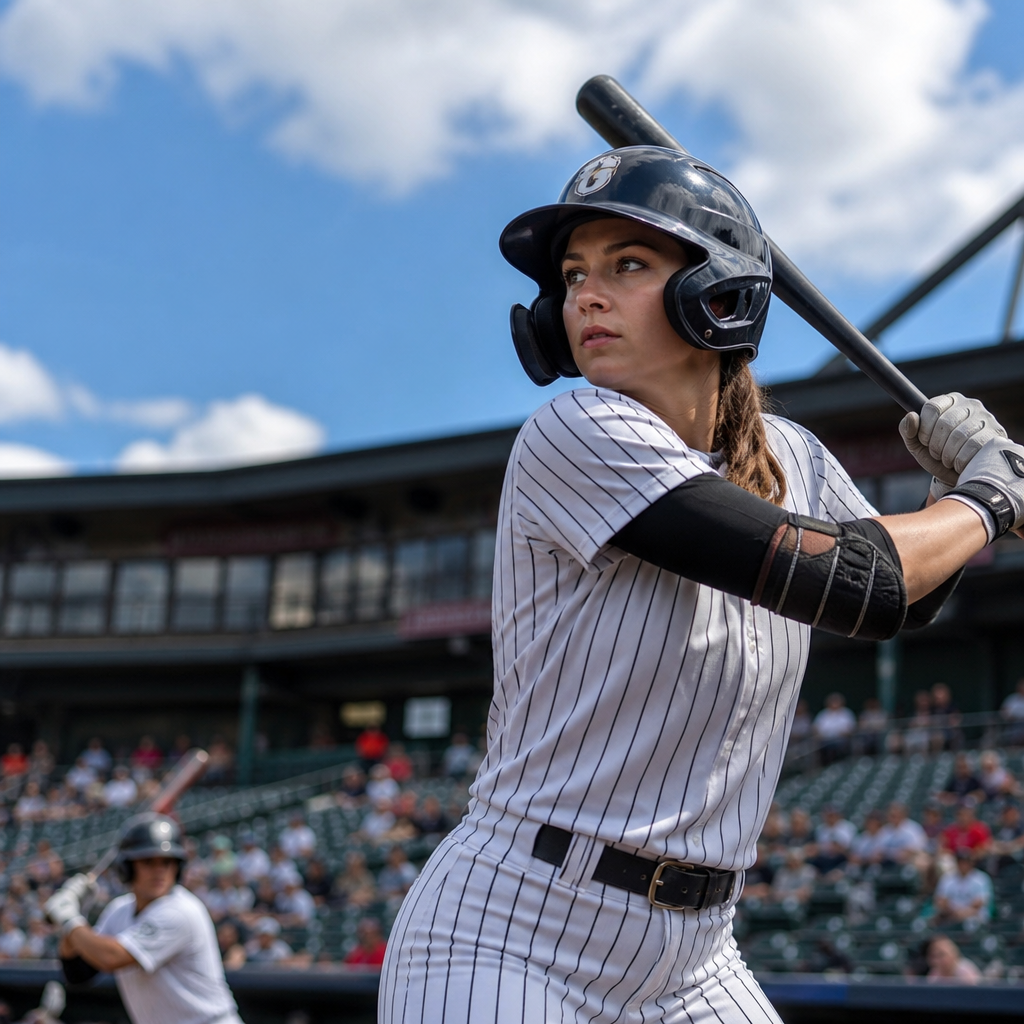
Women’s baseball is entering a decisive period, shaped by new leagues, stronger development pathways, better media coverage, and a growing recognition that the sport deserves its own infrastructure rather than borrowed space within men’s systems. In this hub for the miscellaneous side of Women in Baseball, the focus is the future: where the game is expanding, what barriers still limit progress, and which decisions will determine whether today’s momentum becomes a durable global sport. When I talk with coaches, organizers, and players, one point comes up repeatedly: talent has never been the limiting factor. Opportunity has.
That distinction matters. Women’s baseball refers to baseball played by women and girls under baseball rules, separate from softball, which uses a different field, pitching motion, and competitive structure. The confusion between the two has historically hidden women’s baseball in plain sight. Many casual fans still assume softball is the women’s version of baseball, yet governing bodies including the World Baseball Softball Confederation recognize women’s baseball as a distinct discipline with its own World Cup competition, rankings, and player pathway. A serious conversation about the future starts by naming that difference clearly.
The topic also matters because the sport sits at the intersection of participation, representation, and business. Girls often leave baseball not because they prefer another game, but because local programs stop accommodating them after childhood, equipment and facilities are designed around boys’ participation patterns, and advanced coaching networks remain hard to access. At the elite end, national teams and showcase events have improved, but the professional landscape is still fragmented. That gap creates a bottleneck: promising athletes can compete internationally yet still lack stable domestic competition, salaries, or long-term development environments. In practical terms, the future of women’s baseball depends on building systems, not just celebrating exceptions.
As a hub article, this page connects the broad themes that define the miscellaneous future of the sport: youth retention, international growth, league design, player development, media strategy, sponsorship, and policy. Each area influences the others. Better youth access increases the talent pool. Stronger leagues create recognizable stars. Media exposure attracts sponsors. Sponsorship funds coaching, travel, and facilities. In baseball, where player development is slow and technical, weak links in the chain are costly. The encouraging news is that the sport now has enough proof points to move beyond symbolic support and into structured expansion.
Youth Participation and the Development Pipeline
The future of women’s baseball begins long before any professional league launch. It begins with whether girls are allowed to stay in baseball through adolescence, receive quality instruction, and see a believable path ahead. In my experience following grassroots programs, the central challenge is not initial interest. Tee-ball and youth leagues often include girls naturally. The drop-off starts around the preteen years, when social pressure, limited roster spots, and assumptions about physical development push girls toward softball or out of the sport entirely. If baseball organizations want a stronger future, retention must become a measurable priority.
Retention improves when clubs make explicit operational choices. That means coach education on inclusive team culture, equal access to repetitions at premium positions, and communication with families about long-term baseball opportunities. It also means more girls-only baseball events at key transition ages. Mixed teams can work well, especially in early development, but many players benefit from spaces where they are not treated as novelties. Programs such as Baseball for All in the United States have shown what happens when girls receive regular competition, national tournament exposure, and visible role models. Those environments do more than boost confidence; they accelerate skill because players get more game-speed opportunities.
Technical development also requires baseball-specific coaching. A common mistake is assuming a talented female athlete can simply be redirected into softball mechanics or adapted late. Hitting timing, defensive footwork, mound work, and throwing patterns in baseball are distinct. Organizations that want results should track arm-care workloads, bat-speed development, throwing velocity progressions, and defensive reaction metrics just as serious boys’ academies do. Tools such as Blast Motion for swing data, Rapsodo for pitch and batted-ball metrics, and high-speed video review are not luxuries anymore. They are standard parts of modern player development, and women’s baseball needs equal access to them.
Global Growth and International Competition
Internationally, women’s baseball already has a stronger foundation than many people realize. The WBSC Women’s Baseball World Cup has featured national teams from countries including Japan, Canada, the United States, Chinese Taipei, Hong Kong, Venezuela, Cuba, and Australia. Japan has been the benchmark, combining school-based baseball culture, disciplined technical development, and national support structures that translate into consistent excellence. Their dominance is not accidental. It reflects what happens when a country treats women’s baseball as a program to build rather than an exhibition to host.
Canada and the United States offer a different lesson. Both countries have produced talented national team players and influential grassroots advocates, but domestic pathways remain uneven across regions. A player in one city may find travel teams, showcases, and informed coaching, while another equally talented player may have no competitive baseball option after age twelve. That inconsistency limits depth. Meanwhile, countries in Latin America and Asia continue to increase participation, often with fewer resources but growing enthusiasm. If the sport’s future is to be global, federations will need calendar stability, age-group championships, coach exchanges, and more affordable regional tournaments so developing nations can compete regularly rather than sporadically.
The international game also benefits from visible benchmarks. World Cups matter because they create legitimacy, rankings, and repeatable narratives. Fans can follow rivalries, federations can justify investment, and young players can identify a national team dream. But elite events alone are not enough. The strongest baseball nations in the men’s game rely on dense domestic competition. Women’s baseball will need the same ecosystem: school tournaments, club championships, academies, and professional or semi-professional leagues that prepare players for international play rather than asking national teams to carry the entire sport.
What a Sustainable League Must Include
When people ask what the future of women’s baseball looks like, they often jump straight to one question: will there be a fully professional league? The better question is what kind of league can survive. I have seen too many sports launches focus on logos, uniforms, and opening-night publicity while ignoring travel economics, roster depth, venue access, and medical support. A sustainable women’s baseball league needs more than ambition. It needs disciplined operating design from day one.
The strongest model is likely phased growth. Start with a compact footprint, controlled travel, and a season length that matches available revenue. Build around markets where youth participation, local sponsorship, and baseball culture already exist. Use modest but reliable salary structures rather than headline promises that collapse under cash flow pressure. Standardize training standards, athletic therapy access, and strength programs so the league is credible to players and agents. Most importantly, align the competition calendar with national team obligations and major amateur events, because women’s baseball still depends on a relatively concentrated talent pool.
| League Element | Why It Matters | Best Early-Stage Approach |
|---|---|---|
| Geography | Travel is often the biggest operating cost | Cluster teams regionally |
| Player Pay | Signals seriousness and affects retention | Guaranteed base salaries with housing support |
| Facilities | Game quality and fan trust depend on venue standards | Use consistent ballparks with broadcast capability |
| Season Length | Too short limits value; too long strains budgets | Begin with a focused, repeatable schedule |
| Media | Visibility drives sponsors and audience growth | Stream every game and centralize highlights |
Real-world comparisons help. The Women’s National Basketball Association survived early instability because it had institutional support, defined markets, and media visibility, even when profitability took time. By contrast, many independent sports leagues fail because they expand faster than demand. Women’s baseball should learn from both examples. A successful league does not need to imitate Major League Baseball immediately. It needs to establish trust, predictable competition, and evidence that players can improve and fans can follow a coherent season.
Media, Storytelling, and Audience Building
Coverage is not a side issue. It shapes whether women’s baseball is treated as a niche curiosity or a legitimate sport with recurring public value. For years, media attention has concentrated on novelty stories: the girl who made a boys’ team, the woman hired in a male baseball role, the historical anniversary. Those stories matter, but they can unintentionally freeze the sport in a permanent breakthrough moment. The future requires normal sports coverage: box scores, scouting reports, player interviews, injury updates, trade or roster analysis, and season-long narratives that reward repeat attention.
Streaming has lowered one barrier. A league or tournament no longer needs a national television contract to build an audience. Consistent live streams, clipped highlights, searchable statistics, and short-form player features can create discoverability and loyalty. Baseball is especially well suited to this because the game naturally produces discrete moments: strikeout sequences, defensive plays, home runs, pitch overlays, and matchup previews. If a women’s baseball property wants to grow, every event should be covered as though a new fan will encounter it through one clip and decide whether to return.
Audience growth also depends on language. Promotional material should not frame the game as impressive mainly because women are playing it. That framing is patronizing and weakens long-term positioning. The sport should be marketed through competition quality, skill, identity, and access. Tell people why a hitter’s approach works, why a pitcher’s shape profile is difficult to track, or why a rivalry matters in the standings. Baseball fans respond to detail. Treating women’s baseball with the same analytical respect given to other levels of the sport is one of the fastest ways to deepen audience engagement.
Sponsorship, Governance, and Long-Term Investment
Money follows structure. Sponsors are more likely to invest when they can see a calendar, audience data, safeguarding policies, broadcast inventory, and a plan for community activation. In meetings I have sat in around emerging sports properties, the most persuasive pitch is rarely “this deserves support.” It is “this will deliver specific outcomes.” For women’s baseball, those outcomes can include access to youth participants, association with equity and development, local market visibility, and high-engagement digital content. Brands that already operate in baseball, athletic apparel, health care, travel, and education are natural fits, but only if the sport presents itself professionally.
Governance matters just as much as commercial sales. Clear sanctioning relationships, transparent eligibility rules, anti-harassment procedures, concussion and return-to-play protocols, and standardized competitive regulations are not administrative extras. They are the foundation of trust. Governing bodies should also publish participation data and strategic plans. When decision-makers can see where girls are leaving the sport, where coach shortages exist, and where facilities are underused, investment becomes more rational. Without data, the sport is forced to rely on anecdote and goodwill.
Long-term investment should prioritize coaches, umpires, and administrators alongside players. A women’s baseball ecosystem cannot mature if every experienced coach is overextended, every event depends on volunteers, and officiating pipelines remain thin. Scholarships for coaching certification, grants for regional tournaments, and partnerships with MLB clubs, colleges, or municipal facilities can all help. None of this is glamorous, but infrastructure rarely is. It is simply the reason some sports become permanent and others remain occasional headlines.
The Most Likely Future for Women’s Baseball
The future of women’s baseball will probably not arrive through one dramatic breakthrough. It will be built through accumulation: more girls staying in the game at thirteen, more national federations funding regular competition, more coaches trained in baseball-specific development, more reliable streaming, and at least one league proving that disciplined growth can work. Progress may look uneven across countries, but the overall direction is clear. The sport now has history, international legitimacy, identifiable leaders, and enough technical depth to support serious expansion.
The key takeaway is simple: women’s baseball does not need to be justified anymore. It needs to be organized. Its future depends less on symbolic support than on practical decisions about pathways, facilities, schedules, media, and funding. Build those systems well, and talent will do the rest. If you are shaping a program, covering the game, sponsoring an event, or guiding a young player, now is the time to act with long-term intent. The next era of women’s baseball will belong to the organizations that treat opportunity as infrastructure, not inspiration.
Frequently Asked Questions
What makes this moment so important for the future of women’s baseball?
This is a pivotal moment because women’s baseball is no longer surviving only through isolated tournaments, volunteer-run programs, or borrowed visibility from the men’s game. It is beginning to build the pieces of a real sporting ecosystem: dedicated leagues, clearer player development pathways, stronger national team structures, wider digital exposure, and a growing expectation that girls and women should have a legitimate future in baseball itself. That shift matters because momentum in sport is never permanent. If investment, scheduling, media coverage, and governance align now, women’s baseball can move from being treated as an occasional novelty to being recognized as a stable, year-round sport with its own identity.
What makes the current period especially significant is that demand is now easier to see than ever before. More girls are entering baseball at younger ages, more players are staying in the game longer, and more fans are discovering elite women’s baseball through streaming, social media, and international competition. At the same time, the conversation has matured. The issue is no longer simply whether women can play baseball at a high level; that has already been answered repeatedly. The real question is whether administrators, sponsors, broadcasters, and governing bodies are willing to create the structures that allow talent to develop and careers to exist. The future will be shaped by those decisions, not by a lack of ability on the field.
Why does women’s baseball need its own leagues and infrastructure instead of relying on men’s systems?
Women’s baseball needs its own infrastructure because borrowed space is always conditional space. When women’s programs depend entirely on men’s clubs, men’s calendars, men’s funding priorities, or facilities assigned as an afterthought, the women’s side of the game remains vulnerable. Training times get pushed aside, competitions are scheduled inconsistently, and player pathways become unclear. A sport cannot grow sustainably if its participants are always waiting for permission to exist. Dedicated leagues, coaching pipelines, scouting networks, front-office roles, and marketing strategies create something much more durable: a system designed with women’s baseball as the priority rather than as an add-on.
That does not mean women’s baseball must isolate itself from existing baseball institutions. In many cases, support from established federations, clubs, and professional organizations can accelerate growth. But support is most useful when it helps build independent strength rather than permanent dependence. The long-term goal is a sport with its own competition calendar, development standards, commercial strategy, and public profile. That kind of foundation makes it easier to attract sponsors, retain players, train coaches, and give fans a product they can follow consistently. In short, dedicated infrastructure turns participation into progression, and progression into permanence.
What are the biggest barriers still holding women’s baseball back?
The biggest barriers are not a lack of talent or interest. They are structural. One major problem is the limited availability of continuous playing opportunities. In many countries, girls can start in baseball but are often redirected toward softball or forced out of the sport entirely once they reach certain ages. That creates a broken pathway where athletes have enthusiasm and ability but nowhere obvious to go next. Without regular leagues, elite training environments, and meaningful competition, even the best players face unnecessary obstacles in development.
Funding is another critical barrier. Women’s baseball programs are often under-resourced, which affects everything from travel and equipment to coaching quality, player support, and media production. Visibility is closely tied to this issue. If games are not televised, streamed, promoted, or covered seriously, then sponsors see less value, fans struggle to follow teams, and players have fewer opportunities to build public recognition. There is also a cultural barrier that still lingers in some parts of the game: the assumption that baseball is naturally a male space and that women belong only on its margins. That mindset can influence policy decisions, facility access, talent identification, and even how young athletes are encouraged by adults. Overcoming these barriers requires more than celebration of inspirational stories; it requires strategic investment, institutional commitment, and a willingness to build systems that treat women’s baseball as a legitimate long-term sport.
How can stronger development pathways change the future of women’s baseball?
Stronger development pathways can change everything because they connect early participation to elite opportunity. A healthy pathway gives a player somewhere to begin, somewhere to improve, and somewhere to aspire to reach. That includes youth entry points, trained coaches, age-group competitions, high-performance camps, domestic leagues, national team programs, and ideally professional or semi-professional environments. When those stages are connected, talent is less likely to disappear. Players can see a future in the sport, families are more likely to support long-term participation, and federations can develop athletes with greater consistency.
Development pathways also raise the standard of play across the board. Instead of relying on a small number of exceptional individuals overcoming limited support, the sport begins producing deeper talent pools. That leads to better games, stronger national teams, more compelling leagues, and a more marketable product for media and sponsors. Just as importantly, pathways create roles beyond the players themselves. Coaches, trainers, umpires, administrators, scouts, and broadcasters all become part of the ecosystem. The future of women’s baseball depends not only on producing star athletes, but on building a full network that helps those athletes thrive. When that network exists, growth stops being accidental and starts becoming repeatable.
What will determine whether today’s momentum becomes a lasting global sport?
The answer will come down to whether key decision-makers act with long-term intent rather than short-term enthusiasm. Momentum becomes lasting only when it is converted into institutions. That means stable leagues instead of one-off showcases, recurring budgets instead of symbolic support, consistent media plans instead of occasional viral moments, and serious governance instead of vague promises. Women’s baseball has reached the point where visibility alone is not enough. The next phase requires infrastructure that can survive beyond a single tournament cycle or a burst of social media attention.
Global growth will also depend on geographic expansion. For women’s baseball to become a durable international sport, more countries must develop domestic competition and not rely exclusively on a small handful of established programs. International federations, national governing bodies, private investors, and media partners all have a role here. They can help create regular competition, improve talent exchange, and make the sport easier to follow across borders. Just as important is storytelling. Fans invest in sports when they know the teams, understand the stakes, and can follow athletes over time. If women’s baseball is covered consistently and presented as a serious competitive product, it can build loyal audiences rather than temporary curiosity. Ultimately, the future will be decided by whether the sport is treated as worthy of structure, visibility, and ambition on its own terms.