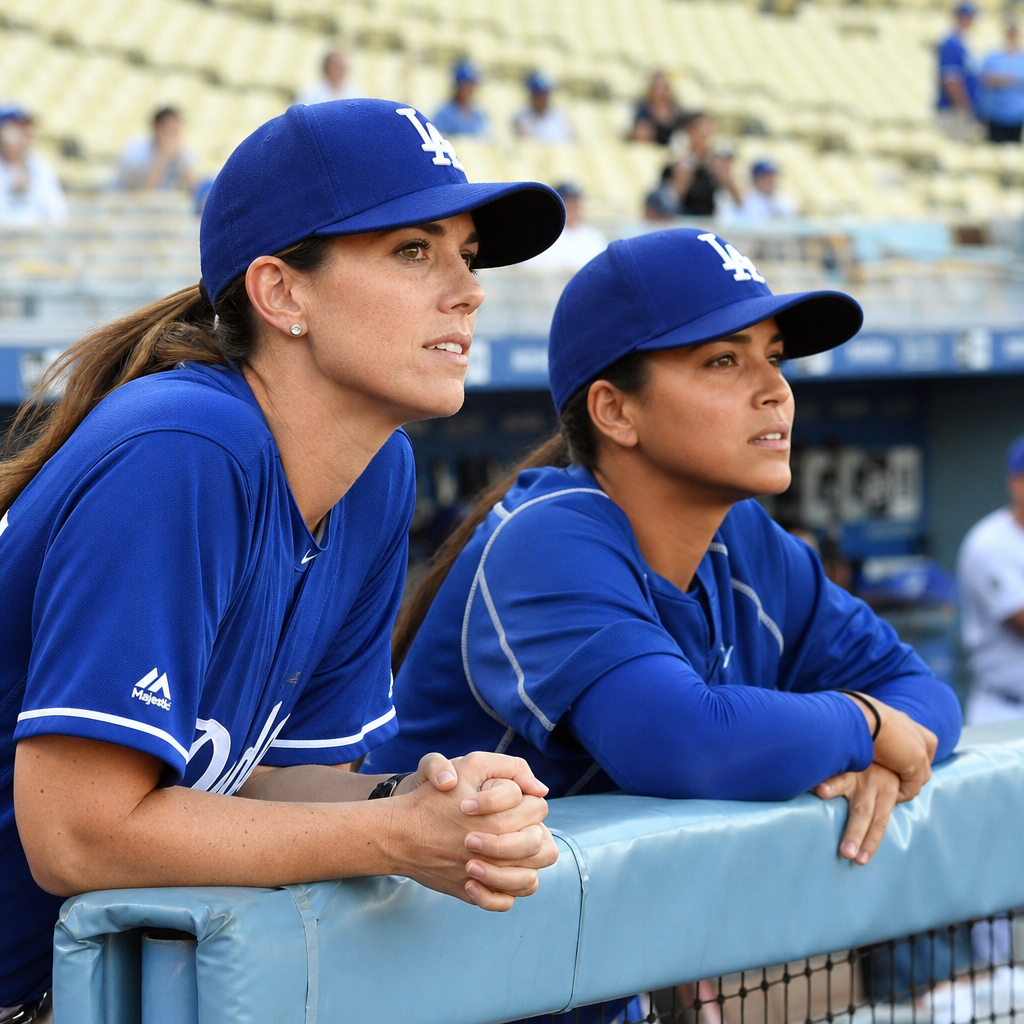
Baseball has long been marketed as a boys’ game, yet the female force in baseball has shaped the sport at nearly every level, from sandlots and scoring booths to front offices, broadcast studios, and professional diamonds. When people hear “women in baseball,” they often think first of the All-American Girls Professional Baseball League, but that is only one chapter in a much larger story. Women have contributed as players, owners, executives, scouts, coaches, umpires, journalists, statisticians, physicians, trainers, and advocates who expanded access to the game. Understanding those contributions matters because baseball’s history is not complete without them, and the sport’s future depends on recognizing the full pool of talent available to it.
In practical terms, this topic covers both direct on-field participation and the less visible infrastructure that keeps baseball functioning. A player changes outcomes between the foul lines, but so does a general manager who builds a roster, a strength coach who reduces injury risk, or a reporter who documents labor issues and public sentiment. I have worked on baseball content and archival research long enough to see how often women’s roles are treated as side notes rather than core developments. That framing is inaccurate. Women did not merely appear in baseball during isolated moments of novelty; they consistently solved problems for the sport, created pathways for others, and forced institutions to evolve.
This hub article surveys the miscellaneous side of women in baseball comprehensively, connecting the major themes readers usually ask about. Who were the pioneers? What barriers did they face? Where are women making the biggest impact today? Which organizations and programs are changing the pipeline? The answers span more than a century and cut across amateur, collegiate, independent, and Major League Baseball environments. Looking at these contributions together reveals a simple truth: women have been essential to baseball’s continuity, culture, and innovation, even when the official record gave them limited space.
One reason this subject deserves a dedicated hub is that baseball progress rarely comes from one role alone. Cultural change happens when participation expands in multiple places at once. Girls need opportunities to play, but they also benefit from seeing women call games on television, negotiate contracts in the front office, teach mechanics in batting cages, and enforce rules on the field. Visibility in one area reinforces legitimacy in another. That pattern appears repeatedly in baseball history, and it explains why today’s momentum feels more durable than earlier, short-lived bursts of attention.
Pioneers Who Refused Baseball’s Boundaries
Women have challenged baseball’s gender barriers since the nineteenth century. The Bloomer Girls teams, active from the 1890s into the 1930s, barnstormed across the United States and played serious baseball against men’s semipro and local clubs. They were often packaged for entertainment, yet their games demanded genuine skill, travel endurance, and business savvy. Players such as Maud Nelson did more than take the field; she pitched, managed, and helped organize teams, proving women could perform multiple baseball jobs at once. These clubs existed outside the mainstream structure, but they preserved a tradition of women playing competitive baseball long before modern governing bodies offered support.
The All-American Girls Professional Baseball League, founded in 1943, remains the best-known women’s baseball institution for good reason. During World War II, it kept public interest in diamond sports alive while many male players served in the military. More importantly, it offered professional salaries, coaching, scouting, and national visibility to hundreds of women. Stars like Sophie Kurys, who stole 201 bases in 1946, and Dottie Kamenshek, a superb first baseman reportedly admired by major league evaluators, demonstrated high-level baseball intelligence and athleticism. The league combined baseball and softball rules in different eras, but its competitive standard and cultural impact are undeniable.
Other pioneers broke ground in spaces baseball had barely opened. Effa Manley, co-owner of the Newark Eagles, was the first woman inducted into the National Baseball Hall of Fame. She managed promotions, advocated for player rights, and helped run a successful Negro Leagues franchise with sophistication equal to any executive of her time. Toni Stone, Connie Morgan, and Mamie “Peanut” Johnson later played in the Negro Leagues, proving women could compete in demanding professional environments against male opposition. Their careers matter because they joined the game where the level was real and the skepticism was relentless.
How Women Strengthen Baseball Beyond Playing
Women’s contributions to baseball are not limited to roster spots, and reducing the conversation to playing opportunities alone misses much of their influence. In front offices, women increasingly shape player development, contract strategy, and organizational culture. Kim Ng’s appointment as general manager of the Miami Marlins in 2020 was historic, but it was also the logical result of decades of high-level work in league and club offices. She had already built a résumé with the White Sox, Yankees, Dodgers, and MLB that showed expertise in arbitration, roster construction, and baseball operations. Her success made visible a pipeline that had existed but was too often overlooked.
Coaching is another critical area. Alyssa Nakken became the first full-time female coach in Major League Baseball with the San Francisco Giants, and she later became the first woman to coach on the field in a regular-season MLB game. Rachel Balkovec broke another barrier by becoming the first woman to manage a Minor League Baseball team for the New York Yankees organization. These milestones matter because coaching is where instruction meets trust. Players do not respond to symbolism alone; they respond to preparation, communication, and technical value. Women who earn these jobs do so because they can teach swing decisions, baserunning reads, defensive positioning, and clubhouse routines at a professional standard.
Broadcasting, journalism, analytics, and medicine also shape baseball’s modern ecosystem. Reporters such as Claire Smith changed how the game is covered, often pushing through discriminatory access rules to do the job properly. Analysts and data specialists now influence draft models, biomechanical evaluations, and advance scouting reports. Athletic trainers, doctors, and mental performance staff members determine how often players stay on the field. In my experience, baseball organizations improve fastest when they stop treating diverse hiring as ceremonial and start treating it as operationally necessary. Broader perspectives make departments sharper, especially in a sport that depends on constant information processing.
Key Areas Where Women Are Expanding the Modern Game
Baseball now offers more points of entry for women than at any earlier time, though access remains uneven. The most important development is not one headline hire but a network effect across development, governance, media, and grassroots participation. When these areas improve together, the sport becomes easier to enter and harder to exclude from. The table below highlights the roles where women are currently having the strongest systemic impact and why each area matters to baseball’s future.
| Area | Example | Why It Matters |
|---|---|---|
| Front Office | Kim Ng with the Marlins | Influences roster construction, player development, and hiring standards |
| Coaching | Alyssa Nakken, Rachel Balkovec | Expands who can teach elite baseball skills on professional staffs |
| Broadcasting | Women in play-by-play and reporting roles | Changes public perception and normalizes expertise on air |
| Umpiring | Women working in MLB-affiliated development systems | Builds authority in rule enforcement and game management |
| Youth Development | Baseball For All programs | Creates the player pipeline that every higher level depends on |
| International Competition | Women’s Baseball World Cup participation | Provides elite competition and global legitimacy for women’s baseball |
Youth baseball may be the most important category on that list because it determines whether future progress compounds or stalls. Organizations such as Baseball For All have created tournaments, camps, and advocacy channels that give girls a place to play baseball specifically, not merely be redirected toward softball. That distinction matters. Baseball and softball are separate sports with different field dimensions, pitching styles, tactical rhythms, and developmental tracks. Girls who want baseball need baseball instruction, baseball repetitions, and baseball competition. Without that foundation, every later conversation about college opportunities, national teams, or professional roles starts from a deficit.
International play has added legitimacy and structure as well. The Women’s Baseball World Cup, organized by the World Baseball Softball Confederation, gives top players from countries including Japan, the United States, Canada, Australia, and others a meaningful elite platform. Japan’s sustained excellence in women’s baseball demonstrates what long-term investment can produce: stronger technical development, deeper rosters, and clearer public recognition. International competition also changes domestic expectations. Once federations see women competing at a high level across borders, it becomes harder to claim there is no audience, no talent pool, or no reason to invest.
Barriers That Still Shape Women’s Baseball Experience
Progress has been real, but baseball still presents structural barriers for women and girls. The first is the participation pipeline. In many communities, girls are subtly or explicitly steered toward softball, even when they prefer baseball. That affects coaching access, travel-team invitations, high-level repetitions, and exposure to scouts or tournament directors. The second barrier is representation. If parents, administrators, or local coaches have never seen a woman in a baseball authority role, they may assume she does not belong there. Bias in baseball is often less dramatic than a closed door and more persistent than one obvious act; it appears as lowered expectations, fewer chances, and delayed trust.
There are also economic barriers. Travel baseball is expensive, and specialized instruction can cost hundreds or thousands of dollars across a season. Those costs limit access for many families regardless of gender, but they become even more restrictive when girls must search farther for baseball-specific opportunities. Media coverage remains another challenge. Women’s baseball achievements often receive celebratory feature stories without the sustained game coverage, performance analysis, and statistical framing that build long-term credibility. In sports media, being treated as inspirational is not the same as being treated as competitively important.
Institutional policy can help, but policy alone does not finish the job. Schools, amateur associations, and professional clubs need clear inclusion standards, qualified hiring processes, and pathways for reporting discrimination. They also need to measure outcomes: who made the team, who stayed in the pipeline, who got promoted, and who left. In organizations I have studied, progress accelerates when leaders track participation and promotion patterns with the same discipline they apply to player performance metrics. Baseball respects data. Applying that mindset to access and retention leads to better decisions and fewer excuses.
Why This Hub Matters for the Future of Women in Baseball
A strong miscellaneous hub matters because women’s contributions to baseball are interconnected, not isolated anecdotes. The player who needs a team also needs a coach, a scout, a journalist, a tournament organizer, and an executive willing to invest in the sport’s broader ecosystem. The broadcaster who explains the game to new fans helps create demand for better coverage and more opportunities. The front-office leader who makes one inclusive hire often makes several more because competence becomes visible once institutions stop filtering it out. Baseball changes through accumulated proof, and women have supplied that proof for generations.
The clearest takeaway is that women are not entering baseball as outsiders asking for symbolic acceptance. They are continuing a long record of contribution that has improved the sport’s quality, reach, and resilience. From the Bloomer Girls to the AAGPBL, from Effa Manley to Kim Ng, from grassroots baseball camps to international championship play, the pattern is consistent: when women get meaningful access, baseball becomes stronger and smarter. That is the central benefit of recognizing the female force in baseball accurately. It is not about correcting a footnote. It is about understanding the sport as it actually developed and where its best opportunities now exist.
Use this hub as a starting point for deeper exploration across the women in baseball topic. Read the individual profiles, league histories, development guides, and role-based features connected to this page, then support the programs and coverage that expand opportunity. If baseball is going to grow, it must keep widening the field of who gets to play, teach, lead, and be seen.
Frequently Asked Questions
What roles have women played in baseball beyond being players?
Women have influenced baseball in far more ways than most popular histories suggest. While players often receive the most attention, women have long helped shape the sport as team owners, executives, scouts, coaches, umpires, broadcasters, journalists, statisticians, historians, and community organizers. In the earliest eras of organized baseball, women were already visible as scorekeepers, club supporters, and business partners behind local teams. Over time, their involvement expanded into decision-making positions that affected how clubs were run, how talent was evaluated, and how baseball stories were told to the public.
In front offices, women have helped manage operations, player development, marketing, and long-term strategy. In media, female broadcasters and writers have broadened the way fans understand the game by bringing sharp analysis, reporting depth, and new perspectives to a sport that was long filtered through male-only voices. Women have also contributed to baseball’s statistical culture, archival work, and historical preservation, ensuring that the game’s records and stories are documented accurately. At every level, from youth leagues to the major leagues, women have not just participated in baseball culture; they have helped build, explain, promote, and modernize the sport.
Why is the All-American Girls Professional Baseball League important, and why is it only part of the story?
The All-American Girls Professional Baseball League, or AAGPBL, is important because it gave women one of the most visible platforms in baseball history. Founded during World War II, it demonstrated that women could play highly skilled, entertaining professional baseball in front of paying audiences. The league challenged assumptions about who belonged on the diamond and preserved a powerful example of women competing at a high level in a sport widely branded as masculine. Its players became symbols of athleticism, perseverance, and professionalism, especially at a time when opportunities for women in sports were limited and often constrained by social expectations.
At the same time, the AAGPBL is only one chapter in a much larger history. Focusing only on that league can unintentionally narrow the broader story of women in baseball. Women played on barnstorming teams, amateur clubs, semi-professional rosters, and integrated community teams before, during, and after the AAGPBL years. Others contributed off the field in scouting, ownership, administration, reporting, and instruction. There have also been women who pursued baseball in countries outside the United States, adding an international dimension to this history. So while the AAGPBL deserves its place as a landmark institution, it should be understood as part of a much wider legacy of women who sustained and expanded baseball across generations.
How have women changed baseball in leadership and front-office positions?
Women in leadership have helped redefine what baseball expertise looks like. In front offices, women have served in roles involving baseball operations, analytics, player development, business strategy, communications, and executive leadership. Their contributions matter not only because they represent progress in hiring, but because they directly influence how organizations function. Modern baseball depends on collaboration across scouting, data analysis, health and performance, and long-term roster planning. Women working in these areas have become part of the sport’s competitive infrastructure, helping teams make smarter decisions on and off the field.
Just as importantly, women in leadership challenge the outdated idea that baseball authority must look or sound a certain way. Their presence helps normalize a more inclusive pipeline for future executives, interns, coordinators, and analysts. It also expands the talent pool, which benefits organizations that want the best people making decisions. When women succeed in executive and advisory roles, they do more than break barriers for symbolic reasons; they influence club culture, broaden problem-solving approaches, and create more pathways for innovation. In a sport often associated with tradition, their leadership has been a meaningful part of baseball’s evolution.
What obstacles have women faced in baseball, and how have they overcome them?
Women in baseball have faced a long list of barriers, many rooted in the persistent belief that baseball is naturally a “boys’ game.” Those obstacles have included exclusion from playing opportunities, limited access to coaching and development, hiring bias, unequal media coverage, lack of mentorship, and skepticism about their qualifications even when their credentials matched or exceeded those of male peers. For female players, one of the biggest challenges has been the shrinking number of structured baseball opportunities as girls are often steered toward softball, regardless of whether baseball is the sport they want to pursue. For women working off the field, advancement has often required navigating workplaces where they were the only woman in the room.
They have overcome these obstacles through persistence, excellence, advocacy, and community-building. Many women in baseball have succeeded by mastering the technical side of the game, earning respect through preparation, performance, and resilience. Others have created support networks, mentorship channels, and development programs that make it easier for the next generation to enter and remain in the sport. Visibility has also played a major role. Every woman who thrives as a coach, analyst, scout, executive, broadcaster, or player helps dismantle the myth that women are outsiders in baseball. Progress has not always been fast or linear, but it has been driven by women who refused to accept narrow definitions of where they belong in the game.
Why does recognizing women’s contributions to baseball matter today?
Recognizing women’s contributions matters because it produces a more accurate and complete understanding of baseball itself. When the sport’s history is told only through male players, managers, and owners, the public gets an incomplete picture of how baseball developed and who made it meaningful. Women have helped sustain the game at the grassroots level, enriched its media coverage, advanced its business operations, and expanded its professional possibilities. Acknowledging that history is not about adding a side note to baseball’s story; it is about correcting the record and recognizing that women have always been part of the sport’s foundation.
It also matters because representation shapes opportunity. When fans, young athletes, and aspiring professionals see women thriving in baseball, it changes what they believe is possible. That can influence participation, hiring, mentorship, and the overall culture of the game. Recognizing women’s impact encourages baseball to become more welcoming, more honest about its past, and better prepared for its future. In practical terms, a sport that values contributions from a wider range of people becomes stronger, smarter, and more connected to the communities that support it. Women’s contributions are not peripheral to baseball; they are central to understanding where the sport has been and where it can go next.