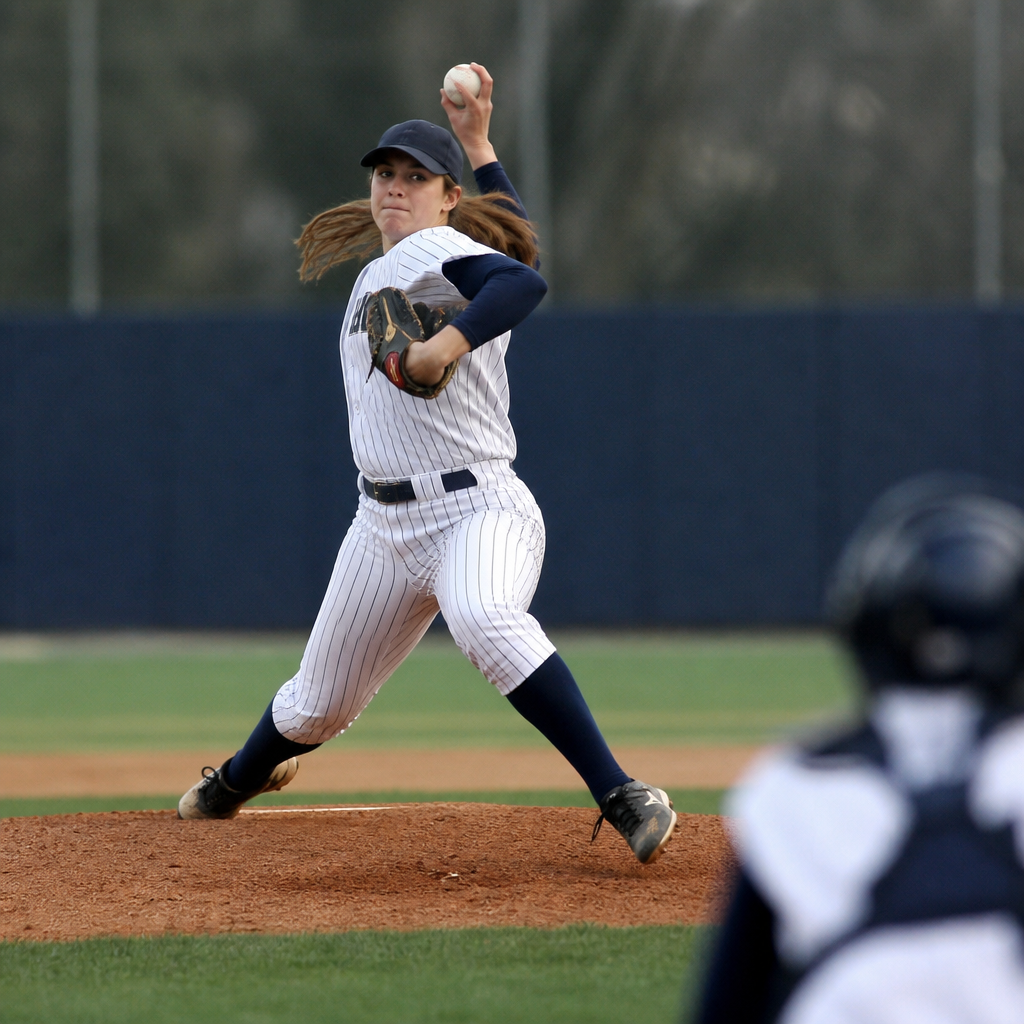
Breaking the mound has never been a single moment; it has been a long, uneven campaign fought inning by inning by women who insisted that pitching belongs to skill, training, and nerve rather than gender. In baseball, pitching is the act of delivering the ball from the mound to the plate, but culturally it has also served as a gatekeeping role, treated for generations as the ultimate symbol of male authority on the field. That is why women’s historic journey in baseball pitching matters so much within the broader Women in Baseball story. It reveals how rules, scouting habits, media narratives, and development systems have restricted opportunity, while determined players, coaches, barnstorming teams, and international programs kept proving that elite command, velocity, deception, and durability are not exclusively male traits. As a hub for the miscellaneous side of this topic, this article connects the overlooked names, leagues, milestones, barriers, and lessons that define how women have challenged baseball’s most protected position and why their progress continues to reshape the game today.
Why pitching became the hardest barrier to break
Pitching has always carried outsized symbolic weight in baseball. A first baseman can be hidden in the batting order. An outfielder can be praised for speed or defense. A pitcher, however, controls tempo, strategy, and the outcome of every plate appearance. In my experience researching women in baseball history, this is exactly why the position drew the fiercest resistance. Decision-makers often accepted women in ceremonial roles, novelty exhibitions, or temporary wartime opportunities, yet balked when women sought the mound, where authority is visible and measurable. Radar-gun readings, inning totals, strike percentages, and earned run average invite direct comparison, and many gatekeepers preferred assumptions to evidence.
That resistance was reinforced by infrastructure. Boys historically had denser travel-ball pipelines, year-round coaching, and access to private instruction focused on mechanics, strength, and recovery. Girls who wanted to pitch in baseball often trained in mixed environments where they were treated as exceptions rather than long-term prospects. Many were steered toward softball despite wanting the overhand delivery, different mound distance, and tactical rhythm of baseball. The result was not a shortage of ability, but a shortage of sustained opportunity. When women reached the mound, they frequently had fewer innings of formal development than their male counterparts.
The mythology around velocity also distorted the conversation. Yes, professional baseball rewards power, and average fastball speeds have risen dramatically with modern biomechanics, weighted-ball programs, and pitch design. But pitching success has never depended on velocity alone. Command, movement profiles, release deception, sequencing, spin efficiency, and emotional control all matter. Baseball history is full of successful pitchers who won with craft rather than elite speed. Women who pitched effectively understood this deeply. They often had to be more technically polished because they were judged more harshly and given fewer second chances.
Early pioneers, barnstormers, and forgotten professionals
Women appeared in baseball exhibitions as early as the nineteenth century, but the record is scattered because newspapers often treated them as curiosities instead of athletes. Even so, the historical trail shows women pitching in touring teams, local clubs, and independent settings where entertainment value and competitive baseball overlapped. These games mattered. They allowed women to face live hitters, develop repertoires, and demonstrate that overhand pitching by women was not impossible or unnatural, despite frequent claims to the contrary.
One of the earliest widely documented figures is Lizzie Arlington, who reportedly pitched for the Reading Coal Heavers in the 1890s, making her one of the first women associated with a men’s professional club. Coverage from that era is inconsistent, but her appearance on the mound became a touchstone because it challenged a rigid sporting culture during baseball’s formative decades. Another key name is Jackie Mitchell, the teenage left-hander who in 1931 famously struck out Babe Ruth and Lou Gehrig in an exhibition for the Chattanooga Lookouts. Historians still debate how competitive or promotional that moment was, and it is wise to treat sensational newspaper copy cautiously. Still, the event endured because even a staged opportunity required enough skill to deliver convincing pitches under extreme pressure.
Then there is Mamie “Peanut” Johnson, one of the most important pitchers in women’s baseball history. Johnson played in the Negro Leagues for the Indianapolis Clowns in the 1950s, compiling a reported 33-8 record. The exact statistics from Black baseball’s segregated era can be incomplete, but her impact is not in doubt. She pitched against men, traveled relentlessly, adjusted to hostile crowds, and earned respect the hardest way possible: by getting outs. Johnson’s career belongs at the center of any serious discussion because it joins two histories often separated in public memory, women in baseball and Black baseball.
Women also surfaced in other overlooked professional and semiprofessional contexts, including integrated independent teams and international competitions. Some were signed for drawing power, some for publicity, and some because they could genuinely help a roster. The categories were not always clean. What matters is that these pitchers kept creating evidence. Every inning thrown by a woman in organized baseball weakened the argument that the mound was biologically off limits.
The league years, the postwar shift, and the pipeline problem
Many readers first think of the All-American Girls Professional Baseball League, and it deserves attention, but with an important correction: the league is central to women’s professional baseball history, yet it does not fully represent women’s baseball pitching as we define it today. In its early years, the league used underhand or modified deliveries and rules that evolved over time, reflecting a hybrid structure influenced by softball. That distinction matters because overhand baseball pitching requires different mechanics, arm action, and tactical design. Still, the league proved a critical point: women could train seriously, travel professionally, attract paying audiences, and sustain a national sporting product.
After World War II, the path narrowed again. As Major League Baseball consolidated power and television reshaped fan attention, girls interested in baseball had fewer visible role models and fewer institutional supports. Title IX, passed in 1972, dramatically improved girls’ and women’s access to school sports in the United States, but baseball did not benefit equally because softball became the default offering. In practice, many schools interpreted compliance through softball programs, leaving baseball as the boys’ track. That administrative habit influenced generations of would-be pitchers. I have seen this pattern repeatedly in player development stories: a girl excels in youth baseball, reaches adolescence, then faces social pressure, lack of roster spots, or direct exclusion.
Little League Baseball eventually expanded opportunities for girls, and court challenges also helped. Kathryn “Tubby” Johnston Massar became the first girl to play Little League baseball in 1950 after legal action, setting an important precedent for participation. Decades later, more girls gained access to youth baseball, but access was still not the same as advancement. The strongest pitchers need high-leverage innings, catcher continuity, strength programming, and coaches who understand kinetic chain efficiency, workload management, and recovery. When girls are treated as temporary participants rather than future pitchers, the development gap widens long before college or pro ball is even realistic.
Modern milestones and what they actually changed
The modern era includes several highly visible breakthroughs that deserve careful interpretation. Ila Borders became the first woman to pitch in men’s NCAA baseball and later in independent professional baseball during the late 1990s. Her career was not symbolic theater. She handled real competition, built routines, and absorbed the grind of roster politics, travel, and clubhouse scrutiny. In practical terms, Borders showed that a woman could survive baseball’s professional rhythm, not merely appear in a headline.
Eri Yoshida, the Japanese knuckleball pitcher nicknamed the “Knuckle Princess,” signed with the Kobe 9 Cruise in 2008 and later pitched in North American independent leagues. Her path highlighted an enduring truth: unconventional pitch types can create openings when traditional evaluators fixate on velocity. The knuckleball reduces reliance on power and shifts attention to touch, release consistency, and movement unpredictability. That does not make the route easier; the pitch is notoriously difficult to command. But Yoshida broadened the public imagination about what a viable female pitcher might look like in pro baseball.
Kelsie Whitmore expanded the conversation again. In 2022, she became the first woman to sign with an MLB Partner League team, the Staten Island FerryHawks of the Atlantic League. Whitmore had already built a substantial resume with Team USA and in various professional environments, but this milestone mattered because MLB Partner Leagues operate closer to affiliated baseball’s ecosystem than many earlier independent circuits. The signing sent a development signal to scouts, youth players, and front offices: women on professional baseball mounds are not historical artifacts; they are current competitors.
| Pitcher | Era | Why the milestone matters |
|---|---|---|
| Lizzie Arlington | 1890s | One of the earliest women linked to a men’s professional club, challenging baseball’s foundational gender norms |
| Jackie Mitchell | 1931 | Became a lasting symbol of women confronting baseball celebrity and myth on the mound |
| Mamie Johnson | 1950s | Won games in Negro Leagues competition and proved sustained pitching success against men |
| Ila Borders | 1990s | Established a credible modern path through college and independent professional baseball |
| Eri Yoshida | 2000s | Showed that specialized pitch design, especially the knuckleball, can open professional opportunities |
| Kelsie Whitmore | 2020s | Connected women’s baseball pitching to today’s MLB-adjacent professional landscape |
These milestones changed visibility, but visibility alone is not development. Breakthroughs matter most when they alter coaching behavior, scouting criteria, and roster construction. That is the real test of progress, and baseball is still working through it.
How women pitchers win: mechanics, repertoire, and strategy
Women who succeed in baseball pitching generally do so by mastering the same performance pillars that define success for any pitcher. Efficient mechanics are first. A repeatable delivery supports command, velocity maintenance, and injury mitigation. Coaches increasingly use high-speed video, motion capture, force plates, and ball-tracking systems such as Rapsodo or TrackMan to evaluate release height, spin axis, induced vertical break, horizontal movement, and extension. These tools do not care about gender; they measure outputs. That objectivity is useful because it shifts evaluation toward observable performance.
Repertoire design is equally important. A pitcher without elite velocity can still dominate by tunneling pitches effectively, changing eye levels, stealing strikes early in counts, and understanding hitter tendencies. For some women, that means leaning on a plus changeup, cutter, or sweeper. For others, it means sidearm deception, advanced command, or a well-developed off-speed profile. I have found that the most underestimated pitchers are often the ones with the clearest self-knowledge. They know exactly how they get outs, and they build game plans around contact quality rather than radar-gun vanity.
Physical preparation matters too. Modern pitchers need lower-half strength, rotational power, scapular stability, and recovery protocols that include sleep, nutrition, hydration, and arm-care work. There is no benefit in pretending the challenge is simple. Baseball pitching places extreme stress on the shoulder and elbow, and any athlete trying to compete in higher-level environments must train accordingly. But the training principles are established and teachable. The barrier is rarely knowledge; it is access to consistent, high-quality development.
Global growth, national teams, and the road ahead
Women’s baseball has grown most reliably through international competition. The Women’s Baseball World Cup, organized under the World Baseball Softball Confederation, has given pitchers from Japan, the United States, Canada, Australia, Hong Kong, and other countries a meaningful elite stage. Japan has been especially influential, combining technical development, cultural investment, and competitive depth. Watching Japanese women pitchers work is instructive: tempo, command, defensive integration, and tactical discipline are often exceptional. These programs show what happens when girls are not treated as novelties but as baseball players from the start.
For the sport to keep advancing, the next steps are practical. Girls need baseball-specific pathways from childhood through adulthood, including rec leagues, travel clubs, high school opportunities, college club and varsity options, and professional or semiprofessional placements. Scouts need broader benchmarks than raw velocity alone. Media coverage needs to move beyond “first woman to” framing and explain arsenals, mechanics, and results with the same seriousness used for men. Governing bodies should support coaching education, tournament inventory, and international scheduling so pitchers accumulate innings against strong competition.
The core lesson from women’s historic journey in baseball pitching is straightforward. Talent has never been the missing ingredient; access has. From Lizzie Arlington to Mamie Johnson, from Ila Borders to Kelsie Whitmore, women have kept proving on the mound that baseball’s most demanding position can be learned, refined, and performed at a high level by athletes who are given real chances. That matters for the entire Women in Baseball landscape because pitching sits at the center of credibility, strategy, and visibility. If the mound opens, much else opens with it. Follow the linked stories in this Women in Baseball sub-pillar, study the pioneers, and support programs that give the next generation of pitchers more than applause: give them innings, coaching, and a genuine path forward.
Frequently Asked Questions
Why has pitching been such an important battleground in women’s baseball history?
Pitching has always carried meaning beyond the mechanics of throwing a baseball toward home plate. On the field, the pitcher controls tempo, strategy, and the emotional rhythm of the game, so the position has long been treated as one of baseball’s clearest expressions of authority. For that reason, women who sought opportunities as pitchers were not just trying to claim a roster spot; they were challenging one of the sport’s most deeply protected symbols of masculine control. That is why women’s historic journey in baseball pitching stands out so sharply in sports history. It exposed the difference between actual athletic ability and the assumptions that institutions, coaches, fans, and media often imposed on female athletes.
For generations, women were encouraged to participate in baseball only within narrow boundaries, and pitching was often one of the first roles from which they were excluded. Even when women proved they had command, velocity, movement, and endurance, skepticism persisted because the resistance was cultural as much as competitive. Their progress therefore came slowly, through exhibition games, amateur circuits, barnstorming teams, international tournaments, and occasional breakthroughs into more visible leagues. Every woman who stepped onto the mound helped dismantle the idea that pitching belonged naturally to men. In that sense, the mound became both a physical place and a social barrier, and breaking it required persistence across decades rather than one dramatic turning point.
What kinds of barriers have women faced when trying to become baseball pitchers?
The barriers have been layered, persistent, and often mutually reinforcing. At the most obvious level, women and girls have historically faced limited access to baseball development pipelines. That has included fewer opportunities to play on competitive teams, reduced exposure to advanced coaching, less encouragement to specialize as pitchers, and fewer chances to face high-level hitters regularly. Since pitching is a role built through repetition, instruction, and strategic experience, these missing opportunities can have a lasting impact. In many cases, female athletes were not evaluated on the same developmental timeline as boys, which meant they were expected to prove themselves without having received equivalent support.
Just as significant were the social and psychological barriers. Women pitchers have often had to perform under a burden of doubt that male pitchers do not face in the same way. They were frequently judged as exceptions, novelties, or publicity stories before they were judged as athletes. That kind of framing can influence scouting decisions, media coverage, team chemistry, and even the willingness of coaches to invest in long-term growth. Some women also encountered rules, traditions, or informal biases that steered them toward softball or away from central positions on the diamond. Others had to deal with the constant need to justify their presence, not only through competence but through near-perfection.
There has also been the issue of visibility. Because women pitchers have so often been left out of mainstream baseball narratives, younger players have had fewer role models to point to when imagining their own futures. That absence matters. When athletes cannot easily see someone like themselves succeeding in a position, the path can feel less legitimate, even when the talent is there. Despite all of this, women have continued to push into pitching spaces through determination, community support, independent leagues, national teams, and grassroots baseball programs that recognize skill rather than stereotype.
Have women ever proven they can compete effectively as baseball pitchers?
Yes, repeatedly. The history of women in baseball includes many examples of female athletes demonstrating the technical and mental traits required to pitch successfully. Effective pitching is not built on a single measure such as raw strength; it depends on command, pitch sequencing, deception, mechanics, movement, composure, and the ability to adapt under pressure. Women who have taken the mound in baseball have shown those qualities in a wide range of settings, from amateur and semi-professional competition to international play and developmental environments. Their performances have made clear that the old assumption that women could not handle baseball pitching was never a neutral conclusion based on evidence. It was a bias that persisted despite evidence to the contrary.
Some of the strongest proof comes from the fact that women pitchers have not simply appeared in games; they have earned outs, disrupted hitters’ timing, managed innings, and competed in meaningful situations. Their success has often come in spite of structural disadvantages, which makes those achievements even more significant. Rather than being celebrated as part of baseball’s normal talent spectrum, these performances were often treated as surprising. But over time, that surprise itself has become harder to defend. As more women receive high-level baseball training and more opportunities to compete seriously, the discussion has shifted from whether women can pitch to why they were denied equal access for so long.
It is also important to understand that proving competitive ability does not require every woman pitcher to dominate every male counterpart. Baseball has never demanded that standard from men, either. Players are evaluated individually based on results, tools, and potential. Women’s historic journey in baseball pitching has helped move the conversation toward that same standard: not symbolic inclusion, but fair evaluation. That is a major change in how baseball talent is understood.
How has the perception of women pitchers changed over time?
The perception of women pitchers has evolved from dismissal and novelty toward greater respect, though the change has been uneven and far from complete. In earlier eras, women who pitched in baseball were often framed as curiosities rather than legitimate competitors. Coverage focused heavily on gender, appearance, or spectacle, while the actual craft of pitching was treated as secondary. That kind of attention diminished athletic credibility and reinforced the idea that women on the mound were outside baseball’s natural order. Even when female pitchers performed well, the conversation frequently centered on whether they belonged there at all.
Over time, increased advocacy, better historical scholarship, and broader conversations about gender equity in sports have helped reshape that narrative. More people now recognize that women’s exclusion from pitching was not the product of an absence of talent but the result of tradition, institutional barriers, and cultural gatekeeping. Fans and analysts are also better equipped to talk about mechanics, strategy, and development without defaulting to stereotypes. That shift matters because it moves women pitchers out of the realm of tokenism and into the real baseball conversation, where they belong.
Still, perception changes slowly when a sport’s mythology has been built around male dominance for generations. Women pitchers may still be asked to represent an entire gender rather than simply compete as individuals. They may still receive disproportionate scrutiny or be treated as groundbreaking every time they step onto a mound. Yet even that reflects progress of a kind: the presence of women pitchers is now part of a visible public debate, and each appearance helps normalize what once seemed unthinkable. The more often women are seen pitching, the less extraordinary the image becomes, and that normalization is one of the most powerful signs of long-term change.
Why does women’s historic journey in baseball pitching still matter today?
It matters because the struggle over who gets to pitch reveals how sports institutions define authority, merit, and belonging. Baseball often presents itself as a game of numbers and performance, but the history of women on the mound shows that access has never been determined by skill alone. Tradition, bias, and limited opportunity have shaped who gets developed, who gets noticed, and who gets believed. Looking at women’s historic journey in baseball pitching helps expose those hidden rules. It reminds readers and fans that fairness in sports is not automatic; it has to be built intentionally through access, coaching, investment, and open-minded evaluation.
This history also matters because it expands the way future generations understand baseball itself. When girls and women see that others have fought to pitch before them, the mound becomes more imaginable as a place they can claim. That is not just symbolic encouragement. Representation can affect participation rates, training commitment, and the willingness of families, coaches, and organizations to support female baseball players seriously. The more visible the history becomes, the harder it is for gatekeepers to pretend there is no precedent or no demand.
Finally, the story remains important because it is unfinished. Women have made meaningful gains, but equal opportunity in baseball pitching is still not a settled reality. Development pathways remain narrower, professional opportunities remain limited, and media attention can still lag behind achievement. Remembering the long, uneven campaign that women have fought inning by inning is essential because it honors those who pushed the game forward and keeps pressure on the sport to keep evolving. Breaking the mound was never only about entering a position; it was about redefining who baseball is for, and that question still matters today.