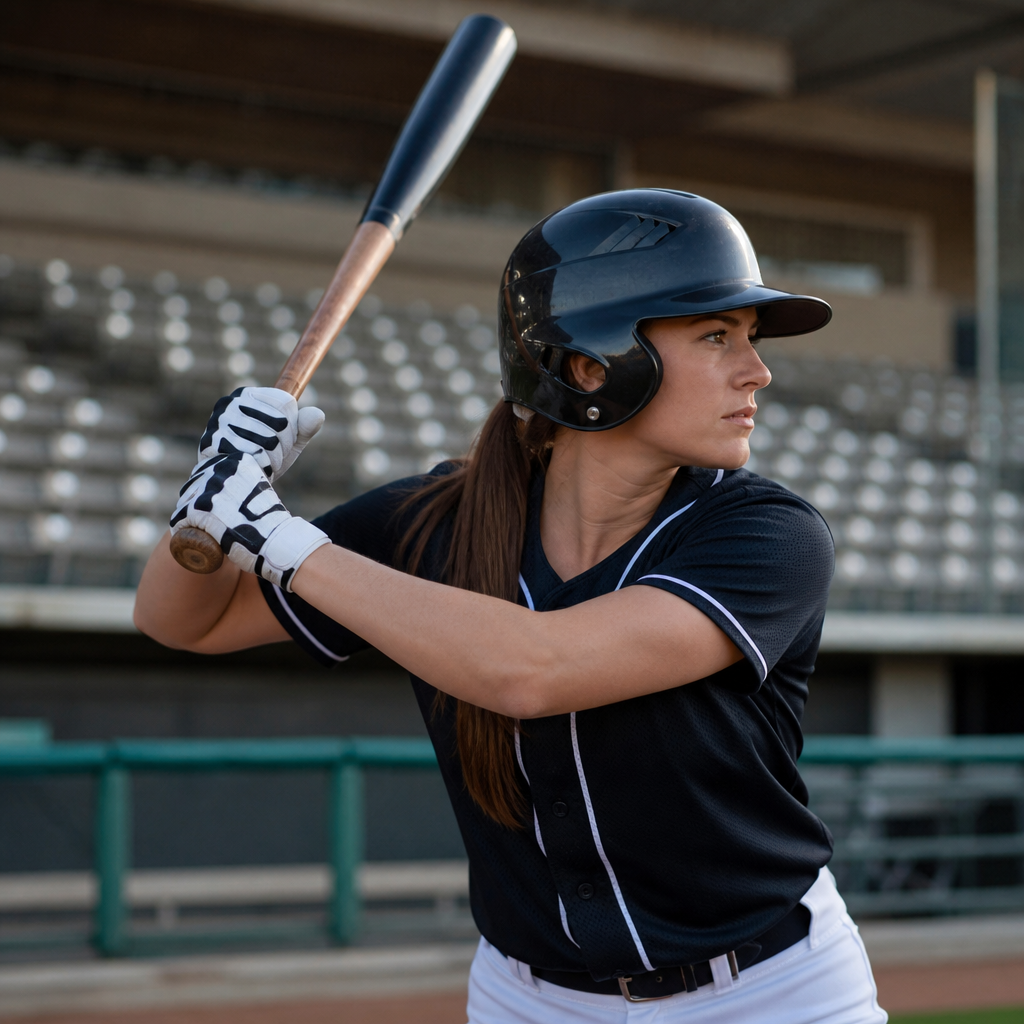
Baseball has long sold itself as a national pastime open to anyone with skill, patience, and competitive grit, yet the history of women in the game shows how incomplete that promise has been. Batting for equality means confronting the barriers that kept women off professional diamonds, out of front offices, and away from the coaching pipeline, while also recognizing the many ways women have always shaped baseball culture. In practical terms, inclusion in baseball covers access to youth leagues, school teams, college programs, professional opportunities, scouting roles, broadcasting, umpiring, administration, ownership, and historical recognition. This matters because baseball is not just a sport; it is a labor market, a cultural institution, and a public stage where belonging is visibly granted or denied.
I have worked on baseball content and player development research long enough to see the same pattern repeat across levels: when opportunities are available, girls and women perform, persist, and lead; when pathways disappear, people wrongly confuse exclusion with lack of interest. The issue is structural, not biological destiny. Women have played baseball since the nineteenth century, barnstormed across the country, filled wartime professional rosters, and built modern organizations to keep the sport alive for the next generation. Yet the record remains fragmented, and many fans still know a few symbolic names but not the systems that limited advancement. A strong hub article has to connect those systems, identify where progress is real, and explain what still needs to change for women’s inclusion in baseball to become ordinary rather than exceptional.
The conversation also reaches beyond one league or one famous film. It includes the All-American Girls Professional Baseball League, the Negro Leagues context, Title IX’s indirect effects, girls choosing baseball over softball, MLB initiatives, international women’s baseball, and the work of advocates building community in spaces that were not designed for them. Search interest around women in baseball often starts with simple questions: have women played professional baseball, why do girls get pushed into softball, are there women coaches in MLB, and what does equality actually look like in this sport? The clearest answer is that women have always belonged in baseball, but equal inclusion requires durable infrastructure: teams, funding, media coverage, coaching, rules access, and visible career ladders that do not disappear at adolescence.
Historical barriers and the overlooked roots of women’s baseball
Women’s fight for inclusion in baseball began well before modern diversity initiatives. By the late 1800s, women’s teams were drawing crowds, often under novelty framing that undercut athletic legitimacy even as it profited from spectatorship. Bloomer Girls teams traveled widely, mixing skilled players with theatrical marketing because entertainment was one of the few available business models. That dual treatment, part admiration and part trivialization, became a recurring problem. Women could be visible as spectacle without being accepted as competitors. In my experience reviewing archives and league histories, that pattern explains why so many early players were documented unevenly compared with men who performed in equivalent semiprofessional settings.
The modern touchstone is the All-American Girls Professional Baseball League, founded in 1943 when wartime manpower shortages threatened men’s professional baseball. The league proved there was an audience for women’s baseball and produced elite athletes such as Dottie Wiltse Collins, Sophie Kurys, and Dorothy Kamenshek. But it also imposed charm school requirements, beauty standards, and restrictive gender presentation rules that male players never faced. Inclusion was conditional. Women were welcomed so long as they reassured the public that athletic excellence would not challenge feminine norms. When men returned from war and commercial priorities shifted, the league eventually folded in 1954. Its legacy is inspiring, but it is also a cautionary example of what happens when opportunity depends on crisis rather than principle.
Race made the exclusion story even sharper. Black women played baseball, but segregated systems and poor documentation hid much of their contribution. Toni Stone, Mamie “Peanut” Johnson, and Connie Morgan are central figures because they played in the Negro Leagues, directly challenging both gender and racial barriers. Their careers make one point unmistakable: women did not merely seek separate spaces; some proved they could compete in high-level men’s professional environments when given the chance. Still, they were treated as exceptions instead of evidence. That framing allowed institutions to celebrate isolated pioneers without opening systematic pathways for those who might follow.
Why the pipeline narrows: girls, youth baseball, and the softball detour
The biggest inclusion problem in baseball today is not visibility at the top; it is attrition in the middle. Many girls play baseball when they are young, especially in tee-ball and community recreational leagues where access is relatively open. The drop-off usually comes when competition intensifies around ages ten to fourteen. Travel teams become more selective, middle schools and high schools often sponsor softball instead of baseball for girls, and families start hearing that softball is the practical route to scholarships. The result is a pipeline leak that would be obvious in any workforce analysis: talent exists early, then institutions redirect it elsewhere.
Softball is a legitimate sport with its own rich history, but steering girls into softball by default is not the same as offering equal choice. Baseball and softball differ in field dimensions, pitching mechanics, batting timing, defensive reads, and tactical rhythm. A girl who prefers baseball should not be told that softball is “basically the same.” In player development terms, it is not. I have seen how this assumption affects confidence. Once a player is treated as unusual for wanting to stay in baseball, she often has to justify her preference in ways boys never do. That social tax matters almost as much as roster access.
Parents and coaches also face practical barriers. A talented girl may have to travel farther to find a baseball team willing to roster her, deal with outdated locker room arrangements, or navigate competition rules that were written without considering mixed participation at older ages. At the high school level, some girls have made boys’ baseball teams, but doing so often requires a legalistic, case-by-case fight. College opportunities are even thinner because varsity women’s baseball programs are rare in the United States, while softball has the scholarship infrastructure. Until baseball builds equivalent ladders, many athletes will continue leaving not because they lack ability, but because the ecosystem rewards another choice.
| Barrier | How it appears | Effect on inclusion | Practical response |
|---|---|---|---|
| Youth attrition | Girls leave baseball during travel-ball years | Talent pool shrinks before elite development | Create girls’ baseball teams and mixed-team protections |
| School structure | Schools offer softball but not girls’ baseball | Baseball pathway breaks in adolescence | Add girls’ baseball clubs, tournaments, and state support |
| College gap | Few varsity options for women’s baseball | Players lose incentive to continue | Build collegiate baseball programs and national competition |
| Cultural bias | Girls are told baseball is not for them | Reduced confidence and retention | Coach education and visible role models |
Professional opportunities, leadership roles, and the business of belonging
When people ask whether women belong in professional baseball, the most accurate response is that women already contribute across the professional game, but representation remains uneven and often symbolic. Kim Ng’s appointment as general manager of the Miami Marlins in 2020 was historic because she became the first woman to hold that role in a major North American men’s professional sports league. Her rise was not ceremonial; it was built on decades of work with the Chicago White Sox, American League office, New York Yankees, and MLB. The significance of her appointment lies in what it disproved: the idea that baseball operations expertise is somehow gendered.
Coaching and on-field instruction show similar movement. Alyssa Nakken became the first woman to coach on the field in a regular-season MLB game with the San Francisco Giants in 2022. Rachel Balkovec became the first woman to manage an affiliated minor league team when she took over the New York Yankees’ Low-A Tampa Tarpons in 2022. Bianca Smith became the first Black woman to coach in professional baseball with the Boston Red Sox organization. These milestones matter because they expand the image of authority in baseball. Players learn quickly whether a club truly trusts women with decision-making, not just with outreach roles.
Broadcasting, umpiring, sports science, and front-office analytics are also part of inclusion. Women such as Jessica Mendoza, Melanie Newman, and Jenny Cavnar have worked major baseball broadcasts, helping normalize expert analysis from women in spaces long dominated by men. In umpiring, trailblazers including Ria Cortesio and Jen Pawol have advanced through professional development systems, showing that rule enforcement and game management are not gender-bound skills. Behind the scenes, women are now visible in biomechanics, strength and conditioning, medical departments, data operations, and player development. Still, one lesson from inside the sport is clear: firsts are encouraging, but second, third, and twentieth hires indicate structural change.
Professional inclusion also depends on economics. Clubs invest where they expect return, and return follows audience, sponsorship, and media exposure. That is why women’s baseball cannot rely only on inspirational storytelling. It needs business planning, regular competition, rights deals, and measurable development pathways. Internationally, organizations such as the Women’s Baseball World Cup have shown that competitive women’s baseball can attract committed fan bases when given proper presentation. If leagues, federations, and brands treat women’s baseball as a permanent product rather than a periodic campaign, the market can mature. Baseball’s commercial history proves that fandom grows when access is consistent.
Global growth, advocacy networks, and what real inclusion looks like next
One of the most important developments in women’s baseball has come from international competition and grassroots advocacy. The World Baseball Softball Confederation stages the Women’s Baseball World Cup, and countries including Japan, Canada, the United States, Australia, Chinese Taipei, and others have built national team programs. Japan has been especially influential, combining technical excellence with organizational seriousness. Watching international women’s baseball makes one fact obvious: the talent level is not hypothetical. It exists now. What many players lack is not capability, but enough domestic structure between childhood and elite national competition.
Grassroots groups have stepped into that gap. Baseball For All, founded by Justine Siegal, has created tournaments, camps, and advocacy programs that give girls chances to play baseball with peers who share their ambitions. Siegal herself became the first woman to coach for an MLB organization when she worked as a guest instructor with the Oakland Athletics and later with other clubs. Programs like this matter because they do more than host events; they convert isolation into community. A girl who is the only female player on a local roster may stay in the sport if she can periodically enter an environment where her participation is normal rather than defended.
Real inclusion next will require policy choices. Youth governing bodies should protect coed access and discourage arbitrary exclusions. State associations should sanction girls’ baseball championships where participation justifies it, because official competition confers legitimacy and media attention. Colleges should pilot club-to-varsity pathways. MLB and its partners should fund coaching education, scouting visibility, and equipment grants targeted to girls’ baseball, not only softball. Historians and museums should continue correcting the record so current players inherit a usable past. Inclusion also means everyday operational details: properly designed uniforms, safe facilities, travel standards, and locker room planning that respects athletes without treating them as logistical problems.
The broader benefit is simple. Baseball gets better when it stops excluding potential players, coaches, executives, and fans. Equality in baseball is not a side issue reserved for special events or heritage months. It is a competitive advantage, a fairness obligation, and a test of whether the sport can align its traditions with its stated values. Women have already shown they can play, teach, evaluate, lead, and market baseball at the highest levels available to them. The next step is to make those opportunities durable and ordinary. If you care about the future of women in baseball, support the organizations, teams, and policies that keep girls in the game long enough to choose their own ceiling.
Frequently Asked Questions
Why has inclusion been such a central issue in women’s baseball history?
Inclusion has been a defining issue because baseball’s public image has often promised fairness, merit, and open competition, while its actual structures have historically limited who could fully participate. For generations, women were told that baseball was not the right sport for them, even when they had the talent, discipline, and desire to play at a high level. Those barriers appeared in many forms: exclusion from organized leagues, limited access to training and competition, a lack of visibility in media coverage, and assumptions that women belonged in supporting roles rather than on the field, in the dugout, or in decision-making positions.
That is why the fight for equality in baseball is not only about adding more opportunities today. It is also about correcting a long pattern of gatekeeping that shaped who was seen as legitimate in the sport. Women have always been part of baseball culture as players, advocates, organizers, fans, scouts, executives, and educators, but their contributions were often minimized or treated as exceptions. Inclusion matters because it determines who gets to develop skills early, who receives coaching and resources, who gets noticed by selectors, and who sees a future in the game. Without inclusion, talent is ignored and the sport falls short of its own ideals.
What kinds of barriers have women faced in trying to play baseball rather than being steered into softball?
One of the most persistent barriers has been the assumption that girls who want to play with a bat and glove should automatically be directed into softball, regardless of their actual interest in baseball. While softball is a respected sport in its own right, steering girls away from baseball removes choice and can interrupt athletic development at key stages. In many communities, boys are encouraged to continue on established baseball pathways through youth leagues, travel teams, elite coaching, and showcase events, while girls may have to search much harder for teams willing to roster them or tournaments designed for their participation.
These barriers are practical as much as cultural. A girl who wants to play baseball may struggle to find age-appropriate leagues, experienced coaches, regular competition, or peers with similar ambitions. She may also face skepticism from adults who assume she will not fit in a clubhouse, handle the pace of the game, or belong on a competitive roster. Even when she earns her place, she may deal with isolation, tokenization, or pressure to prove herself over and over in ways male peers do not. The result is a thinning of the pipeline: talented players disappear not because they lack ability, but because the system repeatedly tells them there is no clear path forward. Creating equality means protecting girls’ access to baseball from the earliest levels and treating their participation as normal, not unusual.
How does inclusion in baseball extend beyond players on the field?
True inclusion reaches every level of the sport. It includes not only players, but also coaches, managers, umpires, scouts, player development staff, broadcasters, analysts, front office leaders, medical staff, and ownership circles. When women are absent from these roles, baseball loses a broad range of expertise and perspective. It also sends a message to younger generations that their place in the sport is limited. A girl who never sees a woman coaching third base, running player development, or helping shape draft strategy may assume those careers are not realistically open to her, even if she has the knowledge and drive to excel in them.
This is why the coaching pipeline and leadership opportunities matter so much. Baseball is a relationship-driven industry in which advancement often depends on access, mentoring, trust, and visibility. If women are not being hired, promoted, and supported across the sport’s professional infrastructure, then progress on the field will remain incomplete. Inclusion beyond playing also changes how baseball is taught and governed. It influences recruitment, athlete support, workplace culture, media narratives, and policy decisions. In short, equality in baseball is not a single roster issue. It is an ecosystem issue, and lasting change requires women to be fully included wherever the game is organized, taught, evaluated, and led.
Why does youth access matter so much in the fight for equality in baseball?
Youth access is where baseball opportunity either begins or breaks down. Most athletic pathways are built early through repetition, quality coaching, regular competition, and the confidence that comes from being welcomed in a sport’s culture. If girls do not receive those things when they are young, the gap compounds over time. A lack of access to local leagues, facilities, travel opportunities, or baseball-specific instruction can affect skill development, visibility, and long-term retention. By the time higher-level opportunities appear, many girls have already been filtered out of the system.
Just as important, youth access shapes identity. When girls are allowed to participate fully in baseball from the start, they grow up seeing themselves as baseball players, not as outsiders asking for permission to stay. That sense of belonging has enormous long-term value. It influences whether they continue competing, whether they pursue coaching or officiating, and whether they remain connected to the sport as leaders and advocates. Equality in baseball cannot be achieved only by celebrating a few individual breakthroughs at the top. It requires building a stronger foundation underneath them, one where girls can enter the game easily, stay in it consistently, and imagine meaningful futures within it.
What does meaningful progress for women’s inclusion in baseball actually look like?
Meaningful progress looks like structural change, not just symbolic moments. It means girls having routine access to baseball leagues, training, and competition in the same way boys do. It means women being recruited, hired, and promoted in coaching, player development, scouting, analytics, broadcasting, and executive leadership. It means institutions treating women’s presence in baseball as a normal and permanent part of the sport rather than a novelty worthy of surprise. Progress also includes better visibility, because representation in stories, broadcasts, and public history helps shift assumptions about who belongs in baseball and who has always belonged there.
At the same time, real progress should be measured by everyday experience. Are women welcomed and respected in clubhouses, offices, and dugouts? Are girls able to join teams without being pushed elsewhere? Are women in baseball given authority, resources, mentorship, and pathways to advance? Are the sport’s leaders willing to address bias when it appears? Those are the questions that reveal whether equality is becoming real. The goal is not simply to open a door once and call the problem solved. The goal is to build a baseball culture where women can enter, contribute, lead, and thrive at every level of the game.