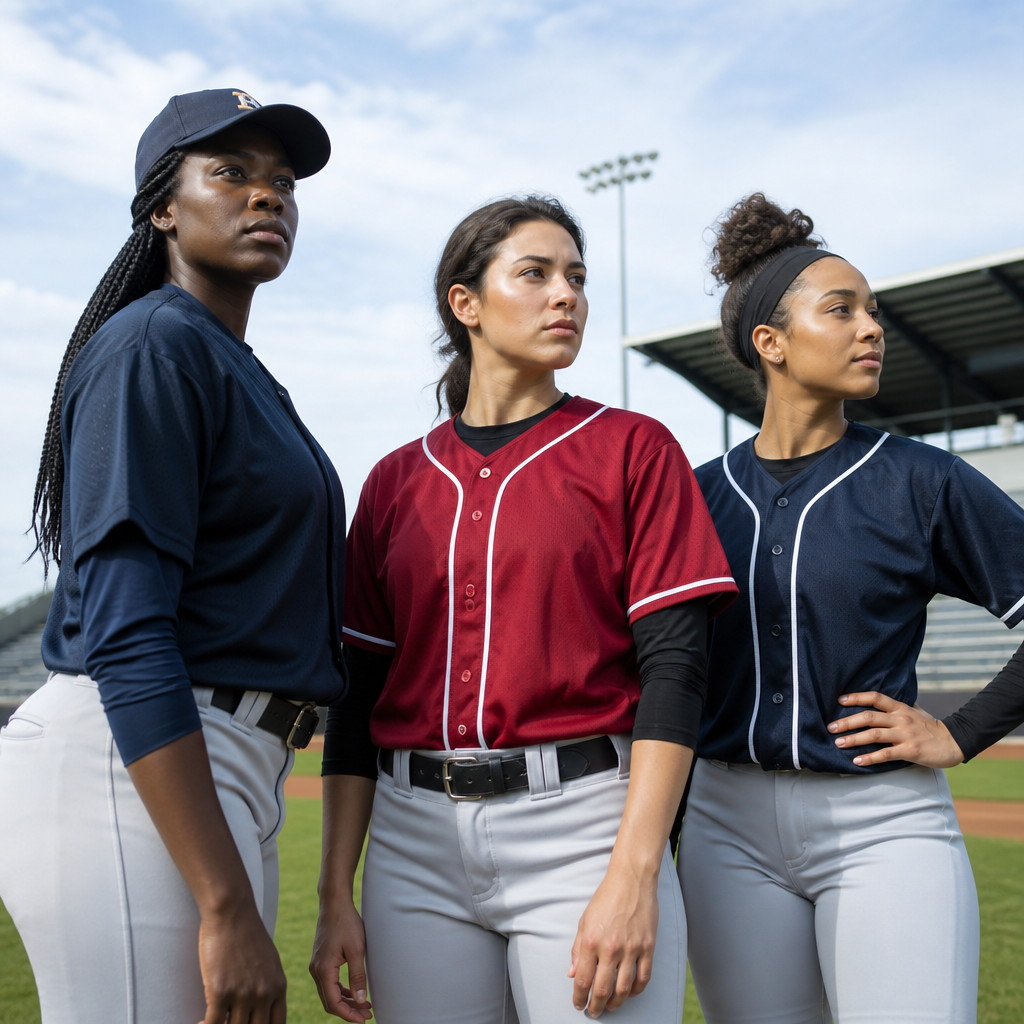
Trailblazing women in baseball player representation have changed how the sport negotiates contracts, protects athletes, and imagines leadership off the field. Player representation refers to the work of certified agents, attorneys, contract advisers, marketing specialists, and agency executives who guide players through salary negotiations, endorsement deals, labor rules, immigration issues, tax planning, and long-term career decisions. In baseball, that work is unusually technical because Major League Baseball operates under a detailed collective bargaining agreement, an international signing system, salary arbitration, service-time rules, luxury-tax pressures, and a layered minor league structure. When women entered this space in meaningful numbers, they were not stepping into a generic sales job. They were entering one of the most relationship-driven, regulation-heavy, male-dominated corners of professional sports.
This topic matters far beyond the biographies of a few successful agents. Representation shapes who gets paid, how prospects are advised, how families understand risk, and whether players trust the business side of the game. I have seen in sports business reporting and agency operations that the best representatives do much more than close a deal; they become interpreters of a complex system at moments when a player’s future can turn on one medical opinion, one opt-out clause, or one arbitration brief. Women who built careers in baseball representation had to master all of that while also proving, repeatedly, that they belonged in clubhouses, winter meetings, draft rooms, and boardrooms where access was never handed to them. Their progress opened pathways not only for more women agents, but also for women in analytics, front offices, law, marketing, and player development.
As a hub article within the broader Women in Baseball subject, this page covers the key people, milestones, skills, barriers, and emerging trends that define miscellaneous coverage in this subtopic. It connects the history of women in baseball player representation with practical questions readers often ask: Who were the pioneers? What does an MLB agent actually do? Why does certification matter? How have women influenced negotiations, client services, and agency culture? The answers reveal a clear pattern. Trailblazing women did not succeed by being symbolic figures. They succeeded because they combined legal rigor, negotiation discipline, cross-cultural communication, and relentless preparation, then used those strengths to reshape an industry that now depends on broader talent to serve players well.
Pioneers Who Redefined Baseball Representation
Any serious discussion starts with Arn Tellem’s longtime deputy and then independent agency leader Lonnie Murray, one of the first prominent Black women to represent Major League players at the highest levels. Her work mattered because it demonstrated that a woman could build credibility in elite baseball circles through contract expertise and durable player trust, not novelty. Murray represented stars including Hall of Famer Dave Winfield and later worked with high-profile athletes across sports. In baseball, she became a visible example for younger women entering representation, sports law, and athlete marketing. Visibility alone does not change an industry, but visible excellence does. Murray’s negotiations and executive leadership proved that women could command respect in a field that historically treated access as an old-boys network.
Another essential figure is Rachel Luba, whose rise brought unusual public attention to women in baseball agency work. Luba, a lawyer and certified agent, became widely known through her representation of Trevor Bauer and her role as founder of Luba Sports. Her prominence is not the whole story of women in representation, but it is an important modern case because it showed how a new-generation baseball agent could combine legal training, media fluency, analytics-driven positioning, and direct brand building. Whether one agrees with every public strategy associated with high-profile clients, her visibility helped force a broader conversation: women were no longer exceptions working quietly in the background; they were increasingly public faces of baseball dealmaking and client advocacy.
Equally important are women whose names are less familiar outside industry circles but whose influence inside agencies and player-service firms has been substantial. Baseball representation depends on recruiting coordinators, contract analysts, international liaisons, endorsement specialists, salary arbitration researchers, and capably networked attorneys who may not seek headlines. Women have steadily filled those roles at firms such as Boras Corporation, CAA Sports, Excel Sports Management, Ballengee Group, and boutique baseball agencies. Their work includes preparing market comps for arbitration, reviewing medical records, organizing off-season training resources, building Latin American player support systems, and coordinating post-career planning. In practice, these functions often determine whether a player feels fully represented.
What Baseball Player Representatives Actually Do
A baseball representative’s core job is to protect and advance a player’s interests across the entire career lifecycle. That starts before a player reaches the majors. Advisers assess draft options, college leverage, bonus-pool strategy, and development environments. For international amateurs, representatives may help families understand age-verification rules, trainer relationships, visa logistics, language support, and the risks of early professional commitments. Once a player signs, the work shifts toward roster moves, option years, grievance issues, endorsement screening, and relationship management with clubs. At the major league level, the representative must understand service time, pre-arbitration value, salary arbitration comparables, free agency timing, qualifying offers, no-trade clauses, assignment bonuses, opt-outs, award bonuses, and deferred compensation structures.
In my experience reviewing baseball deals and agency workflows, the public usually sees only the final dollar figure. The harder work happens long before an agreement is announced. Agents collect comparable contracts, study organizational depth charts, evaluate whether a team values ground-ball rate, framing, chase rate, or durability history, and test which clubs have both payroll room and strategic fit. They also coordinate with tax advisers because state taxes, signing-bonus treatment, and residency planning can materially affect take-home value. A three-year contract is never just a three-year contract. The language around termination rights, physicals, injury protections, assignment conditions, and marketing commitments can change the practical outcome dramatically.
| Representation Function | Why It Matters in Baseball | Example |
|---|---|---|
| Contract negotiation | Secures salary, bonuses, clauses, and flexibility | Adding an opt-out after year two increases future upside |
| Arbitration preparation | Frames a player’s value using accepted comparables | Using innings, WAR, saves, or awards to justify a raise |
| International support | Reduces transition risk for players and families | Visa help, translation, housing, and financial education |
| Brand and endorsements | Builds income beyond salary and extends career value | Local equipment deal for a pre-free-agency player |
| Crisis and injury management | Protects rights when careers become unstable | Independent medical review before accepting a club decision |
Women who excel in player representation often distinguish themselves in these less glamorous areas. Clients remember who returned calls at midnight after a demotion, who explained a non-tender without jargon, and who pushed for the right rehab language after surgery. That service ethic has helped many women build reputations that spread through word of mouth, which remains one of the most powerful recruiting channels in baseball.
Barriers Women Faced and How They Broke Through
The biggest barriers were structural, cultural, and relational. Structurally, baseball agency work has long depended on informal networks built through scouts, former players, clubhouse staff, attorneys, and front-office contacts. Women entering the field often lacked easy access to those pipelines because they had been excluded from the spaces where those relationships formed. Culturally, many players, parents, and even team officials carried assumptions that baseball business expertise naturally belonged to men, especially former male athletes. Relationally, agency success depends on trust built over years, and women frequently had to perform more work to earn the same presumption of competence.
They broke through by overpreparing and by building value in places others neglected. Some came through sports law, which gave them a command of contracts and labor rules that immediately translated into credibility. Others built recruiting relationships with families rather than relying only on clubhouse proximity. Many became exceptionally strong in multilingual communication, player services, or brand strategy, areas that modern players increasingly prioritize. In a sport with large Latin American talent pipelines, representatives who can work comfortably across languages and cultures have a practical advantage. Women who invested there often became indispensable to clients navigating life changes far beyond baseball performance.
Another breakthrough came from changing agency models. Traditional baseball representation often revolved around a dominant founder with a roster of negotiators and recruiters beneath him. As sports business digitized, smaller firms and specialist-led boutiques gained room to compete through personalization, social media visibility, legal precision, and targeted recruiting. That created openings for women to build firms or personal brands without waiting for legacy power structures to invite them in. The path is still difficult, but it is more navigable than it was twenty or thirty years ago.
How Women Have Improved the Business for Players
Women have influenced baseball representation not simply by increasing diversity numbers, but by broadening what full-service representation means. Many players now expect integrated support that covers contract value, mental health referrals, family logistics, media preparation, sponsorship alignment, and career planning after retirement. Women in agency roles have often been central to building these systems because they entered the business at a time when athletes were becoming brands, not only employees of clubs. Good representation today includes digital reputation management, content strategy, charitable foundation planning, and business formation, all handled alongside baseball negotiations.
There is also a measurable strategic effect when representatives listen carefully and tailor negotiations to player goals rather than forcing every client toward the same template. One player may want maximum annual value. Another may prioritize location, a chance to start, opt-out flexibility, or a club with strong pitching development. The most effective women representatives have shown a consistent ability to translate personal priorities into contract structure. That can mean securing housing support for a player with a young family, negotiating interpreter access, or finding endorsement fits in markets overlooked by larger agencies chasing only national deals.
Real influence is seen in client retention. Players rarely stay with advisers who cannot deliver clarity and trust. Women who have lasted in baseball representation have done so because clients and families recognized competence over time. Their success has improved standards for the whole business by making communication, responsiveness, and holistic service central parts of representation rather than optional extras.
The Skills, Credentials, and Standards That Matter
To work as a baseball agent at the highest level, credentials and systems matter. Representatives dealing with Major League players must understand the Major League Baseball Players Association certification process and the collective bargaining agreement that governs compensation and mobility. Legal training helps, but it is not mandatory; many excellent baseball agents come from recruiting, finance, marketing, or former team operations. What is mandatory is mastery of the rules. Misunderstanding service time, international restrictions, grievance procedures, or arbitration file standards can cost a player real money.
In practice, the strongest women in this field usually combine several competencies: contract analysis, negotiation strategy, public communication, and emotional steadiness. They also use recognized tools and information sources. Agencies rely on video platforms, performance databases, contract trackers, public salary resources, and medical-consult coordination. Analysts review FanGraphs and Baseball-Reference for performance context, while legal teams compare precedent language from prior agreements. During arbitration preparation, representatives build narratives around counting stats, awards, workload, defensive value, and market comparables because arbitration panels do not evaluate players exactly the way fans do. Precision matters. A good representative knows when advanced metrics help and when the forum favors traditional milestones.
Standards matter because trust in this business is earned slowly and lost quickly. Ethical representatives disclose conflicts, explain fees clearly, avoid unrealistic promises, and document advice. That has been especially important for women, who have often had to build reputations under heavier scrutiny. The women who became trailblazers did so by being right, prepared, and reliable over long periods, not by relying on image alone.
Where This Subtopic Connects Across Women in Baseball
Player representation sits at the intersection of many other women-in-baseball stories, which is why it works well as a miscellaneous hub. It connects to women in sports law because many agents start as attorneys. It connects to front-office leadership because some agency professionals later move into club administration, business operations, or player services. It connects to broadcasting and media because high-visibility negotiations shape public narratives around players and teams. It connects to international baseball because representatives often guide players through cross-border transitions that affect education, housing, family stability, and career risk. It even connects to women in analytics, since modern negotiations increasingly use pitch data, batted-ball trends, aging curves, and workload projections.
For readers exploring the broader Women in Baseball landscape, this subtopic offers a practical lens on power. Representation is where advocacy becomes contractual reality. It is where behind-the-scenes expertise turns into guaranteed money, player choice, and career security. The trailblazing women in baseball player representation proved that expertise travels. Once women established authority in agency work, it became harder for the sport to argue that women did not belong in any other baseball business role.
The key takeaway is straightforward: women transformed baseball player representation by mastering the sport’s most complex business functions and using that mastery to serve players more completely. They overcame closed networks, changed expectations around client service, and created new entry points for the next generation. If you are building a Women in Baseball content plan, use this hub as the foundation for deeper articles on pioneering agents, certification pathways, baseball contract strategy, international player advising, sports law careers, and the future of athlete advocacy. Start there, and the full picture of women’s impact on baseball becomes impossible to miss.
Frequently Asked Questions
What does player representation in baseball actually involve, and why has it been such an important area for trailblazing women?
Player representation in baseball goes far beyond negotiating a headline contract number. A representative may serve as a certified agent, attorney, contract adviser, marketing strategist, business manager, or agency executive, and in many cases the role blends several of those functions at once. In baseball, representatives help players navigate salary arbitration, free agency, option years, service-time rules, luxury-tax realities, endorsement opportunities, international signing systems, visa and immigration concerns, tax planning across multiple states and countries, injury protections, grievance procedures, and long-term wealth management. Because Major League Baseball operates under a highly technical collective bargaining framework, effective representation requires both legal fluency and deep industry relationships.
That complexity is exactly why the work of trailblazing women has mattered so much. Women who entered baseball representation often had to prove themselves in spaces historically dominated by men, yet many of them did more than simply gain access—they reshaped standards of professionalism, preparation, and player advocacy. They helped expand the idea of what strong representation looks like, emphasizing not only contract value but also career architecture, personal branding, family considerations, post-playing opportunities, and holistic support. Their presence also challenged old assumptions about who could lead negotiations, advise elite athletes, and manage high-stakes baseball business. In that sense, trailblazing women did not just participate in the profession; they helped modernize it.
How have women in baseball player representation changed contract negotiations and player advocacy?
Women in baseball representation have influenced contract negotiations by bringing a broader, more strategic view of value creation. At the negotiation table, success is not only about securing the highest possible salary. It can also involve timing a player’s market entry, structuring guarantees, protecting against downside risk, negotiating performance bonuses, preserving opt-out flexibility, addressing no-trade protections, and understanding how a team’s payroll strategy affects leverage. Trailblazing women have been part of that evolution by treating negotiations as multi-variable business decisions rather than one-dimensional salary battles.
They have also helped deepen the advocacy side of the profession. Strong advocates do more than negotiate in December and disappear by spring training. They monitor a player’s standing with the club, track comparable salaries, anticipate roster risks, coordinate legal and tax advice, support endorsement positioning, and step in when labor, disciplinary, or immigration issues arise. Many women who broke through in this field earned trust by being exceptionally detail-oriented and relentlessly prepared, qualities that matter in a sport governed by dense rules and long career timelines. Their work has reinforced a key principle in modern player representation: the best agent is often the one who can see around corners, protect the client before problems escalate, and align every deal with the player’s larger life goals.
Why is baseball player representation considered especially technical compared with other sports?
Baseball representation is unusually technical because the business of the sport is built around layered rules that directly shape a player’s earning power and career path. Representatives must understand service time, pre-arbitration compensation, salary arbitration formulas, reserve-system restrictions, option years, free-agency timing, qualifying-offer implications, roster classifications, injury-related provisions, and the practical effects of the collective bargaining agreement. A small detail in timing or status can materially affect a player’s leverage and long-term income. That means advisers need to combine legal analysis, statistical context, market intelligence, and relationship management at a very high level.
The technical demands grow even more when international players are involved. Representatives may need to coordinate immigration documentation, work authorization, translation support, tax planning across jurisdictions, housing transitions, family logistics, and cultural adaptation while also advising on baseball matters. Endorsement work introduces another set of legal and commercial considerations, especially when a player’s image rights and brand identity are expanding. Trailblazing women in representation have stood out in this demanding environment precisely because success depends on mastery, not stereotype. Their rise underscores a central reality of baseball business: the profession rewards expertise, precision, and judgment, and those qualities can redefine who is seen as a leader in the sport.
What qualities make a successful baseball representative, and how have pioneering women exemplified them?
A successful baseball representative needs a rare mix of technical skill and interpersonal judgment. At minimum, that includes deep knowledge of labor rules, contract structure, arbitration dynamics, team behavior, and the economics of the baseball marketplace. But elite representation also requires credibility, discretion, communication skills, persistence, emotional intelligence, and the ability to earn trust over many years. Players are not only choosing someone to negotiate compensation; they are choosing someone who may advise them through injuries, trades, family relocations, public scrutiny, and career-defining decisions.
Pioneering women in the field have exemplified these qualities by building reputations for preparation, advocacy, and strategic steadiness. Many earned influence by mastering the details others overlooked, communicating clearly under pressure, and proving they could represent clients effectively in rooms where expectations were stacked against them. Just as importantly, they often broadened the client-service model. Rather than limiting representation to transactional moments, they treated it as ongoing stewardship of a player’s career, reputation, and future opportunities. That approach has resonated throughout the industry because baseball careers are fragile, nonlinear, and deeply affected by decisions made off the field. The women who trailblazed in this space showed that durable success comes from combining command of the rules with a genuine commitment to the person behind the player.
What is the broader legacy of trailblazing women in baseball player representation for the future of the sport?
Their legacy extends well beyond individual deals or agency milestones. Trailblazing women in baseball player representation have helped expand the pipeline of leadership in one of the sport’s most influential business sectors. By succeeding as negotiators, advisers, lawyers, and executives, they made it harder for the industry to cling to narrow ideas about authority and expertise. That matters because representatives often shape major career outcomes for players and influence how teams, agencies, and sponsors conduct business. When more voices with proven expertise enter that ecosystem, the sport benefits from stronger advocacy, broader perspective, and a more modern professional culture.
Looking forward, their impact is likely to be felt in mentorship, hiring, and the expectations players bring to agency relationships. Younger professionals can now see a clearer path into baseball representation, and players increasingly recognize the value of advisers who offer comprehensive, sophisticated counsel rather than a one-size-fits-all approach. The legacy is also cultural: these women helped normalize the idea that leadership in baseball’s off-field power structure should be earned through skill, judgment, and results. For an article about trailblazing women in baseball player representation, that is the central takeaway—their work did not merely open doors; it altered how the profession defines excellence.