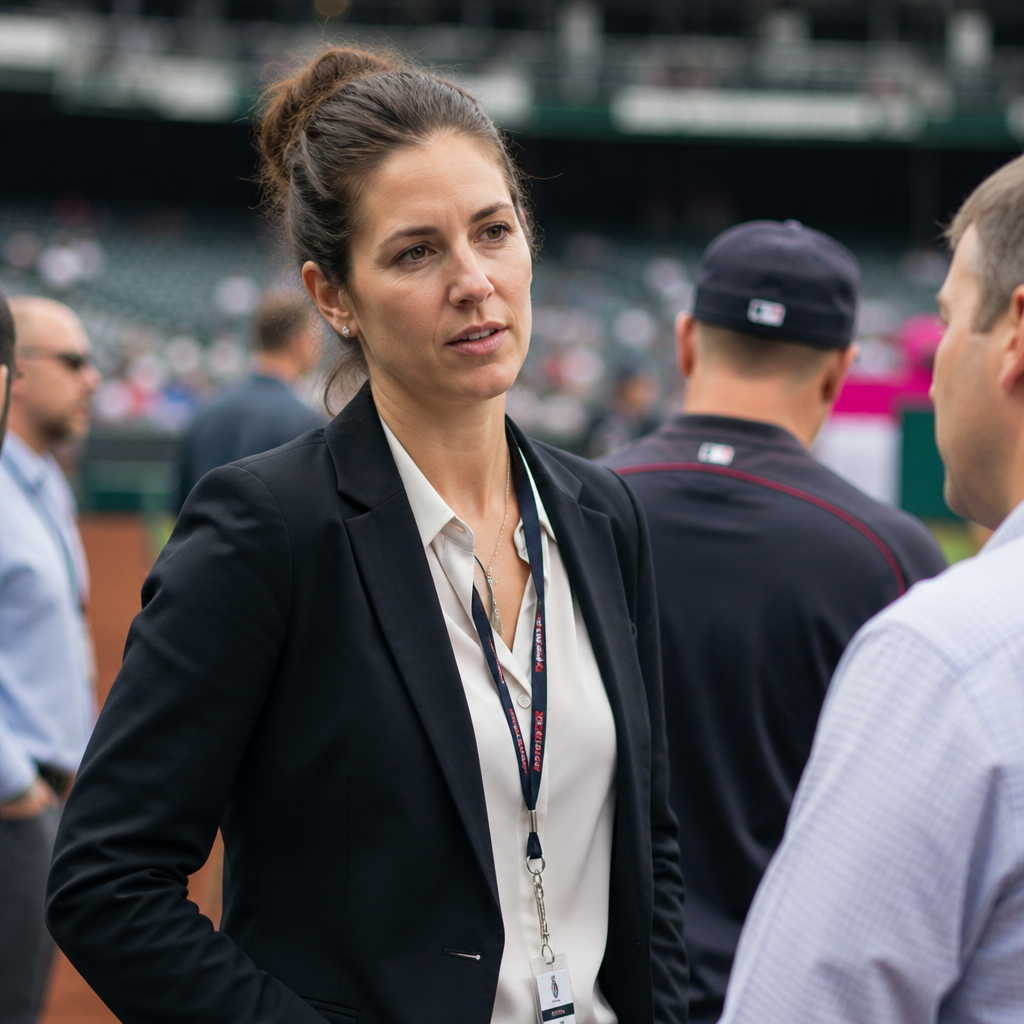
Women in baseball management are no longer treated as rare exceptions, yet the path to leadership across the sport remains uneven, highly scrutinized, and historically significant. In this context, management means the decision-making roles that shape how a baseball organization operates: owners, presidents, general managers, assistant general managers, scouting directors, farm directors, analytics leaders, operations executives, and other front-office positions that influence roster construction, player development, budgets, hiring, and long-term strategy. The changing landscape matters because baseball management controls access, sets workplace culture, and determines which voices are heard when clubs make competitive and financial choices. After years of covering hiring trends and speaking with people in club operations, I have seen one consistent truth: representation in leadership changes not only who gets hired, but how organizations define talent, communication, and accountability. This hub article maps the major themes in this area, from historical barriers and milestone appointments to today’s pipeline challenges, emerging opportunities, and the practical questions readers often ask when exploring women in baseball management.
For decades, women worked around professional and amateur baseball in visible but narrowly defined roles, while the core leadership ladder remained overwhelmingly male. That history is important because current progress did not appear suddenly; it developed through legal change, labor shifts, public pressure, and the sport’s growing acceptance of analytics, cross-functional staffing, and broader professional backgrounds. Baseball management used to favor former players and long-standing insider networks more heavily than many other industries. Those networks often reproduced themselves through informal referrals, low-paid entry jobs, and assumptions about who “looked” credible in a clubhouse or scouting department. As a result, women were frequently evaluated against stereotypes rather than standards. Today, the strongest organizations are moving in a different direction. They define competencies more clearly, recruit from a wider set of universities and industries, and recognize that effective management requires communication, planning, evidence-based decision-making, and organizational leadership as much as it requires playing experience. Understanding that shift helps explain why this part of the women in baseball conversation is both complex and central to the sport’s future.
Historical barriers and why baseball management changed slowly
Baseball management changed more slowly than many fans expected because the sport has long relied on hierarchy, apprenticeship, and relationship-based hiring. In practice, that meant entry points were limited and advancement often depended on access to informal networks built in clubhouses, scouting circles, and ownership groups. Women interested in operations or executive tracks faced three persistent obstacles. First, there was a credibility gap rooted in outdated assumptions that leadership in baseball had to come from male playing experience. Second, there was an access problem: many internships and early-career jobs paid poorly or required relocation, making them harder to pursue without resources and connections. Third, there was retention pressure, because women entering male-dominated front offices often carried the burden of representing an entire group while navigating workplace cultures that were not designed for them.
These barriers were reinforced by the structure of the industry itself. Front offices tend to be lean, confidential, and risk-averse. Owners and top executives often hire people they already know, especially for sensitive roles involving contracts, medical data, proprietary models, and trade discussions. When a field works this way, exclusion can persist without a formal rule excluding anyone. Baseball also lagged in some diversity outcomes because the sport historically divided authority into separate silos: scouting, player development, business operations, and baseball operations. Women were more likely to be hired into communications, legal, finance, or community roles than into roster-building tracks. That distinction matters, because titles on the baseball side carry the clearest influence over competitive decisions and future executive advancement.
Milestones that reshaped expectations across the sport
Several high-profile appointments changed how the industry and the public viewed women in baseball management. Kim Ng’s hiring as general manager of the Miami Marlins in 2020 was a landmark because it broke a barrier at the highest baseball-operations level in Major League Baseball. Her résumé was not symbolic; it was built over decades with the Chicago White Sox, New York Yankees, Los Angeles Dodgers, and Major League Baseball’s central office. That depth mattered. It showed that the issue was never lack of qualified women, but lack of opportunity. Earlier milestones also set precedent. Jean Afterman became one of the most respected contract and negotiation executives in the game with the Yankees. Raquel Ferreira advanced in player development and front-office administration with the Boston Red Sox. Ila Borders, Justine Siegal, and others helped expand what baseball leadership could look like by challenging assumptions around authority and expertise.
These milestones matter beyond headlines because baseball is an imitation industry. Clubs study one another’s processes, staffing structures, and risk decisions. When one team succeeds after broadening its talent pool, others follow. The same pattern occurred as analytics departments expanded in the 2000s and 2010s. Teams that had once relied on narrow archetypes started hiring economists, engineers, software developers, data scientists, and legal specialists. That evolution indirectly widened pathways for women, especially in research and development, high-performance departments, and administrative leadership connected to baseball operations. It also changed internal status markers. A person did not need to fit the old image of a baseball lifer to contribute to roster strategy, arbitration prep, international operations, or draft modeling. In practical terms, each visible promotion made it easier for the next hiring committee to imagine a different kind of leader.
What women in baseball management roles actually do today
Women in baseball management work across nearly every operational function, and the scope of those jobs is broader than many fans realize. In a modern front office, executives help coordinate the amateur draft, international signings, salary arbitration, free-agent analysis, contract structures, advance scouting, player information systems, and communication between the major league staff and the farm system. On a given day, an assistant general manager may review injury projections with a medical team, discuss roster constraints with finance staff, and compare trade targets using internal valuation models. A farm director may oversee affiliate staffing, player development plans, workload management, and promotion timelines. A director of baseball operations may manage logistics, transactions, rule compliance, and communication flow during the season.
The expansion of technology has made these roles even more interdisciplinary. Systems such as TrackMan, Hawk-Eye, Rapsodo, and force-plate testing now generate detailed information on biomechanics, ball flight, pitch shape, bat speed, and movement quality. Turning those readings into better decisions requires leaders who can translate data into plain language for coaches, athletes, agents, and ownership. In my experience, the most effective managers are not the loudest voices in the room; they are the clearest. They know when to trust quantitative evidence, when to weigh human observation, and when to challenge groupthink. That combination of analytical rigor and communication skill has created real openings for women with backgrounds in law, finance, public policy, sports science, psychology, operations research, and organizational leadership.
| Management Area | Core Responsibilities | Why It Matters |
|---|---|---|
| General Manager | Roster building, trades, contracts, staff alignment | Sets competitive direction and resource allocation |
| Assistant GM | Cross-department coordination, negotiations, project oversight | Turns strategy into daily decisions |
| Player Development | Minor league staffing, training plans, promotions | Shapes long-term talent pipeline |
| Analytics and R&D | Modeling, performance analysis, decision support tools | Improves evidence-based evaluation |
| Scouting Administration | Draft process, reporting systems, budget and logistics | Connects talent identification to execution |
| Baseball Operations | Transactions, rules compliance, travel, scheduling | Keeps the organization functional under pressure |
The pipeline: where progress is real and where gaps remain
The pipeline for women in baseball management is stronger than it was a decade ago, but it is still fragile. More women are entering the sport through internships, fellowships, data roles, legal departments, and player development support positions. Programs run by Major League Baseball, clubs, and universities have helped expose candidates to front-office work earlier in their careers. Networking organizations, conference panels, and social platforms have also made the field less opaque. A student interested in baseball operations can now see more concrete examples of career paths than previous generations could. That visibility matters because many talented candidates rule themselves out of an industry when they cannot picture where they fit.
Still, the gaps are significant. Entry roles often remain competitive, underpaid, and concentrated in expensive markets. Advancement can depend on mobility, long hours, and comfort in environments where women may still be isolated. Another challenge is title inflation versus actual authority. A club can promote diversity numerically while keeping strategic power in a small inner circle. Readers should pay attention not only to hiring announcements, but to who runs meetings, controls information, signs off on major recommendations, and moves into succession-track positions. Progress is most credible when women advance from coordinator and analyst roles into director, vice president, assistant general manager, and top baseball-operations jobs with budgetary and personnel responsibility.
Leadership styles, organizational culture, and performance
One of the most useful corrections to old baseball thinking is the recognition that management effectiveness is not tied to a single leadership style. Successful women in baseball management are not succeeding because they mimic traditional executive behavior; they are succeeding because they build trust, create process discipline, and make better organizational decisions. In baseball, where departments can become territorial, leaders who ask sharper questions and synthesize different kinds of evidence often outperform those who rely on status alone. This is especially true in draft rooms, trade-deadline preparation, and player development meetings, where certainty is often overstated and information is incomplete.
Culture is not a soft extra. It affects retention, information flow, and competitive results. A front office that rewards thoughtful dissent is less likely to miss market inefficiencies or rush players into poor development situations. A department that tolerates dismissive behavior loses ideas before they can be tested. I have watched organizations improve simply by clarifying decision rights, documenting processes, and holding leaders accountable for mentoring junior staff. Those changes benefit everyone, but they are especially important in workplaces that have historically filtered out people who did not match a narrow template. Better culture does not mean lower standards. It usually means sharper standards, clearer communication, and less wasted energy.
How media coverage and fan expectations have evolved
Media framing around women in baseball management has improved, though it still tends to swing between novelty and symbolism. Early coverage often focused on “first woman” narratives without explaining the substance of the job. That approach brought attention, but it also reduced experienced executives to milestones. The stronger reporting now examines résumés, decision-making responsibilities, and measurable impact. Fans are also more informed than they were even five years ago. They understand that front-office success comes from process, not just personality, and that baseball operations involve negotiations, systems design, analytics integration, and development philosophy.
This shift matters for accountability. When coverage is more precise, clubs cannot hide behind celebratory headlines while failing to change internal power structures. Readers should ask practical questions: Was this hire given a meaningful portfolio? Does the organization have multiple women in baseball-facing leadership roles? Are promotion patterns improving over time? Is the club building a sustainable pathway, or making an isolated appointment? As this hub expands into related articles, those questions provide a useful lens for evaluating team announcements, league initiatives, and public statements about inclusion.
What comes next for women in baseball management
The next phase will likely be defined less by breakthroughs and more by normalization. That is a healthy sign. The objective is not a handful of headline-making hires, but a stable leadership ecosystem in which women are recruited, promoted, retained, and judged by consistent standards. Expect future growth in areas where baseball increasingly intersects with specialized expertise: performance science, international strategy, cap-style budget modeling, labor strategy, technology implementation, and integrated player development. As teams continue to treat information as infrastructure, management pathways will widen for leaders who can connect technical knowledge with field-level execution.
At the same time, baseball should not assume progress is automatic. Gains can stall when ownership changes, budgets tighten, or clubs retreat into familiar hiring habits. The organizations that continue moving forward will be the ones that formalize recruitment, invest in paid development pathways, and treat inclusion as an operating principle rather than a public-relations theme. For readers exploring the broader Women in Baseball hub, management is the connective tissue linking every other subtopic, from coaching and scouting to media, health, and player development. When leadership opens, the entire sport opens with it. Follow the people, structures, and decisions behind the titles, and you will see where baseball is truly changing.
Frequently Asked Questions
1. What does “women in baseball management” actually include?
In this conversation, baseball management refers to the front-office and executive positions that influence how a team or organization is built, operated, and sustained over time. That includes owners, club presidents, general managers, assistant general managers, vice presidents of baseball operations, scouting directors, player development leaders, farm directors, analytics executives, contract and salary specialists, and other decision-makers who shape roster construction, talent evaluation, long-term strategy, budgets, staffing, and organizational culture. In other words, this is not limited to the dugout or on-field coaching staff. It is about the people who determine how baseball decisions get made behind the scenes.
That definition matters because women’s progress in baseball has often been discussed too narrowly, as though only one role or title “counts.” The reality is much broader. A woman leading an analytics department, overseeing international scouting, managing baseball operations, or helping direct player development is participating in core competitive decision-making. Those positions influence draft choices, trades, free-agent signings, player pipelines, and the philosophical direction of an entire franchise. Looking at the full management structure gives a much clearer picture of where progress has happened, where bottlenecks remain, and how leadership pathways in baseball are continuing to evolve.
2. Why is the rise of women in baseball management considered historically significant?
It is historically significant because baseball has long been one of the most tradition-bound professional sports, especially in its leadership structures. For generations, decision-making authority in the sport was overwhelmingly concentrated among men, often reinforced by informal networks, inherited assumptions about who “looked” like a baseball executive, and limited access to the internships, mentorships, and development tracks that feed senior leadership. When women enter and advance in these spaces, they are not simply filling individual jobs. They are reshaping who is seen as credible in one of the most symbolically important institutions in American sports culture.
The significance also lies in the shift from token visibility to structural participation. In earlier eras, women in baseball leadership were frequently treated as anomalies, exceptions who were profiled precisely because they were rare. Today, while still underrepresented, women are increasingly present across multiple departments and levels of authority. That changes the conversation from novelty to influence. Their presence affects hiring pipelines, leadership norms, workplace expectations, and the range of perspectives included in major baseball decisions. Historically, that is a major turning point: not just having women in the room, but recognizing them as integral to the sport’s operational and strategic future.
3. What barriers still make the path to baseball leadership uneven for women?
Even with real progress, the path remains uneven because barriers exist at both the entry level and the leadership level. One challenge is access. Many baseball careers begin through internships, low-paid entry roles, seasonal assignments, and industry networking, which can favor candidates with existing connections or the financial flexibility to accept uncertain early-career conditions. Since baseball has traditionally recruited through tightly connected circles, women have often had fewer built-in pathways into those networks. Another challenge is scrutiny. Women in prominent baseball roles are often evaluated more visibly and more skeptically than male peers, with mistakes receiving outsized attention and successes sometimes framed as unusual rather than expected.
There are also structural issues inside organizations. Advancement can be slowed by unclear promotion pathways, a shortage of mentors in senior roles, and workplace cultures that still carry outdated assumptions about authority, expertise, or “fit.” In some cases, women are steered toward support functions while the most direct pipelines to top baseball operations jobs remain less accessible. Bias does not always appear in obvious ways; it can show up in who gets invited into strategic meetings, who receives stretch assignments, who is trusted with difficult negotiations, and who is seen as leadership material. That is why the conversation is no longer just about hiring women into baseball, but about ensuring they have the same opportunity to gain influence, build credibility, and move into the highest decision-making positions.
4. How are women changing baseball organizations when they move into management roles?
Women in baseball management are changing organizations in practical, measurable ways rather than simply symbolically. Like any strong executives, they contribute through talent evaluation, strategic planning, department building, communication, and long-term organizational design. In modern baseball, successful front offices rely on coordination across scouting, analytics, player development, sports science, medical information, contract strategy, and clubhouse support systems. Leaders who can integrate those areas effectively make organizations better. Women in management are part of that modernization, often helping teams build more collaborative structures, more data-informed processes, and more intentional leadership cultures.
Just as important, broader representation can improve how organizations think. Baseball decisions are rarely made in a vacuum; they depend on judgment, debate, and interpretation of both quantitative and qualitative information. When leadership teams include a wider range of experiences and perspectives, organizations can become more adaptable and less vulnerable to groupthink. That does not mean women lead in one single style or think alike. It means expanding who participates in decision-making strengthens the institution. Over time, that can affect everything from hiring practices and player support systems to innovation, accountability, and the overall professionalism of the front office. In that sense, women in management are not changing baseball by standing apart from the sport, but by helping lead it more effectively from within.
5. What should readers watch for in the future of women in baseball management?
One of the most important things to watch is whether representation deepens at the highest levels of authority, not just in growing numbers across junior or mid-level roles. Progress is meaningful when women are not only hired into baseball operations, but also promoted into jobs with real control over budgets, staffing, competitive strategy, and franchise direction. That means paying attention to general manager tracks, assistant GM appointments, department head roles, and executive positions that feed into top baseball leadership. The future of this issue will be measured less by isolated milestones and more by whether the presence of women in these roles becomes normal, expected, and sustainable.
Readers should also watch the strength of the pipeline. Are organizations recruiting broadly? Are women gaining experience in scouting, player development, analytics, and operations—the areas most closely tied to senior baseball leadership? Are mentorship and sponsorship systems improving? Are clubs retaining talented women long enough for them to rise? These questions matter because lasting change comes from systems, not headlines alone. The changing landscape of women in baseball management is ultimately about whether the sport can turn symbolic progress into institutional progress. If baseball continues to widen access, reduce gatekeeping, and reward talent consistently, the next era will not be defined by whether women belong in management, but by how much they shape the game’s future.