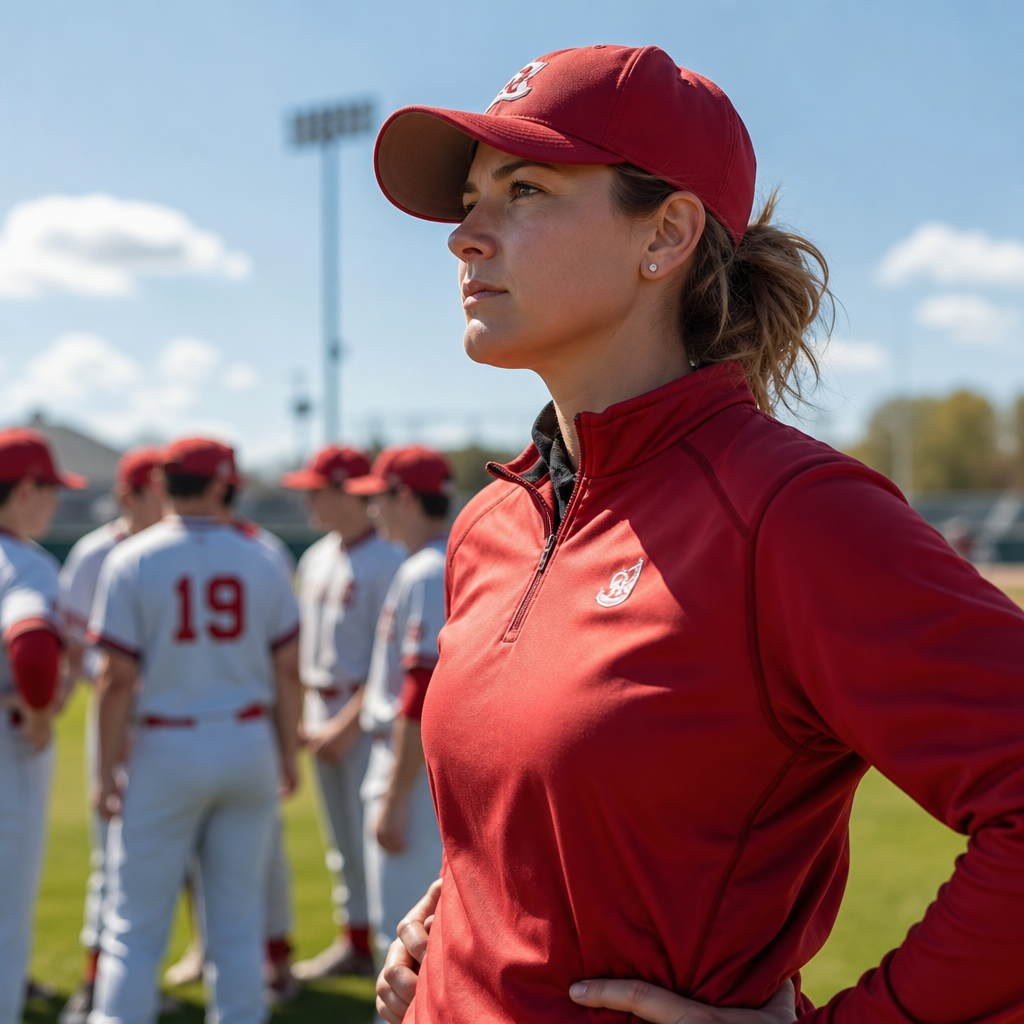
College baseball has long been framed as a men’s space, yet influential women have shaped its history as players, coaches, administrators, umpires, advocates, and cultural catalysts. Understanding influential women in college baseball history requires a broad definition of participation because the sport’s formal structures often excluded women even while women were helping build teams, departments, fan bases, and opportunities around them. In practice, college baseball includes NCAA programs, club teams, junior colleges, NAIA schools, summer developmental pathways linked to campuses, and the administrative systems that govern recruitment, compliance, facilities, and athlete support. When I have worked on baseball history projects, the biggest mistake I see is treating influence as only on-field statistics. In reality, influence also means opening a roster spot, changing a hiring norm, creating a women’s club team, securing funding, or proving that baseball knowledge is not gendered.
This matters because the history of women in college baseball is not a side note to the sport; it explains how change actually happens. Women were visible around college baseball long before they were welcomed into every role, and their progress often came through persistence rather than policy. That makes this topic essential for readers interested in women in baseball, sports equity, collegiate athletics, and leadership pipelines. It also matters for practical reasons. Today’s women working in college baseball operations, player development, analytics, athletic training, media, and coaching still inherit structures shaped by earlier pioneers. To understand where the sport is going, you need to know who challenged those structures first, what barriers they encountered, and which breakthroughs had lasting effects. This hub article maps that history across several overlooked areas, serving as a foundation for deeper reading throughout the wider women in baseball landscape.
Why women’s influence in college baseball history is broader than roster participation
Many searchers ask a simple question: have women played college baseball? The accurate answer is yes, but the fuller answer is that women’s impact reaches far beyond playing. Women have appeared on college rosters in scattered cases, especially at club and community college levels, but the more consistent pattern has been influence through coaching, administration, support services, officiating, and advocacy. Because softball became the default women’s diamond sport in the United States, baseball institutions often treated female baseball participation as an exception rather than a normal pathway. That historical split matters. It pushed many baseball-focused girls toward alternative routes, including boys’ youth leagues, travel ball, independent instruction, and later women’s national teams, while colleges mostly lacked direct recruiting channels for them.
From a historical perspective, this means college baseball became a proving ground for women entering the sport through nontraditional doors. A woman serving as a student manager in the 1980s or video coordinator in the 2000s often had to be better prepared than male peers just to be seen as equally credible. I have seen this pattern repeatedly in athletic departments: women became indispensable by mastering detail-heavy work such as scouting reports, compliance documentation, bullpen planning, travel logistics, biomechanics review, and player communication. Those roles are sometimes mislabeled as support positions, but in baseball they shape competitive outcomes. The women who excelled there did not merely participate; they changed hiring assumptions and expanded what expertise looked like inside a dugout and front office.
Pioneering players and the slow path to roster inclusion
The most visible milestones in women’s college baseball history involve athletes who earned places on men’s teams or built women-centered college baseball opportunities where none existed. Public attention often focuses on singular breakthroughs, but the larger story is cumulative. Women who made junior college, club, or developmental rosters forced coaches and teammates to confront the difference between tradition and ability. In baseball, where evaluation can be concrete, a player who throws strikes, fields cleanly, controls the running game, or delivers quality at-bats makes a direct argument. That is why even limited roster inclusion mattered so much. Each case became evidence that the sport’s assumptions were cultural, not technical.
Examples from the broader baseball pipeline help explain the college setting. Players such as Ila Borders, who became famous for pitching in college and later independent professional baseball, demonstrated that women could compete in environments built for men. Borders is one of the clearest reference points because her college career produced real innings, real scouting evaluation, and public scrutiny. Her path did not suddenly normalize women in college baseball, but it gave later athletes a model and gave journalists, administrators, and parents a concrete precedent to cite. Similar importance attaches to women who competed at community colleges, club programs, and showcase events, even when their names received less national coverage. Their impact lies in widening imagination as much as in box-score history.
Another important development has been the growth of women’s college club baseball. Organizations connected to campuses have created spaces where women can play baseball without abandoning the sport for softball. These teams matter historically because they solve a structural problem: many female baseball players reach college with skill but no varsity pathway. Club baseball preserves development, community, and visibility. It also produces future coaches, advocates, and administrators who understand the college baseball environment from direct experience. For a subtopic hub on miscellaneous history, this point is central: not every influential woman made history through an NCAA roster. Some changed the sport by ensuring women had any college baseball space at all.
Women coaches, managers, and baseball operations leaders who changed expectations
Coaching is one of the clearest measures of institutional trust, and women who entered college baseball coaching changed expectations in durable ways. The titles have varied: assistant coach, graduate assistant, director of operations, bullpen coach, player development coordinator, strength specialist, analytics lead, and recruiting support. In day-to-day baseball, these distinctions matter, but they often overlap. A coach may handle hitters’ timing work, defensive positioning, and pre-series reports. An operations leader may control travel, technology systems, communication flow, and practice efficiency. When women succeeded in these roles, they proved baseball authority could rest on preparation, teaching skill, and decision quality rather than stereotype.
Justine Siegal is one of the most influential names to understand in this conversation. Although she is best known for work across multiple baseball levels rather than solely college programs, her career changed how institutions think about women coaching male players. Through Baseball For All and hands-on instruction, she created both opportunity and legitimacy. Her example matters for college baseball because collegiate hiring rarely happens in isolation; athletic departments borrow confidence from broader baseball culture. Once women became visible instructing at high levels, it became harder for colleges to claim there was no talent pool. In practical terms, women entering college baseball today benefit from credibility built by pioneers who coached, taught clinics, ran camps, and demonstrated advanced baseball knowledge in public settings.
Student managers and graduate assistants also deserve more historical attention. In many programs, these positions have been the first rung where women learned scouting software, batting practice routines, opponent advance work, Synergy clips, TrackMan data interpretation, and the rhythm of a college season. Some later moved into full-time athletics careers. Others became influential because they changed internal culture, showing players and head coaches that women could command respect in competitive spaces. This is one of those truths people overlook when they search for famous names. College baseball history is full of women whose influence was local but meaningful, and local changes are often how the national culture shifts.
Administrative leadership, compliance, and the hidden architecture of opportunity
College baseball does not function on talent alone. It runs on budgets, eligibility rules, medical coordination, travel approvals, academic support, fundraising, donor relations, and facility planning. Women have been highly influential in these areas, and their impact is often underestimated because administrative work is less visible than a game-day role. In my experience around athletic departments, some of the most consequential decisions affecting a baseball program happen far from the dugout. An associate athletic director who approves staffing lines, a compliance officer who protects eligibility, or a fundraising leader who helps secure an indoor lab can change a program’s trajectory as surely as a pitching coach can.
This part of the history also intersects with federal policy, especially Title IX. Title IX did not create women’s college baseball, and it did not resolve baseball’s gender imbalance. But it transformed the governance context in which colleges make decisions about athletic opportunity, resource allocation, and equitable treatment. For baseball, often paired administratively with softball, Title IX shaped facility planning, scholarship conversations, and program optics. Women administrators became central interpreters of these requirements. Some pushed for broader inclusion, while others navigated the tension between expanding women’s sports generally and finding room for girls and women who specifically wanted baseball. That nuance matters. Baseball and softball are related but not interchangeable sports, and influential women in college baseball history repeatedly made that distinction clear.
| Area of influence | How women changed college baseball | Why it mattered long term |
|---|---|---|
| Playing opportunities | Joined rosters, formed club teams, sustained baseball pathways on campus | Created precedent and visibility for future athletes |
| Coaching and instruction | Taught skills, led practices, ran player development and baseball operations | Expanded beliefs about who holds baseball authority |
| Administration | Managed compliance, budgets, hiring, travel, academics, and facilities | Shaped the infrastructure supporting program growth |
| Advocacy and culture | Built organizations, camps, and public awareness around girls playing baseball | Strengthened the pipeline feeding colleges and clubs |
Umpires, media voices, and advocates who broadened the college baseball ecosystem
Influence in college baseball also comes from people who are not on the roster or formal coaching staff. Women umpires, broadcasters, writers, photographers, and advocates have broadened the sport’s ecosystem and changed who feels welcome in it. Officiating is especially important because it combines technical mastery with authority under pressure. A woman umpire working college games represents competence in one of baseball’s most scrutinized environments. That visibility matters not just symbolically but functionally. It normalizes women making rule interpretations, controlling game flow, and commanding respect from coaches and players in live competition.
Media representation has mattered just as much. When women journalists and broadcasters cover college baseball with depth, they influence what stories are told and which achievements become part of the historical record. A beat writer who profiles a woman coach, a broadcaster who treats her presence as normal rather than novelty, or a documentarian who records women’s club baseball creates archives future readers can actually find. History depends on documentation. One reason miscellaneous areas of women in college baseball are often overlooked is that many contributions happened in spaces not routinely preserved by mainstream sports media. The women who reported, photographed, and organized those stories helped prevent entire chapters from disappearing.
Advocacy organizations deserve direct mention here as well. Baseball For All is the most obvious modern example because it has created tournaments, training spaces, and public legitimacy for girls in baseball. While not a college league itself, its pipeline effect is significant. Girls who stay in baseball longer are more likely to seek college club teams, pursue student-manager roles, study sports performance, or enter baseball operations. That is how ecosystem change works. By the time a woman arrives at a college baseball program, her opportunity often reflects years of advocacy done elsewhere.
What this history means for today’s women in college baseball
The current landscape is more open than past eras, but it is not evenly open. Women can now point to more examples in coaching, operations, analytics, athletic training, media, and club participation than ever before. Technology has helped. Tools such as Rapsodo, TrackMan, Blast Motion, and video platforms have made baseball communication more evidence-driven, which can reduce the gatekeeping power of stereotype when a knowledgeable coach or analyst presents clear data. At the same time, barriers remain. Varsity women’s baseball opportunities at the college level are still rare in the United States, hiring pipelines can still depend heavily on personal networks, and women in male-dominated programs may still carry extra scrutiny.
The practical lesson from history is not that progress is automatic. It is that progress follows visibility, standards, and repeatable pathways. Colleges that want genuine inclusion need more than celebratory messaging. They need intentional hiring, mentorship, internship design, club support, and public recognition of women already doing baseball work. Readers exploring women in baseball should treat college baseball as a critical junction. It links youth participation to professional opportunity and turns informal interest into credentialed experience. If you want to understand the future of women in baseball, start by studying the women who already changed college baseball from every angle, then follow the programs and organizations building the next wave.
Frequently Asked Questions
What does “influential women in college baseball history” actually mean?
In this context, “influential” should be understood broadly rather than narrowly. College baseball has historically been organized, marketed, and regulated as a men’s sport, so if we only look for women who appeared in official NCAA baseball box scores, we miss much of the real history. Influential women in college baseball history include players who challenged gender expectations, coaches who helped develop programs, administrators who shaped athletic departments, umpires and officials who asserted professional authority in baseball settings, journalists and advocates who changed public conversations, and behind-the-scenes contributors who built teams, fan communities, fundraising networks, and institutional support.
This broader definition matters because exclusion has often hidden women’s contributions from the official record. In many periods, women were not given equal access to roster spots, scholarships, facilities, or recognized leadership pathways in baseball, even while they were actively participating in adjacent and essential ways. Looking at influence through a wider lens helps explain how change happens in sports: not only through on-field participation, but through policy, visibility, advocacy, and persistence. When an article examines influential women in college baseball history, it is really tracing how women helped shape the culture, opportunities, and future of the sport despite longstanding structural barriers.
Have women ever played college baseball, or were their contributions mostly off the field?
Women have played college baseball, but their opportunities have been limited and often highly visible precisely because they were unusual within a male-dominated system. Across different eras, women have appeared in college baseball environments as rostered players, tryout participants, practice contributors, and pioneers whose very presence challenged assumptions about who belonged on a baseball field. These stories are important because they reveal both progress and the persistence of institutional obstacles. In many cases, women who pursued college baseball had to prove not only their baseball ability, but also their legitimacy in a space where they were treated as exceptions rather than as normal participants.
At the same time, it would be inaccurate to say women’s impact was only about playing. Because formal access to college baseball was so constrained, some of the most influential women made their mark through coaching, administration, compliance work, athletic leadership, event operations, sports medicine, media coverage, and advocacy for broader gender equity in athletics. Their work often affected baseball programs directly, even if it did not occur between the foul lines. So the best answer is both: women have played college baseball, and women have also shaped college baseball in major off-field ways. A full history should recognize each of those forms of influence rather than treating one as more “real” than the other.
Why is Title IX part of the conversation about women in college baseball history?
Title IX is central to this topic because it transformed the landscape of college athletics, even though it did not simply open women’s college baseball in a direct, one-to-one way. Passed in 1972, Title IX prohibits sex-based discrimination in educational programs and activities receiving federal funding, and athletics became one of the most visible areas where its impact was felt. The law expanded opportunities for women in sports, increased pressure on schools to provide equitable treatment, and changed the expectations around participation, resources, scholarships, and institutional accountability.
For college baseball specifically, Title IX is part of the story because it influenced how schools structured athletic opportunities for men and women. In many cases, institutions expanded women’s softball rather than women’s baseball, which helped create more access for female athletes overall but also reinforced softball as the expected path for women in bat-and-ball sports. That means Title IX is both a story of progress and a story of channeling participation into certain accepted forms. When discussing influential women in college baseball history, Title IX helps explain why women’s direct presence in baseball remained limited even as women gained greater rights and visibility across college athletics. It also helps illuminate the work of women administrators, advocates, and policy leaders who pushed schools toward fairer treatment and broader ideas of athletic inclusion.
What kinds of barriers did women face in college baseball, and how did they overcome them?
Women in college baseball faced several overlapping barriers: cultural, institutional, logistical, and psychological. Culturally, baseball was long framed as a male space, with assumptions about strength, skill, leadership, and belonging tied to gender stereotypes rather than actual ability. Institutionally, women often encountered rules, traditions, recruiting habits, and administrative decisions that left little room for them to pursue baseball seriously at the college level. Logistically, they could face a lack of access to teams, training, coaching pipelines, mentorship, media recognition, and even basic belief from decision-makers. Psychologically, many had to navigate skepticism, isolation, and the pressure of representing more than just themselves whenever they entered a baseball environment.
Women overcame these obstacles through persistence, excellence, and strategic adaptation. Some proved themselves through direct participation as players or baseball professionals. Others built influence by entering athletic administration, compliance, coaching support roles, officiating, or advocacy networks where they could shape the system from within. Many used visibility itself as a tool: by showing up, competing, leading, or speaking publicly, they challenged outdated assumptions and expanded what younger athletes and college communities could imagine. Their influence often came not from one dramatic breakthrough, but from sustained effort over time. That is a key theme in college baseball history: change has frequently been cumulative, driven by women who kept creating opportunity, credibility, and momentum in spaces that were not originally designed to welcome them.
Why does it matter to study influential women in college baseball history today?
It matters because sports history shapes present-day ideas about opportunity, legitimacy, and leadership. If college baseball history is told only through the achievements of male players, coaches, and programs, the story becomes incomplete and misleading. Studying influential women reveals how institutions evolve, how exclusion operates, and how change is often driven by people whose contributions are undervalued in official narratives. It also helps readers understand that college baseball has never been shaped solely by those listed on traditional rosters. Women have helped build the sport’s culture, operations, visibility, and future in ways that deserve serious historical attention.
This topic also matters for practical reasons today. It informs conversations about gender equity, representation, hiring, athlete development, and the boundaries people still place around who “belongs” in certain sports. For students, researchers, fans, and athletic leaders, understanding the role of influential women in college baseball history offers a more accurate and more useful picture of the sport. It highlights pioneers and decision-makers, encourages better institutional memory, and provides role models for future generations. Most importantly, it reminds us that history is not just about who was permitted to stand at the center of the field, but also about who changed the game from every position around it.